
The Silent Saboteur Nobody Addresses
Stress, cortisol and body composition form a relationship that is among the most thoroughly evidenced and most consistently overlooked in mainstream health coaching. The person who trains four times per week, follows a well-designed nutritional protocol, manages their sleep reasonably well, and still finds their body composition stubbornly resistant to the degree of change their effort warrants may not have a programme problem at all. They may have a stress load problem that their programme, however well-designed, cannot override. Understanding why requires a clear grasp of what cortisol is, what it does to the body at varying levels of exposure, and why the total stress load on the system, not just the training and nutrition variables, determines whether the programme produces the results it should.
Cortisol is a glucocorticoid hormone produced by the adrenal cortex in response to activation of the hypothalamic-pituitary-adrenal axis. Its acute function is essential: it mobilises energy substrates for immediate physical use, suppresses non-essential physiological processes to prioritise survival, enhances alertness and attention, and prepares the body for the physical demands of the stressor it has detected. In the acute, time-limited context for which it evolved, cortisol is a sophisticated and elegantly designed physiological tool. The problem is that the human body's cortisol response system cannot distinguish between the acute physical threat it evolved to manage and the sustained psychological load of a demanding career, a difficult relationship, financial pressure, chronic sleep restriction, excessive training volume, or the low-level background anxiety of modern life. It responds to all of them with the same hormonal cascade, at varying intensity, across varying timescales.(1)
Robert Sapolsky's landmark work on stress biology, developed through decades of research at Stanford and summarised in Why Zebras Don't Get Ulcers, makes the central observation that distinguishes human stress from the stress of every other mammal: other animals experience acute physical stressors and then the stress ends. Humans experience chronic psychological stressors that never fully end and that the cortisol response system was never designed to manage across the months and years that modern professional and personal life routinely demands of it. The physiological consequences of that chronic activation, across every system in the body, are what make life stress a direct and measurable obstacle to the outcomes of any health programme.(2)
“Stress is not what happens to you. It is your response to what happens to you.”
— Hans Selye
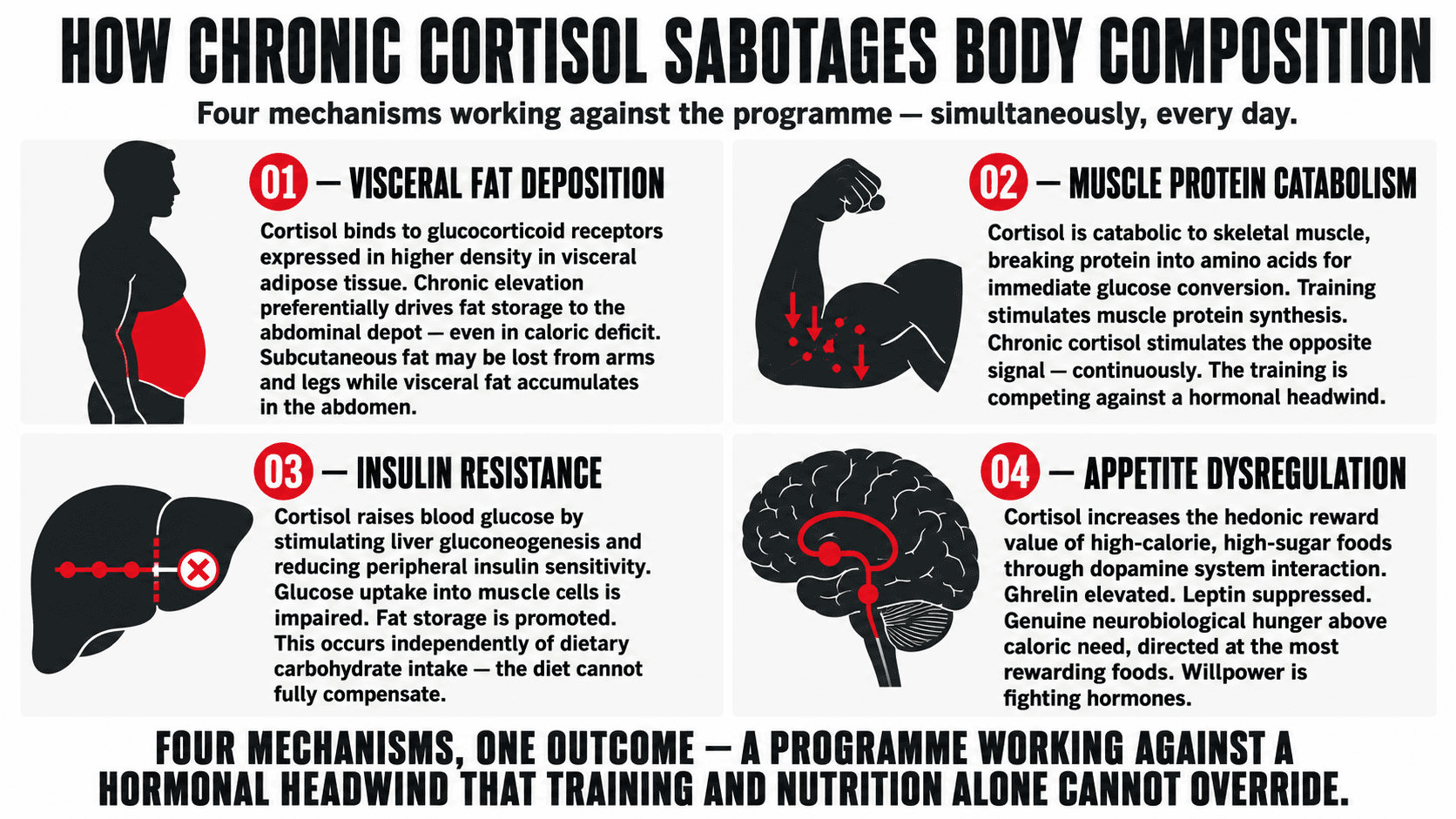
What Cortisol Does to Body Composition: The Four Mechanisms
The relationship between chronically elevated cortisol and body composition operates through at least four distinct mechanisms, each of which works directly against the goals of a programme focused on fat loss, muscle retention, or metabolic health improvement. Understanding all four is important because the common response to a stressful period, which is to train harder and eat less, can actually intensify these mechanisms rather than counteract them.
The first mechanism is visceral fat preferential deposition. Cortisol binds to glucocorticoid receptors that are expressed in higher density in visceral adipose tissue than in subcutaneous fat. Chronically elevated cortisol therefore preferentially drives fat storage into the visceral depot, the abdominal fat that surrounds the internal organs and is most strongly associated with metabolic disease risk. The person under chronic stress who is following a caloric deficit may be losing subcutaneous fat from the arms, legs, and face while simultaneously accumulating visceral fat in the abdomen under the influence of elevated cortisol. The net effect on body composition is substantially worse than the programme would produce in a lower-stress environment.(3)
The second mechanism is muscle protein catabolism. Cortisol is catabolic to skeletal muscle, stimulating the breakdown of muscle protein into amino acids that can be converted to glucose for immediate energy use. In the context of acute exercise this is a normal and manageable metabolic process. In the context of chronically elevated cortisol from life stress, it means that the muscle protein synthesis stimulated by training is competing against a continuous catabolic signal that reduces net protein accretion. The person under chronic stress who is training for muscle development is fighting a hormonal headwind that their training programme cannot fully overcome without addressing the cortisol load.
The third mechanism is insulin resistance. Cortisol raises blood glucose levels by stimulating gluconeogenesis in the liver, the conversion of non-carbohydrate substrates into glucose, and simultaneously reduces the sensitivity of peripheral tissues to insulin. The chronic elevation of cortisol therefore produces a state of functional insulin resistance that impairs glucose uptake into muscle cells, promotes fat storage, and creates the metabolic environment associated with pre-diabetic and type 2 diabetic conditions. This mechanism is independent of dietary carbohydrate intake: the insulin resistance produced by chronic stress occurs even when the nutritional protocol is managed carefully.(4)
The fourth mechanism is appetite dysregulation. Chronic cortisol elevation increases the hedonic reward value of high-calorie, high-sugar, and high-fat foods through interactions with the dopaminergic reward system. It also directly stimulates appetite through ghrelin elevation and leptin suppression, the same hormonal pattern produced by sleep deprivation. The person under significant life stress experiences genuine neurobiological hunger that is above and beyond their actual caloric needs, with a specific drive toward the foods that provide the most immediate reward signal. The willpower required to override this drive is competing against a hormonal environment that is actively working against it.(5)
Key Insight: If you are training consistently, eating well, sleeping reasonably, and your body composition is not responding as the programme warrants, the most productive diagnostic question to ask is not what is wrong with my training or nutrition. It is: what is the current total stress load on my system, and is that load consuming enough of my recovery capacity that the programme cannot produce its expected return? The answer may reframe the problem entirely.
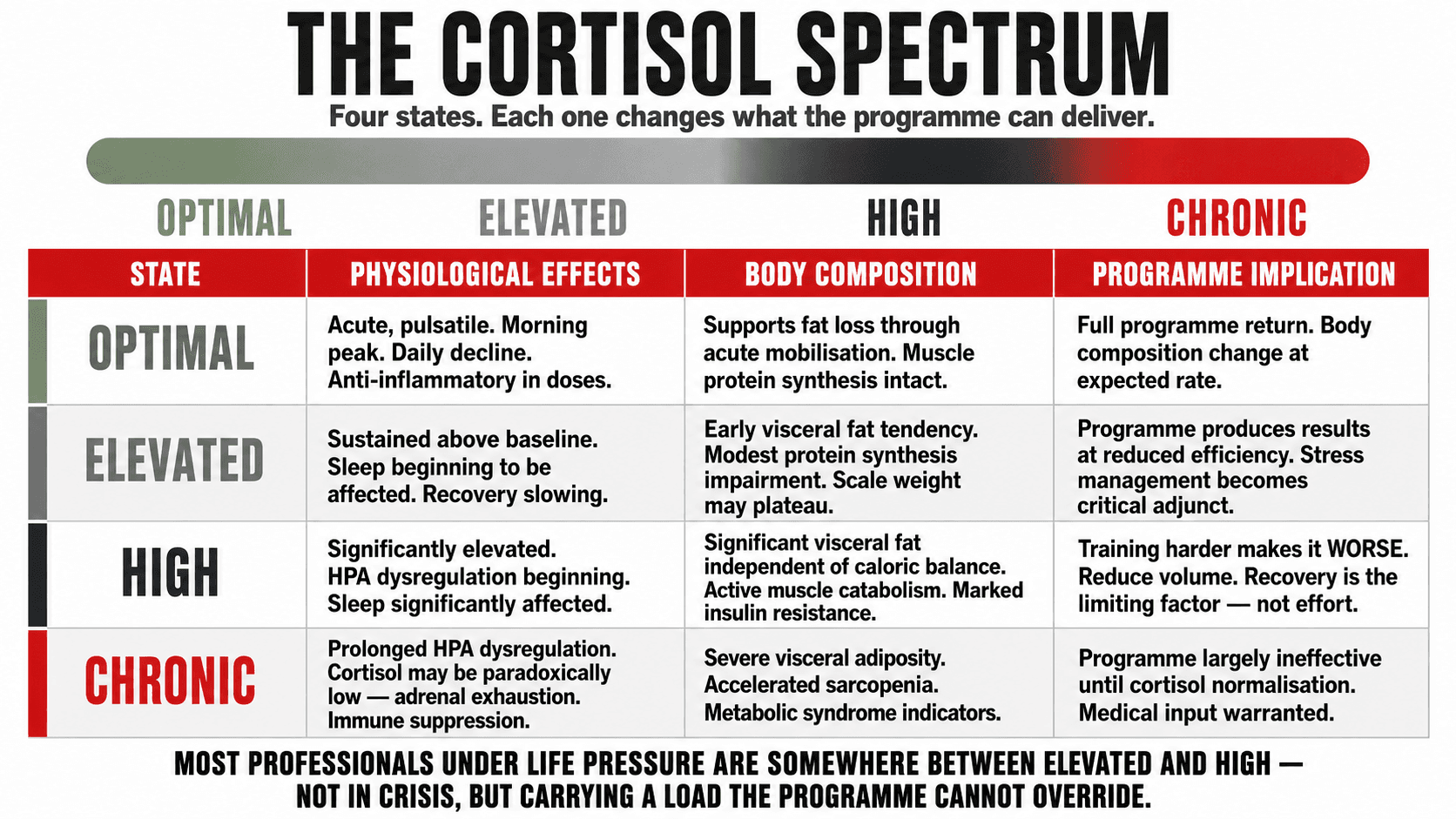
The Cortisol Spectrum: From Optimal to Chronically Elevated and the Body Composition Consequences
Cortisol operates across a spectrum from the physiologically beneficial to the profoundly damaging, and the transition from one end to the other occurs through accumulated exposure rather than through a single threshold event. The spectrum below maps four cortisol states from optimal function through chronic elevation, with the specific physiological effects, body composition consequences, and programme implications of each state.
The Cortisol Spectrum — From Optimal Function to Chronic Elevation Across Four States
| Cortisol State | Physiological Effects | Body Composition Impact | Programme Implication |
|---|---|---|---|
| OPTIMALAcute and pulsatile. Morning peak, training peak, gradual daily decline. | Appropriate energy mobilisation for training. Anti-inflammatory in acute doses. Supports immune function. Facilitates fat oxidation for fuel during fasted or exercise states. | Supports fat loss through acute fat mobilisation during training. Does not impair muscle protein synthesis because the catabolic signal is brief and followed by adequate recovery. | Full programme return available. Training stimulus is followed by appropriate hormonal recovery environment. Body composition change proceeds at expected rate. |
| ELEVATEDModerately above baseline. Sustained above-baseline throughout the day. Elevated in late evening. Sleep quality beginning to be affected. | Early visceral fat accumulation tendency. Modest impairment of muscle protein synthesis. Mild insulin resistance developing. Appetite slightly elevated with beginning of hedonic food preference bias. | Body composition change slower than programme would predict in lower-stress conditions. Fat loss occurring but at reduced rate. Lean mass maintenance more demanding. Scale weight may plateau despite genuine dietary adherence. | Programme produces results but at reduced efficiency. Stress management practices become important adjuncts to training and nutrition. Recovery emphasis increases. |
| HIGHSignificantly elevated. Consistently elevated across the day. HPA axis dysregulation beginning. Sleep significantly affected. Recovery between training sessions impaired. | Significant visceral fat deposition independent of caloric balance. Active muscle catabolism competing against training anabolic stimulus. Marked insulin resistance. Appetite substantially elevated with strong preference for high-reward foods. | Programme may appear to have stopped working. Body composition stubbornly resistant despite training and nutritional adherence. Training harder makes things worse by adding to total stress load. Recovery capacity is the limiting factor, not effort. | Training volume must be reduced. Recovery practices become the primary programme priority. Stress management is not optional. Adding more training in this state accelerates the problem rather than solving it. |
| CHRONICProlonged dysregulation. HPA axis dysregulation. Cortisol may be paradoxically low due to adrenal exhaustion. Immune suppression. Thyroid function impaired. | Severe visceral adiposity. Accelerated sarcopenia. Profound insulin resistance. Metabolic syndrome indicators. Body composition changes resistant to almost all conventional programme interventions until the cortisol load is addressed. | Conventional health programme becomes largely ineffective until cortisol normalisation is achieved. Medical input may be required. | Programme design must prioritise recovery, stress reduction, and hormonal normalisation above all other variables. Medical assessment is warranted. |
Most people operating in demanding professional and personal lives are somewhere between the Elevated and High states. They are not in crisis. They are not overtly unwell. They are simply carrying a chronic stress load that their programme cannot fully override, and attributing the underperformance of the programme to the programme rather than to the stress load.
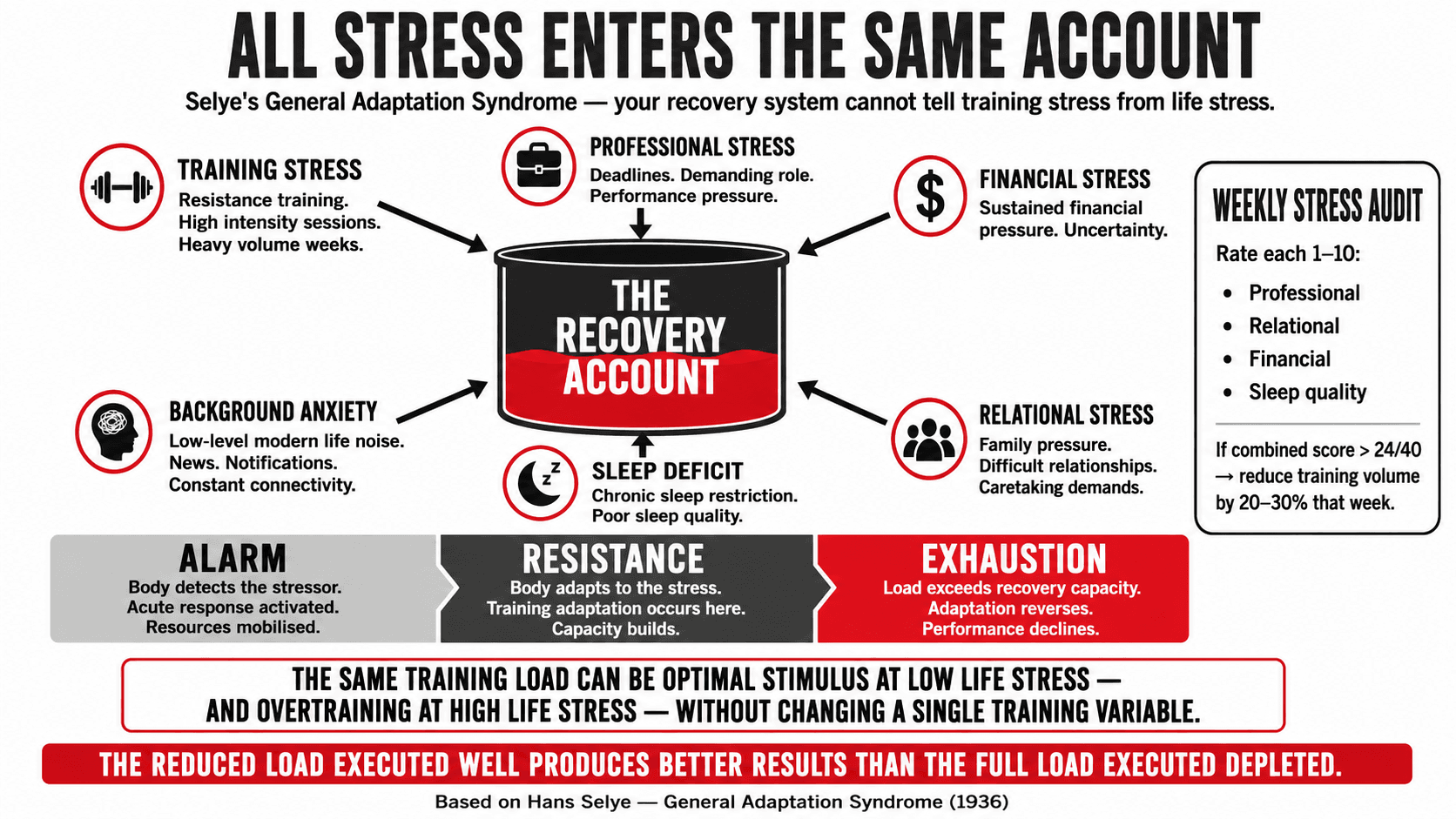
Training Is Stress: The Total Load Equation That Most Programmes Ignore
The critical insight that changes how stress is managed within a health programme is that training is itself a stressor in the physiological sense. A resistance training session activates the HPA axis, elevates cortisol, breaks down muscle protein, and places a recovery demand on the system. This is precisely what it should do: it is the training stimulus that the recovery process converts into adaptation. But the body's recovery capacity does not discriminate between the cortisol load from a heavy training week and the cortisol load from a difficult period at work, a family stressor, a period of poor sleep, or the sustained pressure of financial anxiety. All of it enters the same recovery account. And that account has a finite balance.
Hans Selye's General Adaptation Syndrome, the foundational model of physiological stress response developed in the 1930s and consistently supported since, describes the body's response to any stressor as passing through three stages: alarm, resistance, and exhaustion. The resistance stage is where training adaptation occurs: the body has adapted to the training stress and is building the capacity to handle it. The exhaustion stage is where the training load exceeds the recovery capacity and the adaptive process reverses. The critical point is that Selye's model is non-specific: the alarm, resistance, and exhaustion stages describe the response to any stressor, not specifically to training. Life stress and training stress compete for the same recovery resource.(6)
The practical implication is that a training programme designed for a person operating at low life stress is not automatically appropriate for the same person operating at high life stress, even if their schedule permits the same training volume. The programme must account for the total stress load, not just the training component of it. A training week that would represent optimal stimulus at low life stress may represent overtraining at high life stress, not because the training volume has changed but because the recovery capacity it is drawing on has been reduced by the demands from outside the gym.
Key Insight: A simple weekly stress audit takes two minutes and significantly improves programme design. At the start of each week, rate your current life stress load from one to ten across four domains: professional, relational, financial, and sleep quality. If the combined score exceeds twenty-four out of forty, reduce training volume by twenty to thirty percent that week and prioritise recovery practices. The adaptation that would have come from the full training load is not available in that recovery environment. The reduced load executed well produces better results than the full load executed in a depleted state.
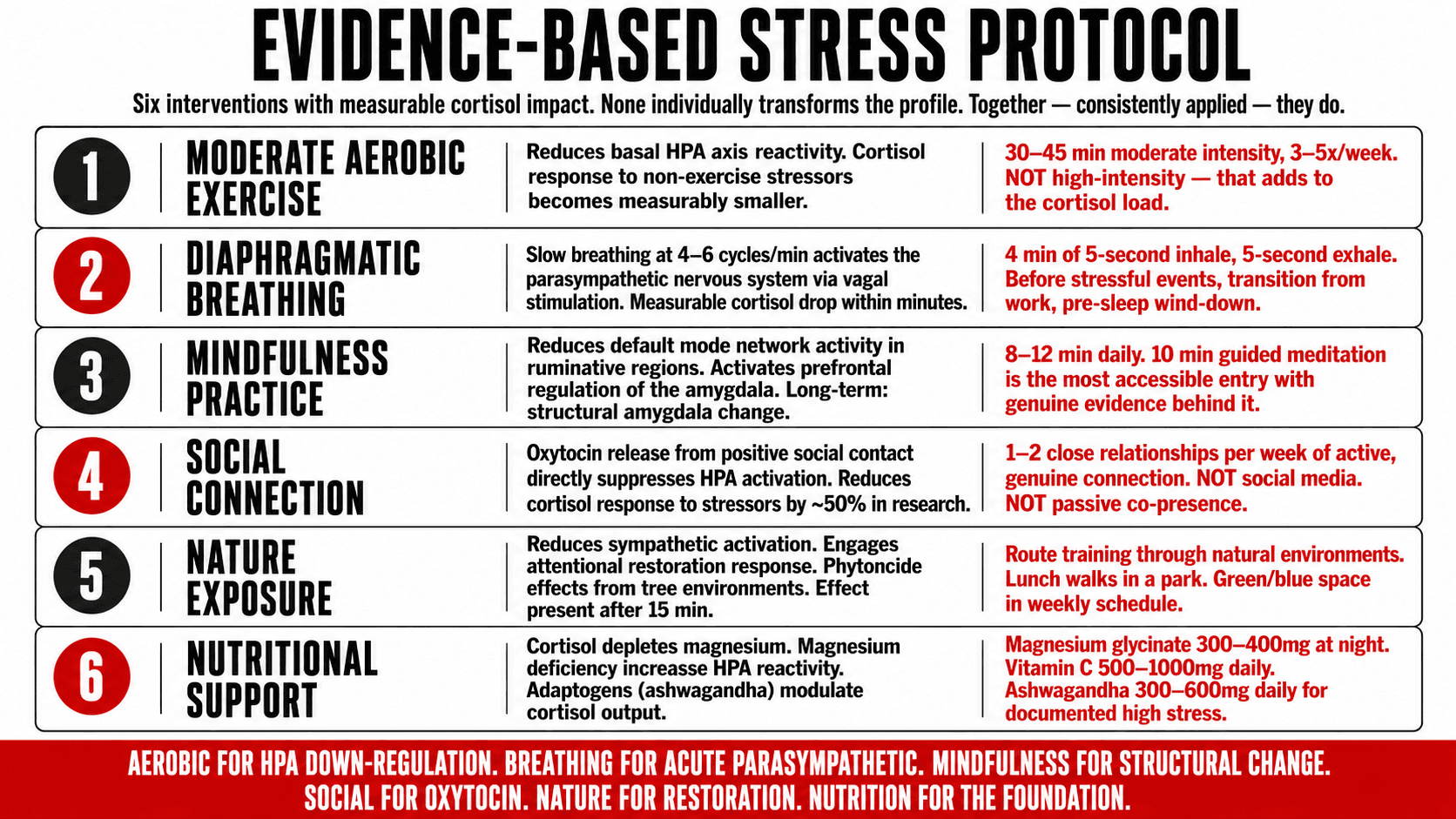
The Stress Management Protocol: Evidence-Based Interventions for Cortisol Reduction
The stress management research has a quality problem: it is saturated with low-evidence interventions dressed in wellness language that make extravagant claims without the scientific support to justify them. What follows is restricted to the interventions with the strongest evidence base for measurable cortisol reduction, with the mechanism, the specific evidence, and the practical implementation for each.
The Evidence-Based Stress Management Protocol — Six Interventions With Proven Cortisol Impact
| Intervention | The Mechanism | The Evidence | The Implementation |
|---|---|---|---|
| Moderate aerobic exercise | Acute cortisol elevation during exercise is followed by a sustained below-baseline cortisol response post-exercise in trained individuals. Regular aerobic training reduces basal HPA axis reactivity, meaning the cortisol response to non-exercise stressors is measurably smaller. | Zschucke and colleagues found that regular moderate aerobic exercise produced significantly reduced cortisol reactivity to psychological stressors in trained compared to untrained individuals, with the effect size increasing with training history. | Thirty to forty-five minutes of moderate intensity aerobic work three to five times per week. Critically, the intensity must be moderate, not high: high-intensity training adds significantly to the cortisol load rather than reducing it. |
| Diaphragmatic breathing and slow breathing protocols | Slow breathing at a rate of four to six breath cycles per minute activates the parasympathetic nervous system through vagal afferent stimulation, reducing HPA axis activation and producing measurable cortisol reduction within minutes of practice. | Ma and colleagues demonstrated that a four-week slow breathing intervention produced significant reductions in salivary cortisol and self-reported stress in a randomised controlled trial. Acute effects are measurable in a single session. | Four minutes of slow breathing at a rate of five seconds inhale, five seconds exhale. Most valuable immediately before a stressful event or meeting, during the transition from work to the evening, and as part of the pre-sleep wind-down sequence. |
| Mindfulness-based practice | Mindfulness meditation reduces activity in the default mode network areas associated with ruminative thinking and activates the prefrontal cortex regulation of the amygdala stress response. Long-term practice produces structural changes in the amygdala reducing its baseline reactivity. | Mindfulness-Based Stress Reduction developed by Jon Kabat-Zinn has been evaluated in over forty randomised controlled trials and consistently produces significant reductions in cortisol, self-reported stress, and inflammatory markers across clinical and non-clinical populations. | Eight to twelve minutes of daily mindfulness practice produces measurable effects. Ten minutes of mindfulness meditation daily using a guided app is the most accessible entry point with genuine evidence behind it. |
| Social connection and quality relationships | Oxytocin release from positive social contact directly suppresses HPA axis activation and reduces cortisol. The social support buffer for stress is one of the most thoroughly documented effects in psychoneuroimmunology. | Heinrichs and colleagues demonstrated that social support from a trusted person reduced cortisol response to a standardised psychological stressor by approximately 50%. The protective effect is specific to the quality of the social connection, not simply the presence of other people. | Deliberate investment in one or two close relationships per week. Not social media. Not passive co-presence. Active, genuine connection with people whose company reduces rather than elevates the stress load. |
| Nature exposure | Exposure to natural environments reduces sympathetic nervous system activation and cortisol through a combination of reduced sensory load relative to urban environments, engagement of the parasympathetically-associated attentional restoration response, and direct phytoncide effects from tree environments. | Park and colleagues demonstrated that shinrin-yoku, the Japanese practice of forest bathing, produced significant salivary cortisol reductions compared to urban walking at the same intensity and duration. The effect was present after as little as fifteen minutes. | Deliberately routing training through natural environments where available. A lunch walk in a park rather than around a block. Access to green or blue space in the weekly schedule. Urban parks and tree-lined streets produce the effect at a reduced magnitude. |
| Nutritional cortisol management | Chronic cortisol elevation depletes specific micronutrients. Magnesium, vitamin C, and adaptogenic compounds including ashwagandha have documented effects on HPA axis regulation and cortisol output in research contexts. | Chandrasekhar and colleagues found that ashwagandha supplementation at 300mg twice daily produced a 27.9% reduction in serum cortisol compared to placebo in a randomised controlled trial. Magnesium supplementation in deficient individuals reduces HPA axis reactivity. | Magnesium glycinate or bisglycinate 300–400mg at night, which also supports sleep quality. Vitamin C 500–1000mg daily. Ashwagandha 300–600mg daily for those with documented high stress load. |
The most effective stress management protocol is multi-layered: aerobic exercise for HPA down-regulation, breathing for acute parasympathetic activation, mindfulness for structural amygdala change, social connection for oxytocin-mediated cortisol suppression, nature for attentional restoration, and targeted nutritional support. None of these individually transforms the cortisol profile. Together, consistently applied, they do.
The Overtraining Trap: When More Effort Makes Things Worse
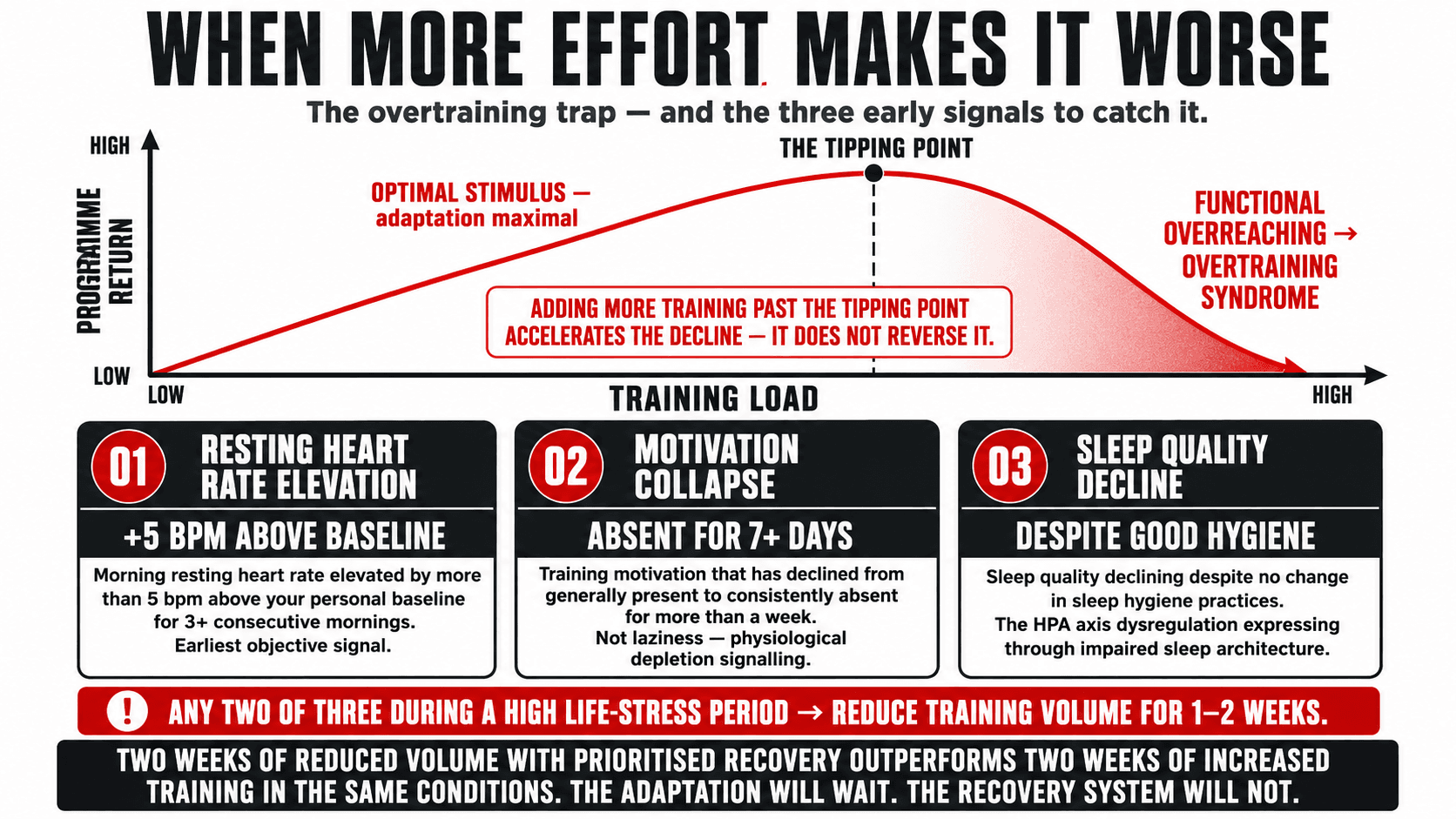
Overtraining syndrome is the clinical presentation of the total load equation tipped past the recovery system's capacity. It is characterised by performance decline despite maintained or increased training volume, elevated resting heart rate, disturbed sleep, mood disturbance, increased injury susceptibility, and paradoxically suppressed immune function. Its defining feature, from the perspective of this article, is that it cannot be resolved by more training. The intervention is always the same: significant reduction in training volume and intensity, increased recovery time, nutritional support, and stress load reduction from all sources. Adding more training to a system in overtraining syndrome accelerates the decline rather than reversing it.(7)
The subclinical version of overtraining, functional overreaching, is far more common than the full syndrome and is the condition most frequently misidentified as programme failure by clients who are training hard and not seeing results. The person who has been pushing training volume during a particularly stressful work period, compensating for slow progress by adding sessions, and sleeping less than usual due to the same pressures, is in a functional overreaching state where the programme is producing the opposite of its intended effect. The correct response is a reduction in training volume, not an increase, and a specific investment in the stress management practices above. Two weeks of reduced volume and prioritised recovery will produce better body composition and performance outcomes than two weeks of increased training in the same conditions.
This is counterintuitive enough that it requires stating directly: there are periods in any person's life when the highest-value health action is not to train harder or restrict more carefully but to rest more completely, manage stress more deliberately, and allow the recovery account to rebuild to a level where the training stimulus can produce the adaptation it is designed to produce. Recognising these periods, and having the understanding to respond to them correctly rather than with the more-effort reflex, is one of the most sophisticated aspects of health programme management and one of the most consistently overlooked.
Key Insight: Three early indicators that the total load equation has been exceeded: resting heart rate elevated by more than five beats per minute above your personal baseline for three or more consecutive mornings; motivation for training that has declined from generally present to consistently absent for more than a week; sleep quality declining despite no change in sleep hygiene practices. Any two of these three, occurring simultaneously during a high life-stress period, is a signal to reduce training volume and prioritise recovery for one to two weeks. The adaptation will wait. The recovery system will not.
Adaptogens, Cortisol, and the Supplement Evidence: What Is Real and What Is Marketing
The supplement industry's cortisol and stress product category is one of the most aggressively marketed and most inconsistently evidenced areas in the entire wellness landscape. The majority of products making cortisol-reduction claims lack clinical evidence of meaningful efficacy at the doses provided, and many contain combinations of ingredients whose individual evidence base ranges from modest to absent. The most responsible approach is to restrict supplemental intervention to the compounds with the strongest individual evidence, used as adjuncts to the behavioural interventions rather than as primary treatments.
Ashwagandha, classified as an adaptogen and used in Ayurvedic medicine for centuries, has accumulated enough clinical trial evidence in the past decade to be considered the supplement with the strongest case for genuine HPA axis modulation. Multiple randomised controlled trials have demonstrated significant cortisol reductions, improved stress resistance, and in some studies meaningful improvements in testosterone levels in chronically stressed adults at doses of 300–600mg of a standardised root extract daily. The evidence is not definitive but it is substantially stronger than most of the category.(8)
Magnesium is the most broadly relevant micronutrient in stress management for the simple reason that a significant proportion of the population is chronically deficient in it, cortisol actively depletes magnesium, and magnesium deficiency increases HPA axis reactivity, creating a self-reinforcing cycle. Correcting a genuine magnesium deficiency through supplementation consistently produces improvements in sleep quality, stress resilience, and muscle recovery. The glycinate and bisglycinate forms are the most bioavailable and least likely to cause digestive discomfort. For the physically active person under regular training and life stress, 300–400mg of magnesium glycinate before bed is one of the most cost-effective and evidence-supported nutritional interventions available.
Key Insight: Supplements are the finishing layer on a structure built from sleep, training management, nutrition, and stress reduction practices. Ashwagandha on top of a chronic sleep deficit and an unmanaged total stress load will do very little. The same supplement on top of a well-managed programme, adequate sleep, and appropriate training load acts as a genuine adjunct with measurable effects. The sequence matters: build the foundation first.
The Stress Conversation in Every Programme
The stress audit is part of every intake assessment I run, because I have seen too many well-designed programmes underperform against their potential because of a stress load the programme was not designed to account for. The client who arrives with a demanding professional role, a complicated personal life, poor sleep, and three years of accumulated life pressure is not the same physiological starting point as the client who arrives with a manageable life load and good sleep, even if they present with the same body composition measurements and the same fitness level.
The programme I build for the first client is not simply a modified version of the one I build for the second. The cortisol load is a primary variable in the programme design, determining the appropriate training volume and intensity, the recovery emphasis, the nutritional approach to adrenal support, and the stress management practices built into the week's structure alongside the training sessions. A programme that ignores the total stress load and focuses only on training and nutrition is optimising two variables while leaving a third unmanaged that is powerful enough to undermine the first two.
Stress is not a mindset issue. It is a physiology issue with direct, measurable consequences for every outcome a health programme is designed to produce. Managing it is not separate from the programme. It is part of it. I work one-to-one with clients online globally. The stress and cortisol conversation begins in the first session.
Work with Me
Get a personalised coaching plan built around your goals, your schedule, and your life.
Enquire NowReferences
- Tsigos C, Chrousos GP. Hypothalamic-pituitary-adrenal axis, neuroendocrine factors and stress. Journal of Psychosomatic Research. 2002; 53(4): 865–871.
- Sapolsky RM. Why Zebras Don't Get Ulcers: The Acclaimed Guide to Stress, Stress-Related Diseases, and Coping. New York: Holt; 2004.
- Epel E, Lapidus R, McEwen B, Brownell K. Stress may add bite to appetite in women: a laboratory study of stress-induced cortisol and eating behavior. Psychoneuroendocrinology. 2001; 26(1): 37–49.
- Andrews RC, Walker BR. Glucocorticoids and insulin resistance: old hormones, new targets. Clinical Science. 1999; 96(5): 513–523.
- Adam TC, Epel ES. Stress, eating and the reward system. Physiology and Behavior. 2007; 91(4): 449–458.
- Selye H. The Stress of Life. New York: McGraw-Hill; 1956.
- Kreher JB, Schwartz JB. Overtraining syndrome: a practical guide. Sports Health. 2012; 4(2): 128–138.
- Chandrasekhar K, Kapoor J, Anishetty S. A prospective, randomized double-blind, placebo-controlled study of safety and efficacy of a high-concentration full-spectrum extract of ashwagandha root in reducing stress and anxiety in adults. Indian Journal of Psychological Medicine. 2012; 34(3): 255–262.