Every year the same pattern plays out. Someone works hard from January through to spring, loses body fat, builds some shape, and starts to feel genuinely good about how they look. Then the warmer months arrive. The routine shifts. Holidays come up. Social events multiply. Late nights, long weekends, pub gardens, ice cream runs, and all of a sudden the structure that got them results starts to slip. By September they are back where they started, frustrated and wondering what happened.
If that sounds familiar, you are not alone. Staying lean through summer is a challenge that catches a lot of people off guard because on the surface it feels like it should be easier. The weather is better, you are more active, you are eating salads and lighter meals. But the reality is that summer introduces a completely different set of obstacles to body composition, and without a clear strategy most people drift backwards without even realising it.

Why Summer Quietly Undoes Your Progress
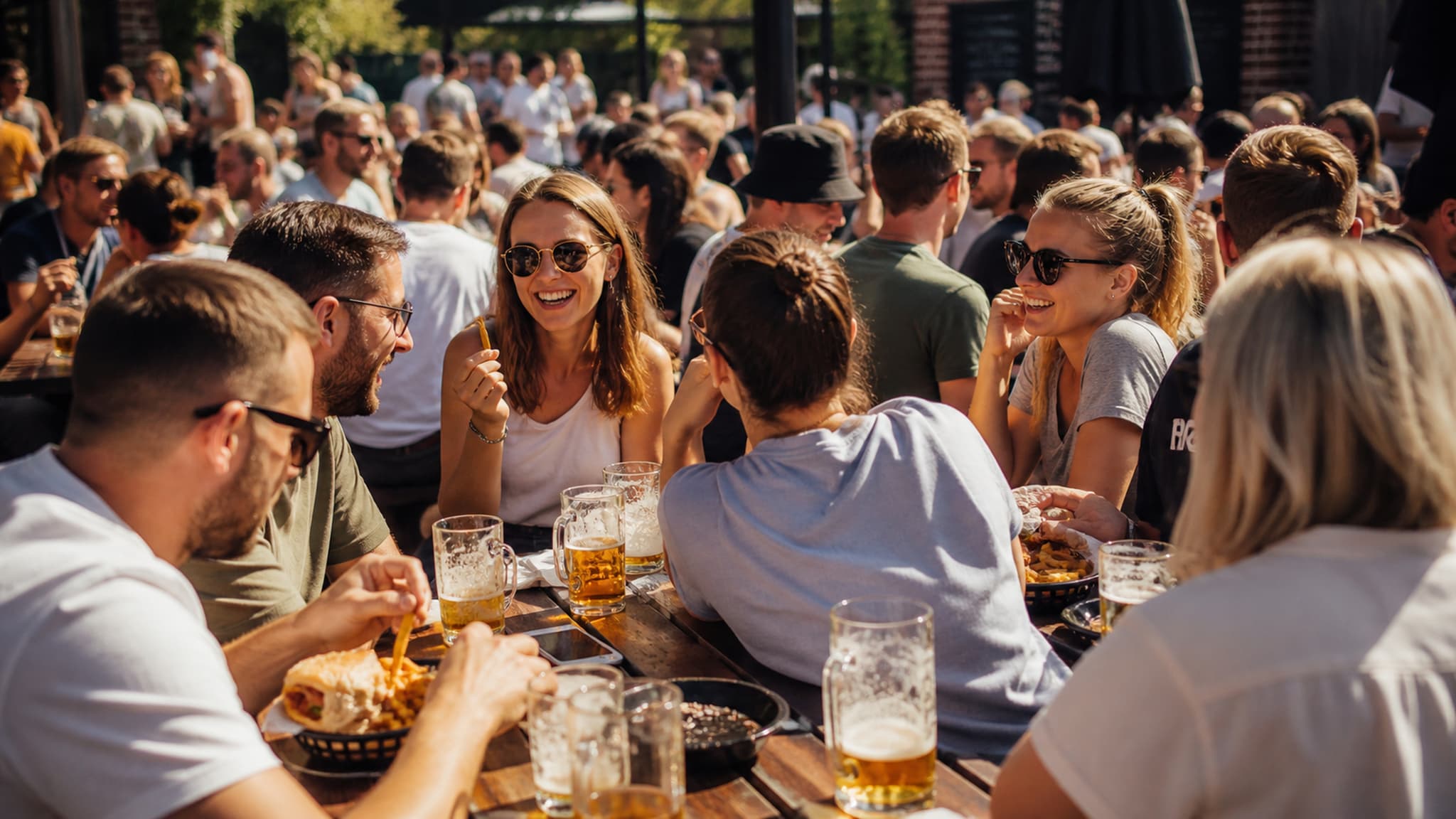
The biggest misconception about summer is that being outdoors and more active automatically keeps you lean. It does not. Physical activity contributes to energy expenditure, but it is remarkably easy to out eat even a very active day. A long walk on the beach burns a few hundred calories. A round of drinks and fish and chips at the seaside adds a thousand or more. The maths does not work in your favour unless you are paying attention to the nutrition side.
Research published in the European Journal of Clinical Nutrition has demonstrated that people consistently underestimate how many calories they consume, often by as much as 30 to 50 percent (1). This tendency gets worse in unstructured environments like holidays, social gatherings, and any situation where food is abundant and varied. Summer is essentially one long unstructured environment for most people. The buffet mentality kicks in and portion awareness disappears.
Alcohol consumption also tends to increase significantly during the warmer months. Longer evenings, garden parties, holidays abroad, and the general social culture around summer all contribute to a higher weekly intake. Each gram of alcohol provides 7 calories with no nutritional benefit, and beyond the caloric load, alcohol directly impairs your body’s ability to oxidise fat for fuel (2). It also disrupts sleep quality, which has its own downstream effects on hunger hormones, recovery, and body composition (3).
Then there is the disruption to training. Gym attendance typically drops during summer. Holidays break the routine. The heat makes training feel harder. Some people reduce their resistance training entirely and replace it with recreational activities that, while enjoyable, do not provide the same stimulus for maintaining muscle mass. Muscle is metabolically active tissue. Losing it means your resting metabolic rate decreases, which makes it even easier to gain fat on the same amount of food (4). This is the hidden cost of skipping the gym for two or three months.
How to Stay Lean Through Summer Without Living Like a Monk
I have coached clients through enough summers to know exactly where things go wrong and exactly what to do about it. The approach I am going to lay out here is not about restriction. It is not about missing out. It is about maintaining a level of awareness and structure that keeps you in control of your results while still fully enjoying the season.
Accept That Maintenance Is a Legitimate Goal
Not every phase of the year needs to be about aggressive fat loss. If you have spent the first few months of the year in a deficit and you have made good progress, summer is an excellent time to shift into a maintenance phase. This means eating at roughly your maintenance calories, keeping protein high, and continuing to train consistently. You are not pushing forward, but you are not sliding backwards either.
A maintenance phase is not a lack of progress. It is a strategic decision to consolidate the results you have earned while navigating a period of your life that is naturally less structured. Research supports this approach. A study published in the International Journal of Obesity found that intermittent periods of energy balance during a fat loss phase improved long term adherence and resulted in greater overall fat loss compared to continuous dieting (5). Protecting your results during summer means you start the autumn in a strong position rather than having to repeat work you have already done.
Keep Protein as Your Anchor
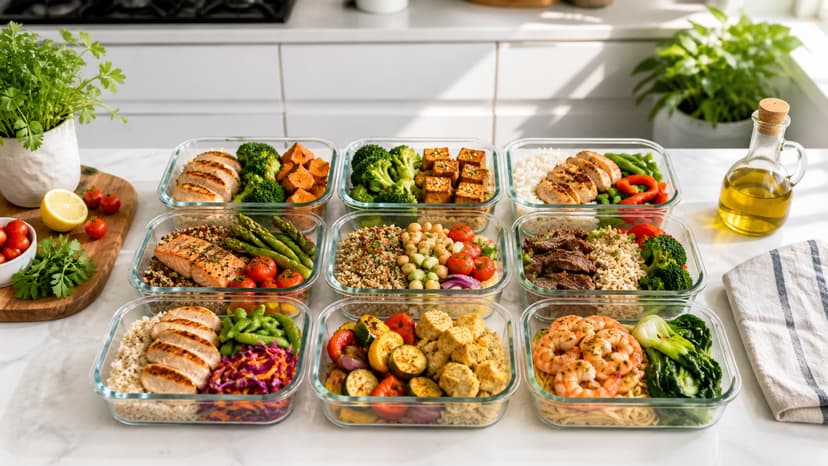
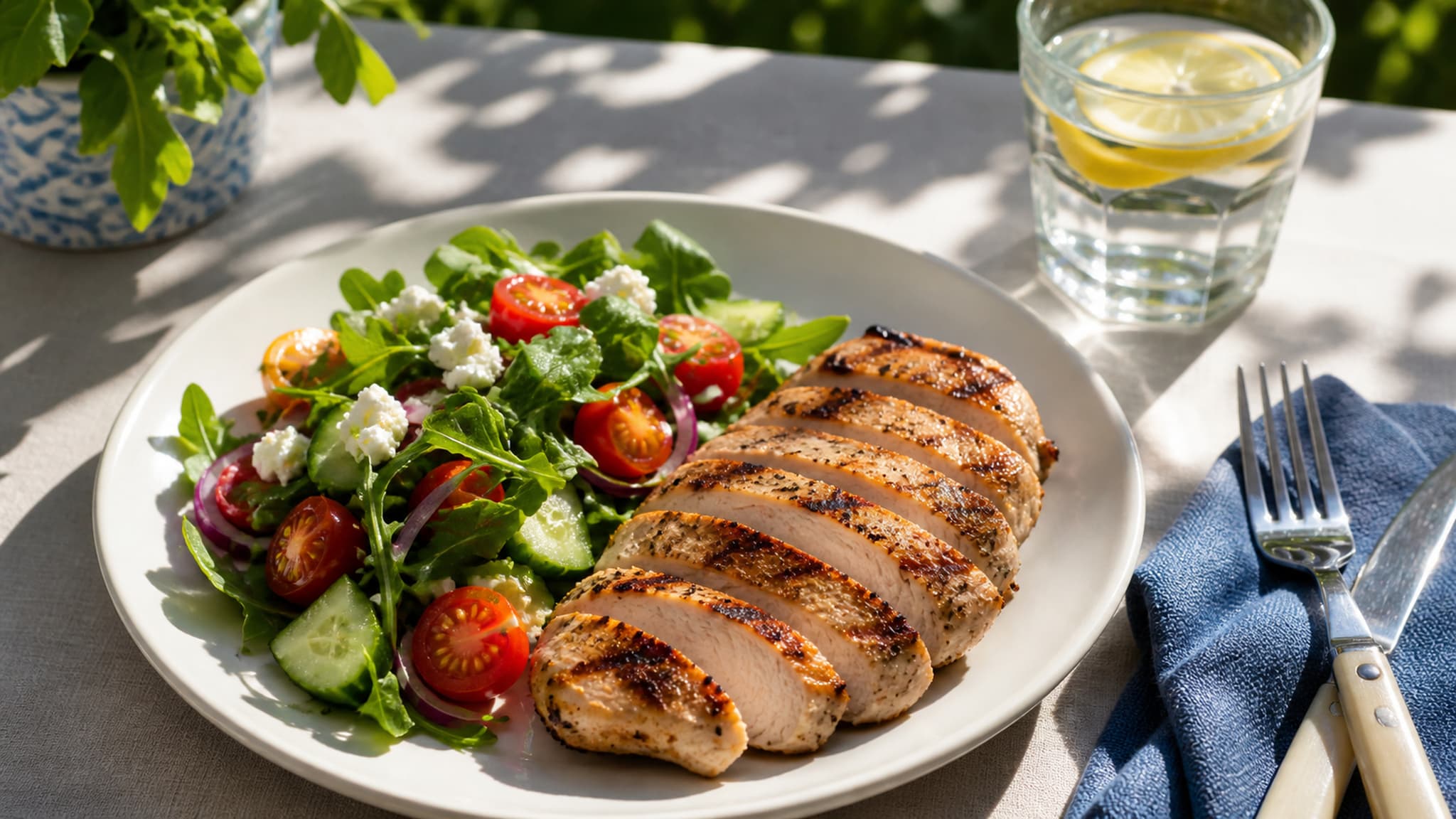
If there is one single thing I would tell every client to focus on during summer, it is protein. Everything else can be flexible. Your carbohydrates can shift around depending on activity. Your fats can vary. Your meal timing can adapt to your social schedule. But protein needs to stay consistent. It is the macronutrient that preserves muscle mass during periods when you might not be training as hard or as frequently, and it is the macronutrient that keeps you feeling full and reduces the temptation to overeat at social events (6).
For my omnivore clients, this means building every meal around a quality protein source. Chicken, fish, eggs, Greek yoghurt, lean beef, or turkey. For my vegetarian and vegan clients, the same principle applies but with different sources. Tofu, tempeh, seitan, edamame, lentils, chickpeas, cottage cheese, paneer, pea protein, and soy based products all provide excellent options. The specific source matters less than the habit of making protein the foundation of every plate. I typically recommend a minimum of 1.6 grams per kilogram of bodyweight per day, which aligns with the evidence for muscle preservation during periods of energy balance or mild surplus (7).
Build Structure Around the Lack of Structure
Summer throws your routine off. That is a given. The solution is not to fight it but to build a simple framework that holds you in place regardless of what the week looks like. I call this setting your non negotiables. These are the three or four habits that you commit to maintaining no matter what. For most of my clients these include hitting their protein target every day, training a minimum of three times per week, limiting alcohol to specific occasions rather than letting it become a daily habit, and drinking at least two litres of water before anything else.
Notice what is not on that list. I am not asking you to track every calorie. I am not asking you to weigh your food at a BBQ. I am not asking you to turn down every social invitation. The non negotiables are the minimum effective dose of structure that keeps your body composition heading in the right direction even when everything else around you is relaxed. A study in the Journal of Consulting and Clinical Psychology found that individuals who maintained a small number of key health behaviours during challenging periods were significantly more likely to sustain their weight loss over time than those who abandoned all structure (8).
Plan Around Your Social Calendar
Most people treat summer social events as surprises they have no control over. In reality, you almost always know what is coming. You know about the holiday weeks in advance. You know about the birthday party on Saturday. You know about the work drinks on Thursday evening. The smart move is to plan your nutrition around these events rather than hoping for the best.
If you have a big social meal planned for the evening, keep your daytime meals lighter and protein focused. A smoothie with pea or whey protein and fruit for breakfast. A large salad with grilled chicken, tofu, or cottage cheese for lunch. This creates the calorie buffer that allows you to eat freely at the event without significantly overshooting your daily intake. If you have a holiday coming up, spend the two weeks before it in a slight deficit so you arrive with a bit of room to enjoy yourself. These are not complicated strategies. They are just forward planning, and they make an enormous difference.
Do Not Abandon Resistance Training
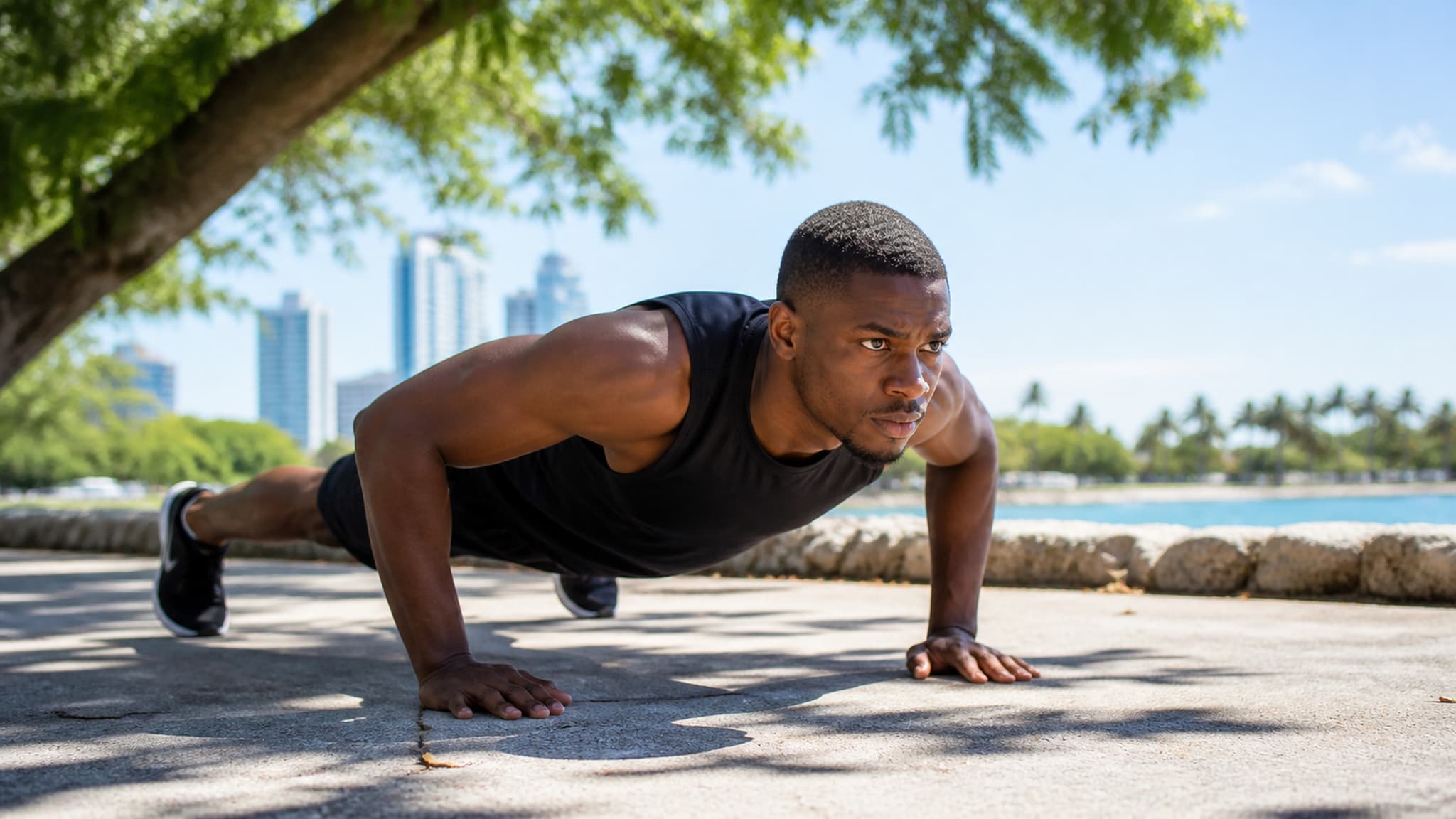
This is the one I feel most strongly about. You can adjust your nutrition. You can be flexible with your social life. But if you stop lifting weights for two or three months, you will lose muscle tissue, your metabolism will slow, and you will look and feel noticeably worse by September. Research from the Journal of Strength and Conditioning Research has shown that significant reductions in muscle strength and size can occur in as little as three weeks of detraining (9).
You do not need to follow the same programme you run during the rest of the year. If you are on holiday, a couple of bodyweight sessions or a hotel gym workout will maintain what you have built. If your schedule is busier than usual, drop from five sessions a week to three and prioritise compound movements. Squats, deadlifts, presses, rows, and pull ups. These give you the most return for your time. The goal during summer is not to peak. It is to preserve. Keep the muscle you have earned and everything else becomes far easier to manage.
Stay on Top of Hydration
This sounds basic but it is frequently overlooked. Dehydration impairs performance, increases perceived effort during training, and can mimic hunger signals that lead to unnecessary snacking (10). During the warmer months your fluid requirements increase, and if you are drinking alcohol on top of that, you are compounding the dehydration effect. I tell all of my clients to aim for a minimum of two to three litres of water daily during summer, more on training days or particularly hot days. Herbal teas, sparkling water, and water with fresh fruit or cucumber all count. The goal is consistent hydration throughout the day, not trying to catch up with a litre at 10pm.
Summer Should Be Enjoyed, Not Feared
The clients I work with who navigate summer best are never the ones who white knuckle their way through it. They are the ones who go into it with a plan, maintain a handful of key habits, and give themselves permission to enjoy the season without guilt. They come out the other side in roughly the same condition they entered it, and in some cases better, because they used the maintenance period to recover, reset, and build momentum for the next phase.
Staying lean through the warmer months is not about perfection. It is about consistency in a few critical areas while being genuinely flexible everywhere else. Keep protein high. Keep training. Plan around your social events. Stay hydrated. And stop treating every ice cream or beer as a failure. It is your pattern across the summer that determines where you end up in September, not what you ate on a single Tuesday afternoon.
If you want a personalised plan that accounts for your training, your nutrition, your lifestyle, and the reality of your summer calendar, that is exactly what I build for my clients. I work one-to-one online globally with men and women of all dietary backgrounds. Whether you eat meat, are vegetarian, vegan, or somewhere in between, I will create something that fits your life and actually works. Get in touch and let me help you come out of this summer in the best shape of your life.
Work with Me
Get a personalised coaching plan built around your goals, your schedule, and your life.
Enquire NowReferences
- Lichtman SW, Pisarska K, Berman ER, Pestone M, Dowling H, Offenbacher E, Weisel H, Heshka S, Matthews DE, Heymsfield SB. Discrepancy between self-reported and actual caloric intake and exercise in obese subjects. New England Journal of Medicine. 1992; 327(27): 1893-1898.
- Suter PM, Schutz Y, Jequier E. The effect of ethanol on fat storage in healthy subjects. New England Journal of Medicine. 1992; 326(15): 983-987.
- Nedeltcheva AV, Kilkus JM, Imperial J, Kasza K, Schoeller DA, Penev PD. Insufficient sleep undermines dietary efforts to reduce adiposity. Annals of Internal Medicine. 2010; 153(7): 435-441.
- Stiegler P, Cunliffe A. The role of diet and exercise for the maintenance of fat-free mass and resting metabolic rate during weight loss. Sports Medicine. 2006; 36(3): 239-262.
- Byrne NM, Sainsbury A, King NA, Hills AP, Wood RE. Intermittent energy restriction improves weight loss efficiency in obese men: the MATADOR study. International Journal of Obesity. 2018; 42(2): 129-138.
- Leidy HJ, Clifton PM, Astrup A, Wycherley TP, Westerterp-Plantenga MS, Luscombe-Marsh ND, Woods SC, Mattes RD. The role of protein in weight loss and maintenance. American Journal of Clinical Nutrition. 2015; 101(6): 1320S-1329S.
- Morton RW, Murphy KT, McKellar SR, Schoenfeld BJ, Henselmans M, Helms E, Aragon AA, Devries MC, Banfield L, Krieger JW, Phillips SM. A systematic review, meta-analysis and meta-regression of the effect of protein supplementation on resistance training-induced gains in muscle mass and strength in healthy adults. British Journal of Sports Medicine. 2018; 52(6): 376-384.
- Wing RR, Phelan S. Long-term weight loss maintenance. American Journal of Clinical Nutrition. 2005; 82(1): 222S-225S.
- McMaster DT, Gill N, Cronin J, McGuigan M. The development, retention and decay rates of strength and power in elite rugby union, rugby league and American football: a systematic review. Sports Medicine. 2013; 43(5): 367-384.
- Popkin BM, D’Anci KE, Rosenberg IH. Water, hydration and health. Nutrition Reviews. 2010; 68(8): 439-458.