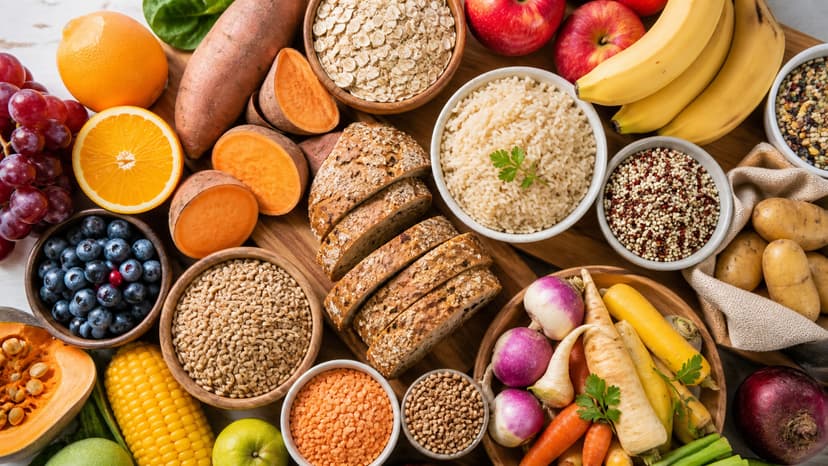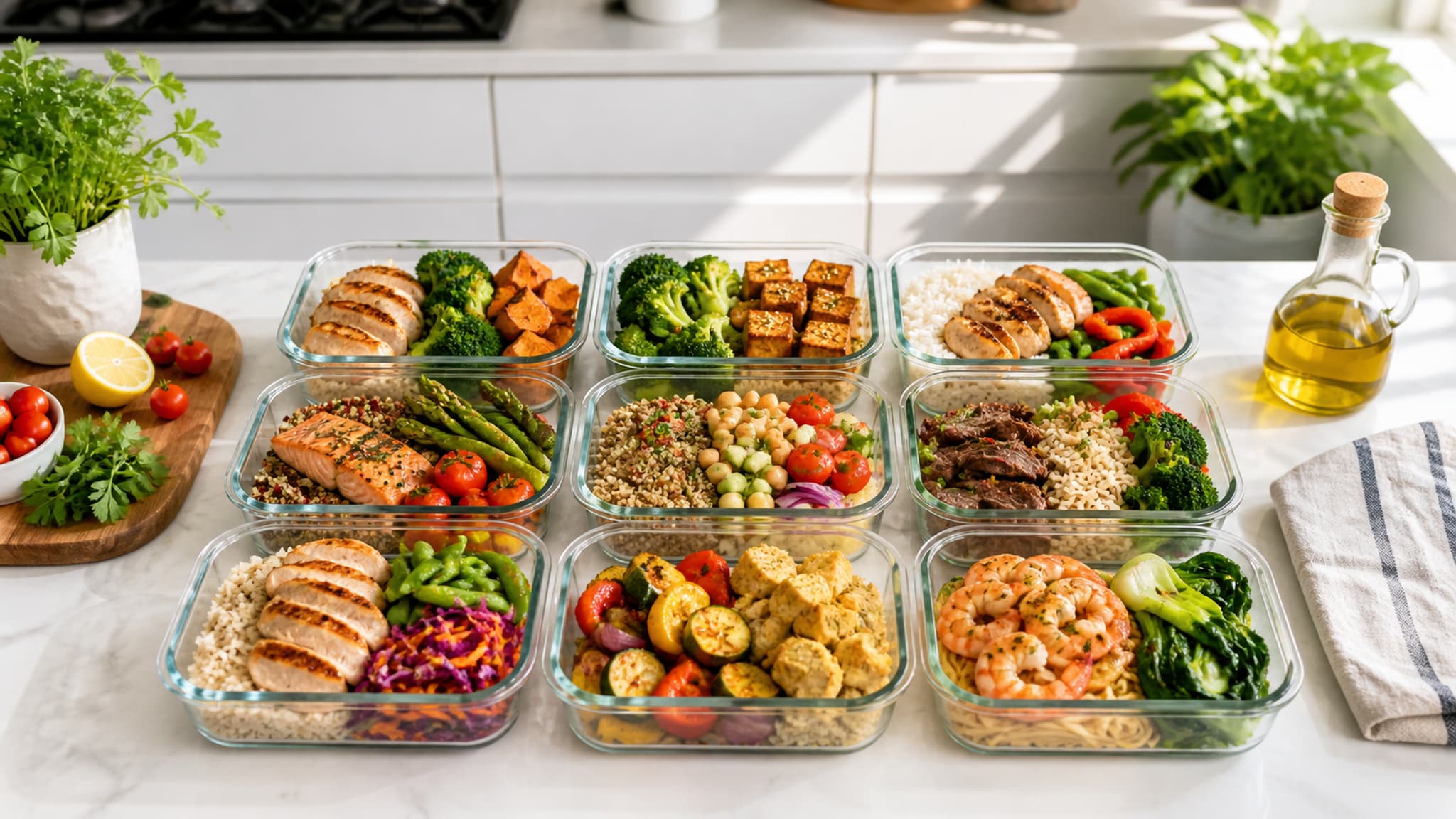
If I asked ten people what stops them from eating well consistently, at least seven of them would say the same thing. Time. They do not have time to cook. They do not have time to plan. They get home from work exhausted and the last thing they want to do is stand in a kitchen for an hour figuring out what to eat. So they reach for whatever is quick and convenient, and more often than not that means something that does not support their goals.
Meal prep is the obvious solution to this problem. Everyone knows it. Every fitness influencer on the internet has told you to do it. But knowing you should meal prep and actually doing it consistently are two completely different things. Most people try it once, spend an entire Sunday afternoon cooking six identical chicken and rice containers, eat two of them before the boredom sets in, and never do it again. That is not a meal prep system. That is a punishment.
The issue is not that meal prep does not work. It works brilliantly when it is done properly. The issue is that most people have been taught a version of meal prep that is rigid, repetitive, time consuming, and completely unsustainable for anyone with a real life. I have developed an approach to meal prep that my clients actually stick with. It is simple, it is flexible, and it takes a fraction of the time most people think it requires.

What Happens When You Leave Your Meals to Chance
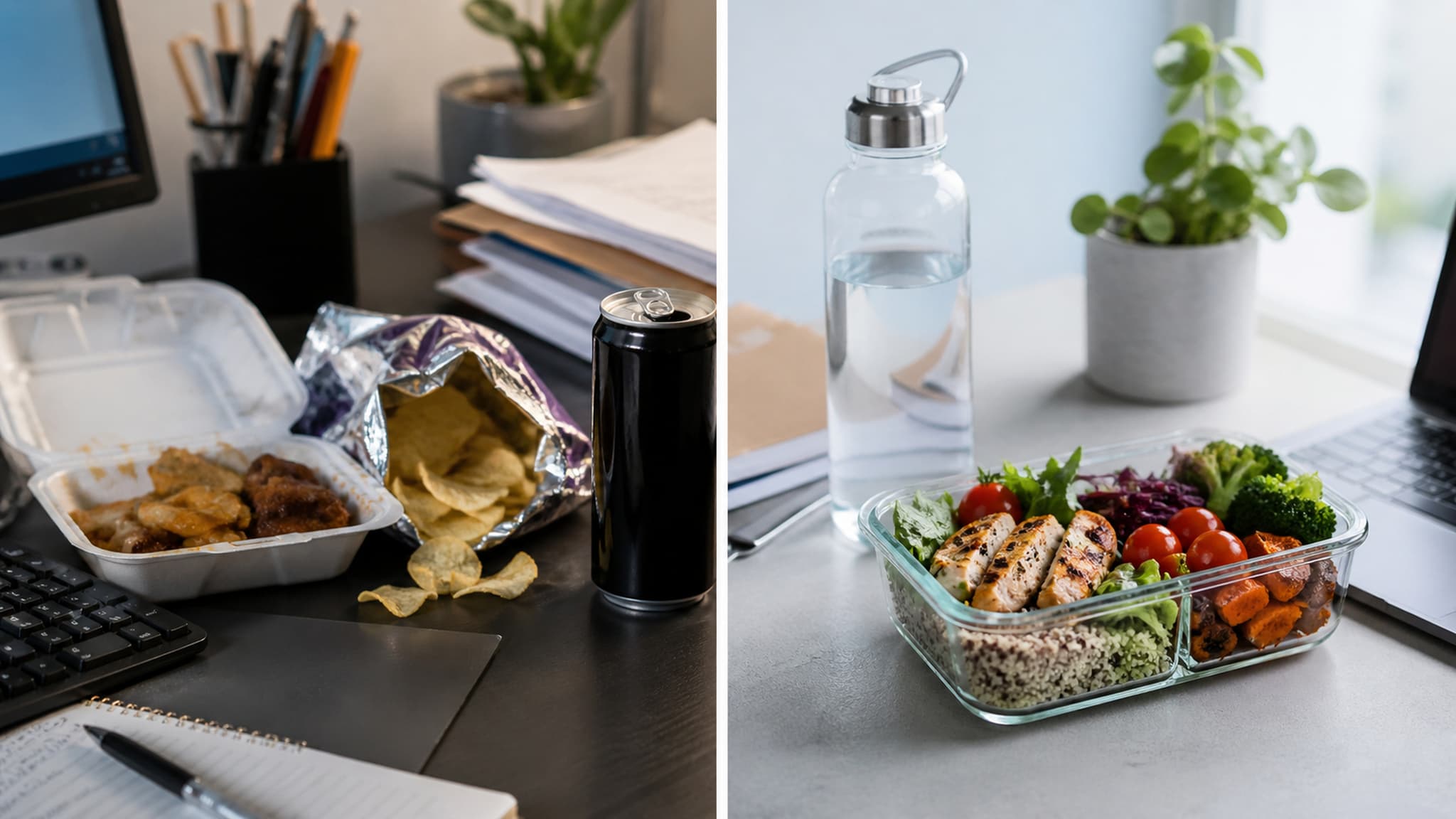
The research on this is clear and I see it play out with clients every single week. When people do not have meals prepared in advance, they make poorer food choices. A study published in the International Journal of Behavioral Nutrition and Physical Activity found that individuals who spent more time on home food preparation consumed significantly more fruits, vegetables, and nutrient dense foods compared to those who relied on convenience options (1). The inverse was also true. Less preparation meant higher intakes of ultra processed food, more takeaways, and greater overall calorie consumption.
This is not a willpower issue. It is an environment issue. When you are hungry and tired and there is nothing ready to eat, you default to the path of least resistance. That might be a supermarket meal deal, a delivery app, or a bowl of cereal at 9pm. None of these are inherently bad in isolation, but when they become the pattern rather than the exception, your nutrition falls apart. You end up in a calorie surplus without realising it, your protein intake drops, your micronutrient intake suffers, and your energy levels follow.
There is also a financial cost. Research from the Journal of the Academy of Nutrition and Dietetics found that eating out and purchasing convenience foods was associated with significantly higher daily food expenditure compared to home prepared meals (2). Clients I have worked with who switched from buying lunch every day to prepping their own meals have saved anywhere from 30 to 60 pounds a week without trying. Over a year that is a meaningful amount of money, and the food they are eating is better quality by a significant margin.
The psychological impact matters too. When you do not know what you are going to eat and you are constantly making reactive food decisions, it creates a low level of stress and decision fatigue that accumulates over the week. You feel like your nutrition is something that happens to you rather than something you control. That loss of control is one of the biggest reasons people fall off their plans. Meal prep eliminates it entirely. When your food is ready and waiting, the decision has already been made. You just eat it and move on with your day.
How I Teach My Clients to Meal Prep Without Hating It
The system I use with my clients is built around three core principles. Cook components, not complete meals. Keep it to 60 to 90 minutes once or twice a week. And build variety through assembly, not through cooking. This approach works for omnivores, vegetarians, and vegans alike. The ingredients change depending on dietary preference, but the framework stays the same.
Cook Components, Not Complete Meals
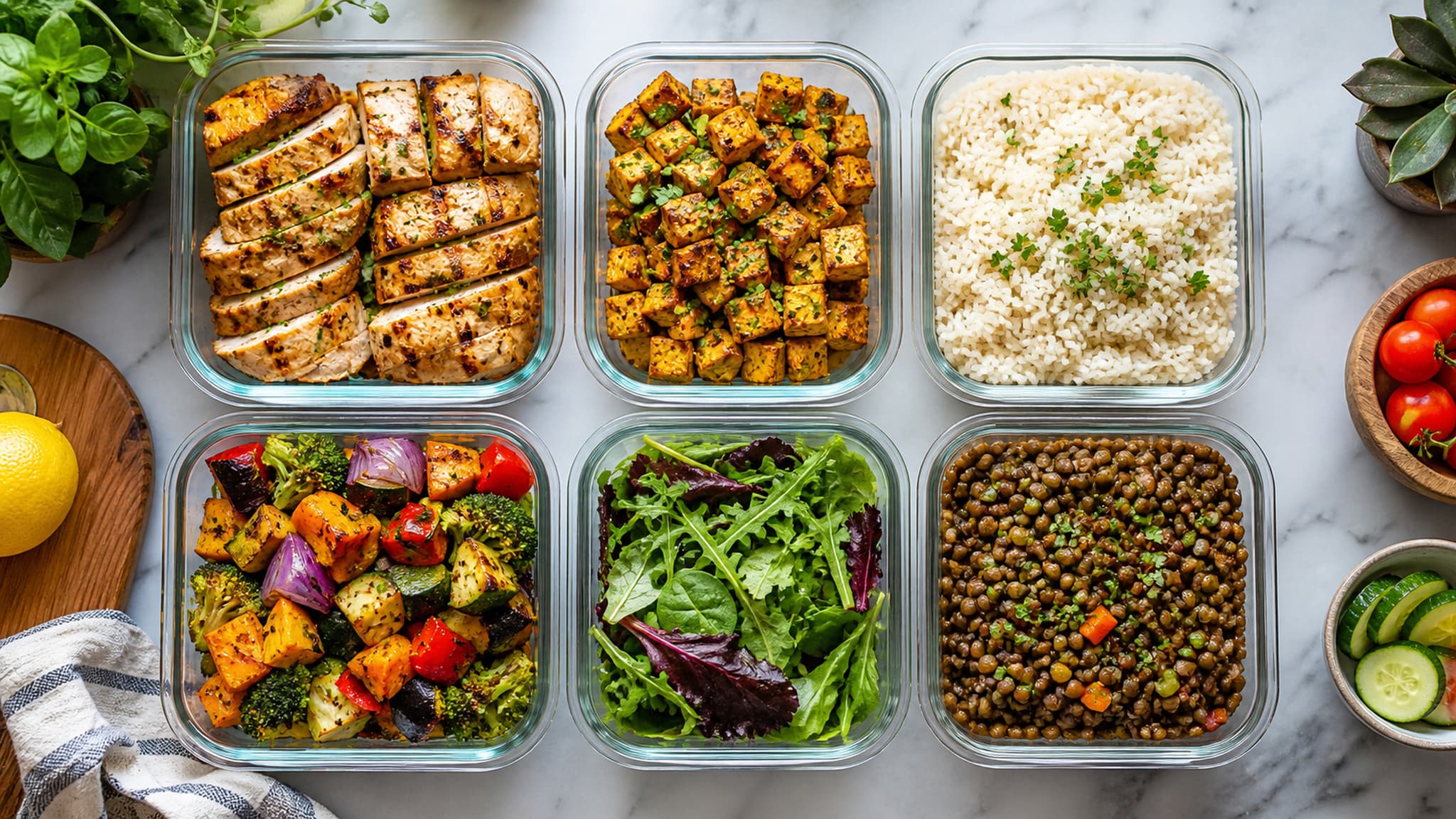
This is the single biggest shift that transforms meal prep from a chore into something manageable. Instead of cooking six finished meals that you have to eat in a specific order, you batch cook individual components that can be mixed and matched throughout the week. A large batch of grilled chicken breast or baked tofu. A pot of cooked rice, quinoa, or sweet potato. A tray of roasted vegetables. A container of washed and chopped salad ingredients. A pot of cooked lentils or chickpeas. A batch of hard boiled eggs.
When it comes to eating, you simply combine components to build a meal in under two minutes. Monday might be chicken with rice and roasted peppers. Tuesday might be the same chicken but with quinoa and a green salad. For plant based clients, Monday could be marinated tofu with sweet potato and roasted courgettes, Tuesday could be the same tofu with lentils and spinach. The cooking was done once. The meals feel different every day. This is the key to making meal prep sustainable and it is the reason my clients stick with it long after the initial novelty wears off.
The 60 to 90 Minute Weekly Prep Session
Most people massively overestimate how long meal prep takes because they are trying to cook complete recipes from scratch. When you are batch cooking components, the process is surprisingly quick. Here is what a typical prep session looks like for my clients. You put the oven on. While it heats, you season and arrange your protein on one tray and your vegetables on another. Both go in the oven. While they cook, you put a pot of rice or quinoa on the hob. While that simmers, you wash and chop your salad ingredients and portion them into containers. By the time the oven and the hob are done, you portion everything out and you are finished.
The entire process takes between 60 and 90 minutes depending on how much you are making. That is less time than most people spend scrolling their phone on a Sunday afternoon. And the return on that investment is enormous. You have just eliminated the need to cook or think about food for the next three to four days. Research published in the American Journal of Preventive Medicine found that spending as little as one hour per week on food preparation was associated with significantly better diet quality and lower rates of obesity (3). You do not need to spend your entire weekend in the kitchen. You need one focused session.
Build Variety Through Assembly
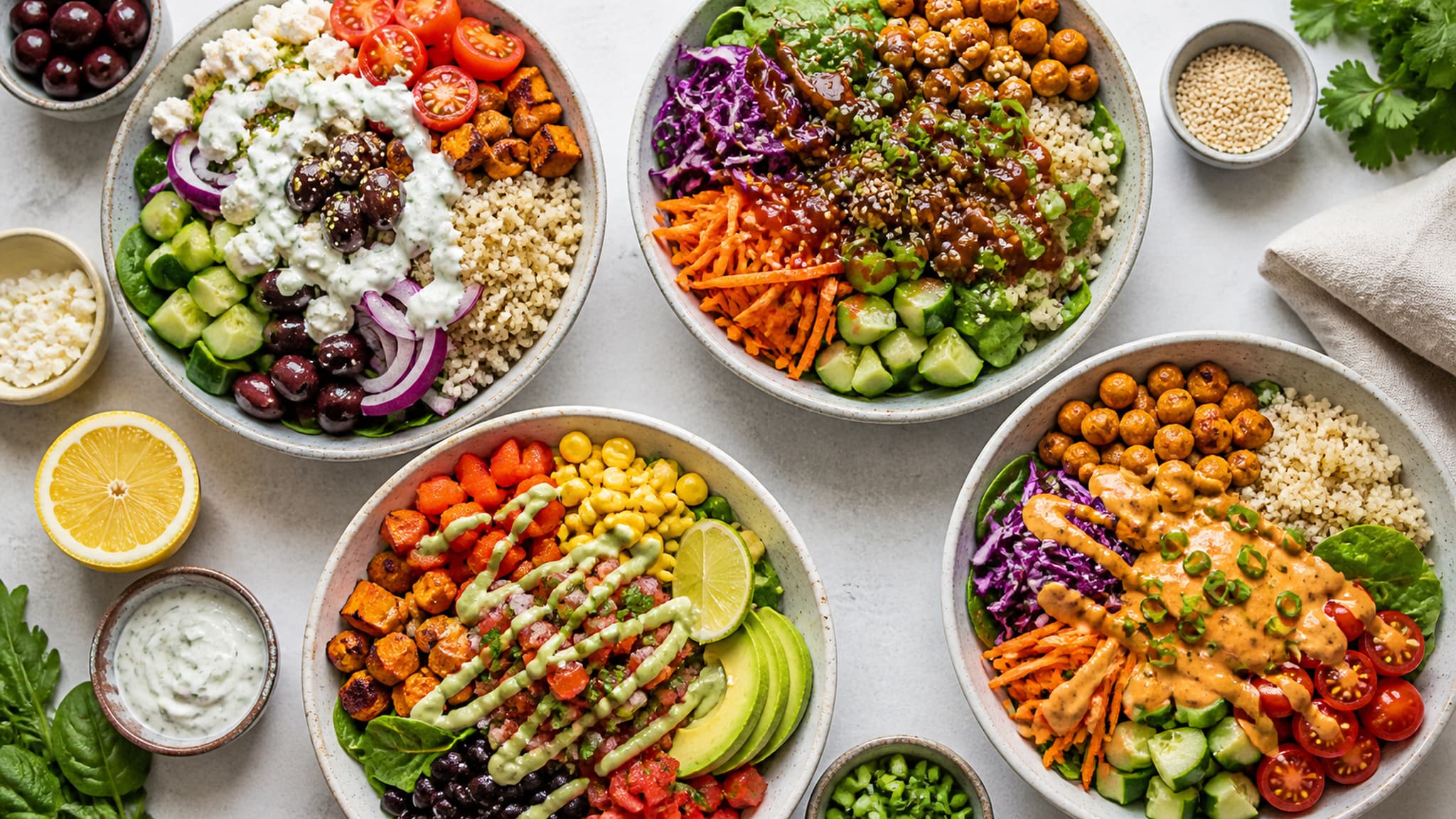
The number one reason people abandon meal prep is boredom. Eating the same thing five days in a row is not sustainable for most people, and it does not need to be. When you have batch cooked your components, you create variety through the way you assemble your meals, the sauces and seasonings you add, and the cold additions you include.
A plain grilled chicken breast becomes something completely different when you add sriracha and pickled red cabbage versus tzatziki and cucumber versus pesto and sun dried tomatoes. The same baked tofu transforms with soy and ginger versus chimichurri versus a tahini dressing. A base of rice, lentils, or quinoa can go in ten different directions depending on what you put on top of it. I encourage my clients to keep a rotation of three or four sauces and dressings in the fridge at all times. This one habit alone makes prepped food feel like a choice rather than a sentence.
Scale It to Your Life
Not everyone needs to prep five days of food at once. Some of my clients prep twice a week, doing a smaller session on Sunday and another on Wednesday. Some only prep lunches because their dinners are straightforward enough to cook fresh in the evening. Some prep breakfasts as well, making overnight oats with protein powder and fruit, or portioning out Greek yoghurt parfaits. For vegan clients this might be chia puddings made with soy milk and topped with nuts and berries, or smoothie bags pre portioned with frozen fruit, spinach, and a scoop of pea protein ready to blend in the morning.
The system adapts to you. The point is not to follow a rigid meal prep template from the internet. The point is to identify the meals and times of day where you are most likely to make poor food choices and solve that specific problem with a small amount of preparation. For some people that is lunch. For others it is the 4pm snack. For others it is dinner after a long day. Once you know where you are most vulnerable, you prep for that and leave the rest flexible.
Invest in the Right Equipment
This is a small thing that makes a surprisingly big difference. Having good quality, stackable, leak proof containers makes the entire process more efficient and more appealing. Nobody wants to eat out of a flimsy plastic box that stains after one use. Glass containers with clip lids are my recommendation. They are microwave safe, dishwasher safe, they do not retain smells, and they stack neatly in the fridge. A set of ten containers, a sharp knife, a large chopping board, and a couple of good baking trays are the only equipment you need to make this work. The initial investment pays for itself within a fortnight of not ordering takeaway.
Use Protein as Your Planning Anchor
When I build a meal prep plan for a client, protein is always the starting point. Everything else gets built around it. The reason is simple. Protein is the macronutrient most people under eat, and it is the one that has the biggest impact on body composition outcomes. Research from the American Journal of Clinical Nutrition has shown that higher protein diets are associated with greater satiety, better preservation of lean mass during fat loss, and improved body composition overall (4). If your prep guarantees you hit your protein target each day, you have already solved the most important nutritional variable.
For omnivore clients, this might mean batch cooking two or three kilograms of chicken breast, a large piece of salmon, or turkey mince. For vegetarian clients, it could be a large block of paneer cubed and seasoned, a batch of halloumi slices, several blocks of firm tofu marinated and baked, and a pot of lentil or chickpea curry. For vegan clients, seitan, tempeh, edamame, and soy based mince all batch cook brilliantly. The key is making sure that when you open the fridge at any point during the week, there is always a ready to eat protein source staring back at you.
Meal Prep Is a Skill, Not a Talent
Nobody is born good at this. Every client I have ever worked with has started meal prep thinking it would be harder and more time consuming than it actually turns out to be. The first week feels slightly clunky. By the third or fourth week it becomes automatic. Within a couple of months most of my clients tell me it has become the single most impactful habit change they have made, not just for their physique but for their energy, their finances, and their mental clarity around food.
The evidence supports what I see in practice. A systematic review in Nutrition Reviews concluded that home meal preparation was consistently associated with better diet quality and more favourable health outcomes across a wide range of populations (5). You do not need to be a chef. You do not need to enjoy cooking. You need a sharp knife, an oven, a few containers, and 60 to 90 minutes a week. The return on that investment is extraordinary.
If you want a personalised meal prep framework built around your goals, your dietary preferences, your schedule, and the foods you actually enjoy eating, that is exactly what I create for my clients. I work one-to-one online globally with men and women who eat meat, are vegetarian, vegan, or anywhere in between. No generic templates. No copy and paste plans. Just a system designed specifically for your life that you will actually stick with.
Get in touch and let me build something that works for you.
Work with Me
Get a personalised coaching plan built around your goals, your schedule, and your life.
Enquire NowReferences
- Monsivais P, Aggarwal A, Drewnowski A. Time spent on home food preparation and indicators of healthy eating. American Journal of Preventive Medicine. 2014; 47(6): 796-802.
- Todd JE, Mancino L, Lin BH. The impact of food away from home on adult diet quality. Economic Research Report, United States Department of Agriculture. 2010; 90: 1-30.
- Wolfson JA, Bleich SN. Is cooking at home associated with better diet quality or weight-loss intention? Public Health Nutrition. 2015; 18(8): 1397-1406.
- Leidy HJ, Clifton PM, Astrup A, Wycherley TP, Westerterp-Plantenga MS, Luscombe-Marsh ND, Woods SC, Mattes RD. The role of protein in weight loss and maintenance. American Journal of Clinical Nutrition. 2015; 101(6): 1320S-1329S.
- Mills S, White M, Brown H, Wrieden W, Kwasnicka D, Halligan J, Robalino S, Adams J. Health and social determinants and outcomes of home cooking: a systematic review of observational studies. Appetite. 2017; 111: 116-134.