The Most Neglected Performance Variable in Every Health Programme
Sleep as a performance tool for health is the variable that the fitness industry consistently undervalues, the general population consistently neglects, and the research consistently identifies as one of the most powerful determinants of every outcome a health programme is designed to produce. Body composition, muscle recovery, insulin sensitivity, appetite regulation, hormonal balance, cognitive function, emotional regulation, cardiovascular health, immune function, and the neuroplastic consolidation of every new habit and skill covered in this series: every single one of these is directly and substantially affected by sleep quality and duration.
Matthew Walker's synthesis of the sleep research, developed across his career at the University of California Berkeley and published in Why We Sleep, presents a picture that is difficult to reconcile with the cultural normalisation of sleep deprivation as a badge of productivity. No aspect of human health, performance, or longevity is unaffected by sleep. Not one. The person who consistently sleeps six hours per night is not a person who is performing at a slightly reduced level compared to the person sleeping eight hours. They are a person whose body is operating in a state of significant physiological impairment across every system that the health programme is trying to optimise. (1)
LeBron James sleeps ten hours per night and credits sleep as the most important recovery tool in his professional practice. Roger Federer routinely slept eleven to twelve hours during training blocks. Usain Bolt was known to sleep eight to ten hours and nap daily. These are not coincidences of temperament or privilege. They reflect the understanding, embedded in elite sport performance culture for decades, that training quality is limited by recovery quality, and that sleep is the primary recovery variable available to any athlete, professional or otherwise. (2)
“Sleep is the greatest legal performance-enhancing drug that most people are neglecting.”
— Matthew Walker
What Sleep Actually Does: The Four-Stage Architecture of a Full Night
The cultural narrative around sleep treats it as a passive state of unconsciousness during which nothing of significance occurs. The physiological reality is the opposite. Sleep is the most metabolically and neurologically active recovery process available to the body. What happens across a full night of adequate sleep is not the absence of activity. It is a precisely orchestrated sequence of biological processes whose combined effect on physical and cognitive performance is, according to the research, more significant than any other single recovery intervention.
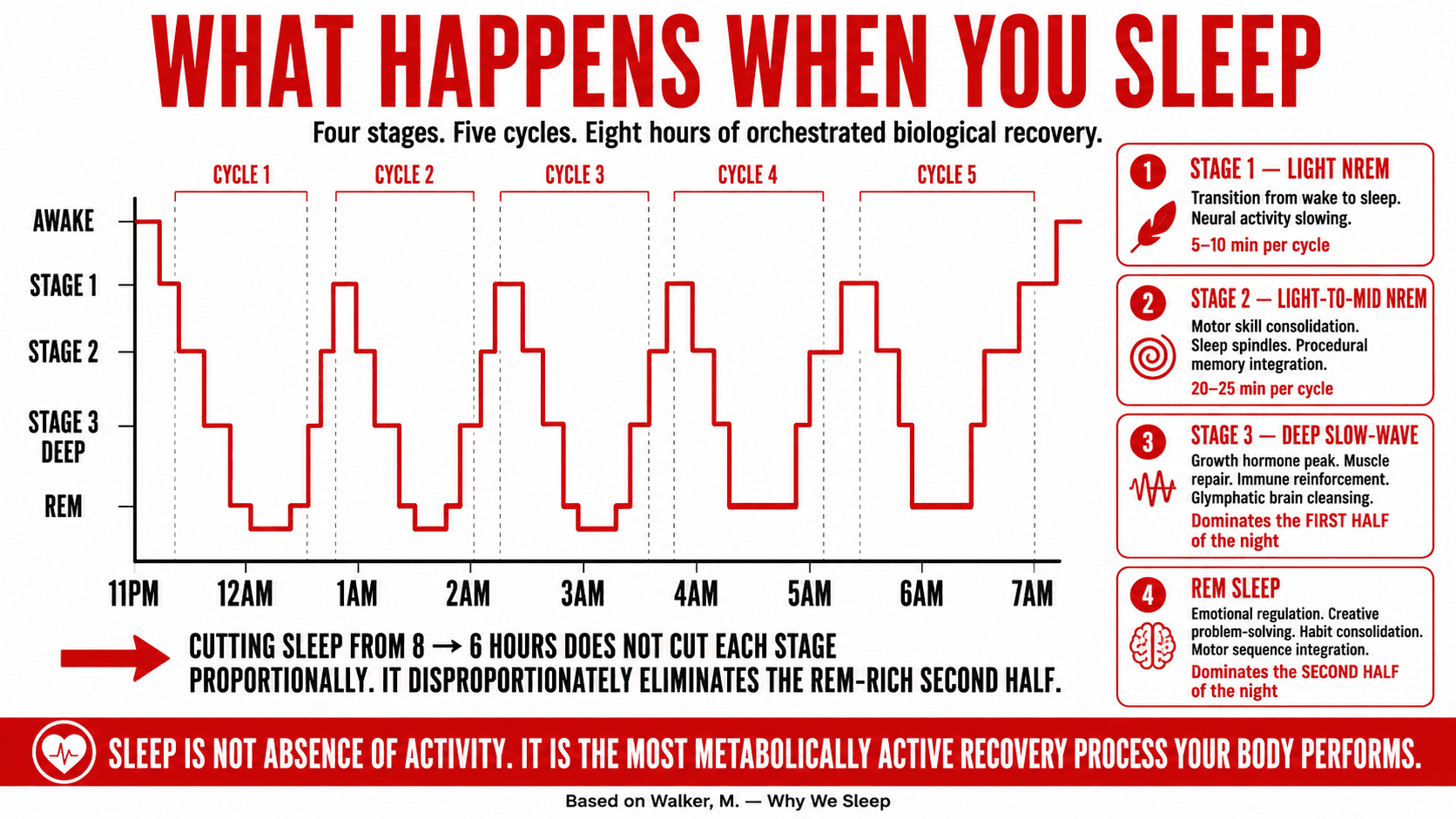
Sleep architecture across a full night is divided into cycles of approximately ninety minutes each, with each cycle containing a sequence of sleep stages ranging from light non-REM sleep through deep slow-wave sleep and back to REM sleep. A full night of seven to nine hours contains four to five complete cycles. The proportions of deep sleep and REM sleep within each cycle shift across the night: early cycles are dominated by deep slow-wave sleep, while the cycles in the second half of the night contain progressively more REM sleep. This distribution is not arbitrary. Each stage serves specific, non-redundant biological functions, and the truncation of either the early or the late portion of the night eliminates access to the specific functions performed there. (1)
The Sleep Stage Architecture — What Each Stage Does for Health, Recovery, and Performance
| Sleep Stage | Duration per Night | Primary Biological Functions | What Is Lost When Reduced |
|---|---|---|---|
| Stage 1 Light NREM — Lightest depth | 5–10 min per cycle | Transition from wakefulness to sleep. Neural activity slowing. Muscle tone reducing. Brain preparing the conditions for the deeper stages that follow. | Disruption here delays entry to the more restorative stages. Fragmented sleep reduces total restorative stage time even when total time in bed is adequate. |
| Stage 2 Light-to-mid NREM — Moderate depth | 20–25 min per cycle | Sleep spindles produced — bursts of neural activity critical for motor skill consolidation and memory integration. Heart rate and body temperature continue to fall. The most abundant stage by total time. | Reduced motor learning consolidation. Skills practised during training sessions consolidated less efficiently. Procedural memory for new movement patterns and habits impaired. |
| Stage 3 Deep Slow-Wave — Deepest restorative | 20–25 min early cycles; 5 min late cycles | Primary stage for physical restoration. Growth hormone release at its peak. Muscle protein synthesis, tissue repair, and fat metabolism. Immune system reinforcement. Metabolic waste clearance from the brain via the glymphatic system. | Dramatically reduced growth hormone output. Impaired muscle repair and protein synthesis from training. Elevated cortisol relative to testosterone. Reduced fat oxidation and impaired glucose metabolism. Immune suppression. |
| REM Sleep Rapid Eye Movement — Emotionally active | 10 min early cycles; 40–50 min late cycles | Emotional memory processing and regulation. Creative problem-solving and associative thinking. Neuroplastic consolidation of new learning and habits. Motor sequence integration. The stage associated with vivid dreaming. | Impaired emotional regulation, elevated anxiety, and reduced stress resilience. Poor consolidation of the habit patterns and skills being built in the programme. The stage most affected by alarm clocks set before natural awakening. |
Cutting sleep from eight to six hours does not reduce access to all stages proportionally. It disproportionately eliminates the REM-rich cycles of the second half of the night. This is why six hours of sleep produces significantly worse outcomes for emotional regulation, learning consolidation, and habit formation than the same person's raw arithmetic might suggest.
The Body Composition Catastrophe: What Sleep Deprivation Does to Fat Loss and Muscle
The most immediately relevant finding for anyone pursuing a health transformation is the impact of sleep deprivation on body composition, independent of any changes in caloric intake or training volume. The data is striking and consistently under-communicated in fitness contexts: inadequate sleep actively undermines both fat loss and muscle retention in ways that make the best-designed programme substantially less effective than it would be with adequate sleep.
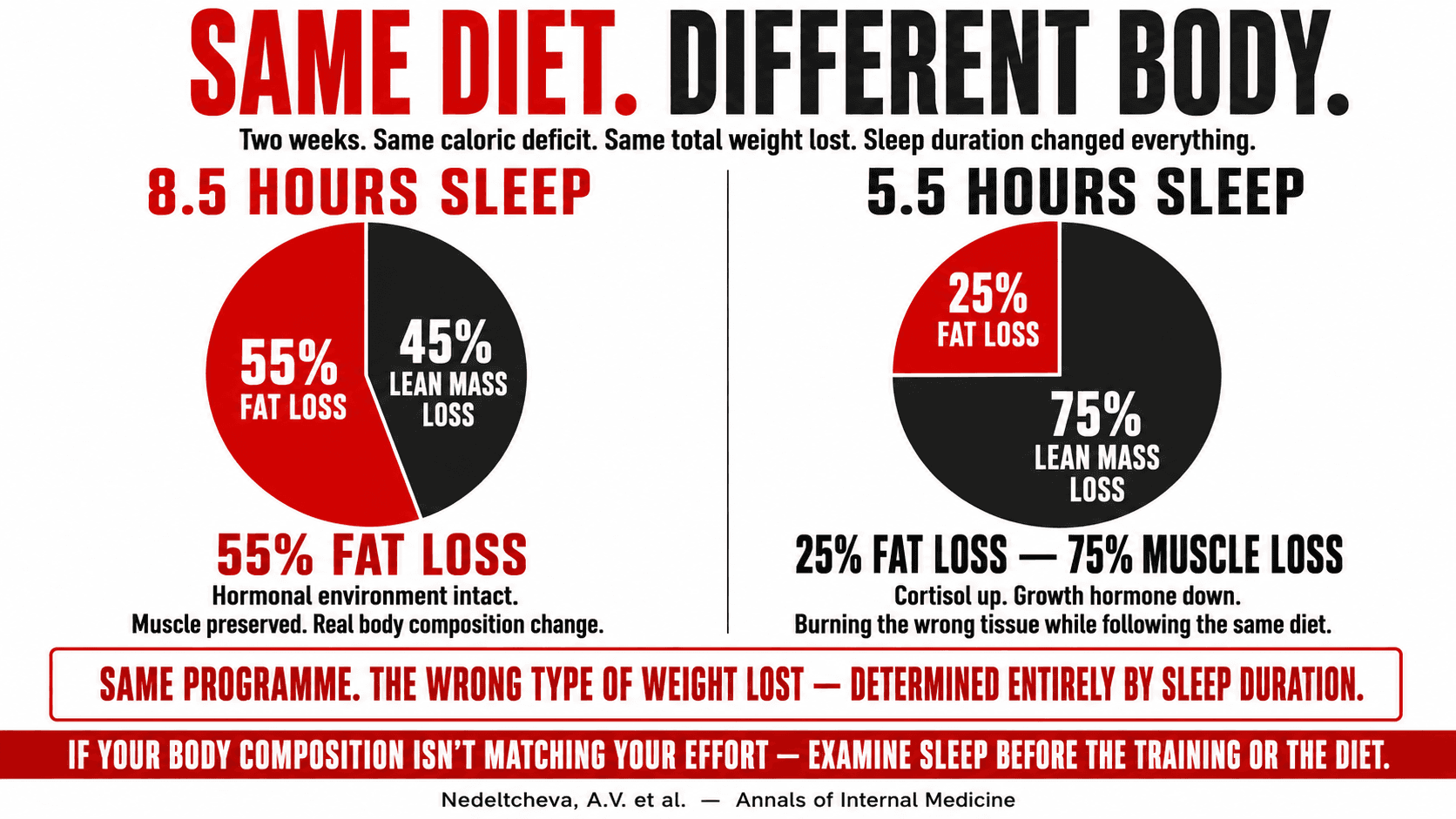
Nedeltcheva and colleagues conducted a landmark study in which subjects followed a caloric deficit diet for fourteen days under two sleep conditions: 8.5 hours per night or 5.5 hours per night. Both groups lost the same total amount of weight. The critical finding was in the composition of that weight loss. The 8.5-hour sleep group lost 55% of their weight from fat and 45% from lean mass. The 5.5-hour sleep group lost only 25% from fat and 75% from lean mass. The same caloric deficit, the same weight lost, but a dramatically different body composition outcome determined entirely by sleep duration. The person sleeping less was losing primarily muscle, not fat, while following exactly the same dietary protocol. (3)
The mechanism operates through multiple hormonal pathways simultaneously. Sleep deprivation reduces growth hormone output, which impairs muscle protein synthesis. It elevates cortisol levels, which promotes muscle protein breakdown and fat storage particularly in the abdominal region. It suppresses leptin, the satiety hormone, and elevates ghrelin, the hunger hormone, producing a hormonal environment that increases appetite by the equivalent of up to 24% of daily caloric intake in controlled studies. And it reduces insulin sensitivity, creating a metabolic environment in which carbohydrates are more likely to be stored as fat and less likely to be used as energy. Every one of these effects works directly against the body composition goals of any health programme. (1)
Key Insight: If your body composition results are not matching your training and nutritional effort, sleep duration and quality should be the first variable examined before adjusting the training programme or the nutritional protocol. A programme executed on six hours of sleep is categorically less effective than the same programme executed on eight. The deficit is not marginal. It is the difference, in Nedeltcheva's data, between losing primarily fat and losing primarily muscle.
The Sleep Debt Accumulation: What One Night, One Week, and Chronic Deprivation Each Produce
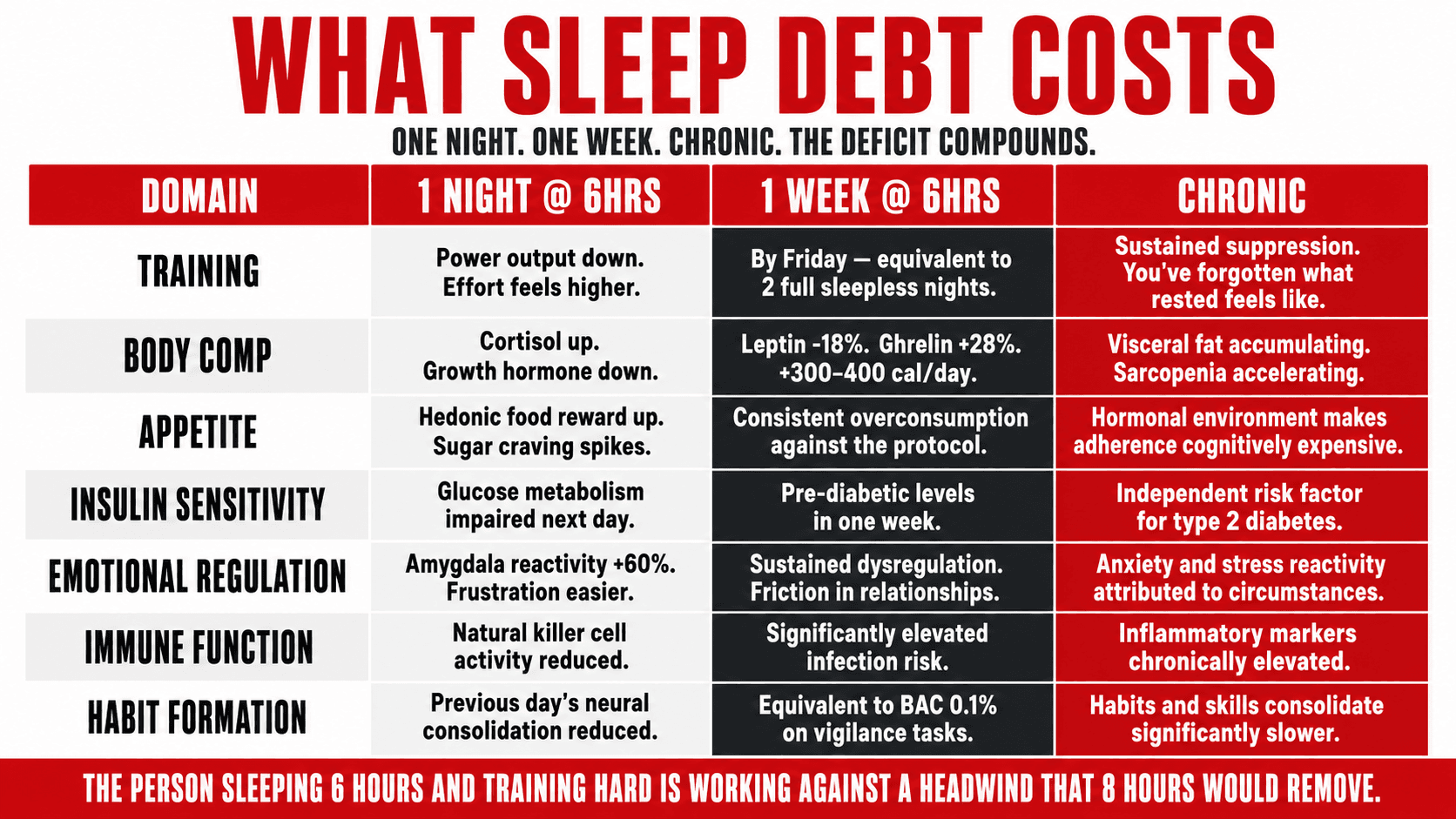
The dose-response relationship between sleep deprivation and performance impairment is nonlinear and cumulative. Single nights of reduced sleep produce immediate measurable effects. A week of mild sleep restriction produces impairments comparable to two full nights without sleep. Chronic mild sleep restriction, the pattern most common in working adults, produces a sustained impairment in every performance domain that the individual typically underestimates dramatically because the gradual nature of the decline normalises the impaired state.
The Sleep Debt Accumulation — What Is Lost Across One Night, One Week, and Chronic Deprivation
| Performance Domain | One Night of 6hrs vs 8hrs | One Week of 6hrs per Night | Chronic Mild Deprivation (Months to Years) |
|---|---|---|---|
| Training performance | Reduced muscular endurance and power output. Cardiovascular performance reduced. Perceived effort at any given intensity significantly higher. | Progressive performance decline across the week. By Friday, objective training performance is measurably equivalent to two full nights without sleep. | Sustained performance suppression masked by adaptation to the impaired state. The person believes they are performing normally because they have forgotten what rested performance feels like. |
| Body composition | Elevated cortisol, reduced growth hormone. Post-training muscle protein synthesis reduced even when nutritional protein intake is adequate. | Leptin reduced 18%, ghrelin elevated 28% in research conditions. Appetite and caloric intake elevated by up to 300–400 calories per day in some studies. | Progressive accumulation of visceral fat driven by cortisol dysregulation. Sarcopenic muscle loss accelerated. Body composition results from training significantly reduced versus adequately rested condition. |
| Appetite and food choices | Hedonic food reward system upregulated. Preference for high-calorie, high-sugar foods measurably increased even when the person is not hungry. | Consistent overconsuming above caloric needs. Nutritional protocol compliance significantly reduced by hormonal appetite dysregulation. | Chronically elevated ghrelin and suppressed leptin create a sustained hormonal environment that makes nutritional adherence far more cognitively demanding than it would be with adequate sleep. |
| Insulin sensitivity | Glucose metabolism impaired within a single night of shortened sleep. Postprandial glucose response elevated the following day. | After one week of 6-hour sleep, insulin sensitivity reduced to levels seen in pre-diabetic individuals in some studies. | Chronic sleep restriction is an independent risk factor for type 2 diabetes, operating through sustained insulin resistance regardless of dietary pattern. |
| Emotional regulation | Amygdala reactivity increased by up to 60% in Walker's research. Negative emotional stimuli amplified. Frustration threshold reduced. | Sustained emotional dysregulation. Interpersonal friction increased. Tolerance for discomfort reduced, making training adherence harder. | Elevated anxiety, depressive symptoms, and stress reactivity that are often attributed to life circumstances rather than to the sleep deprivation that is amplifying the response to those circumstances. |
| Immune function | Natural killer cell activity reduced after a single night of shorter sleep. The first line of defence against pathogens and cancer cell surveillance impaired. | Significantly elevated susceptibility to infection. Training load may need to be reduced due to illness that would not have occurred with adequate sleep. | Chronic sleep deprivation associated with elevated inflammatory markers and long-term immune dysfunction independent of other health variables. |
| Cognitive function and habit formation | Prefrontal cortex efficiency reduced. Decision quality impaired. New habit pattern consolidation from the previous day's practice reduced. | Sustained cognitive impairment comparable to blood alcohol level of 0.1% in psychomotor vigilance tasks, while the individual subjectively underestimates their impairment. | Habit patterns being built through the programme consolidate significantly more slowly. Skill acquisition and behaviour change require more repetitions to reach automaticity than in adequately rested condition. |
The person who is consistently sleeping six hours and training hard is not simply a well-rested person minus two hours. They are operating in a state of chronic physiological impairment across every system the programme is designed to improve. The training is working against a headwind that adequate sleep would remove.
The Growth Hormone Window: Why Sleep Is the Most Powerful Anabolic Tool Available
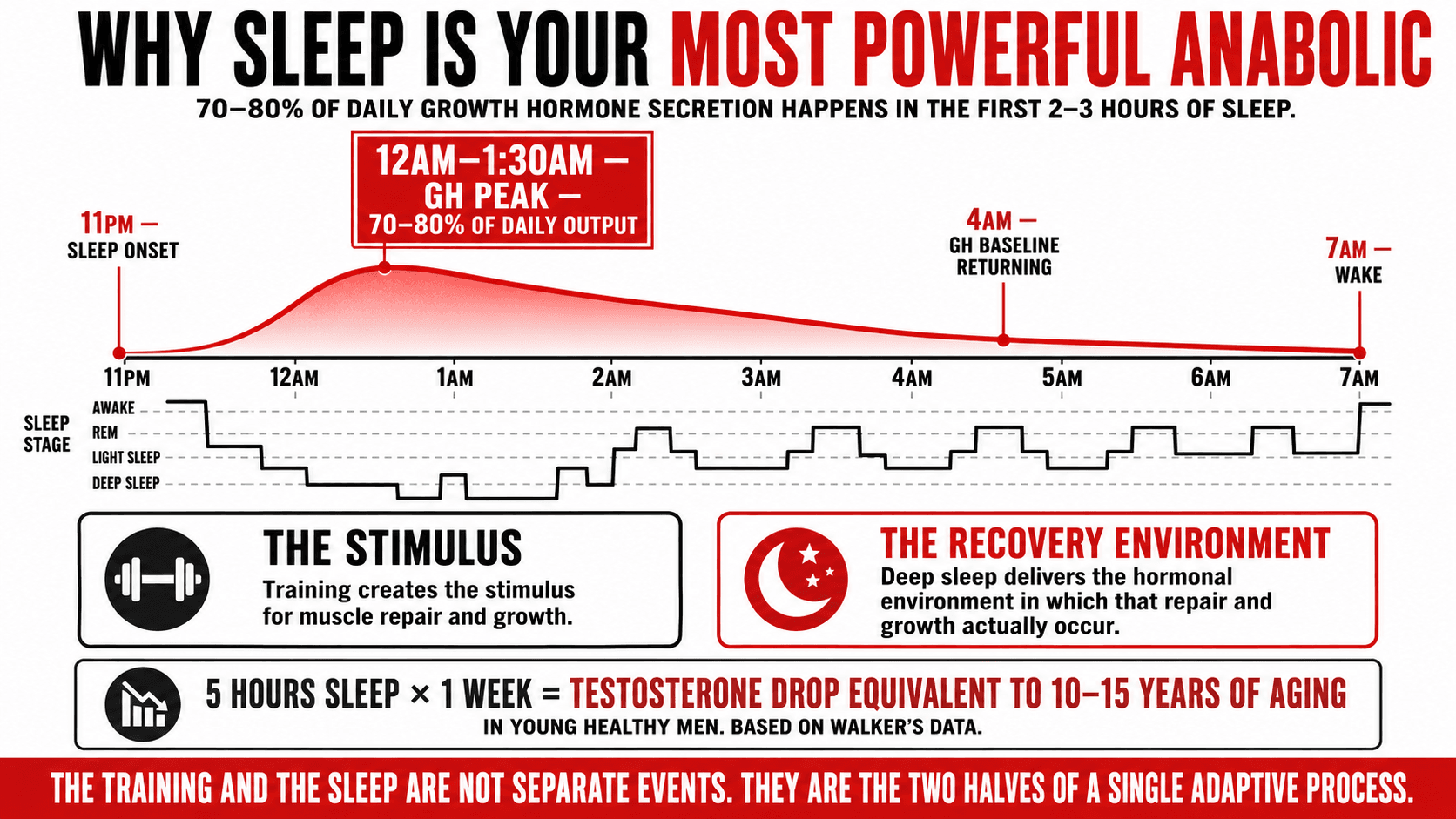
Growth hormone, the anabolic hormone most directly responsible for muscle protein synthesis, tissue repair, and fat oxidation, is released in a highly pulsatile pattern that is tightly linked to the sleep cycle. Approximately 70–80% of daily growth hormone secretion occurs during the first two to three hours of sleep, coinciding with the deep slow-wave sleep that dominates the early cycles of the night. This is not a modest contribution to the daily hormonal profile. It is the primary secretory event for a hormone that drives the physical recovery processes that training is designed to stimulate. (4)
The practical implication is direct and frequently underappreciated. The training session creates the stimulus for muscle repair and growth. The deep sleep of the early night hours delivers the hormonal environment in which that repair and growth actually occurs. Without adequate deep sleep, the training stimulus exists but the hormonal environment for responding to it is substantially compromised. The athlete who trains hard and sleeps six hours is performing the stimulus without adequately providing the recovery environment. The athlete who trains less hard and sleeps eight hours may produce better physical adaptation outcomes because the recovery environment is intact.
Testosterone follows a similar pattern, with levels peaking during sleep and declining across the waking day. A single week of five hours of sleep per night reduces testosterone levels in young healthy men by the equivalent of ten to fifteen years of ageing in Walker's data. This finding has implications far beyond athletic performance: testosterone is a primary driver of lean mass maintenance, fat metabolism, cognitive function, mood stability, and cardiovascular health in both men and women. Sleep deprivation is not simply a recovery problem. It is an endocrine problem, and its effects on the hormonal environment that determines body composition outcomes are among the most consequential findings in the sleep research for anyone engaged in a health transformation. (1)
Key Insight: The training session and the sleep that follows it are not separate events. They are the two halves of a single adaptive process. The training creates the stimulus. The sleep creates the recovery environment in which the adaptation to that stimulus occurs. Prioritising training while neglecting sleep is prioritising the stimulus while compromising the adaptation. It is the equivalent of planting a seed and then withholding the water. The seed is not the problem.
The Sleep Optimisation Protocol: A Practical Architecture for the Most Important Recovery Tool
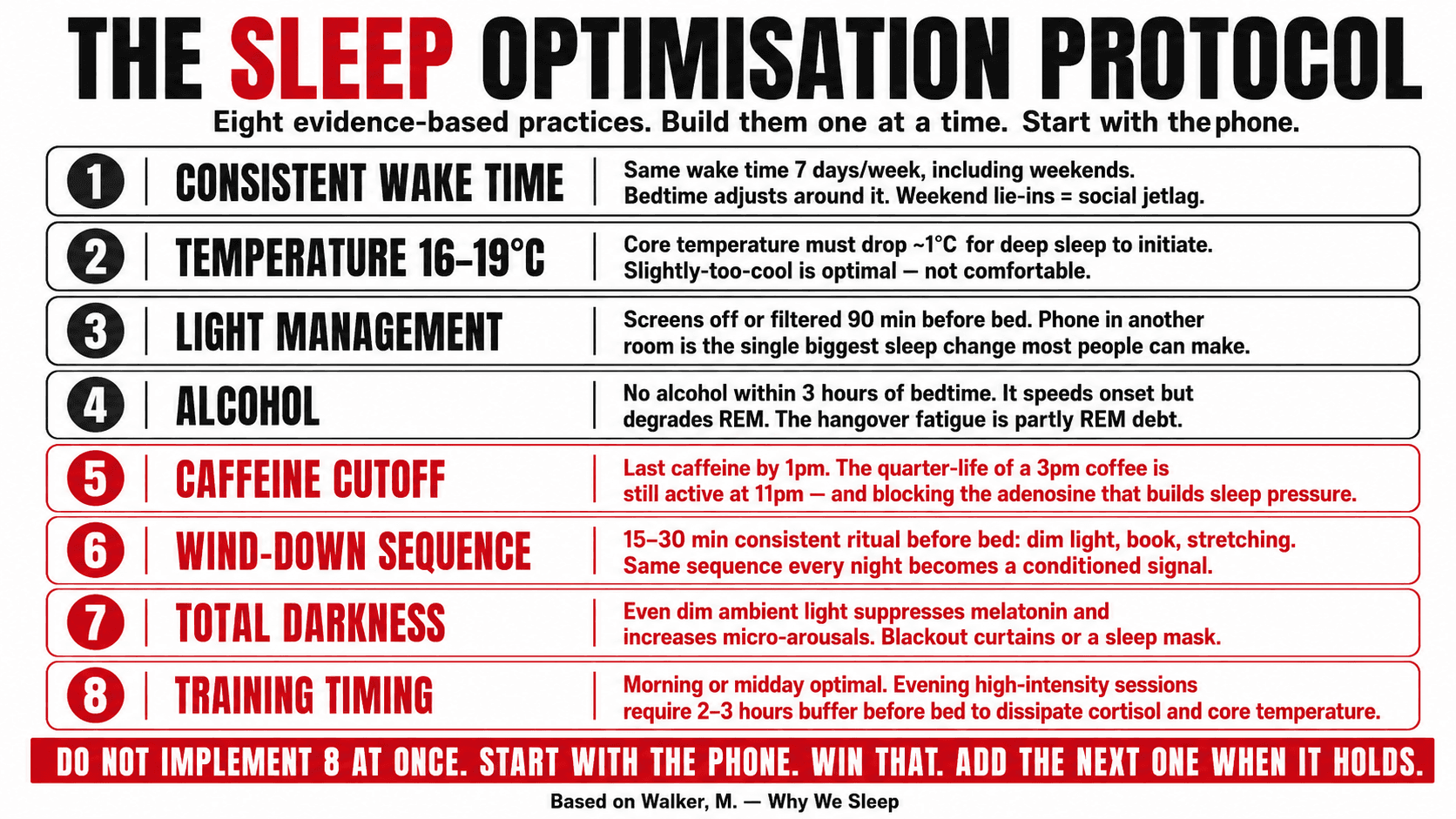
The research on sleep hygiene, the set of behavioural and environmental practices that improve sleep quality and duration, has a level of evidence supporting it that is comparable to the evidence supporting most medical interventions. The practices are not complicated or expensive. They require the same architectural intentionality applied to training and nutrition: deliberate design of the environment and the pre-sleep sequence to produce the conditions under which the brain and body can move efficiently through the full sleep stage architecture.
The Sleep Optimisation Protocol — Eight Evidence-Based Practices and Their Specific Mechanisms
| Protocol Element | Why It Works (The Mechanism) | How to Apply It | Timing and Practical Notes |
|---|---|---|---|
| Consistent sleep and wake times | The circadian rhythm is a biological clock that governs the timing of sleep stage initiation. Consistent timing strengthens the clock's signal and improves both sleep onset and sleep stage quality. | Set a fixed wake time and maintain it seven days a week, including weekends. The wake time is the anchor. Bedtime adjusts around it based on the sleep need. | Weekend lie-ins shift the circadian clock, producing social jetlag whose effects on sleep quality and metabolic health extend across the following week. The cost of the lie-in is higher than it appears. |
| Temperature management | Core body temperature must fall by approximately one degree Celsius for the brain to initiate deep sleep. A cooler bedroom facilitates this drop, while a warm one delays it. | Bedroom temperature between 16 and 19 degrees Celsius. A warm bath or shower one to two hours before bed paradoxically helps by producing a rapid post-bath temperature drop that signals the brain to initiate sleep. | The most commonly overlooked sleep variable. Room temperature has a larger effect on sleep quality than most people expect. A room that feels slightly cool is optimal, not a room that feels comfortable. |
| Light management | Blue-wavelength light from screens suppresses melatonin production by up to 50% and delays its onset by up to three hours. Melatonin is the biological signal for sleep initiation, not sleep itself. | Screen off or blue light filtered at least ninety minutes before bedtime. Bright overhead lighting reduced to dim warm-toned alternatives in the hour before bed. | The phone is the primary problem. Scrolling in bed combines blue light exposure with social stimulation, both of which elevate cortisol and delay melatonin onset. The phone in another room is the single most impactful sleep change most people can make. |
| Alcohol management | Alcohol is a sedative that produces sleep onset but dramatically reduces REM sleep quality and increases sleep fragmentation. People sleep less restoratively after alcohol, not more, despite falling asleep faster. | No alcohol within three hours of bedtime. Even modest amounts measurably reduce REM sleep quality as measured by wearable devices in research conditions. | The cultural belief that alcohol improves sleep is the opposite of the physiological reality. It speeds falling asleep while degrading the quality of sleep that follows. The hangover fatigue is partly REM sleep debt. |
| Caffeine cutoff | Caffeine blocks adenosine receptors, the mechanism through which sleep pressure builds across the waking day. Its half-life is five to six hours; its quarter-life is ten to twelve hours. Afternoon caffeine still affects midnight sleep. | Last caffeine intake by 1pm for people with average caffeine metabolism. Earlier for those with slow metabolism, later only for those with documented fast metabolism. | The quarter-life argument is important: a coffee at 3pm still has 25% of its adenosine-blocking effect active at 11pm. The tiredness felt after a poor night is partly adenosine that caffeine has blocked from clearing. The cycle is self-reinforcing. |
| Wind-down sequence | The brain requires a transition period between the stimulation of the waking day and the conditions for sleep initiation. Attempting to go directly from activity to sleep asks the nervous system to decelerate too quickly. | A consistent fifteen to thirty minute wind-down sequence: dim light, non-stimulating reading or stretching, no screens, same sequence every night. The sequence becomes a conditioned signal that sleep follows. | The consistency of the sequence is as important as its content. The brain learns to associate the beginning of the sequence with the approach of sleep and begins the physiological preparation for it. |
| Sleep environment darkness | Even dim light entering the sleeping environment through closed eyelids suppresses melatonin during the night and increases the frequency of micro-arousals that fragment sleep without full awakening. | Blackout curtains or a sleep mask. Cover or remove any light-emitting devices in the bedroom. Even the standby light of a television measurably affects sleep quality in sensitive individuals. | The hotel room sleep problem is partly this: unfamiliar sounds but also the ambient light from fire exit signs, charging LEDs, and street light through thin curtains. Travelling with a sleep mask solves a significant portion of this. |
| Training timing | Vigorous exercise elevates core body temperature and cortisol for several hours post-session. Evening high-intensity training can delay sleep onset in individuals who are temperature or cortisol-sensitive. | Morning or midday training is optimal for sleep quality. If evening training is unavoidable, allow two to three hours between session end and bedtime, and prioritise cool-down and recovery practices. | This is individual: some people are unaffected by evening training; others are significantly affected. Wearable sleep data is the most accurate way to determine personal sensitivity. The recommendation is to test and to measure. |
The protocol is not a checklist to implement simultaneously from tomorrow. It is an architecture to build one element at a time, beginning with the element whose impact on your specific sleep pattern is likely to be largest. For most people that is phone management and consistent wake time. Start there.
The Nap: A Legitimate Performance Tool, Not a Failure of Night-Time Sleep
Strategic napping is one of the most extensively researched and most underutilised performance tools available. NASA research on military pilots found that a 40-minute nap improved performance by 34% and alertness by 100%. The 10–20 minute power nap, taken between 1pm and 3pm to coincide with the natural post-lunch circadian dip, restores alertness, improves motor performance, and enhances the emotional regulation capacity that the second half of the working day requires. It does not replace night-time sleep but supplements it in conditions where the night was shorter than optimal. (5)
The practical guidance is specific. A nap shorter than twenty minutes avoids entering deep sleep and eliminates the sleep inertia, the grogginess of waking from deep sleep, that longer naps can produce. A nap longer than ninety minutes completes a full sleep cycle and can be restorative in the manner of shortened night-time sleep, but it reduces the sleep pressure required for efficient night-time sleep onset and is therefore better suited to a recovery day than a standard working day. Consuming caffeine immediately before a twenty-minute nap, the coffee nap, produces optimal results for alertness recovery because the caffeine takes approximately twenty minutes to reach peak blood concentration, arriving precisely as the nap ends.
Key Insight: If you are consistently sleeping less than seven hours, adding a fifteen to twenty minute nap in the early afternoon is a more effective intervention for performance and recovery than adding an extra coffee. The coffee temporarily addresses the alertness deficit while deepening the sleep debt. The nap temporarily addresses both. Use a nap as the first response to a short night rather than adding caffeine after the early morning dose.
Sleep Is Not a Lifestyle Preference. It Is a Performance Requirement.
The cultural narrative around sleep, particularly in professional and high-performance contexts, frames reduced sleep as either a necessary compromise or a demonstration of commitment. I will sleep when I am dead. Four hours is enough when you love what you do. These are not admirable positions. They are descriptions of chronic physiological impairment, dressed in the language of productivity, that produce worse outcomes in every domain they are intended to optimise.
Arianna Huffington's very public collapse from exhaustion in 2007 and her subsequent advocacy for sleep as a performance non-negotiable represent one of the most high-profile conversions in this area. Her book The Sleep Revolution, and the corporate Thrive culture built around its principles, brought the sleep performance argument into executive and professional contexts that had previously treated sleep deprivation as a competitive advantage. The research she cited, and the research that has continued to accumulate since, is unambiguous: there is no domain of professional or physical performance that is improved by sleeping less. Not one. (6)
In every health programme I build, sleep is addressed in the first two sessions, because I know from fifteen years of coaching practice that the client who is sleeping six hours and training hard is working against a headwind whose removal would improve their results faster and more dramatically than any adjustment to the training programme or the nutritional strategy. Sleep is not a reward for having earned the rest. It is the non-negotiable foundation on which every other health investment compounds.
I work one-to-one with clients online globally. The sleep audit is part of every programme from the beginning.
Work with Me
Get a personalised coaching plan built around your goals, your schedule, and your life.
Enquire NowReferences
- Walker M. Why We Sleep: The New Science of Sleep and Dreams. London: Penguin; 2017.
- Mah CD, Mah KE, Kezirian EJ, Dement WC. The effects of sleep extension on the athletic performance of collegiate basketball players. Sleep. 2011; 34(7): 943–950.
- Nedeltcheva AV, Kilkus JM, Imperial J, Schoeller DA, Penev PD. Insufficient sleep undermines dietary efforts to reduce adiposity. Annals of Internal Medicine. 2010; 153(7): 435–441.
- Van Cauter E, Leproult R, Plat L. Age-related changes in slow wave sleep and REM sleep and relationship with growth hormone and cortisol levels in healthy men. JAMA. 2000; 284(7): 861–868.
- Rosekind MR, Smith RM, Miller DL, et al. Alertness management: strategic naps in operational settings. Journal of Sleep Research. 1995; 4(S2): 62–66.
- Huffington A. The Sleep Revolution: Transforming Your Life, One Night at a Time. London: WH Allen; 2016.
- Spiegel K, Tasali E, Penev P, Van Cauter E. Brief communication: sleep curtailment in healthy young men is associated with decreased leptin levels, elevated ghrelin levels, and increased hunger and appetite. Annals of Internal Medicine. 2004; 141(11): 846–850.