
Most people dramatically overcomplicate nutrition. They obsess over meal timing, worry about whether fruit is too high in sugar, debate whether white rice is as good as brown, and spend hours reading about the latest superfood that is supposedly going to change their health. Meanwhile, they are not eating enough protein. They have no idea how many calories they consume on a daily basis. And they eat fewer than two portions of vegetables a day. This is the reality I see when new clients come to me. They are drowning in detail while ignoring the nutrition fundamentals that would actually transform their body and their health.
The fitness and nutrition industry is largely responsible for this. Complexity sells. Simple does not generate clicks, sell supplements, or fill up a social media feed. But simple is what works. Three fundamentals account for the overwhelming majority of results. Get these three things right and the minor details take care of themselves. Get these three things wrong and no amount of supplement stacking, carb cycling, or superfood smoothies will save you.

What Happens When You Focus on the Wrong Things
I had a client come to me who could tell me the exact antioxidant profile of acai berries. He knew which adaptogens supposedly supported cortisol management. He had a cupboard full of greens powders, collagen peptides, and fat burners. He was spending well over a hundred pounds a month on supplements. And he was thirty kilograms overweight. His protein intake was roughly 60 grams a day. He was eating in a calorie surplus most weeks without realising it. He consumed barely one portion of actual vegetables daily despite the greens powder. The supplements were a sticking plaster over a foundation that did not exist.
This is not an unusual story. It is the norm. The industry has conditioned people to believe that the secret to results is hidden in the details, that there is some advanced hack or obscure nutrient that separates those who succeed from those who fail. There is not. Research consistently shows that the fundamentals of nutrition, specifically energy balance, protein intake, and food quality, explain the vast majority of variance in body composition and metabolic health outcomes (1). A landmark review published in the Journal of the International Society of Sports Nutrition concluded that once these fundamentals are addressed, the marginal gains from optimising secondary variables like meal timing and specific supplementation are minimal for most individuals (2). You do not need a more complicated plan. You need to execute the basics with more consistency.
Fundamental One: Energy Balance
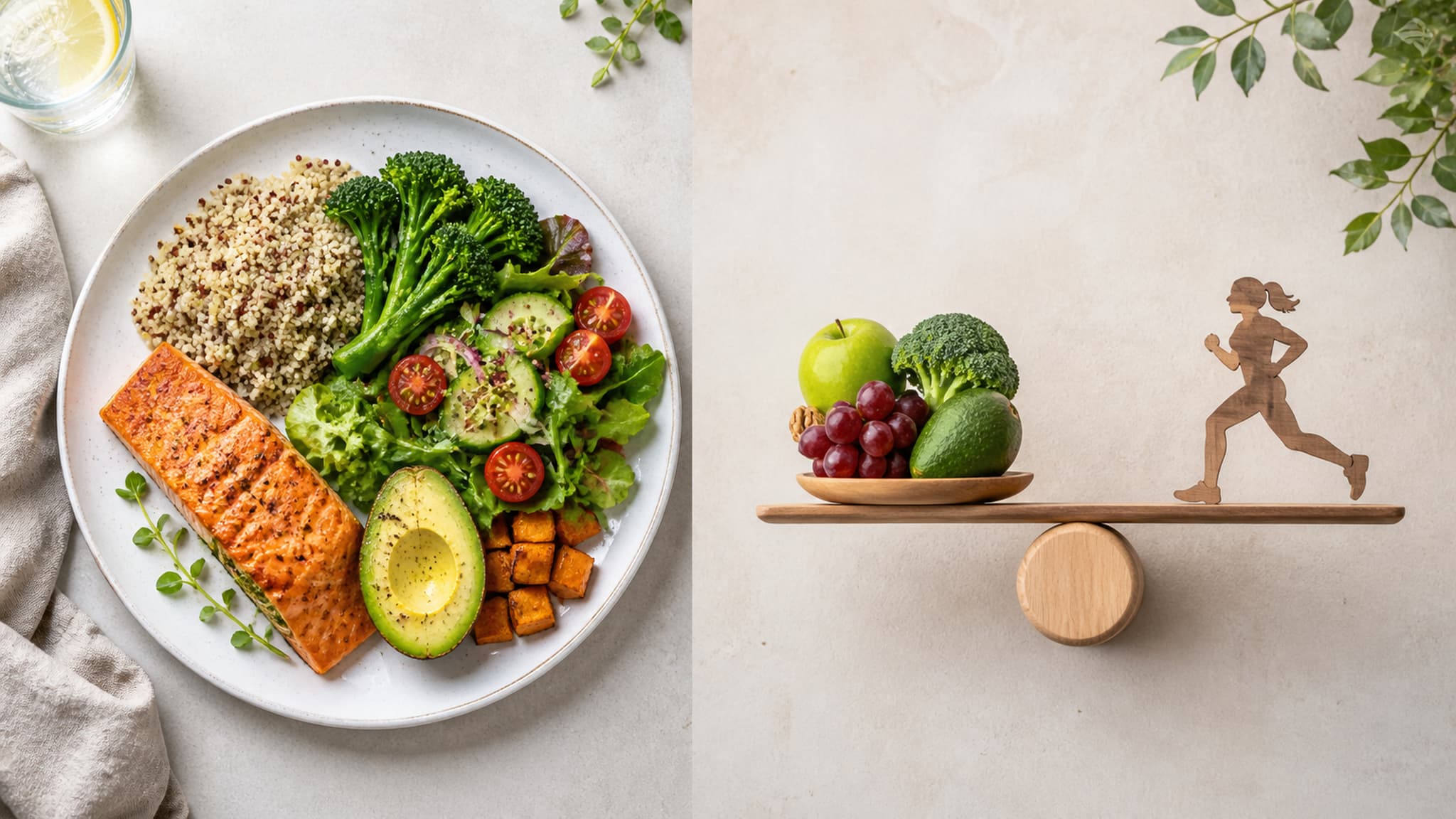
If you take nothing else from this article, take this. Calories determine whether you gain weight, lose weight, or stay the same. This is not an opinion. It is a law of thermodynamics applied to human physiology, and it has been confirmed by every controlled feeding study ever conducted. A study published in the New England Journal of Medicine placed participants on diets with vastly different macronutrient compositions but identical calorie deficits. The result was statistically equivalent weight loss across all groups (3). The macronutrient ratio did not matter for weight change. The calorie deficit did.
This does not mean you need to count every calorie for the rest of your life. It means you need to have an awareness of your energy intake relative to your energy expenditure. For some clients, I use precise tracking with a food diary or app for a period of time to build that awareness. For others, I use portion control methods and structured meal templates that create a deficit without requiring daily tracking. The method depends on the client. The principle does not change.
The most common mistakes I see with energy balance are underestimating intake and overestimating expenditure. Research published in the New England Journal of Medicine found that individuals who reported being unable to lose weight despite eating very little were actually underestimating their calorie intake by an average of 47 percent (4). Liquid calories, cooking oils, snacking, and weekend overeating are the most frequent culprits. A client who is disciplined Monday to Friday but untracked on Saturday and Sunday can easily wipe out their entire weekly deficit in two days. I teach every client to understand where their calories are actually going, not where they think they are going.
Fundamental Two: Protein Intake
Protein is the single most important macronutrient for body composition, and it is the one that most people consistently under eat. I have written about protein requirements in detail elsewhere on this site, but the core message bears repeating because of how critical it is. Adequate protein intake preserves lean muscle mass during fat loss, supports muscle growth during building phases, increases satiety to help control hunger, and has a significantly higher thermic effect than carbohydrates or fats, meaning your body burns more calories simply digesting it (5).
The evidence based target for active individuals is 1.6 to 2.2 grams per kilogram of bodyweight per day, spread across three to five meals with a minimum of 20 to 40 grams per meal to optimise muscle protein synthesis (6). When I audit a new client’s diet, their protein intake is almost always the first thing I address because it is almost always too low. The typical person I start working with is eating 50 to 80 grams of protein daily when they need 120 to 160 grams or more depending on their bodyweight and goals.
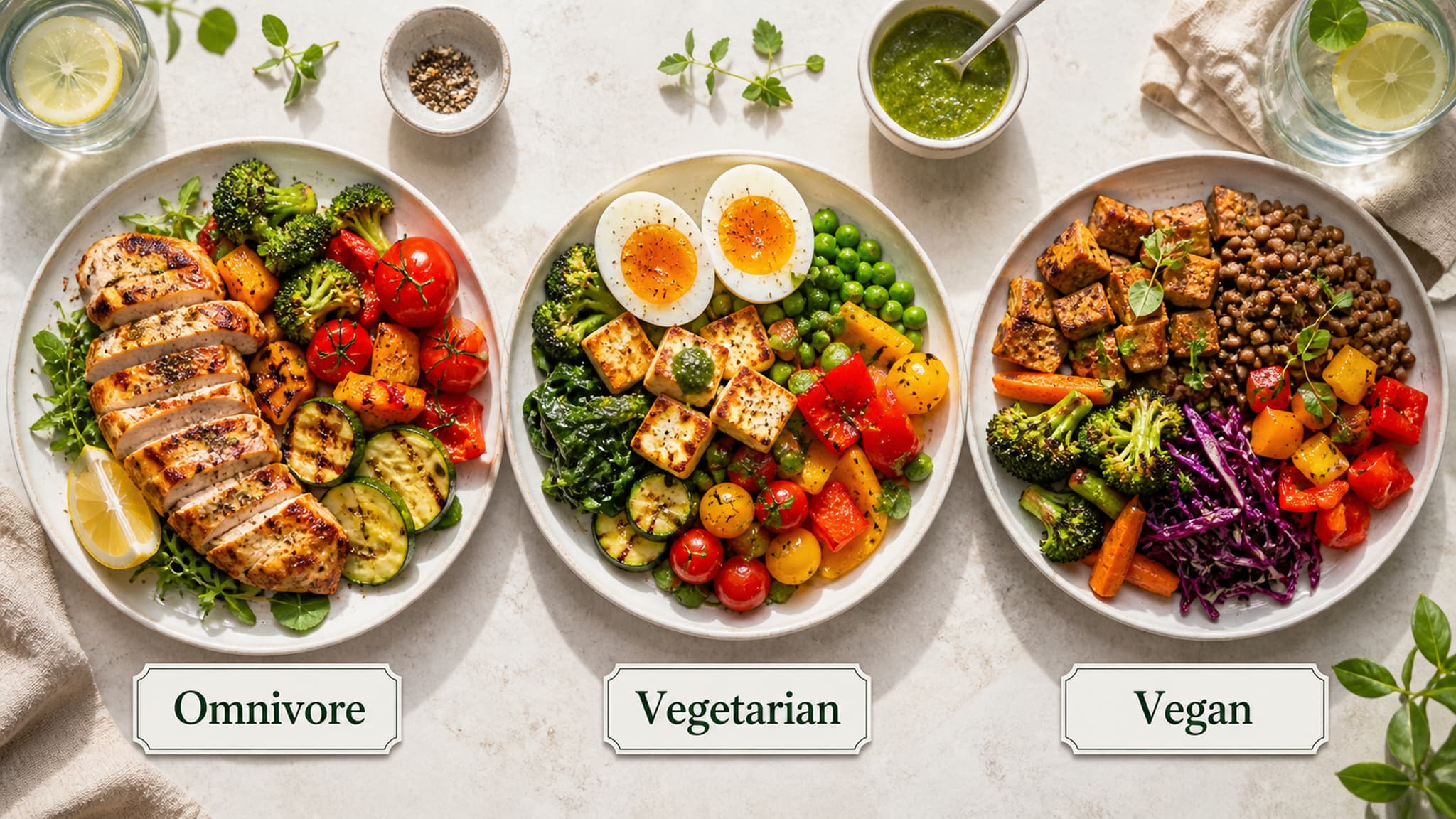
Hitting these targets is achievable on any dietary pattern. For omnivore clients, primary sources include chicken, turkey, fish, lean beef, eggs, and Greek yoghurt. For vegetarian clients, eggs, Greek yoghurt, cottage cheese, paneer, halloumi, and whey protein form the foundation, supplemented by lentils, chickpeas, and beans which provide both protein and carbohydrates. For vegan clients, I build protein intake around tofu, tempeh, seitan, edamame, soy mince, lentils, chickpeas, and pea or soy protein supplements. Vegan clients may need slightly more total protein to account for the lower digestibility and amino acid profiles of some plant sources, a point confirmed by research published in the Journal of the International Society of Sports Nutrition which found that plant based athletes benefit from intakes at the higher end of the 1.6 to 2.2 range (7).
The key is not the source. It is the consistency. Hitting your protein target six or seven days a week is what drives results. Missing it regularly, regardless of how perfect the rest of your diet is, will hold you back.
Fundamental Three: Food Quality and Micronutrient Density
Calories and protein are the first two priorities, but the quality of your food matters significantly for your health, your energy, your digestion, your hormonal function, and your long term disease risk. A diet that meets your calorie and protein targets entirely from processed food and protein shakes will produce body composition changes, but it will not produce optimal health. The distinction matters because I am not just building bodies. I am building health.
Food quality in practical terms means eating predominantly whole, minimally processed foods. Vegetables, fruits, whole grains, legumes, nuts, seeds, lean proteins, and healthy fats. The evidence linking higher intake of whole foods to reduced risk of cardiovascular disease, Type 2 diabetes, certain cancers, and all cause mortality is extensive and consistent (8). A large scale meta-analysis published in The Lancet found that diets rich in whole grains, fruits, vegetables, nuts, and legumes were associated with the greatest reductions in mortality and chronic disease risk (9).
In practical coaching terms, I use an 80/20 approach with all of my clients. Roughly 80 percent of your food intake should come from whole, nutrient dense sources. The remaining 20 percent provides flexibility for foods you enjoy that may not be as nutrient dense but that support adherence, social eating, and psychological wellbeing. This is not a free pass to eat junk. It is an acknowledgement that rigid perfection is unsustainable and that a sustainable 80/20 approach will always outperform a perfect plan that lasts three weeks before collapsing into a binge cycle.
What Does This Look Like in Practice
For vegetables, I recommend a minimum of three portions daily, ideally four to five. Prioritise variety and colour. Broccoli, spinach, peppers, courgettes, tomatoes, mushrooms, aubergine, kale, and green beans are all staples I rotate through client plans. For complex carbohydrates, oats, rice, sweet potatoes, quinoa, whole grain bread, and potatoes are all excellent choices. For plant based clients, lentils, chickpeas, black beans, and kidney beans serve double duty as both carbohydrate and protein sources. For healthy fats, olive oil, avocados, nuts, seeds, and oily fish or algae based omega 3 for vegan clients provide essential fatty acids and support hormonal health.
Fruit deserves a specific mention because it is an unnecessary casualty of low carb culture. Fruit is not the reason anyone is overweight. It is packed with fibre, vitamins, minerals, and polyphenols, and multiple large scale reviews have found consistent associations between fruit consumption and reduced risk of cardiovascular disease, stroke, and Type 2 diabetes (10). I include fruit in every client plan. Berries, bananas, apples, and citrus fruits are my most recommended choices. Eat them. Enjoy them. They are not the enemy.
The Hierarchy That Actually Matters
If I were to rank every nutrition variable by impact on results, the hierarchy would look like this. Energy balance sits at the base. It is the single most important determinant of whether you gain or lose weight. Protein intake sits above that, because within any calorie target, your protein intake determines how much of the weight you lose is fat versus muscle, and how much of the weight you gain is lean tissue versus body fat. Food quality and micronutrient density sit above protein, because while they have less impact on scale weight, they have enormous impact on your health, your energy, your digestion, your hormones, and your long term disease risk. Everything else, meal timing, specific food combinations, supplements, nutrient timing around training, sits at the top of the hierarchy. These things matter. But they matter far less than the three below them. Perfecting these top tier variables while ignoring the base is like adding a spoiler to a car that has no engine.
Research from the International Society of Sports Nutrition supports exactly this hierarchy, noting that energy intake and macronutrient targets should be the primary focus for individuals seeking body composition improvements, with meal timing and supplementation serving as secondary and tertiary considerations respectively (2). I apply this hierarchy with every single client. It is the reason my approach works regardless of the specific dietary pattern. Whether you eat meat, are vegetarian, are vegan, have diabetes, have PCOS, or simply want to lose fat and feel better, the hierarchy does not change. The application changes. The principles do not.
Stop Overcomplicating It and Start Executing
You do not need another diet book. You do not need another supplement. You do not need to know whether you should eat before or after training, whether sweet potatoes are better than white potatoes, or whether apple cider vinegar accelerates fat loss. You need to get your calories right. You need to eat enough protein. And you need to eat mostly whole, nutrient dense food. Do those three things with consistency and your body will change. Your health will improve. Your energy will stabilise. And you will wonder why you ever made it so complicated in the first place.
If you want someone to cut through the noise, build you a plan that focuses on what actually matters, and coach you through the process from start to finish, that is exactly what I do. I work one-to-one online globally with clients of all dietary backgrounds and health conditions. No gimmicks. No fads. Just the fundamentals, executed properly, and personalised to you. Get in touch and let me show you how simple real results can be.
Work with Me
Get a personalised coaching plan built around your goals, your schedule, and your life.
Enquire NowReferences
- Aragon AA, Schoenfeld BJ, Wildman R, Kleiner S, VanDusseldorp T, Taylor L, Earnest CP, Arciero PJ, Wilborn C, Kalman DS, Stout JR, Willoughby DS, Campbell B, Arent SM, Bannock L, Smith-Ryan AE, Antonio J. International Society of Sports Nutrition position stand: diets and body composition. Journal of the International Society of Sports Nutrition. 2017; 14(1): 16.
- Kerksick CM, Arent S, Schoenfeld BJ, Stout JR, Campbell B, Wilborn CD, Taylor L, Kalman D, Smith-Ryan AE, Kreider RB, Willoughby D, Arciero PJ, VanDusseldorp TA, Ormsbee MJ, Wildman R, Greenwood M, Ziegenfuss TN, Aragon AA, Antonio J. International Society of Sports Nutrition position stand: nutrient timing. Journal of the International Society of Sports Nutrition. 2017; 14(1): 33.
- Sacks FM, Bray GA, Carey VJ, Smith SR, Ryan DH, Anton SD, McManus K, Champagne CM, Bishop LM, Laranjo N, Leboff MS, Rood JC, de Jonge L, Greenway FL, Loria CM, Obarzanek E, Williamson DA. Comparison of weight-loss diets with different compositions of fat, protein, and carbohydrates. New England Journal of Medicine. 2009; 360(9): 859-873.
- Lichtman SW, Pisarska K, Berman ER, Pestone M, Dowling H, Offenbacher E, Weisel H, Heshka S, Matthews DE, Heymsfield SB. Discrepancy between self-reported and actual caloric intake and exercise in obese subjects. New England Journal of Medicine. 1992; 327(27): 1893-1898.
- Westerterp-Plantenga MS, Lemmens SG, Westerterp KR. Dietary protein – its role in satiety, energetics, weight loss and health. British Journal of Nutrition. 2012; 108(S2): S52-S63.
- Morton RW, Murphy KT, McKellar SR, Schoenfeld BJ, Henselmans M, Helms E, Aragon AA, Devries MC, Banfield L, Krieger JW, Phillips SM. A systematic review, meta-analysis and meta-regression of the effect of protein supplementation on resistance training-induced gains in muscle mass and strength in healthy adults. British Journal of Sports Medicine. 2018; 52(6): 376-384.
- Rogerson D. Vegan diets: practical advice for athletes and exercisers. Journal of the International Society of Sports Nutrition. 2017; 14(1): 36.
- Aune D, Giovannucci E, Boffetta P, Fadnes LT, Keum N, Norat T, Greenwood DC, Riboli E, Vatten LJ, Tonstad S. Fruit and vegetable intake and the risk of cardiovascular disease, total cancer and all-cause mortality: a systematic review and dose-response meta-analysis of prospective studies. International Journal of Epidemiology. 2017; 46(3): 1029-1056.
- GBD 2017 Diet Collaborators. Health effects of dietary risks in 195 countries, 1990-2017: a systematic analysis for the Global Burden of Disease Study 2017. The Lancet. 2019; 393(10184): 1958-1972.
- Muraki I, Imamura F, Manson JE, Hu FB, Willett WC, van Dam RM, Sun Q. Fruit consumption and risk of type 2 diabetes: results from three prospective longitudinal cohort studies. BMJ. 2013; 347: f5001.