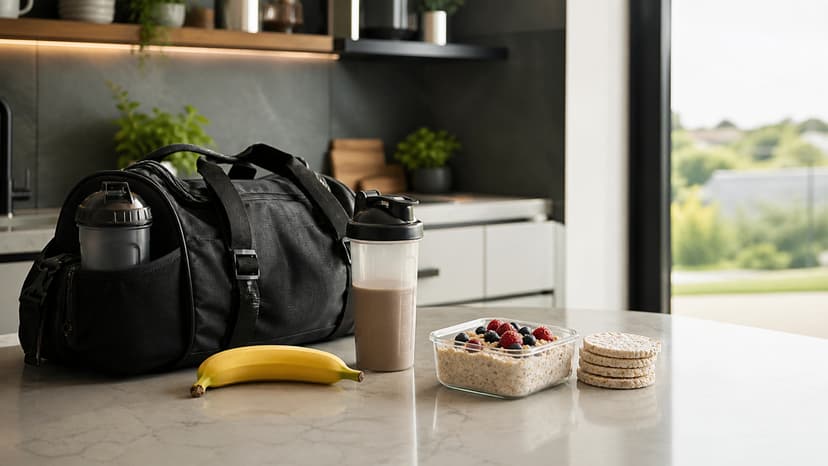
For decades, breakfast was untouchable. It was the most important meal of the day. Skipping it was irresponsible. Every health authority, every cereal box, and every well meaning parent reinforced the same message. Then the pendulum swung. Intermittent fasting became mainstream and suddenly breakfast was the enemy. Skipping it was the secret to fat loss, mental clarity, and longevity. The people who had been eating breakfast dutifully for years were now told they had been sabotaging themselves all along.
So which is it? Should you eat breakfast or should you skip it? The honest answer, the one that neither camp wants to hear, is that it depends entirely on you. Not on what a study of university students found, not on what a CEO does in his morning routine podcast, and not on what worked for your friend who lost two stone. It depends on your goals, your appetite patterns, your training schedule, your daily routine, and most importantly, what helps you eat well for the rest of the day. I have seen breakfast work brilliantly for some people and I have seen skipping it work just as well for others. The difference is never the meal itself. It is always the context.

Why the Breakfast Debate Has Left People More Confused Than Ever
The problem with the breakfast debate is that both sides cherry pick evidence to support their position and ignore everything that contradicts it. The pro breakfast camp points to observational studies showing that breakfast eaters tend to be leaner and healthier. The anti breakfast camp points to studies showing no metabolic advantage to eating in the morning. Both are right. Both are incomplete. And the person caught in the middle has no idea what to do, which means they either force themselves to eat when they are not hungry or skip meals when their body is clearly asking for food. Neither is a good outcome.
The observational data that linked breakfast eating with lower body weight was heavily confounded. A systematic review published in the BMJ analysed 13 randomised controlled trials and concluded that eating breakfast was not a reliable strategy for weight loss and that breakfast eaters actually consumed more total daily calories than breakfast skippers on average (1). The supposed metabolic advantage of breakfast eating was largely an artefact of the fact that people who eat breakfast tend to have other health conscious behaviours. They sleep more, exercise more, smoke less, and drink less alcohol. It was the overall lifestyle pattern, not the breakfast itself, that drove the association.
On the other side, the fasting advocates overstated the benefits of skipping breakfast. The metabolic advantages attributed to fasting, such as enhanced autophagy and improved insulin sensitivity, are largely extrapolated from animal models and short term studies that do not reflect what happens in a real human being eating a normal diet over months and years (2). I covered this in detail in my article on intermittent fasting. The point is that neither extreme position is supported by the full body of evidence. The truth, as it so often does in nutrition, sits in the middle.
When Eating Breakfast Makes Sense
There are specific situations where I actively recommend that clients eat breakfast, and in these situations the evidence and my coaching experience align clearly. If any of the following apply to you, eating a proper breakfast is almost certainly going to improve your results.
You Train in the Morning
If you train before midday, eating before or shortly after your session provides substrate for performance and supports recovery. Training in a fasted state is not inherently harmful, but research published in the Journal of the International Society of Sports Nutrition found that consuming protein and carbohydrates before resistance training improved performance and promoted a more favourable anabolic environment compared to fasted training (3). For clients who train early in the morning and struggle to eat a full meal beforehand, I recommend a small pre training option such as a banana with a scoop of protein powder, a slice of toast with peanut butter, or a small protein shake. A full breakfast can then follow the session. The goal is to provide enough fuel to train well and enough protein to support muscle protein synthesis.
You Struggle With Overeating Later in the Day
This is one of the most common patterns I see. A client skips breakfast, eats a modest lunch, then proceeds to consume the majority of their daily calories between 4pm and 10pm. They snack before dinner. They eat a large dinner. They snack after dinner. By the time they go to bed, they have eaten 60 to 70 percent of their daily intake in a six hour window. The total calorie count is consistently above target despite the fact that they skipped a meal.
For these clients, eating a protein rich breakfast redistributes their appetite across the day and reduces the evening overeating that is derailing their progress. Research published in the journal Obesity found that a high protein breakfast reduced subsequent food intake throughout the day and decreased evening snacking compared to either a low protein breakfast or no breakfast at all (4). I have seen this play out countless times in practice. The client who was convinced they saved calories by skipping breakfast starts eating 30 to 40 grams of protein first thing and suddenly their evening cravings vanish. Their total daily intake drops because they are no longer arriving at dinner ravenously hungry and making impulsive choices.

You Have Blood Sugar Regulation Issues
For clients managing Type 2 diabetes, insulin resistance, PCOS, or reactive hypoglycaemia, breakfast plays a particularly important role. Prolonged fasting in the context of impaired glucose metabolism can lead to blood sugar instability that affects energy, concentration, mood, and food choices for the rest of the day. Research published in Diabetes Care demonstrated that skipping breakfast in individuals with Type 2 diabetes resulted in significantly higher post lunch and post dinner glucose spikes compared to days when breakfast was consumed (5). For these clients, I always include a balanced breakfast with protein, moderate complex carbohydrates, and healthy fat to establish stable glucose levels from the start of the day.
You Need to Hit a High Protein Target
If your protein target is 140 grams or above and you are trying to hit that in just two meals, you are making your life unnecessarily difficult. Each meal would need to contain 70 or more grams of protein, which is a large volume of food that many people find uncomfortable to consume in a single sitting. Research published in the Journal of Nutrition found that distributing protein intake evenly across three or more meals stimulated 24 hour muscle protein synthesis approximately 25 percent more effectively than consuming the same total amount in a skewed pattern (6). Eating breakfast gives you an additional meal to distribute your protein across, which makes the target more achievable and the digestion more comfortable.
When Skipping Breakfast Makes Sense
Just as there are clear situations where breakfast helps, there are situations where skipping it is a perfectly reasonable strategy. If the following apply to you, there is no reason to force yourself to eat in the morning.
You Genuinely Are Not Hungry in the Morning
Some people wake up with no appetite whatsoever. Their body is not asking for food and eating first thing makes them feel nauseous or uncomfortable. If that is you and you are not experiencing any of the problems I described above, there is no physiological reason to force breakfast. Appetite is regulated by circadian rhythm and hormonal patterns that vary between individuals. Forcing food when your body is not ready for it is not a health strategy. It is an uncomfortable habit based on outdated advice.
The caveat here is important. There is a difference between genuinely not being hungry and having suppressed your morning appetite through years of skipping breakfast. Appetite is partially adaptive. If you have not eaten breakfast for years, your body has downregulated the hormonal signals that create morning hunger. If you start eating breakfast consistently, most people find that their morning appetite returns within two to three weeks. So if you want to start eating breakfast for any of the reasons I listed above, do not let the initial lack of hunger put you off. Start small. A protein shake, a yoghurt, a handful of nuts. Your appetite will adjust.

You Prefer Larger Meals Later in the Day
Some people genuinely function better eating two larger meals and a snack rather than three or four smaller meals throughout the day. If skipping breakfast allows you to eat more satisfying meals at lunch and dinner while still hitting your calorie and protein targets, that is a valid approach. The total daily intake matters far more than the specific distribution across the day for body composition outcomes. A systematic review published in the British Journal of Nutrition found no significant effect of meal frequency on body composition when total energy and protein intake were equated (7). If two larger meals keeps you more satisfied and more adherent than three or four smaller ones, go with it.
You Use It Strategically for Calorie Control
For some clients, particularly those with lower calorie targets during a fat loss phase, skipping breakfast is a practical way to create room for two more substantial meals. A client on 1600 calories per day who skips breakfast can split those calories between lunch, dinner, and a snack, eating 500 to 600 calories per meal rather than 400 calorie meals that leave them unsatisfied. This is the legitimate application of intermittent fasting. It is not magic. It is not metabolically superior. It is a practical tool for managing hunger within a restricted calorie budget. As long as protein is still distributed across at least two meals with a minimum of 30 to 40 grams per meal, this approach works well.
What Actually Matters More Than Whether You Eat Breakfast
Here is the part that neither the breakfast advocates nor the fasting advocates talk about enough. Whether you eat breakfast is far less important than what you eat at your first meal, whenever that meal happens to be. The composition of your first meal of the day sets the tone for your appetite, your energy, your blood sugar, and your food choices for the hours that follow.
If your first meal is a bowl of sugary cereal with skimmed milk, you will experience a blood sugar spike followed by a crash that triggers hunger and cravings within two hours. If your first meal is a coffee shop muffin eaten at your desk, you are consuming 400 to 500 calories with negligible protein and minimal satiety. Research published in the American Journal of Clinical Nutrition found that meals with a high glycaemic index produced significantly greater hunger and increased voluntary food intake at subsequent meals compared to low glycaemic index meals matched for calories (8). The type of breakfast matters more than the timing of breakfast.
I build every client’s first meal around the same framework regardless of when they eat it. It starts with a protein foundation of 25 to 40 grams. For omnivore clients this might be eggs with smoked salmon, or Greek yoghurt with nuts. For vegetarian clients it might be an omelette with feta and spinach, or paneer scrambled with vegetables. For vegan clients it might be a tofu scramble with nutritional yeast, or a smoothie made with soy milk and pea protein. The protein is then paired with moderate complex carbohydrates from sources like oats, whole grain toast, or sweet potato, and a controlled amount of healthy fat from avocado, nuts, or olive oil. This combination stabilises blood sugar, sustains energy, maximises satiety, and provides the building blocks for muscle protein synthesis.
The Decision Framework
Rather than asking yourself whether breakfast is good or bad, ask yourself a more useful set of questions. Do I train in the morning and need fuel for performance? Am I overeating in the evenings because I restricted too heavily during the day? Do I have a medical condition like diabetes or PCOS that benefits from stable blood sugar from the start of the day? Am I struggling to hit my protein target in just two meals? If the answer to any of these is yes, eat breakfast. Make it protein rich. Make it balanced. And make it a non negotiable part of your routine.
If the answer to all of those is no, if you are genuinely not hungry in the morning, if you hit your calorie and protein targets comfortably in fewer meals, if your energy and performance are good, and if your eating patterns are controlled and intentional throughout the day, then skipping breakfast is perfectly fine. You are not damaging your metabolism. You are not missing out on a magical fat burning window. You are simply choosing to eat later, and the science says that is completely acceptable.
The Right Answer Is the One That Works for You
The breakfast debate is a perfect example of how the fitness industry turns a simple, individual decision into a tribal war. Eat breakfast or skip it. Neither is inherently right or wrong. What matters is whether your choice supports your goals, your energy, your hunger management, and your ability to hit your nutritional targets consistently. That is what I help clients figure out. Not which tribe to join, but what actually works for their body, their schedule, and their life.
I work one-to-one online globally with men and women of all dietary backgrounds. Whether you eat meat, are vegetarian, vegan, or somewhere in between, I will build you a plan that fits your real life, including when and how you eat your first meal. No dogma. No ideology. Just what works.
Get in touch and let me take the guesswork out of your nutrition.
Work with Me
Get a personalised coaching plan built around your goals, your schedule, and your life.
Enquire NowReferences
- Sievert K, Hussain SM, Page MJ, Wang Y, Hughes HJ, Malek M, Cicuttini FM. Effect of breakfast on weight and energy intake: systematic review and meta-analysis of randomised controlled trials. BMJ. 2019; 364: l42.
- de Cabo R, Mattson MP. Effects of intermittent fasting on health, aging, and disease. New England Journal of Medicine. 2019; 381(26): 2541-2551.
- Kerksick CM, Arent S, Schoenfeld BJ, Stout JR, Campbell B, Wilborn CD, Taylor L, Kalman D, Smith-Ryan AE, Kreider RB, Willoughby D, Arciero PJ, VanDusseldorp TA, Ormsbee MJ, Wildman R, Greenwood M, Ziegenfuss TN, Aragon AA, Antonio J. International Society of Sports Nutrition position stand: nutrient timing. Journal of the International Society of Sports Nutrition. 2017; 14(1): 33.
- Leidy HJ, Ortinau LC, Douglas SM, Hoertel HA. Beneficial effects of a higher-protein breakfast on the appetitive, hormonal, and neural signals controlling energy intake regulation in overweight/obese, ‘breakfast-skipping’, late-adolescent girls. American Journal of Clinical Nutrition. 2013; 97(4): 677-688.
- Jakubowicz D, Wainstein J, Ahren B, Landau Z, Bar-Dayan Y, Froy O. Fasting until noon triggers increased postprandial hyperglycemia and impaired insulin response after lunch and dinner in individuals with type 2 diabetes: a randomized clinical trial. Diabetes Care. 2015; 38(10): 1820-1826.
- Mamerow MM, Mettler JA, English KL, Casperson SL, Arentson-Lantz E, Sheffield-Moore M, Layman DK, Paddon-Jones D. Dietary protein distribution positively influences 24-h muscle protein synthesis in healthy adults. Journal of Nutrition. 2014; 144(6): 876-880.
- Schoenfeld BJ, Aragon AA, Krieger JW. Effects of meal frequency on weight loss and body composition: a meta-analysis. Nutrition Reviews. 2015; 73(2): 69-82.
- Ludwig DS, Majzoub JA, Al-Zahrani A, Dallal GE, Blanco I, Roberts SB. High glycemic index foods, overeating, and obesity. Pediatrics. 1999; 103(3): e26.