The Anti-Ageing Industry Does Not Want You to Know This
The anti-ageing industry is worth billions. Creams, serums, supplements, injections, procedures, gadgets, all promising to slow, halt, or reverse the ageing process. Most of it is nonsense. Some of it is outright harmful. And almost none of it addresses the most powerful anti-ageing tool we actually have access to: resistance training.
I understand why people are drawn to quick fixes. The idea that you can reverse the effects of ageing with a pill or a serum is seductive. But the truth is far more straightforward and far more evidence-based. The single most effective intervention for slowing biological ageing is not something you buy in a bottle. It is something you do in a gym, consistently, week after week, year after year.
In this article, I am going to walk you through what the science actually says about lifting weights and ageing. I am going to explain the difference between your chronological age and your biological age. I am going to cover the telomere research, the epigenetic clock data, the hormonal benefits, and the practical, measurable ways that resistance training can make your body function like that of someone years younger. And I am going to do it without hype, without exaggeration, and without trying to sell you anything except the truth.
Biological Age vs. Chronological Age: Why the Number on Your Birthday Card Does Not Tell the Full Story
Your chronological age is simply how many years you have been alive. It is fixed. It moves forward at the same pace for everyone. Your biological age, on the other hand, is a measure of how well your body is actually functioning relative to your chronological age. Two people can both be 50 years old chronologically, but one might have the cardiovascular fitness, muscle mass, bone density, and metabolic health of a 40-year-old, while the other has the biological profile of a 60-year-old.
Biological age is determined by measurable markers. These include things like resting heart rate, blood pressure, fasting blood glucose, cholesterol profile, body composition, bone mineral density, grip strength, walking speed, and at a deeper molecular level, the length of your telomeres and the patterns on your epigenetic clock(1).
| Concept | Definition |
|---|---|
| Chronological Age | Years since birth. Fixed. Moves forward for everyone. |
| Biological Age | How old your body actually functions. Determined by: muscle mass, cardiovascular fitness, bone density, metabolic health, telomere length, epigenetic markers, hormonal status. A sedentary, overweight 45-year-old may have the biological age of 55. An active, well-nourished 55-year-old may have the biological age of 42. The gap between chronological and biological age is largely determined by lifestyle. Training is the most powerful lever you have. |
The question is not whether ageing happens. Of course it does. The question is how fast your biological age advances relative to your chronological age. And the research increasingly shows that this gap is heavily influenced by what you do with your body, specifically whether you engage in regular resistance training.
Telomeres: The Biological Clock Inside Your Cells
Telomeres are protective caps at the ends of your chromosomes, similar to the plastic tips on the ends of shoelaces. Every time a cell divides, the telomeres shorten slightly. Over a lifetime, this progressive shortening leads to cells that can no longer divide effectively, contributing to tissue ageing, dysfunction, and disease. Shorter telomeres have been associated with increased risk of cardiovascular disease, diabetes, cancer, and premature death(1).
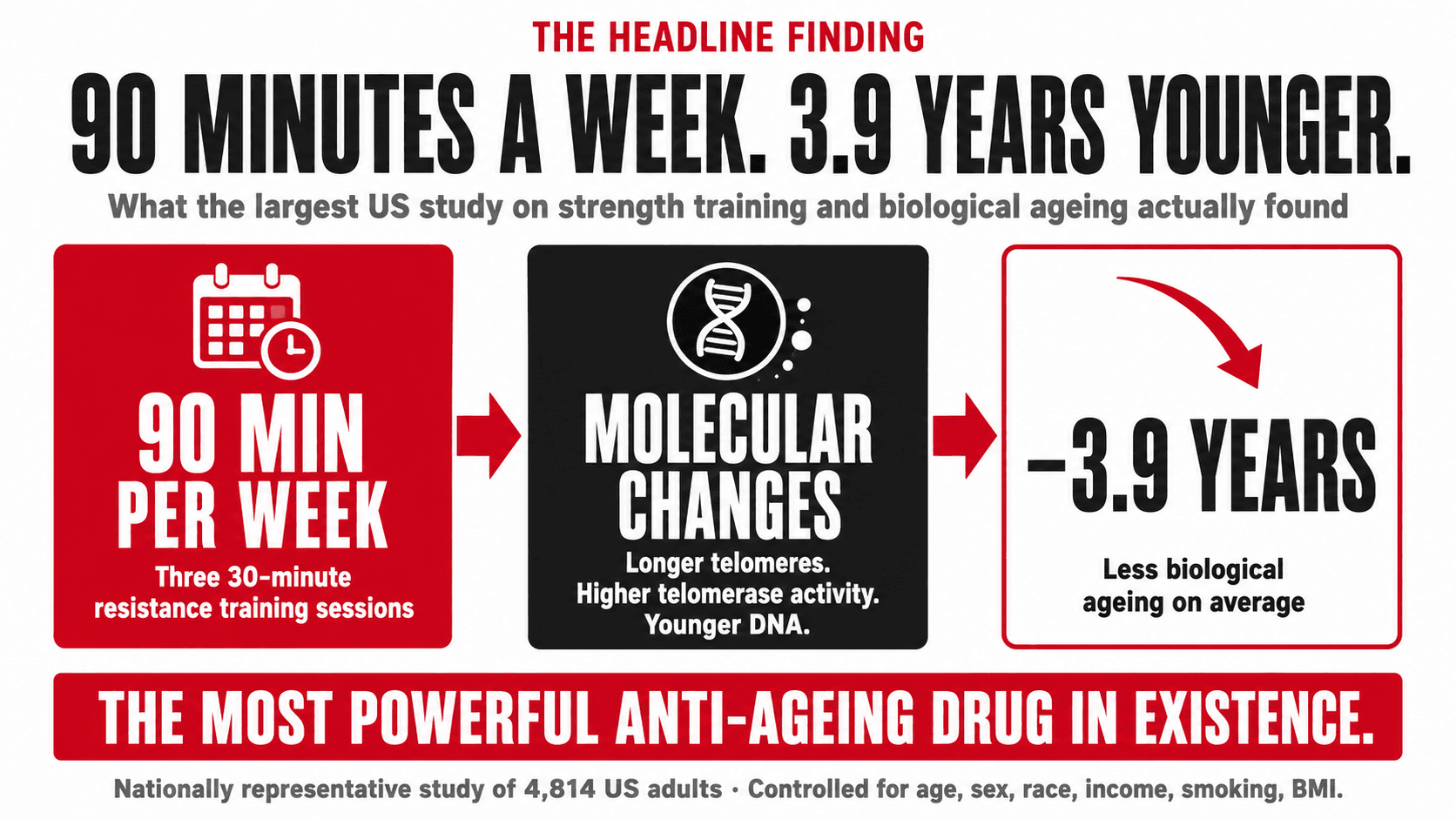
Here is where exercise enters the picture. A nationally representative study of 4,814 US adults found that those who engaged in regular strength training had significantly longer telomeres than those who did not, even after controlling for age, sex, race, income, smoking, BMI, and other lifestyle factors. The data indicated that 90 minutes per week of strength training was associated with approximately 3.9 years less biological ageing on average(2). That is a remarkable finding. Ninety minutes of resistance training per week, the equivalent of three 30-minute sessions, was associated with nearly four fewer years of cellular ageing.
A broader systematic review examining physical activity and telomere length across multiple studies found that physically active adults consistently had longer telomeres than sedentary adults, regardless of sex and ethnicity(3). The most comprehensive meta-analysis on the topic, published in 2025 and including data from multiple randomised controlled trials, confirmed that exercise interventions are associated with favourable changes in telomere length and telomerase activity, the enzyme that helps maintain telomere length(4).
Top Tip
You do not need to train like an athlete to get the telomere benefits. The research suggests that consistent, moderate-intensity resistance training performed two to three times per week is sufficient to produce measurable differences in biological ageing markers. Consistency matters far more than intensity.
The Nuance: Resistance Training, Aerobic Training, or Both?
I want to be transparent about the science here because this is where many articles on this topic oversimplify. The research on telomeres and exercise modality is not entirely straightforward.
A well-designed randomised controlled trial by Werner and colleagues compared the effects of endurance training, high-intensity interval training, and resistance training on telomere length and telomerase activity. Endurance and interval training increased both telomere length and telomerase activity. Resistance training alone did not produce the same telomere-specific changes in that particular study(5).
However, this does not mean resistance training lacks anti-ageing benefits. Far from it. The Werner study looked specifically at telomere biology in isolation. When you examine the full picture of biological ageing, including muscle mass preservation, bone density, metabolic function, insulin sensitivity, hormonal health, body composition, and functional capacity, resistance training is the dominant intervention. No other form of exercise comes close to its combined impact on these markers.
How Different Training Types Affect Markers of Biological Ageing
| Marker of Biological Ageing | Resistance Training | Aerobic Training | Combined (Optimal) |
|---|---|---|---|
| Muscle mass preservation | Primary driver | Minor benefit | Best overall |
| Bone mineral density | Strong evidence | Moderate (weight-bearing only) | Best overall |
| Insulin sensitivity | Strong evidence | Good evidence | Best overall |
| Body composition (fat loss) | Indirect (via increased metabolism) | Direct calorie burn | Best overall |
| Blood pressure reduction | Moderate evidence | Strong evidence | Best overall |
| Telomere length maintenance | Emerging evidence | Strong evidence | Best overall |
| Hormonal health (testosterone, GH) | Strong evidence | Modest impact | Best overall |
| Functional independence | Primary driver | Good support | Best overall |
| Cardiovascular fitness (VO2 max) | Modest improvement | Primary driver | Best overall |
| Cognitive function | Good evidence | Good evidence | Best overall |
The takeaway is clear: do both. But if you are only doing one, make it resistance training. The breadth of its impact across the markers that define biological ageing is unmatched. Add aerobic work, even just brisk walking, to complement it, and you are covering every base.
Top Tip
The ideal training week for anti-ageing combines three resistance training sessions with two to three sessions of moderate aerobic activity (such as brisk walking, cycling, or swimming). This combination provides the best coverage across all measurable markers of biological ageing.
The Epigenetic Clock: A Deeper Measure of Biological Age
Beyond telomeres, there is an even more sophisticated measure of biological ageing: the epigenetic clock. This measures patterns of DNA methylation, chemical modifications to your DNA that change predictably with age. Researchers have developed algorithms that can estimate your biological age based on these methylation patterns, and the results often diverge significantly from chronological age(6).
Research published in npj Aging found that regular physical activity was associated with slower epigenetic ageing across multiple clock measures. Individuals who were more physically active showed younger biological ages than their sedentary counterparts, even after accounting for other lifestyle factors(7). This is not a theoretical observation. These are measurable molecular differences in the DNA of active versus inactive people.
What makes the epigenetic clock particularly compelling is that it appears to be modifiable. Your genes are not your destiny. The way your genes express themselves, which is what epigenetics measures, is influenced by your behaviour. How you train, how you eat, how you sleep, how you manage stress: all of these factors leave molecular signatures on your DNA that either accelerate or decelerate the ageing process.
Hormonal Benefits of Resistance Training: The Anti-Ageing Cascade
Hormones are the chemical messengers that regulate virtually every process in your body, and their decline is one of the most significant drivers of biological ageing. After 30, testosterone in men declines by approximately 1 to 2 percent per year. In women, oestrogen and progesterone fluctuate increasingly through the late 30s and 40s before falling dramatically during menopause. Growth hormone output declines steadily with age in both sexes. These changes contribute to muscle loss, fat gain, reduced bone density, impaired recovery, lower energy, and decreased libido.
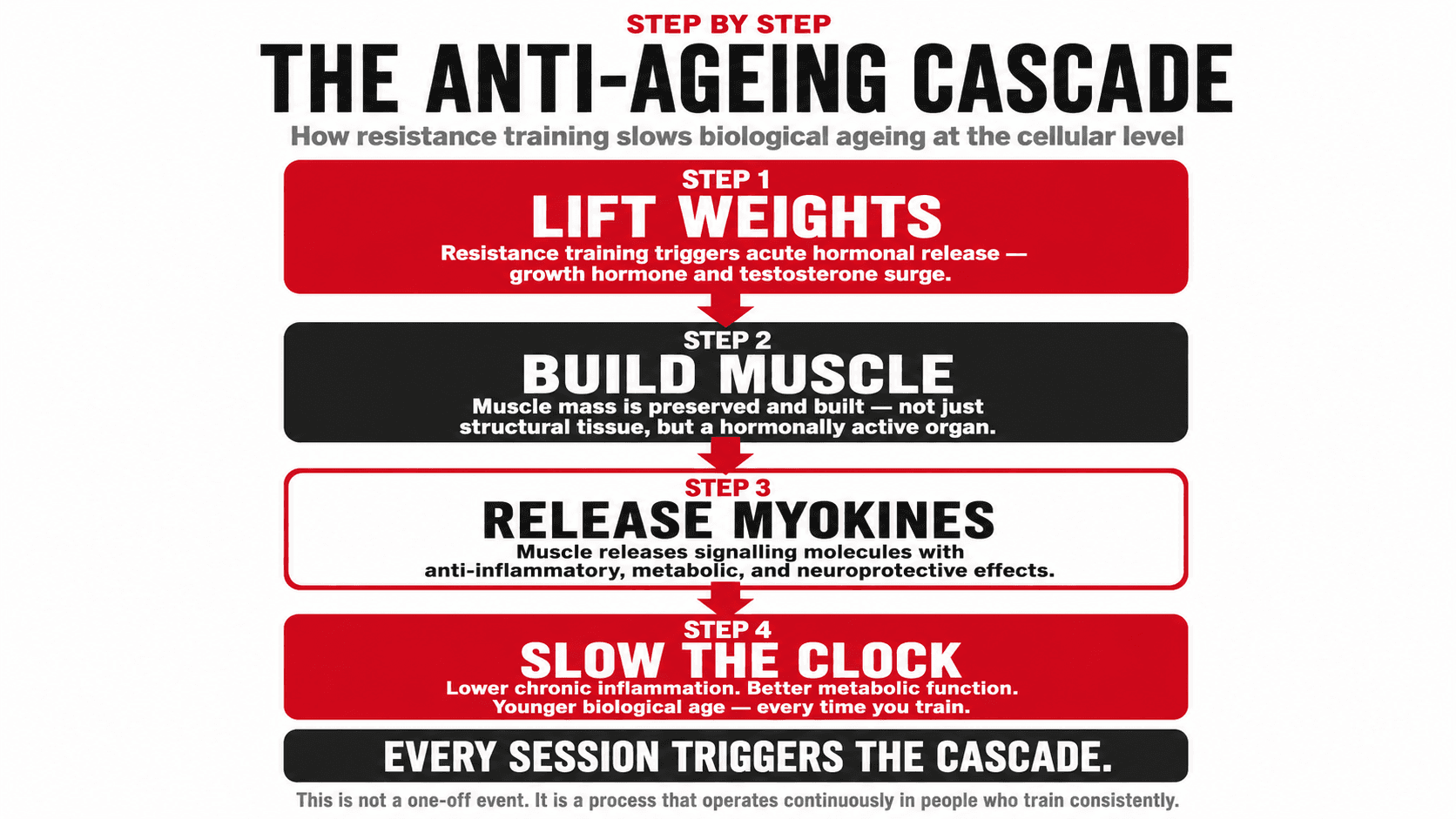
Resistance training directly stimulates the acute release of growth hormone and testosterone(8). While these acute elevations are transient, the cumulative effect of regular resistance training creates a more favourable hormonal environment over time. More importantly, resistance training preserves and builds the muscle tissue that is itself hormonally active. Muscle is not just structural. It functions as an endocrine organ, releasing myokines, signalling molecules that have anti-inflammatory, metabolic, and neuroprotective effects(9).
| Stage | The Anti-Ageing Cascade of Resistance Training |
|---|---|
| Step 1 | Resistance training stimulates growth hormone and testosterone release |
| Step 2 | Builds and preserves muscle mass |
| Step 3 | Muscle acts as an endocrine organ, releasing myokines |
| Step 4 | Myokines reduce inflammation, improve insulin sensitivity, support brain health, and regulate metabolism |
| Result | Lower chronic inflammation + better metabolic function = slower biological ageing. This cascade operates continuously in people who train consistently. It is not a one-off event. |
The Markers You Can Measure: How Training Makes You Functionally Younger
I appreciate that telomeres and epigenetic clocks feel abstract to most people. So let me bring this down to the practical level. Here are the measurable, tangible markers that resistance training improves, each of which is an established indicator of biological age and predictor of longevity.
| Marker | What It Tells You | How Resistance Training Helps | How to Test |
|---|---|---|---|
| Grip strength | Overall muscular strength; strong predictor of mortality | Directly strengthened by pulling, gripping, and carrying exercises | Hand dynamometer (GP or gym) |
| Walking speed | Functional fitness; independently predicts lifespan | Leg strength from squats, lunges, and step-ups increases gait speed | Timed 4-metre walk test |
| Body composition | Ratio of muscle to fat; metabolic health indicator | Builds lean tissue, reduces body fat when combined with nutrition | DEXA scan, bioimpedance, or skinfold calipers |
| Bone mineral density | Fracture risk; osteoporosis indicator | Mechanical loading stimulates bone remodelling and density | DEXA scan (GP referral) |
| Resting heart rate | Cardiovascular efficiency | Improved when combined with aerobic conditioning | Wearable device or manual pulse check |
| Blood pressure | Cardiovascular and stroke risk | Reduced through combined resistance + aerobic training and fat loss | Home BP monitor or GP visit |
| Fasting blood glucose / HbA1c | Insulin sensitivity and diabetes risk | Muscle is a primary glucose disposal site; more muscle = better regulation | Blood test (GP or private lab) |
| Get up from the floor test | Functional independence; strong mortality predictor | Strengthened through compound lifts, single leg work, and mobility training | Self-test: sit to floor and stand without using hands |
Every single one of these markers can be improved through consistent resistance training. And here is the key point: improvements in these markers do not just look good on paper. They translate directly into how you feel, how you function, and how long you live. A 55-year-old with the grip strength, walking speed, body composition, and blood markers of a 42-year-old is not just biologically younger on a test. They feel younger. They move better. They have more energy. They are more resilient. They are more independent.
Top Tip
Test your grip strength and your ability to get up from the floor without using your hands. These two simple tests are among the strongest predictors of longevity in the research literature. If you struggle with either, that is not a reason to feel defeated. It is a reason to start training immediately.
Never Lifted Before? Here Is How to Start
If you have never done structured resistance training, the prospect can feel intimidating. Gyms are unfamiliar territory. The equipment looks complex. You worry about doing something wrong or hurting yourself. I understand all of that. And I want to reassure you: every single person who is now strong and confident in the gym was once a complete beginner.
The most important thing is to start. You do not need to be perfect. You do not need advanced equipment. You do not need to understand periodisation or progressive overload theory on day one. You need to begin, learn the basics, and build gradually.
A Complete Beginner’s First Four Weeks
| Week | Sessions/Week | What to Focus On | Example Session |
|---|---|---|---|
| Week 1–2 | 2 sessions | Learning the six fundamental movement patterns: squat, hinge, push, pull, carry, lunge | Goblet squat 3x10, Dumbbell Romanian deadlift 3x10, Dumbbell bench press 3x10, Cable row 3x10, Farmer carry 3x30 seconds |
| Week 3–4 | 3 sessions | Adding volume, improving form, beginning to increase weights gradually | Back squat 3x10, Hip hinge with kettlebell 3x10, Overhead press 3x8, Lat pulldown 3x10, Walking lunges 2x12 each leg, Plank 3x30 seconds |
After four weeks, you will have a solid foundation. Your body will have adapted to the new stimulus. Your confidence will have grown. And you will be ready to progress to a more structured programme with planned progressive overload.
Top Tip
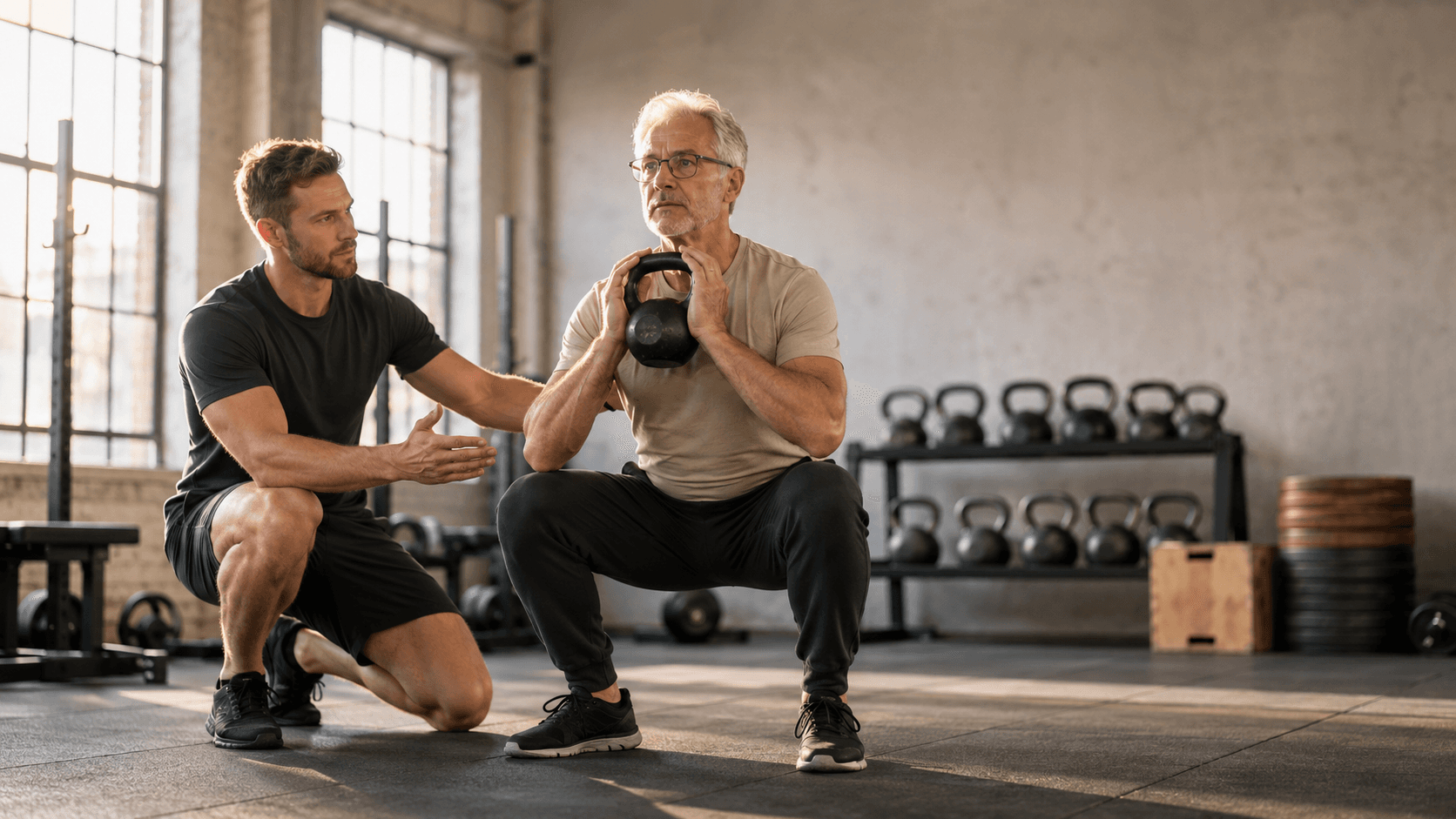
Invest in a few sessions with a qualified coach when you start. Learning proper squat, hinge, press, and pull technique from the beginning will prevent injuries and set you up for decades of productive training. The cost of good coaching at the start is a fraction of the cost of physiotherapy later.
Nutrition That Supports Anti-Ageing Training
Training is the stimulus. Nutrition is the raw material. You cannot build muscle, recover from exercise, maintain bone density, or support hormonal health without providing your body with the right nutrients. Here are the nutritional priorities that complement an anti-ageing resistance training programme.
| Nutrient Priority | Target | Key Sources (All Diets) |
|---|---|---|
| Protein | 1.4–2.0g per kg bodyweight | Chicken, fish, eggs, Greek yoghurt, tofu, tempeh, seitan, lentils, pea protein, whey |
| Omega-3 fatty acids | 2–3 portions oily fish/week or algae supplement | Salmon, mackerel, sardines, walnuts, flaxseed, chia seeds, algae oil |
| Calcium | 1,000–1,200 mg per day | Dairy, fortified plant milk, calcium-set tofu, kale, broccoli, almonds |
| Vitamin D | 1,000–4,000 IU per day (supplement year-round in UK) | Oily fish, eggs, fortified foods, UV-exposed mushrooms, supplement |
| Magnesium | 320–420 mg per day | Pumpkin seeds, almonds, spinach, dark chocolate, black beans |
| Antioxidant-rich foods | Daily variety of coloured fruits and vegetables | Berries, leafy greens, tomatoes, peppers, sweet potato, turmeric |
| Fibre | 30g minimum per day | Beans, lentils, oats, wholegrains, vegetables, fruit, seeds |
| Water | 2–3 litres per day | Water, herbal teas; limit sugary drinks and excessive caffeine |
As a lifelong vegetarian, I can tell you from personal experience that meeting these nutritional targets without meat is entirely possible. It requires more planning and awareness, but it is not a barrier. The same applies to vegans. The key is understanding which nutrients need extra attention on a plant-based diet, specifically B12, omega-3s, calcium, iron, and zinc, and supplementing where food alone falls short.
Top Tip
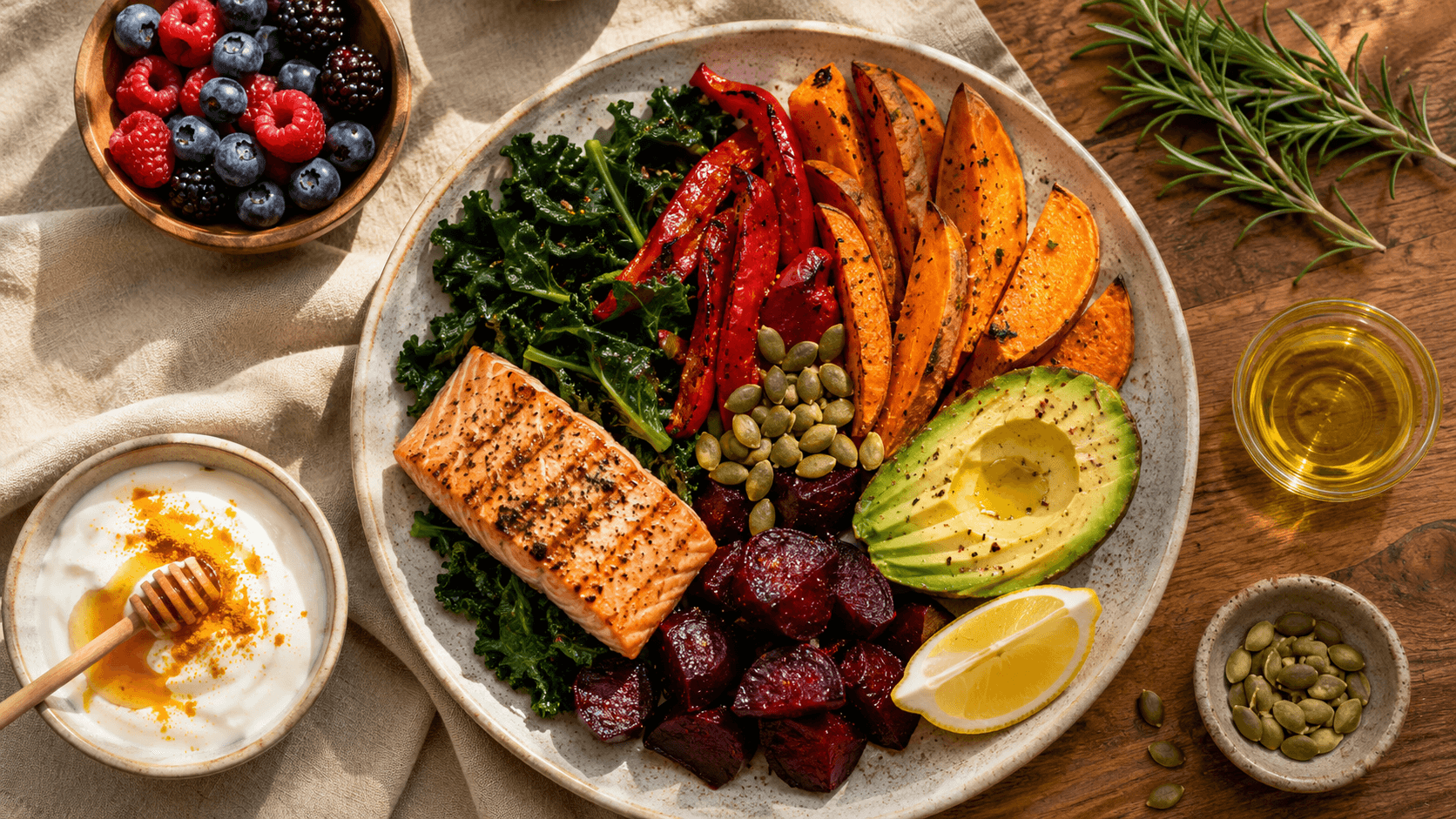
Eat a wide variety of colourful fruits and vegetables daily. The polyphenols and antioxidants in plant foods have been shown to reduce oxidative stress and chronic inflammation, both of which are key drivers of biological ageing. The more colours on your plate, the broader the protective benefit.
So Can Lifting Weights Actually Reverse Ageing?
Here is my honest, evidence-based answer.
Lifting weights cannot reverse chronological ageing. You cannot literally become younger. But resistance training can demonstrably slow biological ageing, and in some measurable domains, it can partially reverse the functional decline that most people accept as inevitable. It can rebuild muscle that has been lost to inactivity. It can improve bone density that has been declining. It can restore insulin sensitivity that has been deteriorating. It can improve cardiovascular markers. It can strengthen grip, improve balance, increase walking speed, and enhance cognitive function. These are not cosmetic changes. They are changes that make your body function like that of a younger person.
The national study of 4,814 US adults found that regular strength training was associated with 3.9 years less biological ageing(2). Exercise interventions have been shown to favourably influence telomere length and telomerase activity(4). Physical activity is associated with slower epigenetic ageing across multiple molecular measures(7). And the practical, functional markers of age, grip strength, walking speed, body composition, balance, metabolic health, all improve with resistance training at any age.
So is it a literal fountain of youth? No. But is it the closest thing we have to one, backed by decades of rigorous research? Yes. And unlike the creams, serums, and supplements that the anti-ageing industry sells, resistance training actually works, it costs almost nothing, and it is available to everyone.
Your Anti-Ageing Action Plan
| Action | Frequency | Why It Matters for Biological Age |
|---|---|---|
| Resistance train (compound movements) | 3 times per week | Preserves muscle, strengthens bones, improves hormones, lengthens telomeres |
| Add aerobic conditioning | 2–3 times per week (walking, cycling, swimming) | Cardiovascular fitness, telomere maintenance, blood pressure reduction |
| Eat adequate protein | Every meal (1.4–2.0g/kg/day) | Supports muscle protein synthesis and recovery from training |
| Prioritise sleep (7–9 hours) | Every night | Growth hormone release, recovery, cognitive protection, cellular repair |
| Eat colourful plant foods daily | Every meal | Antioxidants reduce oxidative stress and inflammation (key drivers of ageing) |
| Get annual blood work | Once per year | Track markers of biological age and catch problems early |
| Test grip strength and floor get-up | Monthly | Practical, functional measures of biological age you can track at home |
| Manage stress actively | Daily | Chronic stress accelerates telomere shortening and epigenetic ageing |
How I Can Help You
Whether you are 30 and want to start building the foundation, 45 and want to reverse a decade of neglect, or 60 and want to prove that your best years are still ahead, resistance training is the answer. And it is an answer that works for everyone, regardless of age, sex, fitness level, or dietary background.
I am a performance coach. I have helped hundreds of clients build strength and reverse the physical effects of ageing. I work one-to-one with clients online globally. I coach clients of all dietary backgrounds, including omnivores, vegetarians, and vegans. As a lifelong vegetarian, I bring personal understanding to the nutritional challenges of plant-based eating.
I offer one-to-one coaching online globally. If you are ready to invest in the most powerful anti-ageing tool available, let me build you a plan that works.
Work with Me
Get a personalised coaching plan built around your goals, your schedule, and your life.
Enquire NowReferences
- Marioni RE, Harris SE, Shah S, McRae AF, von Zglinicki T, Martin-Ruiz C, et al. The epigenetic clock and telomere length are independently associated with chronological age and mortality. International Journal of Epidemiology. 2016; 45(2): 424–432.
- Tucker LA. Telomere length and biological aging: the role of strength training in 4,814 US men and women. International Journal of Environmental Research and Public Health. 2024; 21(11): 1503.
- Valente C, Andrade R, Alvarez-Perez JC, Arija V, Amaral TF, Rodrigues T. Physical activity and telomere length as a biomarker for aging: a systematic review. Sports Medicine Open. 2022; 8: 111.
- Huang Y, Zhang W, Chen Z, Wang Y, Li H. Exercise delays aging: evidence from telomeres and telomerase, a systematic review and meta-analysis of randomized controlled trials. Frontiers in Physiology. 2025; 16: 1627292.
- Werner CM, Hecksteden A, Morsch A, Zundler J, Wegmann M, Kratzsch J, et al. Differential effects of endurance, interval, and resistance training on telomerase activity and telomere length in a randomized, controlled study. European Heart Journal. 2019; 40(1): 34–46.
- Horvath S. DNA methylation age of human tissues and cell types. Genome Biology. 2013; 14(10): R115.
- Etayo-Urtasun P, et al. Relationship between physical activity and DNA methylation-predicted epigenetic clocks. npj Aging. 2025; 11: 25.
- Kraemer WJ, Ratamess NA. Hormonal responses and adaptations to resistance exercise and training. Sports Medicine. 2005; 35(4): 339–361.
- Pedersen BK, Febbraio MA. Muscles, exercise and obesity: skeletal muscle as a secretory organ. Nature Reviews Endocrinology. 2012; 8(8): 457–465.
- Westcott WL. Resistance training is medicine: effects of strength training on health. Current Sports Medicine Reports. 2012; 11(4): 209–216.
- Melov S, Tarnopolsky MA, Beckman K, Felkey K, Hubbard A. Resistance exercise reverses aging in human skeletal muscle. PLoS ONE. 2007; 2(5): e465.
Disclaimer: This article is for educational purposes only and does not constitute medical advice. If you have existing health conditions, consult your GP or relevant healthcare professional before starting any new exercise or nutrition programme.