
The Three Silent Forces Accelerating Your Ageing
Most people think of ageing as a single process. You get older, things slow down, your body deteriorates. It feels inevitable and uncontrollable. But that is not what the science shows. Ageing is not one process. It is the result of several interconnected biological mechanisms, and three of the most powerful are chronic inflammation, hormonal decline, and nutritional inadequacy. These three forces work together, amplifying each other, accelerating the decline of your body in ways that most people never recognise until the damage is advanced.
The term scientists use for age-related chronic inflammation is ‘inflammaging,’ a concept first described by immunologist Claudio Franceschi(1). It refers to the persistent, low-grade inflammatory state that develops with advancing age, even in people who appear otherwise healthy. This slow-burning inflammation is now recognised as a central driver of virtually every major age-related disease, including cardiovascular disease, type 2 diabetes, cancer, cognitive decline, and sarcopenia(2).
In this article, I am going to explain how inflammation, hormones, and nutrition interact to either accelerate or decelerate your ageing. More importantly, I am going to give you the specific, evidence-based strategies to address all three. This is not theoretical. These are the exact approaches I use with my clients to improve their health markers, body composition, and quality of life.
Part One: Chronic Inflammation and Why It Is Ageing You from the Inside
Acute inflammation is essential. When you cut your finger, twist your ankle, or catch a cold, inflammation is the immune response that fights infection, repairs tissue, and restores function. It is aggressive, targeted, and temporary. Chronic inflammation is the opposite. It is low-grade, systemic, persistent, and destructive. It is not responding to a specific threat. It is responding to an ongoing state of biological imbalance that never resolves.
As you age, pro-inflammatory markers including interleukin-6 (IL-6), tumour necrosis factor-alpha (TNF-alpha), and C-reactive protein (CRP) gradually rise in the bloodstream(2). A systematic review of 44 studies found that IL-6 and CRP were the inflammatory biomarkers most consistently associated with frailty in older adults(3). A separate large-scale study confirmed that both IL-6 and CRP increase in an age-dependent manner and independently predict mortality, even in individuals who appear to be ageing successfully(4).
| The Inflammaging Cycle |
|---|
| Excess body fat (especially visceral fat) → Fat cells release inflammatory cytokines |
| Chronic low-grade inflammation (elevated IL-6, CRP, TNF-α) |
| Insulin resistance develops → Blood sugar dysregulation |
| More fat storage (especially abdominal) → More inflammatory signalling |
| Muscle breakdown accelerates → Metabolism slows further |
| Cardiovascular damage, cognitive decline, joint degradation, accelerated ageing |
| This cycle is self-reinforcing. Without intervention, it accelerates with each passing year. |
What drives this chronic inflammatory state? Several interconnected factors: excess body fat (particularly visceral fat around the organs, which is itself a highly active inflammatory tissue), poor diet (high in ultra-processed foods, refined sugars, and inflammatory seed oils), chronic psychological stress, inadequate sleep, physical inactivity, gut dysbiosis, and environmental toxins. Most adults over 40 are dealing with some combination of these factors simultaneously.
Anti-Inflammatory Nutrition: The Food That Fights Ageing
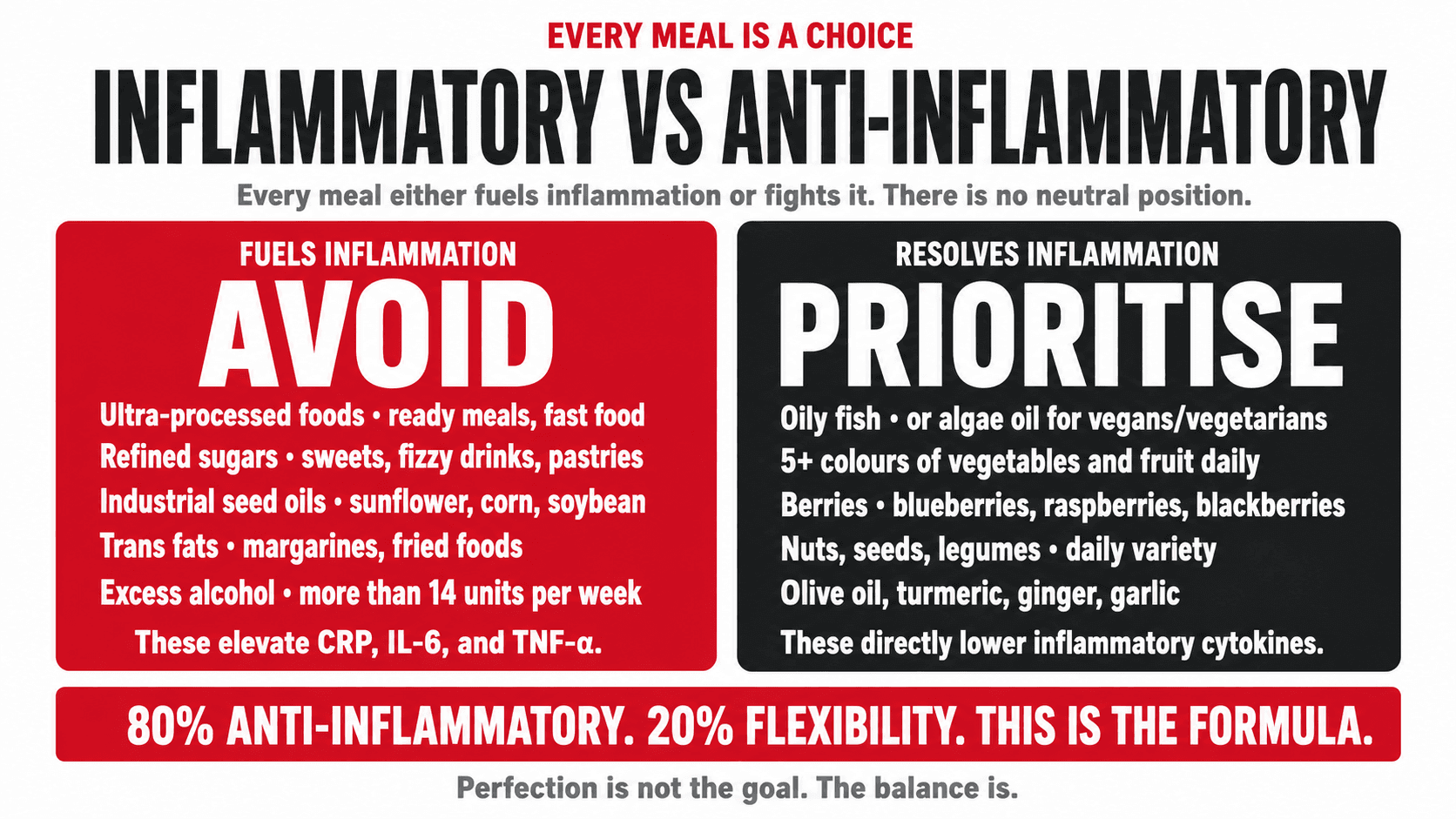
Your diet is either fuelling inflammation or fighting it. There is no neutral position. Every meal is either contributing to the chronic inflammatory load on your body or helping to resolve it. This is not hyperbole. It is what the research consistently demonstrates.
A systematic review and meta-analysis of randomised controlled trials found that whole-food dietary patterns, particularly those rich in fruits, vegetables, whole grains, legumes, nuts, seeds, and oily fish, were associated with reductions in key inflammatory markers including CRP(5). The Mediterranean dietary pattern has been the most extensively studied in this context and consistently shows anti-inflammatory effects across multiple trials(6).
The Anti-Inflammatory Food Framework
| Category | Foods to Prioritise | How They Help |
|---|---|---|
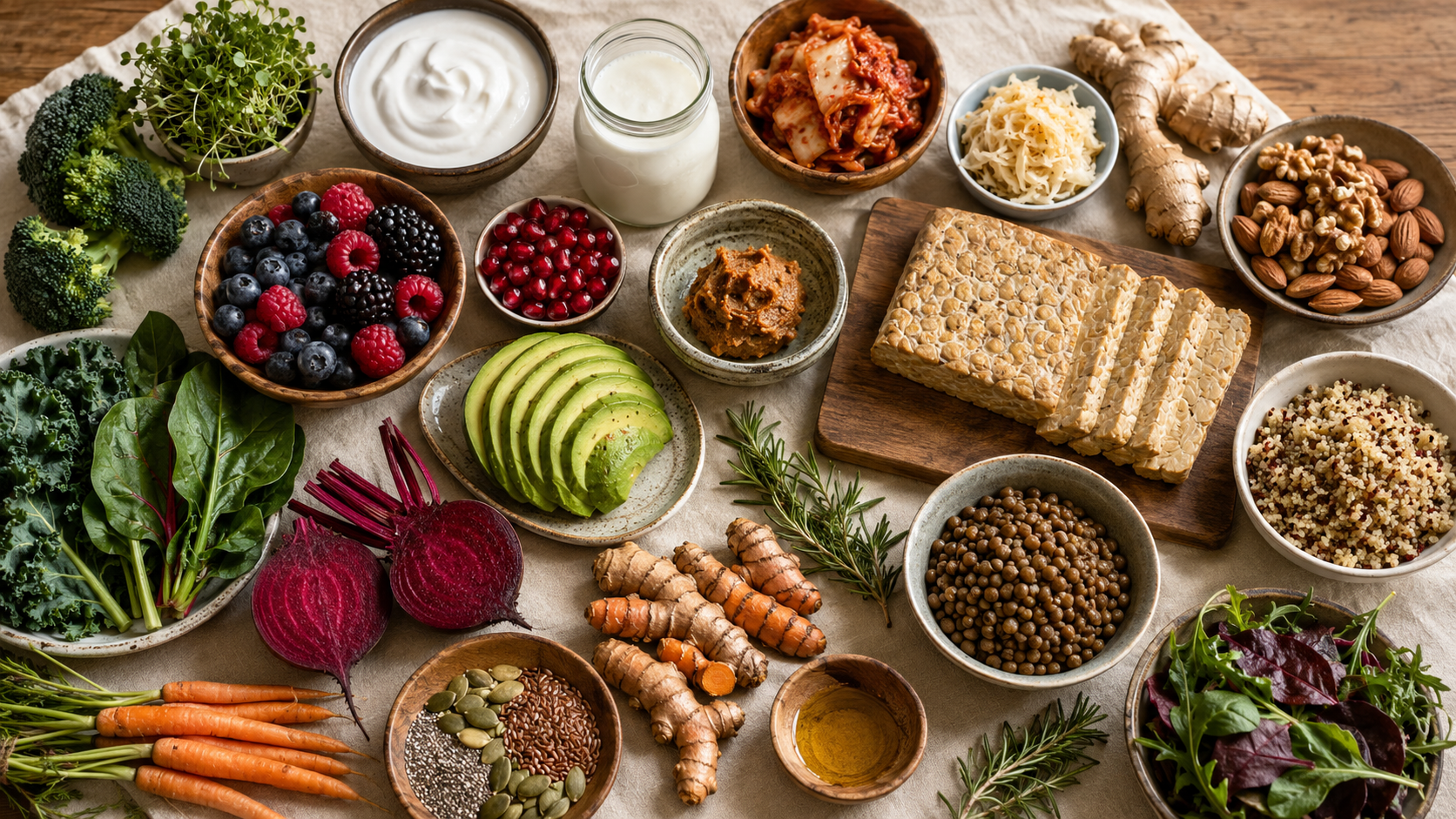
| Oily fish (or algae alternative) | Salmon, mackerel, sardines, anchovies; algae oil supplement for vegetarians/vegans | Rich in EPA and DHA omega-3 fatty acids which directly reduce inflammatory cytokine production |
| Colourful vegetables | Broccoli, spinach, kale, peppers, beetroot, sweet potato, tomatoes, red cabbage | Rich in polyphenols, carotenoids, and antioxidants that neutralise free radicals and reduce oxidative stress |
| Berries and dark fruits | Blueberries, blackberries, raspberries, cherries, pomegranate | Among the highest antioxidant capacity of any foods; anthocyanins actively reduce inflammatory signalling |
| Nuts and seeds | Walnuts, almonds, flaxseed, chia seeds, hemp seeds, pumpkin seeds | Provide omega-3 (ALA), vitamin E, magnesium, and zinc; all support anti-inflammatory pathways |
| Legumes and pulses | Lentils, chickpeas, black beans, kidney beans, edamame | High in fibre which feeds anti-inflammatory gut bacteria; excellent plant protein source |
| Whole grains | Oats, quinoa, brown rice, buckwheat, barley | Fibre supports gut health and blood sugar regulation; refined grains have the opposite effect |
| Herbs and spices | Turmeric, ginger, garlic, cinnamon, rosemary, oregano | Concentrated sources of bioactive anti-inflammatory compounds (curcumin in turmeric most studied) |
| Extra virgin olive oil | Used as primary cooking oil or dressing | Contains oleocanthal which has anti-inflammatory properties comparable to ibuprofen in mechanism |
| Fermented foods | Natural yoghurt, kefir, kimchi, sauerkraut, miso, tempeh | Support gut microbiome diversity which is critical for immune regulation and inflammation control |
Top Tip
Eat at least five different colours of vegetables and fruits every day. The pigments that give plant foods their colour (anthocyanins in berries, lycopene in tomatoes, beta-carotene in sweet potato, chlorophyll in greens) are themselves anti-inflammatory compounds. More colour means broader protection.
The Foods That Are Making Inflammation Worse
Just as some foods reduce inflammation, others actively promote it. And the unfortunate reality is that the standard modern diet is heavily weighted toward the inflammatory side. Ultra-processed foods, refined sugars, excess alcohol, and industrial seed oils are not just nutritionally empty. They are actively harmful, driving up the inflammatory markers that accelerate every aspect of biological ageing.
| Inflammatory Factor | Common Sources | Why It Is Harmful |
|---|---|---|
| Ultra-processed foods | Ready meals, fast food, processed meats, crisps, biscuits, sugary cereals | Engineered combinations of refined ingredients, additives, and preservatives that promote systemic inflammation and gut dysbiosis |
| Added sugars and refined carbohydrates | Sweets, fizzy drinks, white bread, pastries, fruit juices, breakfast cereals | Cause rapid blood sugar spikes which trigger insulin surges and increase production of inflammatory cytokines |
| Excess alcohol | Any consumption above moderate levels (>14 units per week) | Disrupts gut barrier integrity, promotes endotoxin release into bloodstream, directly increases liver inflammation |
| Industrial seed oils (excess omega-6) | Sunflower oil, corn oil, soybean oil, vegetable oil blends in packaged foods | Excessive omega-6 relative to omega-3 promotes pro-inflammatory eicosanoid production; the modern diet has a ratio of 15:1 to 20:1 versus the ideal of 2:1 to 4:1 |
| Trans fats | Some margarines, fried foods, commercially baked goods | Directly increase CRP and IL-6; one of the most potent dietary promoters of inflammation |
I am not suggesting you need to be perfect. Nobody eats perfectly all the time and striving for perfection creates its own stress. But I am suggesting that the balance matters. If 80 percent of your diet is built from the anti-inflammatory foods in the table above, and 20 percent allows for flexibility, you will be in a strong position. The problem most people face is that the ratio is reversed.
Omega-3 Fatty Acids: The Most Important Anti-Inflammatory Nutrient
If I had to choose a single nutrient that has the greatest impact on chronic inflammation, it would be omega-3 fatty acids, specifically EPA (eicosapentaenoic acid) and DHA (docosahexaenoic acid). These long-chain omega-3s are direct precursors to specialised pro-resolving mediators (SPMs), molecules that actively resolve inflammation rather than simply suppressing it(7).
The modern Western diet is dramatically deficient in omega-3 and excessively loaded with omega-6 fatty acids. Simopoulos estimated the current omega-6 to omega-3 ratio in Western diets at approximately 15:1 to 20:1, compared with the evolutionary ratio of approximately 1:1 to 2:1(8). This imbalance is not trivial. It directly skews the body’s inflammatory signalling toward a pro-inflammatory state.
| Dietary Pattern | Best Omega-3 Sources | Supplementation |
|---|---|---|
| Omnivore / Pescatarian | Salmon, mackerel, sardines, anchovies (2–3 portions per week) | Fish oil supplement if oily fish intake is low (minimum 500mg combined EPA/DHA daily) |
| Vegetarian | Flaxseed, chia seeds, walnuts, hemp seeds provide ALA; limited conversion to EPA/DHA (<10%) | Algae-based omega-3 supplement essential (minimum 250mg combined EPA/DHA daily) |
| Vegan | Same plant sources as vegetarian; ALA alone is insufficient for anti-inflammatory EPA/DHA | Algae-based omega-3 supplement non-negotiable (minimum 250mg combined EPA/DHA daily) |
As a lifelong vegetarian, I supplement with algae-based omega-3 every day and I recommend the same to every vegetarian and vegan client I work with. This is not optional. The conversion rate from plant-based ALA to the active EPA and DHA forms is too low to rely on food alone(9).
Top Tip
If you eat no oily fish, take an algae-based omega-3 supplement providing at least 250mg combined EPA and DHA daily. If you eat oily fish, aim for 2 to 3 portions per week. This single intervention addresses one of the most significant dietary contributors to chronic inflammation.
Gut Health: The Inflammation Control Centre
Approximately 70 percent of your immune system resides in your gut. The health of your gut microbiome, the trillions of bacteria that inhabit your digestive tract, directly influences systemic inflammation throughout your entire body. A diverse, well-balanced microbiome supports immune regulation and helps keep inflammatory responses in check. A depleted or imbalanced microbiome promotes immune dysfunction and chronic inflammation(10).
What damages gut health? Antibiotics (necessary sometimes, but destructive to gut diversity), chronic stress, poor sleep, low fibre intake, excessive alcohol, artificial sweeteners, and a diet dominated by ultra-processed foods. What supports it? Fibre, diversity of plant foods, fermented foods, adequate hydration, and regular exercise.
Top Tip
Aim for 30 different plant foods per week. This includes vegetables, fruits, legumes, whole grains, nuts, seeds, herbs, and spices. Diversity of plant intake is the single strongest predictor of gut microbiome health. Count your variety for one week and you may be surprised how limited it is.
Part Two: Hormonal Decline and What You Can Do About It
Hormones regulate virtually every process in your body: metabolism, muscle building, fat storage, energy, mood, sleep, libido, bone density, cognitive function. After 30, the hormonal environment begins to shift, and by 40, 50, and beyond, these changes become increasingly significant for both men and women.
The key hormonal changes are well documented. In men, testosterone declines by approximately 1 to 2 percent per year after age 30(11). In women, oestrogen and progesterone fluctuate increasingly through the late 30s and 40s (perimenopause), then decline dramatically through menopause. Growth hormone output decreases steadily in both sexes. Cortisol, the stress hormone, often becomes chronically elevated due to lifestyle factors, further compounding the problem.
| The Hormonal Shift After 40 | Direction |
|---|---|
| MEN: Testosterone | Declines 1–2% per year after 30 |
| MEN: Growth hormone | Declines steadily from mid-20s |
| MEN: Cortisol | Rises if chronic stress, poor sleep, excess body fat |
| MEN: Insulin sensitivity | Declines especially with inactivity and weight gain |
| WOMEN: Oestrogen | Fluctuates in perimenopause (late 30s–40s), drops dramatically at menopause |
| WOMEN: Progesterone | Declines before oestrogen, often from mid-30s |
| WOMEN: Growth hormone | Declines steadily |
| WOMEN: Cortisol | Rises with same drivers as men, amplified by hormonal fluctuations |
| WOMEN: Insulin sensitivity | Declines particularly post-menopause |
| These shifts are natural. But the rate and severity of decline are heavily influenced by lifestyle. | |

Nutrition That Supports Hormonal Health
You cannot eat your way to the testosterone levels of a 25-year-old or fully replace oestrogen through food. But you can create a nutritional environment that supports optimal hormonal function and slows the rate of decline. This is the difference between a gradual, manageable shift and a dramatic hormonal collapse.
| Hormone / System | Nutritional Support Strategy | Key Foods (All Diets) |
|---|---|---|
| Testosterone (men) | Adequate zinc, vitamin D, healthy fats, sufficient calories (chronic undereating suppresses testosterone), adequate sleep | Pumpkin seeds, oysters (if omnivore), eggs, avocado, olive oil, nuts, fortified foods; supplement vitamin D 1,000–4,000 IU |
| Oestrogen balance (women) | Phytoestrogens (plant compounds with mild oestrogenic activity), adequate calcium, vitamin D, magnesium, B vitamins | Soy foods (tofu, tempeh, edamame, soy milk), flaxseed, sesame seeds, legumes, wholegrains; fermented soy particularly beneficial |
| Growth hormone | Adequate protein (stimulates GH release), adequate sleep (GH released during deep sleep), intermittent fasting may support (evidence mixed) | High-quality protein at every meal; prioritise sleep above all other interventions for GH |
| Cortisol regulation | Stable blood sugar (avoid long gaps between meals), adequate magnesium, omega-3s, limit caffeine after midday, limit alcohol | Regular balanced meals every 3–5 hours; magnesium-rich foods (dark chocolate, almonds, spinach); omega-3 sources |
| Insulin sensitivity | Fibre at every meal, adequate protein, minimise refined carbohydrates, prioritise low-GI foods | Legumes, vegetables, wholegrains, protein at every meal; cinnamon may modestly improve insulin sensitivity |
| Thyroid function | Adequate iodine, selenium, zinc, iron; avoid excessive soy if thyroid is compromised (moderate soy intake is fine for most) | Seaweed, iodised salt, Brazil nuts (selenium), eggs, dairy; vegans should supplement iodine (150mcg/day) |
For women navigating perimenopause and menopause, I want to highlight the role of phytoestrogens. Soy foods, including tofu, tempeh, edamame, and soy milk, contain isoflavones that have mild oestrogenic activity. Population studies consistently show that women in cultures with high soy consumption report fewer menopausal symptoms(12). This does not mean soy replaces hormone replacement therapy where it is indicated, but it can be a valuable nutritional tool, and it is one that vegetarian and vegan women often have natural access to.
Top Tip
For men over 40 concerned about testosterone: before considering any supplement, fix your sleep, reduce excess body fat, lift weights three times per week, eat adequate zinc and vitamin D, and manage stress. These five interventions address the most common modifiable causes of low testosterone. Most men who do all five see meaningful improvement.
Exercise: The Most Powerful Hormonal Intervention
Resistance training is not just about building muscle. It is a hormonal intervention. Every time you lift weights, you trigger acute increases in testosterone, growth hormone, and insulin-like growth factor 1 (IGF-1)(13). While these acute elevations are transient, the cumulative effect of consistent training creates a more favourable hormonal environment over time.
More importantly, resistance training builds and preserves the muscle tissue that is itself hormonally active. Muscle functions as an endocrine organ, releasing myokines during contraction that have systemic anti-inflammatory, metabolic, and neuroprotective effects(14). The more muscle you carry, the greater this protective effect. The less muscle you have, the more vulnerable you become to the inflammatory and hormonal decline of ageing.
A meta-analysis confirmed that resistance exercise significantly lowers CRP and tends to reduce IL-6 in older adults, providing direct evidence that lifting weights reduces the chronic inflammation driving age-related disease(15). Lifelong exercisers show lower levels of inflammatory markers compared with sedentary age-matched peers, though some age-related increase in inflammation appears to occur regardless(16).
Top Tip
Combine resistance training (3 sessions per week) with daily walking (20 to 40 minutes) and 2 to 3 portions of oily fish or an algae supplement per week. This combination addresses inflammation, hormonal health, and muscle preservation simultaneously. It is the most powerful anti-ageing prescription available.

Sleep and Stress: Where Inflammation and Hormones Collide
Poor sleep and chronic stress are where inflammation and hormonal decline converge in the most destructive way. They amplify each other and accelerate every negative process I have described in this article.
Sleep deprivation increases inflammatory markers including IL-6 and CRP, impairs insulin sensitivity within days, reduces testosterone in men, disrupts oestrogen and progesterone cycling in women, suppresses growth hormone release, and increases cortisol. A single week of sleeping fewer than 6 hours per night reduces testosterone in young men by 10 to 15 percent(17). In older adults, the effects are compounded because the hormonal baseline is already lower.
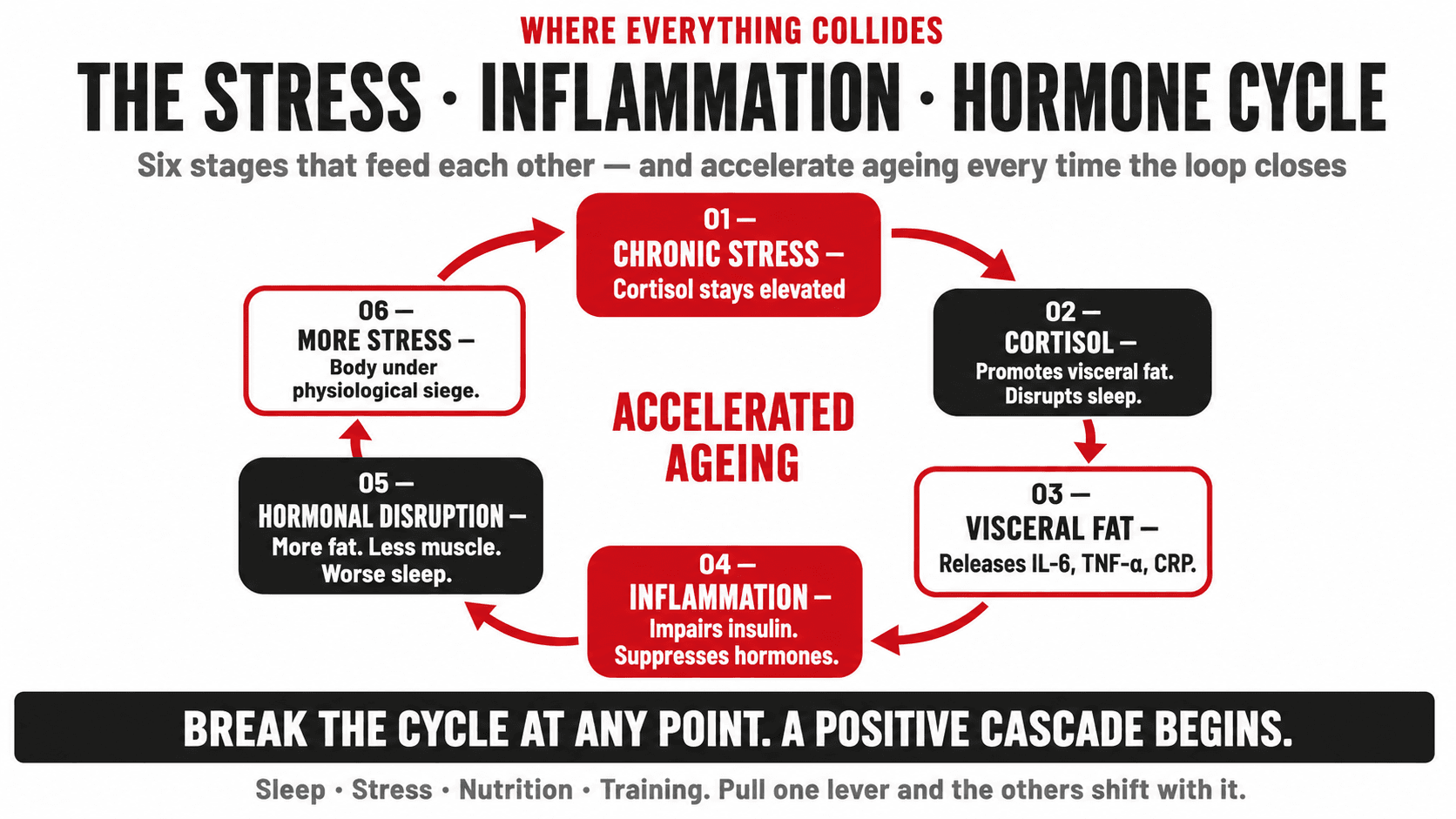
Chronic psychological stress operates through cortisol. Sustained cortisol elevation promotes visceral fat storage (the most inflammatory type of body fat), impairs immune function, accelerates muscle breakdown, disrupts blood sugar regulation, and interferes with sleep. It creates a vicious cycle: stress causes poor sleep, poor sleep elevates cortisol, elevated cortisol increases inflammation, inflammation disrupts hormones, and disrupted hormones make you more vulnerable to stress.
| The Stress-Inflammation-Hormone Vicious Cycle |
|---|
| CHRONIC STRESS → Cortisol stays elevated |
| Cortisol promotes visceral fat storage + disrupts sleep |
| Visceral fat releases inflammatory cytokines (IL-6, TNF-α, CRP) |
| Inflammation impairs insulin sensitivity + suppresses testosterone/oestrogen |
| Hormonal disruption → more fat storage + less muscle + worse sleep |
| Worse sleep + more fat + less muscle → MORE STRESS on the body |
| CYCLE REPEATS AND ACCELERATES. Breaking this cycle at any point (sleep, stress, nutrition, training) creates a positive cascade. |
The Complete Anti-Ageing Protocol: Bringing It All Together
Everything I have covered in this article, inflammation, hormones, and nutrition, is interconnected. You cannot address one without affecting the others. The good news is that the interventions overlap. The same strategies that reduce inflammation also support hormonal health and improve nutritional status. Here is the complete protocol.
| Intervention | What to Do | What It Addresses |
|---|---|---|
| Resistance training | 3 sessions per week, compound movements, progressive overload | Reduces CRP/IL-6, stimulates testosterone/GH, builds muscle (endocrine organ), improves insulin sensitivity |
| Daily walking | 20–40 minutes, ideally outdoors in daylight | Lowers cortisol, supports cardiovascular health, aids digestion, improves mood, regulates circadian rhythm |
| Anti-inflammatory diet | 80% whole foods: vegetables, fruits, legumes, whole grains, nuts, seeds, oily fish/algae oil | Reduces systemic inflammation, supports gut microbiome, provides micronutrients for hormonal function |
| Adequate protein | 1.4–2.0g/kg bodyweight, spread across 3–4 meals daily | Supports muscle protein synthesis, stimulates GH release, improves satiety and blood sugar control |
| Omega-3 intake | Oily fish 2–3x/week or algae-based supplement daily (250mg+ EPA/DHA) | Directly reduces inflammatory cytokine production, supports brain and cardiovascular health |
| Gut health | 30+ plant foods per week, fermented foods daily, 30g+ fibre per day | Supports immune regulation, reduces systemic inflammation, improves nutrient absorption |
| Sleep | 7–9 hours per night, consistent schedule, dark cool room | GH release, testosterone/oestrogen regulation, cortisol normalisation, immune function, cellular repair |
| Stress management | Daily deliberate practice: walking, boundaries, breathing, training | Reduces cortisol, breaks the stress-inflammation cycle, protects hormonal function |
| Vitamin D | Supplement 1,000–4,000 IU daily, year-round in UK | Immune regulation, bone health, hormonal support (testosterone, insulin sensitivity) |
| Limit alcohol | <14 units per week, ideally less | Reduces gut inflammation, improves sleep quality, supports liver function and hormonal metabolism |
How I Can Help You
The interaction between inflammation, hormones, and nutrition is complex. But the solutions are practical, achievable, and within your control. You do not need to be a scientist to implement them. You need a plan, accountability, and someone who understands how these factors work together in real people, not just in research papers.
That is what I provide. I am a performance coach. I have helped hundreds of clients through body transformations. I work one-to-one with clients online globally. I coach clients of all dietary backgrounds. As a lifelong vegetarian, I bring personal understanding to the anti-inflammatory and hormonal challenges of plant-based nutrition.
I offer one-to-one coaching online globally. If this article has given you a clearer picture of what is happening inside your body, let me help you do something about it.
Contact me at trperformancecoaching.com. Your body is either inflaming or healing. Let me help you shift the balance.
Work with Me
Get a personalised coaching plan built around your goals, your schedule, and your life.
Enquire NowReferences
- Franceschi C, Bonafe M, Marchegiani F, Olivieri F, Cardelli M, Cavallone L, et al. Inflamm-aging: an evolutionary perspective on immunosenescence. Annals of the New York Academy of Sciences. 2000; 908: 244–254.
- Ferrucci L, Fabbri E. Inflammageing: chronic inflammation in ageing, cardiovascular disease, and frailty. Nature Reviews Cardiology. 2018; 15(9): 505–522.
- Marcos-Perez D, Sanchez-Flores M, Proano E, Rivadeneira F, Ikram MA, Suarez-Alvarez B, et al. Biomarkers of the ageing immune system and their association with frailty: a systematic review. Experimental Gerontology. 2023; 176: 112163.
- Puzianowska-Kuznicka M, Owczarz M, Wieczorowska-Tobis K, Nadrowski P, Chudek J, Slusarczyk P, et al. Interleukin-6 and C-reactive protein, successful aging, and mortality: the PolSenior study. Immunity and Ageing. 2016; 13: 21.
- Eichelmann F, Schwingshackl L, Fedirko V, Aleksandrova K. Effects of dietary patterns on biomarkers of inflammation and immune responses: a systematic review and meta-analysis of randomized controlled trials. Advances in Nutrition. 2022; 13(3): 101–113.
- Martucci M, Ostan R, Biondi F, Bellavista E, Fabbri C, Bertarelli C, et al. Mediterranean diet and inflammaging within the hormesis paradigm. Nutrition Reviews. 2017; 75(6): 442–455.
- Calder PC. Omega-3 fatty acids and inflammatory processes: from molecules to man. Biochemical Society Transactions. 2017; 45(5): 1105–1115.
- Simopoulos AP. The importance of the ratio of omega-6/omega-3 essential fatty acids. Biomedicine and Pharmacotherapy. 2002; 56(8): 365–379.
- Burdge GC, Calder PC. Conversion of alpha-linolenic acid to longer-chain polyunsaturated fatty acids in human adults. Reproduction, Nutrition, Development. 2005; 45(5): 581–597.
- Claesson MJ, Jeffery IB, Conde S, Power SE, O’Connor EM, Cusack S, et al. Gut microbiota composition correlates with diet and health in the elderly. Nature. 2012; 488(7410): 178–184.
- Feldman HA, Longcope C, Derby CA, Johannes CB, Araujo AB, Coviello AD, et al. Age trends in the level of serum testosterone and other hormones in middle-aged men: longitudinal results from the Massachusetts Male Aging Study. Journal of Clinical Endocrinology and Metabolism. 2002; 87(2): 589–598.
- Messina M. Soy and health update: evaluation of the clinical and epidemiologic literature. Nutrients. 2016; 8(12): 754.
- Kraemer WJ, Ratamess NA. Hormonal responses and adaptations to resistance exercise and training. Sports Medicine. 2005; 35(4): 339–361.
- Pedersen BK, Febbraio MA. Muscles, exercise and obesity: skeletal muscle as a secretory organ. Nature Reviews Endocrinology. 2012; 8(8): 457–465.
- Sardeli AV, Tomeleri CM, Cyrino ES, Fernhall B, Cavaglieri CR, Chacon-Mikahil MPT. Effect of resistance training on inflammatory markers of older adults: a meta-analysis. Experimental Gerontology. 2018; 111: 188–196.
- Monteiro-Junior RS, et al. Does lifelong exercise counteract low-grade inflammation associated with aging? A systematic review and meta-analysis. Sports Medicine. 2025; 55: 231–250.
- Leproult R, Van Cauter E. Effect of 1 week of sleep restriction on testosterone levels in young healthy men. JAMA. 2011; 305(21): 2173–2174.
Disclaimer: This article is for educational purposes only and does not constitute medical advice. If you have existing health conditions, consult your GP or relevant healthcare professional before starting any new exercise or nutrition programme.