
If your fat loss plan revolves around running on a treadmill, you are using one of the least effective tools available to you. I know that is a bold statement. Running has been the default cardio choice for decades, and the treadmill is the most popular machine in every gym on the planet. But popularity does not equal effectiveness, and when it comes to burning fat while preserving muscle, running is nowhere near the top of the list.
One of the most common conversations I have with new clients starts the same way: “I have been running three to five times per week and I am not getting leaner.” There is a reason for that, and this article will explain exactly what it is and what you should be doing instead.
Why the Treadmill Is Failing You
There are three fundamental problems with relying on treadmill running for fat loss. First, moderate intensity steady state running burns fewer total calories than most people assume, and the calorie counter on the machine dramatically overstates the number (1). Second, running at a steady pace does very little to elevate your metabolism after the session ends. The afterburn effect, known as excess post-exercise oxygen consumption (EPOC), is minimal with moderate intensity jogging compared to higher intensity or resistance based alternatives (2). Third, and most critically, regular running during a calorie deficit promotes the loss of lean muscle tissue. A 2025 meta-analysis found that aerobic training alone preserved 0.88 kilograms less fat-free mass than resistance training during a deficit (3). Less muscle means a lower resting metabolic rate, which means your body burns fewer calories at rest, which makes fat loss progressively harder over time.
This does not mean running has no value. It improves cardiovascular health, it clears your head, and some people genuinely enjoy it. But if your primary goal is fat loss and body composition change, there are five workouts that deliver significantly better results in less time.
The Five Workouts That Outperform the Treadmill
#1 Sled Push / Prowler
Time
10 to 20 min
Muscles Worked
Full body
EPOC
Very high
Muscle Sparing
Excellent
The sled push is the single most underrated fat loss exercise in any gym. It combines full body muscular effort with cardiovascular demand in a way that nothing else replicates. Your quads, glutes, hamstrings, calves, core, chest, shoulders and arms are all working together to drive the sled forward, and your heart rate will be through the roof within the first set.
What makes the sled truly special is that it is almost entirely concentric. There is no eccentric (lowering) phase, which means dramatically less muscle soreness and faster recovery compared to running (4). You can train hard on the sled and still recover in time for your next resistance session. It also produces a massive EPOC response because of the intensity and the full body muscle recruitment. A typical sled session of 10 to 15 minutes will leave you burning additional calories for hours afterwards.
How to use it: Load the sled with a moderate to heavy weight. Push it for 20 to 30 metres, rest 45 to 60 seconds, and repeat for 8 to 12 sets. If your gym does not have a sled, a heavy farmer's walk or a tyre flip provides a similar stimulus.
Top Tip
The sled push is one of the only exercises I prescribe to almost every single client regardless of their training level. Beginners can push light, advanced clients can push heavy. The scalability is unmatched.
#2 Assault Bike / Stationary Bike HIIT
Time
12 to 20 min
Muscles Worked
Legs + arms (assault) / Legs (bike)
EPOC
Very high
Muscle Sparing
Very good
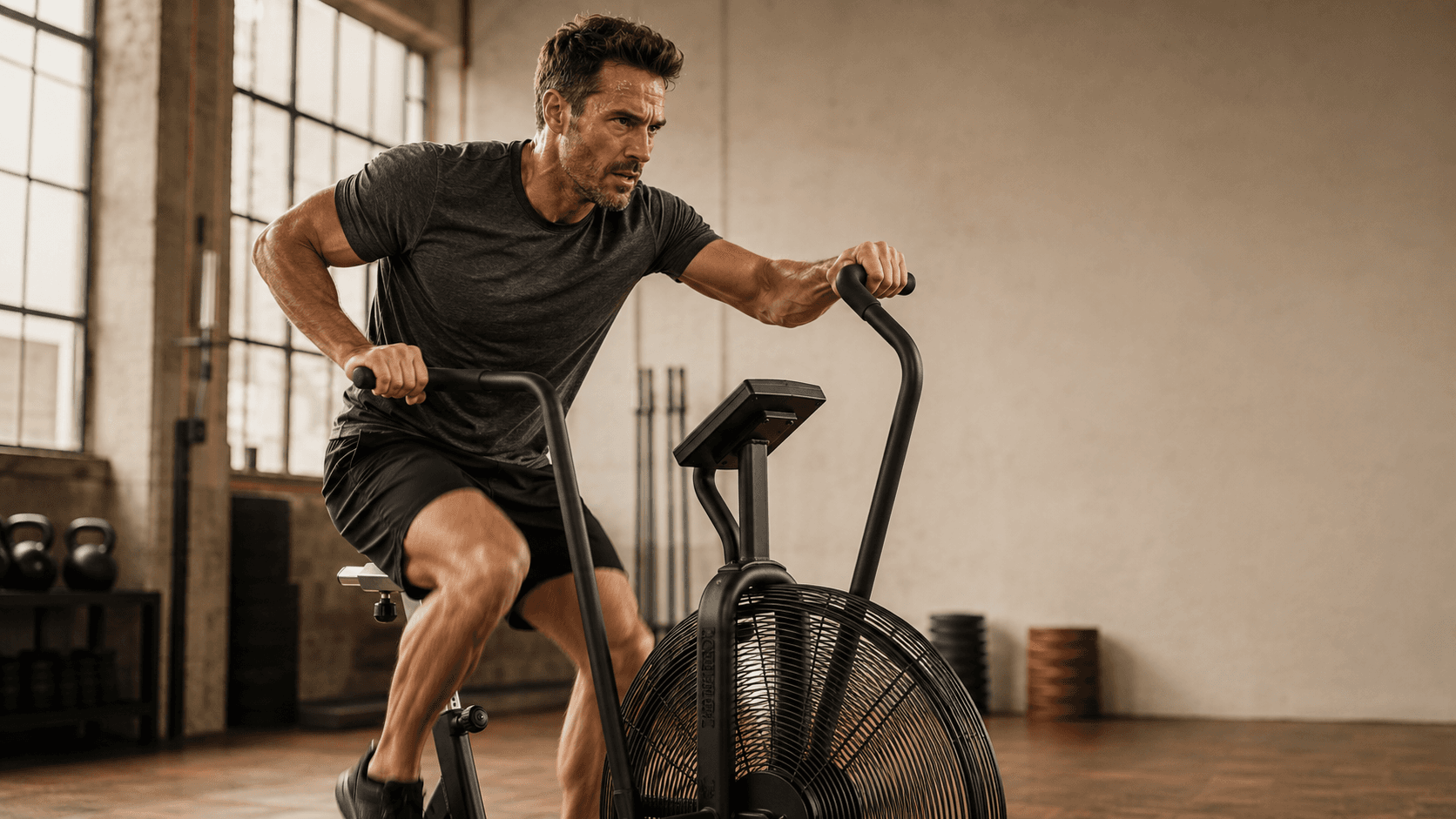
The assault bike, sometimes called the air bike or fan bike, is a machine specifically designed to punish you. The harder you pedal and push the handles, the more resistance it creates. There is no coasting. Every second demands effort. For fat loss, it is devastatingly effective.
HIIT protocols on the assault bike or a standard stationary bike have been shown in multiple meta-analyses to produce comparable or superior fat loss to steady state cardio in significantly less time. A 2024 umbrella review covering 16 systematic reviews and 79 randomised controlled trials found that interval training produced equivalent fat loss to moderate intensity continuous training in approximately 40 percent less time (5). When you add in the substantial EPOC from high intensity intervals, the total caloric advantage over a treadmill jog is significant.
How to use it: Try 20 seconds of maximal effort followed by 40 seconds of easy pedalling for 10 to 15 rounds. Total session time: 10 to 15 minutes. Alternatively, 30 seconds on, 30 seconds off for 10 to 12 rounds works brilliantly. If using a standard stationary bike, increase the resistance during work intervals and reduce it during rest.

#3 Kettlebell Complexes
Time
15 to 25 min
Muscles Worked
Full body
EPOC
High
Muscle Sparing
Good
Kettlebells sit in a unique space between cardiovascular training and resistance training, which is exactly why they are so effective for fat loss. A study funded by the American Council on Exercise found that a 20 minute kettlebell snatch protocol burned approximately 20 calories per minute, an output comparable to running at a six-minute mile pace (6). The difference is that kettlebells also build muscular strength and power, which running does not.
A kettlebell complex involves stringing together multiple exercises without putting the bell down: swings, cleans, presses, squats, rows. This creates an extended period of muscular tension and cardiovascular demand that drives both calorie expenditure during the session and a significant afterburn afterwards. Research has shown that kettlebell complexes can keep oxygen uptake elevated above resting levels for up to 60 minutes post-workout (7).
How to use it: Choose 4 to 5 exercises. Perform 8 to 10 reps of each without resting between movements. Rest 60 to 90 seconds after the full complex, then repeat for 4 to 6 rounds. Example complex: kettlebell swings, goblet squats, single arm rows (each side), overhead press (each side), Romanian deadlifts.
Top Tip
Kettlebells are perfect for clients who train at home or who travel frequently. A single 16kg or 20kg bell and a 20 minute session is enough to produce a genuine training stimulus.
#4 Rowing Machine Intervals
Time
15 to 25 min
Muscles Worked
Full body (85% of muscles)
EPOC
High
Muscle Sparing
Very good
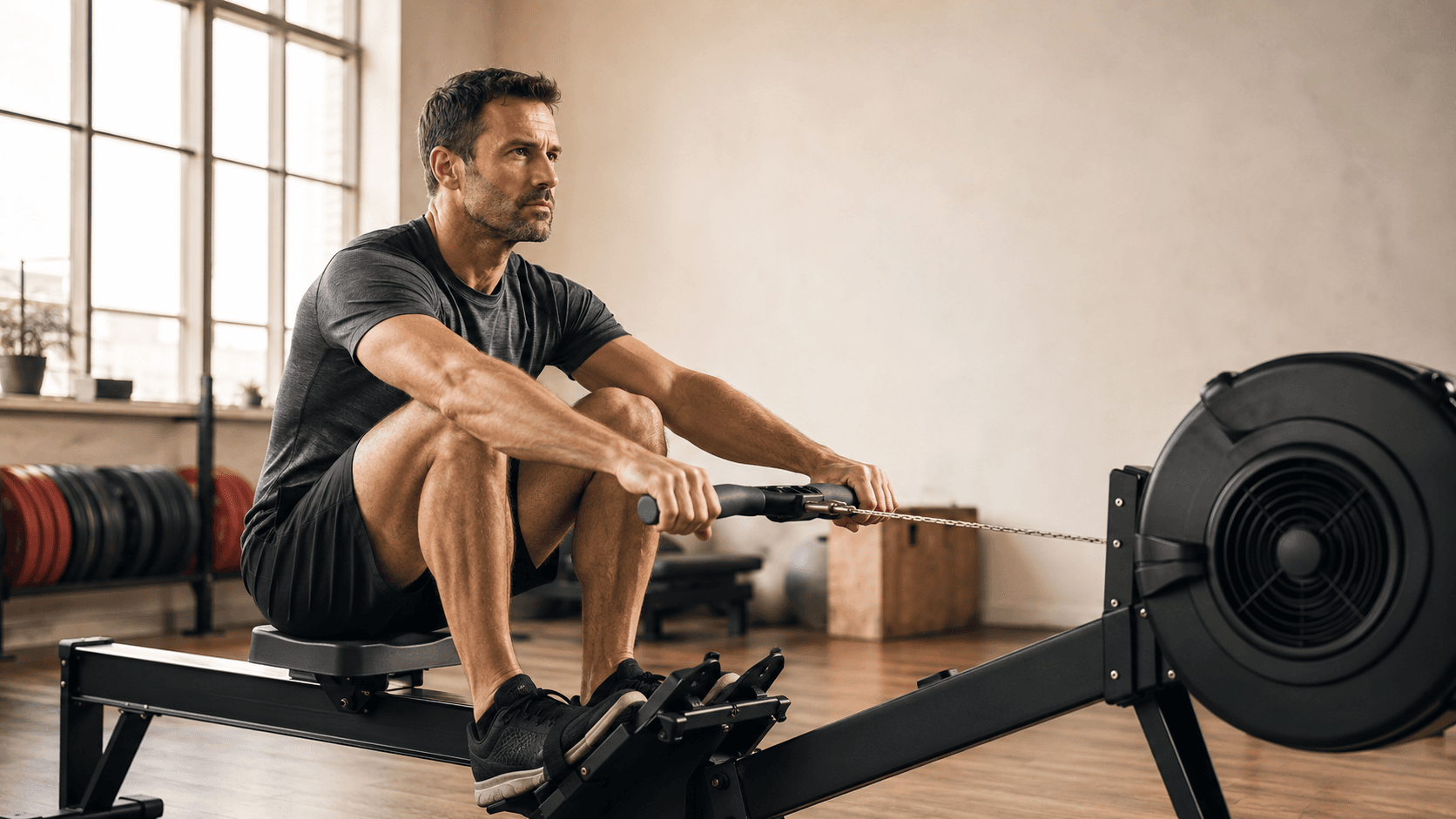
The rowing machine is the quiet achiever of the gym floor. While everyone queues for the treadmill, the rowers sit empty. This is a mistake. Rowing engages approximately 85 percent of your body's muscle mass in every single stroke: legs, glutes, back, core, arms, and shoulders (8). More muscle recruitment means more energy expenditure per minute and a greater metabolic disturbance that drives EPOC.
When performed as intervals, rowing becomes even more effective. HIIT rowing protocols have been shown to produce 25 to 30 percent greater calorie expenditure during the session and up to 14 percent greater afterburn compared to steady state rowing of the same duration (9). The low impact nature of rowing also makes it ideal for heavier clients, those with joint issues, or anyone who finds running uncomfortable.
How to use it: Row 250 metres as fast as you can, then rest for 60 seconds. Repeat for 8 to 10 rounds. Alternatively, row hard for 30 seconds and recover for 30 seconds for 12 to 15 rounds. Focus on powerful leg drive and a controlled recovery stroke.

#5 Resistance Circuit Training
Time
20 to 35 min
Muscles Worked
Full body
EPOC
Very high
Muscle Sparing
Excellent
This is the option that gives you everything at once: strength, cardiovascular conditioning, muscle preservation, and significant calorie burn. Resistance circuit training involves performing a series of resistance exercises back to back with minimal rest, creating a sustained elevation in heart rate while simultaneously providing the mechanical tension your muscles need to grow and be preserved during a calorie deficit.
A 2022 meta-analysis covering 116 studies in Obesity Reviews confirmed that resistance training was essential for preserving lean mass during calorie restriction, and that this preservation directly supported long term fat loss outcomes (10). When you structure resistance exercises as a circuit, you get the cardiovascular benefit of continuous movement alongside the muscle building benefit of progressive resistance. The EPOC from a well designed resistance circuit is among the highest of any training modality because of the combination of mechanical and metabolic stress.
How to use it: Choose 5 to 6 compound exercises. Perform 10 to 12 reps of each with 15 to 20 seconds rest between exercises. Rest 90 seconds between rounds. Complete 3 to 5 rounds. Example circuit: dumbbell squats, press ups, dumbbell rows, lunges, dumbbell shoulder press, plank hold (30 seconds). This works equally well for omnivores, vegetarians, and vegans, as long as protein intake is adequate to support recovery.
Top Tip
Resistance circuit training is my go-to recommendation for anyone with limited time. Three sessions of 25 minutes per week, combined with daily walking, is enough to produce visible body composition change within 8 to 12 weeks.
Head to Head: How These Five Stack Up Against Treadmill Running
| Workout | Calorie Burn / Min | EPOC | Muscle Sparing | Joint Impact | Time Needed |
|---|---|---|---|---|---|
| Treadmill Running (moderate) | 8 to 12 | Low | Poor | High | 30 to 60 min |
| Sled Push / Prowler | 12 to 18 | Very High | Excellent | Very Low | 10 to 20 min |
| Assault Bike HIIT | 14 to 20 | Very High | Very Good | Very Low | 12 to 20 min |
| Kettlebell Complexes | 15 to 20 | High | Good | Low | 15 to 25 min |
| Rowing Intervals | 10 to 16 | High | Very Good | Very Low | 15 to 25 min |
| Resistance Circuits | 8 to 14 | Very High | Excellent | Low | 20 to 35 min |
The pattern is clear. Every single one of these five workouts either matches or exceeds treadmill running in calorie burn per minute, significantly outperforms it in EPOC, dramatically outperforms it in muscle preservation, and does so with lower joint impact and in less total time. The treadmill is not a bad machine. But for fat loss specifically, it is a limited one.
How to Put This Into a Weekly Programme
| SAMPLE FAT LOSS TRAINING WEEK | |
|---|---|
| Monday | Resistance training: upper body (45 to 60 min) + 10,000 steps |
| Tuesday | Assault bike HIIT (15 min) or sled work (12 min) + 10,000 steps |
| Wednesday | Resistance training: lower body (45 to 60 min) + 10,000 steps |
| Thursday | Rest day. Walk only. 10,000+ steps. |
| Friday | Resistance circuit training (25 to 35 min) + 10,000 steps |
| Saturday | Rowing intervals (20 min) or kettlebell complex (20 min) + 10,000 steps |
| Sunday | Rest day. Walk only. 10,000+ steps. |
This structure gives you three resistance sessions to build and preserve muscle, two to three dedicated conditioning sessions using the workouts described above, two genuine rest days, and a non-negotiable 10,000 step daily target that underpins the entire programme. This is the type of framework I use with every client I coach, adapted to their specific health conditions, training experience, dietary preference, and schedule.
A Note on Nutrition
No workout, no matter how effective, will override a poor diet. These five workouts create the metabolic conditions for accelerated fat loss, but only if you are eating in a moderate calorie deficit with adequate protein. For most people I work with, that means 1.6 to 2.2 grams of protein per kilogram of bodyweight per day (11), spread across three to four meals. For omnivores, that could be chicken, fish, eggs, lean beef, and dairy. For vegetarians and vegans, that means tofu, tempeh, seitan, lentils, chickpeas, edamame, pea protein, soy protein, plant based Greek yoghurt, and quality mock meats. I am a lifelong vegetarian and I hit my protein targets every single day. It is absolutely achievable regardless of your dietary background.
The Bottom Line
If you have been running on a treadmill and wondering why your body is not changing, this is why. Running is one dimensional. It burns a modest number of calories, produces minimal afterburn, fails to preserve muscle, and creates repetitive joint stress that limits how often you can train. The five workouts in this article address every one of those shortcomings. They burn more calories, produce greater EPOC, preserve or build muscle, spare your joints, and take less time.
I work one-to-one with clients online globally. Whether you are a meat eater, vegetarian, vegan, or anything in between. Whether you are managing Type 2 diabetes, hypertension, PCOS, menopause, or you simply want to look and feel the best you ever have. I build bespoke training and nutrition programmes around your real life, your real goals, and the evidence that actually works.
If you are ready to stop running in circles and start making real progress, get in touch through trperformancecoaching.com.
Work with Me
Get a personalised coaching plan built around your goals, your schedule, and your life.
Enquire NowReferences
- Lam YY, Ravussin E. Analysis of energy metabolism in humans: A review of methodologies. Molecular Metabolism. 2016;5(11):1057-1071.
- LaForgia J, Withers RT, Gore CJ. Effects of exercise intensity and duration on the excess post-exercise oxygen consumption. Journal of Sports Sciences. 2006;24(12):1247-1264.
- Campbell BI, et al. Comparison of concurrent, resistance, or aerobic training on body fat loss: a systematic review and meta-analysis. Journal of the International Society of Sports Nutrition. 2025;22(1):2507949.
- Proske U, Morgan DL. Muscle damage from eccentric exercise: mechanism, mechanical signs, adaptation and clinical applications. Journal of Physiology. 2001;537(Pt 2):333-345.
- Tsai HH, et al. Effects of interval training on body fat loss: a systematic umbrella review of systematic reviews and meta-analyses. Sports Medicine. 2024;54(6):1563-1582.
- Schnettler C, Porcari JP, Foster C, Anders M. Physiologic responses to a kettlebell workout. ACE ProSource. 2010. American Council on Exercise.
- Sturdy LM, et al. Acute cardiovascular and metabolic responses to a kettlebell complex exercise session. Journal of Strength and Conditioning Research. 2024;38(1):e1-e8.
- Kang SR, et al. Rowing as aerobic exercise. Annals of Rehabilitation Medicine. 2016;40(4):625-637.
- Trapp EG, Chisholm DJ, Freund J, Boutcher SH. The effects of high-intensity intermittent exercise training on fat loss and fasting insulin levels of young women. International Journal of Obesity. 2008;32(4):684-691.
- Lopez P, Taaffe DR, Galvao DA, Newton RU, et al. Resistance training effectiveness on body composition and body weight outcomes in individuals with overweight and obesity across the lifespan: A systematic review and meta-analysis. Obesity Reviews. 2022;23(5):e13428.
- Jager R, Kerksick CM, Campbell BI, et al. International Society of Sports Nutrition Position Stand: protein and exercise. Journal of the International Society of Sports Nutrition. 2017;14:20.