Few topics in the fitness world generate as much debate as fasted cardio for fat loss. The idea is simple: if you exercise before eating, your body will burn more stored fat because glycogen levels are low after an overnight fast. It sounds logical. It has been promoted by bodybuilders and fitness influencers for decades. And it has a seductive appeal because it feels like you are getting a head start on fat burning before the day has even begun.
But does it actually work? The answer is more nuanced than the headlines suggest. In this article, I am going to walk you through exactly what happens in your body when you exercise in a fasted state, what the research actually shows about whether it leads to greater fat loss, and most importantly, how I use fasted cardio in practice with my coaching clients and when I do not.
What Exactly Is Fasted Cardio? Let Me Keep This Simple
Fasted cardio simply means doing cardiovascular exercise after a period of not eating, typically first thing in the morning before breakfast. In most cases, this means you have not eaten for approximately 8 to 12 hours overnight. Your blood sugar is at baseline, your insulin levels are low, and your liver glycogen stores are partially depleted.
The theory behind it is straightforward. When you eat, your body breaks down food into glucose, which is used as its primary fuel source. Insulin rises to manage blood sugar, and while insulin is elevated, fat burning is suppressed. After several hours without food, insulin drops, glycogen stores are reduced, and your body shifts towards using stored fat as fuel. The idea is that exercising in this state forces your body to rely more heavily on fat for energy.
The Physiology
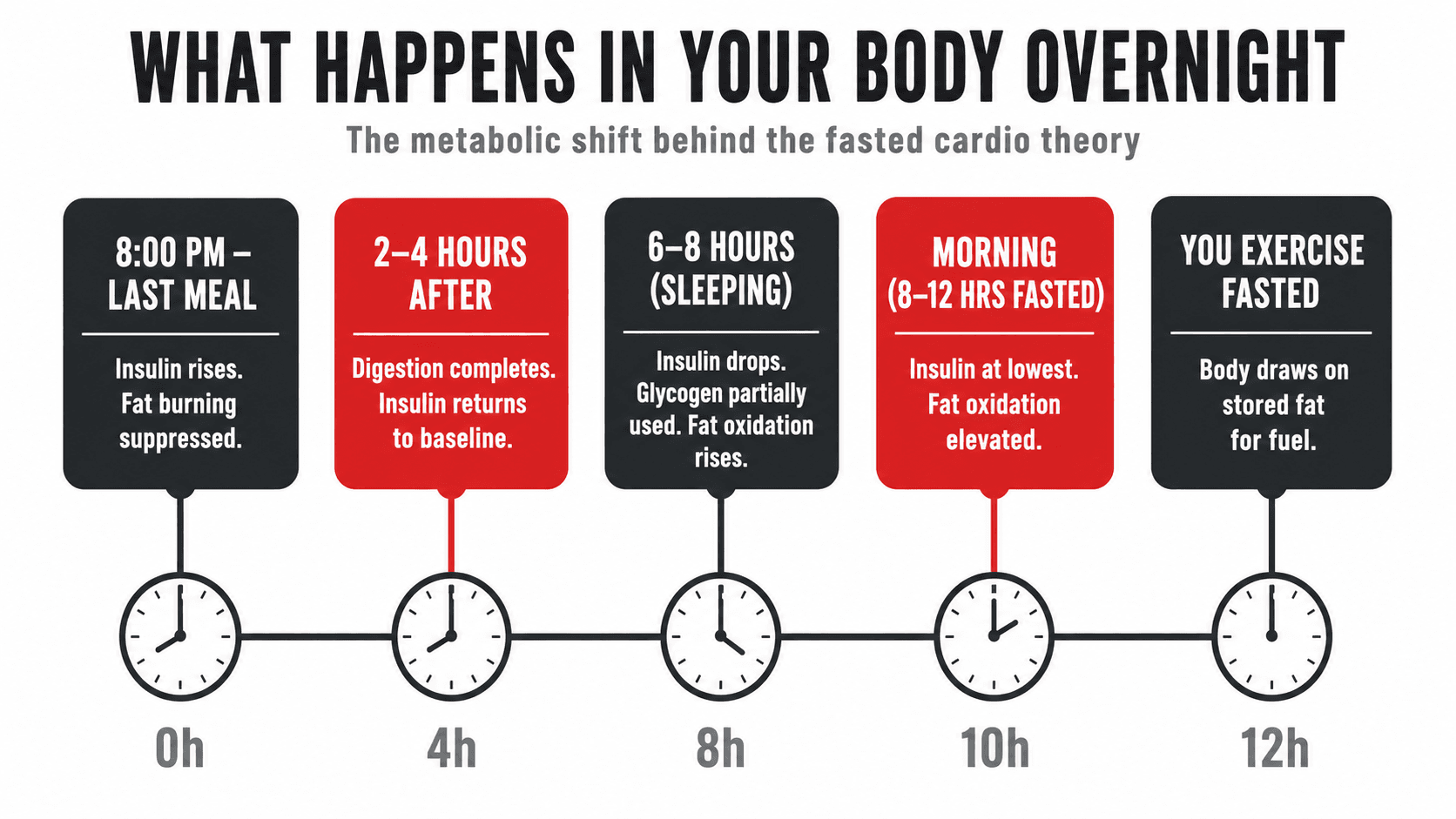
WHAT HAPPENS IN YOUR BODY OVERNIGHT (AND WHY FASTED CARDIO IS SUPPOSED TO WORK)
You Eat Your Last Meal (e.g. 8pm)
Blood sugar rises. Insulin is released to move glucose into cells. Fat burning is temporarily suppressed.
2 to 4 Hours After Eating
Digestion completes. Blood sugar and insulin begin to return to baseline. The body starts transitioning fuel sources.
6 to 8 Hours (While You Sleep)
Insulin drops to fasting levels. Liver glycogen is partially used. The body increasingly relies on free fatty acids for fuel.
Morning (8 to 12 Hours Fasted)
Insulin is at its lowest. Glycogen is partially depleted. Fat oxidation (the rate at which your body burns fat for energy) is elevated.
You Exercise Before Eating
With low insulin and reduced glycogen, your body draws more heavily on stored fat during low to moderate intensity activity.
THE OVERNIGHT FAST SETS THE STAGE. WHAT COMES NEXT IS WHERE IT GETS COMPLICATED.
On paper, this makes complete sense. And the physiology is not wrong. You absolutely do burn a higher proportion of fat for fuel during fasted low intensity exercise compared to fed exercise. But, and this is the critical distinction, burning more fat during a single session is not the same as losing more body fat over time. That difference is where the entire debate lives, and it is where most people get confused.
What the Research Actually Says: The Honest Answer
Let me lay out the evidence as fairly as I can, because the research tells an interesting and somewhat surprising story.
The Studies That Support Fasted Cardio
There is genuine evidence that exercising in a fasted state increases fat oxidation during the session itself. A study published in the British Journal of Nutrition found that participants who performed moderate intensity walking before breakfast burned 20 percent more fat during the session compared to those who ate breakfast first (1). Another study in the Journal of Nutrition and Metabolism found that fasted aerobic exercise performed at low to moderate intensity led to higher rates of fat oxidation compared to fed exercise (2).
There are also some interesting secondary benefits. Fasted morning exercise may improve insulin sensitivity throughout the day. Research published in the Journal of Clinical Endocrinology and Metabolism found that exercising before eating improved 24 hour glucose and insulin profiles compared to exercising after eating the same meal (3). For clients with insulin resistance, Type 2 diabetes, or PCOS, this is a potentially meaningful finding.
The Studies That Challenge Fasted Cardio
Here is where it gets complicated. While fasted exercise burns more fat during the session, several studies have found that this does not translate into greater total fat loss over time.
The most frequently cited study on this topic was published in the Journal of the International Society of Sports Nutrition by Schoenfeld and colleagues. They took 20 young women and assigned them to either a fasted or fed cardio group, with both groups performing one hour of steady state cardio three times per week for four weeks while following a matched calorie controlled diet. The result? Both groups lost a similar amount of body fat. There was no statistically significant difference between fasted and fed exercise for fat loss (4).
A subsequent systematic review published in the Journal of Functional Morphology and Kinesiology examined all available studies on the topic and concluded that performing cardio in a fasted versus fed state does not appear to increase fat loss when total calorie intake is controlled (5). The key phrase there is “when total calorie intake is controlled.” That is the variable that matters most.
| Factor | Fasted Cardio | Fed Cardio |
|---|---|---|
| Fat burned DURING session | Higher. Up to 20% more fat oxidation at low to moderate intensity (1) | Lower fat oxidation during session, higher carbohydrate use |
| Total fat loss OVER TIME | Similar to fed cardio when calories are matched (4, 5) | Similar to fasted cardio when calories are matched |
| Insulin sensitivity | May improve 24 hour glucose and insulin profiles (3) | Benefits insulin sensitivity through exercise itself, but no fasted advantage |
| Muscle preservation | Some concern about increased muscle protein breakdown in a fasted state (6) | Better muscle preservation when protein or amino acids are consumed before training |
| Performance quality | May be lower, especially for high intensity work. Some people feel weak or dizzy. | Generally better. Fuel availability supports higher intensity and longer duration. |
| Cortisol response | Tends to be higher in a fasted state, which may promote muscle breakdown (7) | Lower cortisol response when fed before exercise |
| Practical adherence | Convenient if you train early morning. Shorter eating window may help some people eat less. | More flexible scheduling. No requirement to train before eating. |
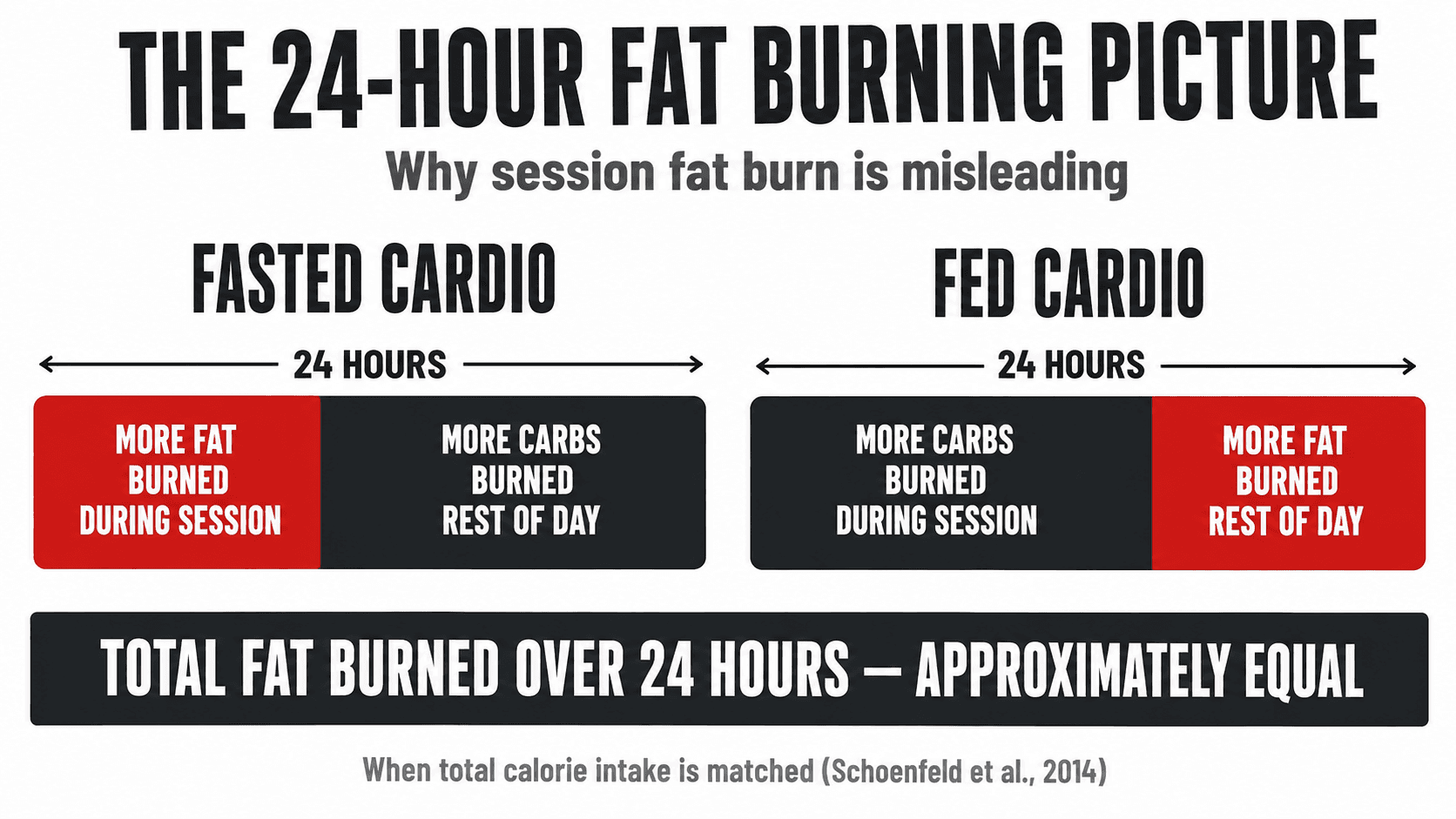
So what does all of this mean in plain language? It means that fasted cardio burns more fat during the session, but your body compensates later in the day by burning less fat and more carbohydrate. Over a 24 hour period, the total fat burned evens out. The scientific term for this is substrate compensation, and it is your body's way of maintaining energy balance regardless of when you ate relative to when you exercised.
| THE 24 HOUR FAT BURNING PICTURE (WHY SESSION FAT BURN IS MISLEADING) | |
|---|---|
| During Fasted Cardio | More fat is used for fuel. Less carbohydrate is used. Fat oxidation rate is elevated (1, 2). |
| After Fasted Cardio | Your body compensates by burning MORE carbohydrate and LESS fat for the rest of the day. |
| During Fed Cardio | More carbohydrate is used for fuel. Less fat is used during the session. |
| After Fed Cardio | Your body compensates by burning MORE fat for the rest of the day. |
| The 24 Hour Total | When calorie intake is the same, total fat burned over 24 hours is approximately equal regardless of whether you trained fasted or fed (4, 5). |
| The Real Takeaway | What matters for fat loss is your total energy balance over days and weeks, not what fuel source you used during one exercise session. |
Top Tip
Do not obsess over whether you are “burning fat” during your cardio session. Your body is constantly shifting between fuel sources throughout the day. What determines whether you lose body fat is your overall calorie balance across the week, not the fuel mix during any single workout.
The Problem: Why This Debate Distracts You From What Actually Matters
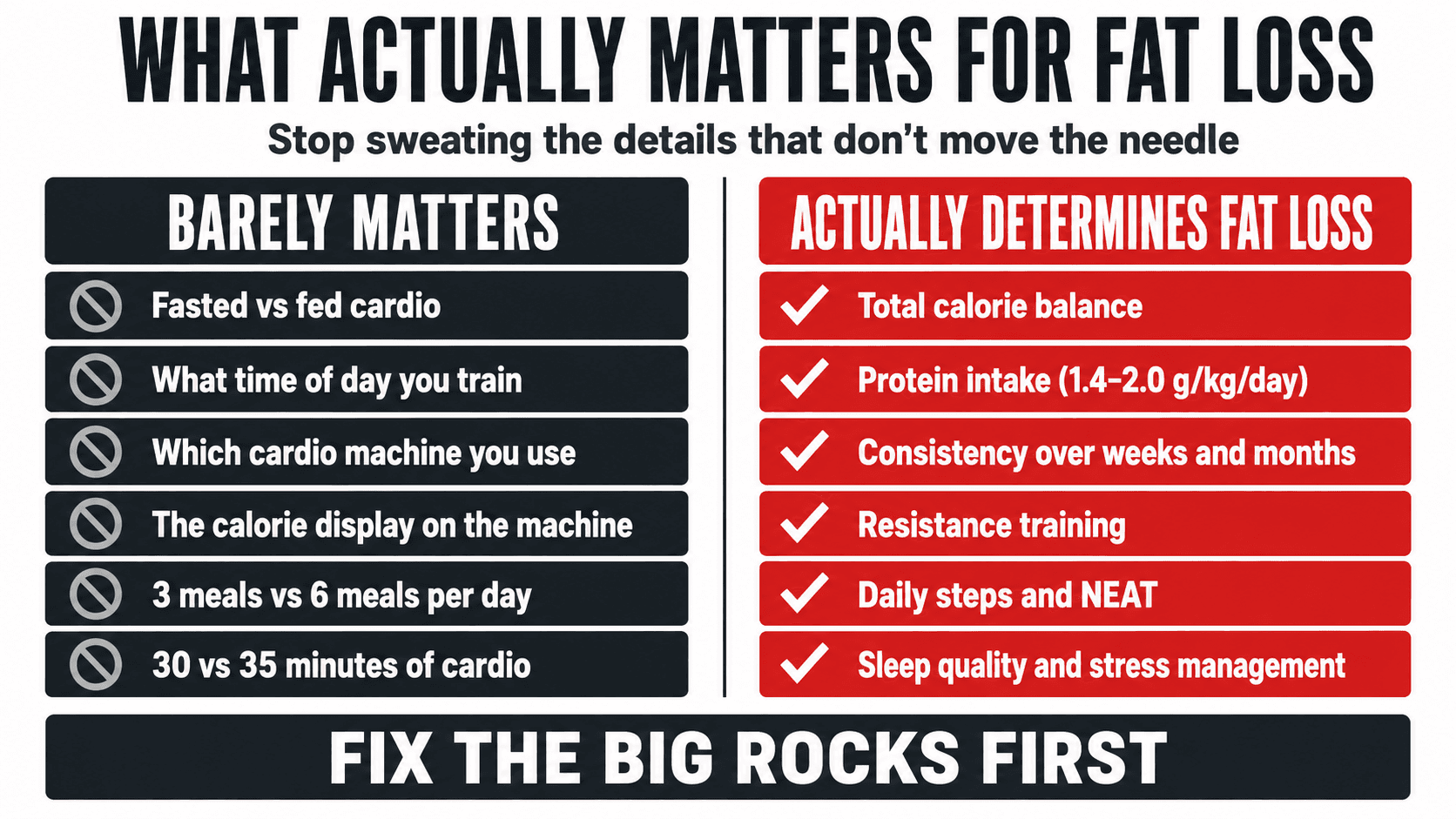
Here is my concern with the entire fasted cardio debate. It occupies an enormous amount of mental energy for a factor that, according to the research, makes little to no measurable difference to total fat loss. While people agonise over whether to eat before their morning walk, they are ignoring the factors that actually determine whether they lose fat or not.
| THINGS THAT BARELY MATTER FOR FAT LOSS | THINGS THAT ACTUALLY DETERMINE FAT LOSS |
|---|---|
| Whether you do cardio fasted or fed | Your total calorie intake relative to your expenditure |
| What time of day you exercise | Your protein intake (1.4 to 2.0g per kg per day) |
| Which specific cardio machine you use | Your consistency over weeks and months |
| The exact calorie count on the machine display | Whether you are doing resistance training |
| Whether you eat 3 meals or 6 meals per day | Your daily step count and NEAT |
| Whether your cardio is 30 minutes or 35 minutes | Your sleep quality and stress management |
I have worked with clients who spent months worrying about the fasted cardio question while eating 500 calories above their maintenance level every day. It does not matter how “optimised” your cardio timing is if your nutrition is not in order. The hierarchy is always the same: nutrition first, resistance training second, daily movement third, and the details of cardio timing a distant fourth.
Top Tip
If you are spending more time thinking about whether to eat before cardio than you are spending planning your meals, tracking your protein, or progressively overloading your resistance training, your priorities are in the wrong order. Fix the big rocks first. The small details only matter once the fundamentals are locked in.
The Solution: How I Actually Use Fasted Cardio With My Clients
Despite what the research says about fasted and fed cardio producing similar fat loss outcomes, I do use fasted cardio with some of my clients. Not because it is metabolically superior. But because for certain people, in certain situations, it offers practical advantages that make adherence easier. And adherence is everything.
When I Recommend Fasted Morning Cardio
| Situation | Why Fasted Morning Cardio Works Here | What I Prescribe |
|---|---|---|
| Early morning walkers | Many clients prefer to walk first thing without eating. It is simple, requires no preparation, and starts the day with movement. | 20 to 45 minute brisk walk before breakfast. Low intensity only. |
| Clients who struggle with overeating | A fasted morning walk can create a shorter eating window, which helps some people consume fewer total calories without formal calorie counting (8). | Walk first, eat breakfast after. This naturally compresses the eating window. |
| Clients with insulin resistance or Type 2 diabetes | Research suggests fasted morning exercise may improve daily glucose control (3). Always in conjunction with medication management. | Low intensity walking only. Monitor blood glucose. Always carry fast acting glucose if on medication. |
| Clients who train in the evening | Fasted morning walking and evening resistance training creates a natural separation that avoids interference and manages energy across the day. | 20 to 30 minute morning walk (fasted), resistance training in the evening (fed). |
| People who simply prefer it | If fasted cardio fits your routine and you feel good doing it, there is no reason not to. Preference drives adherence. | Whatever form of low to moderate cardio they enjoy, first thing in the morning. |
When I Do Not Recommend Fasted Cardio
| Situation | Why Fasted Cardio Is Not Ideal Here | What I Prescribe Instead |
|---|---|---|
| High intensity sessions (HIIT) | HIIT requires glycogen for fuel. Fasted HIIT often leads to poor performance, dizziness, and reduced training quality (9). | Eat a small meal containing protein and carbs 60 to 90 minutes before HIIT. |
| Resistance training sessions | Training with weights in a fasted state can increase muscle protein breakdown and reduce training intensity (6). | Always eat protein before lifting. A small meal or shake 60 to 90 minutes before. |
| Clients prone to muscle loss | Older adults, those in a deep calorie deficit, or very lean individuals are at higher risk of muscle catabolism when training fasted (6). | Eat before all exercise. Prioritise pre training protein. |
| People who feel unwell fasted | Some people experience nausea, lightheadedness, or weakness when exercising on an empty stomach. This impairs performance and adherence. | Eat first. No benefit is worth feeling terrible during a session. |
| Type 1 diabetics on insulin | Fasted exercise with active insulin creates significant hypoglycemia risk. Requires careful management with medical team. | Always eat before exercise. Manage insulin timing with diabetes team. Carry fast acting glucose. |
Safety Note for Diabetics
If you have Type 1 or Type 2 diabetes and take insulin or sulfonylurea medications, never attempt fasted exercise without discussing it with your diabetes team first. The risk of hypoglycemia (dangerously low blood sugar) is real and can be life threatening. Always carry fast acting glucose when exercising, fasted or otherwise.
Top Tip
The best time to do cardio is the time you will actually do it consistently. If fasted morning walks fit your routine and you feel good doing them, that is your answer. If you prefer eating first and training later, that works just as well for fat loss. Do not force yourself into a timing protocol that makes your life harder for a benefit that barely exists.
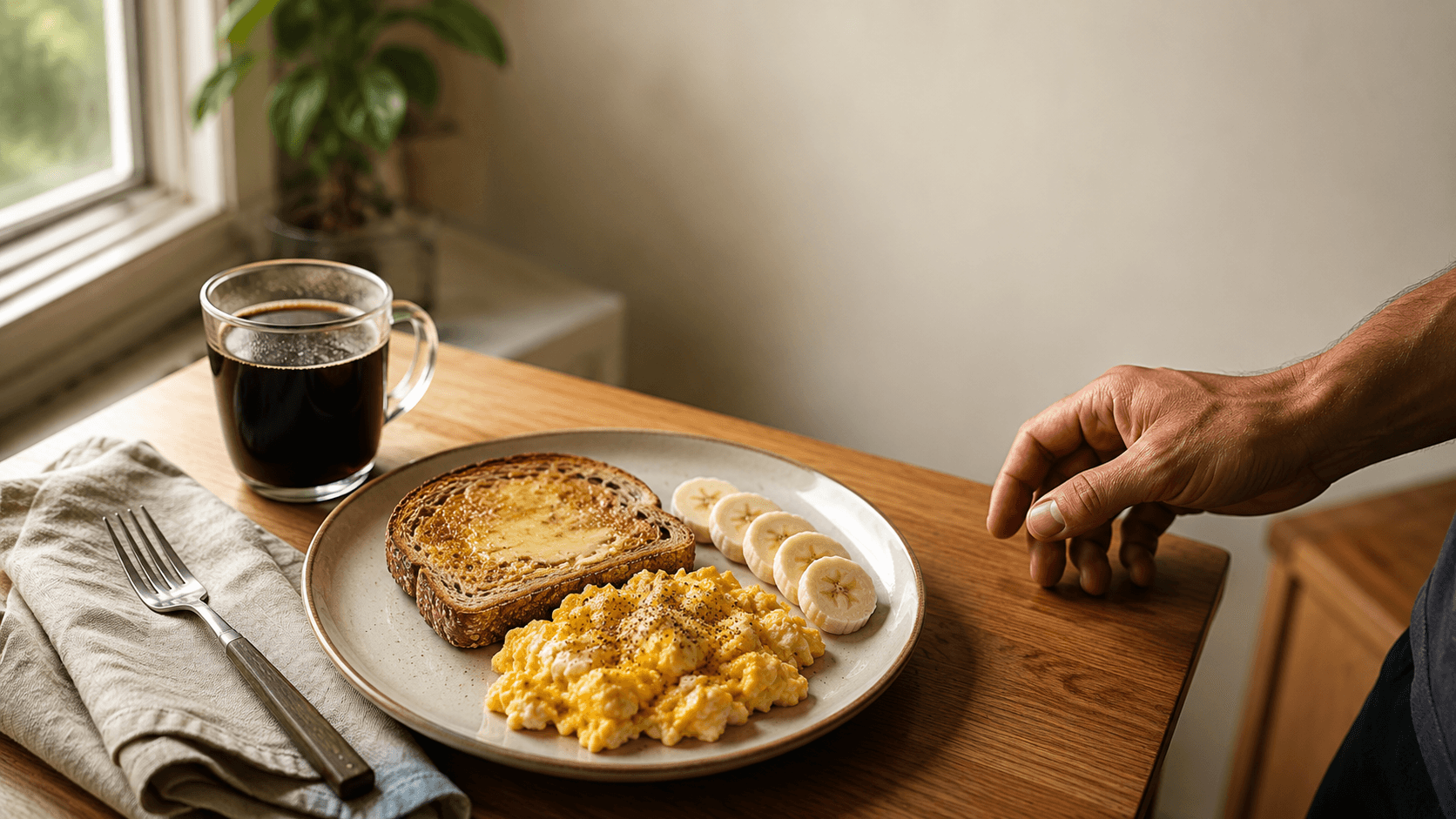
If You Do Eat Before Cardio: What and When
For clients who prefer to eat before their cardio, the meal does not need to be complicated. The goal is to provide enough fuel to support the session without feeling heavy or sluggish.
| Timing Before Session | What to Eat | Examples (All Dietary Backgrounds) |
|---|---|---|
| 60 to 90 minutes before | A balanced small meal with protein and carbohydrates | Eggs on toast. Porridge with whey protein. Tofu scramble on sourdough. Greek yoghurt with banana and oats. |
| 30 to 45 minutes before | A light snack, primarily carbohydrate with a small amount of protein | Banana with a tablespoon of peanut butter. Rice cake with cottage cheese. A small protein shake with fruit. |
| Less than 30 minutes before | Only if needed. Something very easily digested. | A piece of fruit. A few dates. A handful of dried mango. A small glass of juice. |
After any cardio session, whether fasted or fed, your priority should be getting a proper meal within one to two hours. That meal should contain a good serving of protein (25 to 40 grams) and a balance of carbohydrates and fats. This supports recovery, muscle protein synthesis, and replenishment of glycogen stores. Good options include scrambled eggs with vegetables and toast, a chicken or tofu stir fry with rice, a lentil dhal with flatbread, or a protein shake blended with oats and banana if you are short on time.
The Indirect Benefits of Fasted Morning Cardio That Nobody Talks About
While the direct metabolic benefit of fasted cardio appears to be negligible for fat loss, there are indirect benefits that I think deserve more attention. These are the practical, behavioural, and psychological advantages that I have observed across hundreds of clients.
| THE INDIRECT BENEFITS OF FASTED MORNING CARDIO | |
|---|---|
| Shorter Eating Window | Delaying breakfast by 30 to 60 minutes while you walk naturally compresses your eating window. This can lead to consuming fewer total calories without consciously restricting (8). |
| Morning Routine and Discipline | Starting the day with physical activity sets a positive tone. Clients consistently report making better food choices on days they exercise in the morning. |
| Headspace and Mental Clarity | A fasted morning walk with no distractions provides mental space that is increasingly rare. Many of my clients describe it as their most valuable 30 minutes of the day. |
| Improved Sleep Cycle | Morning light exposure combined with physical activity helps regulate circadian rhythm, which can improve sleep quality that night (10). |
| Practical Convenience | No meal to prepare before an early session. No digestion issues. Just get up, get dressed, and go. The lower the barrier, the higher the adherence. |
Top Tip
If you decide to try fasted morning walks, pair them with morning sunlight exposure. Walk outside rather than on a treadmill whenever possible. The combination of movement, natural light, and fresh air first thing in the morning has a compounding effect on mood, energy, and sleep quality that extends well beyond any marginal fat burning advantage.

The Verdict
YOUR FASTED CARDIO DECISION GUIDE
Fasted cardio burns more fat DURING the session, but total 24 hour fat loss is the same as fed cardio when calories are matched.
The research is clear: whether you eat before cardio or not makes little to no difference to long term fat loss (4, 5).
Fasted LOW INTENSITY cardio (walking) is safe and practical for most people. Fasted HIGH INTENSITY exercise is not recommended.
If you have diabetes and take insulin or sulfonylureas, consult your medical team before attempting fasted exercise.
The real benefits of fasted morning cardio are practical: convenience, shorter eating window, morning routine, mental clarity.
Your total calorie balance over the week is 100 times more important than whether you ate before your walk.
Protein intake, resistance training, daily steps, and sleep all matter more for fat loss than cardio timing.
The best time to do cardio is whenever you will actually do it consistently. That is the only timing rule that matters.
GET THE BIG THINGS RIGHT. THE TIMING DETAILS WILL LOOK AFTER THEMSELVES.
The Bottom Line
Fasted cardio is not a magic fat loss tool. The research does not support the claim that it produces superior fat loss compared to fed cardio when total calorie intake is the same. But it is also not harmful, and for many people it is a practical and enjoyable way to start the day with movement.
If you like training fasted, keep doing it. If you prefer eating first, that is equally valid. The debate over fasted versus fed cardio is a minor detail in the grand scheme of fat loss. What actually matters is your nutrition, your resistance training, your daily movement, your sleep, and your consistency over weeks and months. Get those right and the question of whether you ate a banana before your walk becomes entirely irrelevant.
I have coached clients through every variation of this question across every dietary background and health condition. As a lifelong vegetarian, I understand the nuances of fuelling exercise on different diets, and I work with omnivores, vegetarians, and vegans with equal confidence. If you want a programme that takes all of these variables into account, built specifically for you, get in touch through trperformancecoaching.com. I coach one-to-one online globally.
Work with Me
Get a personalised coaching plan built around your goals, your schedule, and your life.
Enquire NowReferences
- Gonzalez JT, Veasey RC, Rumbold PL, Stevenson EJ. Breakfast and exercise contingently affect postprandial metabolism and energy balance in physically active males. British Journal of Nutrition. 2013; 110(4): 721-732.
- Vieira AF, Costa RR, Macedo RCO, Coconcelli L, Kruel LFM. Effects of aerobic exercise performed in fasted v. fed state on fat and carbohydrate metabolism in adults: a systematic review and meta-analysis. British Journal of Nutrition. 2016; 116(7): 1153-1164.
- Edinburgh RM, Bradley HE, Abdullah NF, et al. Lipid metabolism links nutrient-exercise timing to insulin sensitivity in men classified as overweight or obese. Journal of Clinical Endocrinology and Metabolism. 2020; 105(3): 660-676.
- Schoenfeld BJ, Aragon AA, Wilborn CD, Krieger JW, Sonmez GT. Body composition changes associated with fasted versus non-fasted aerobic exercise. Journal of the International Society of Sports Nutrition. 2014; 11(1): 54.
- Hackett D, Hagstrom AD. Effect of overnight fasted exercise on weight loss and body composition: a systematic review and meta-analysis. Journal of Functional Morphology and Kinesiology. 2017; 2(4): 43.
- Lemon PW, Mullin JP. Effect of initial muscle glycogen levels on protein catabolism during exercise. Journal of Applied Physiology. 1980; 48(4): 624-629.
- Heaney JLJ, Carroll D, Phillips AC. Physical activity, life events stress, cortisol, and DHEA: preliminary findings that physical activity may buffer against the negative effects of stress. Journal of Aging and Physical Activity. 2014; 22(4): 465-473.
- Sievert K, Hussain SM, Page MJ, et al. Effect of breakfast on weight and energy intake: systematic review and meta-analysis of randomised controlled trials. BMJ. 2019; 364: l42.
- Achten J, Jeukendrup AE. Optimizing fat oxidation through exercise and diet. Nutrition. 2004; 20(7-8): 716-727.
- Blume C, Garbazza C, Spitschan M. Effects of light on human circadian rhythms, sleep and mood. Somnologie. 2019; 23(3): 147-156.