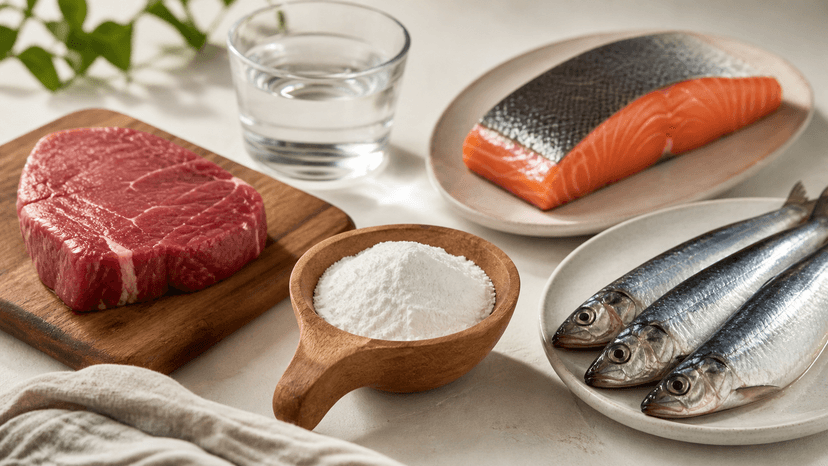
If I could recommend one single supplement to the women I coach, it would be creatine. That statement surprises people. Creatine has spent decades trapped in a reputation it does not deserve, associated almost exclusively with male bodybuilders, bulking phases, and bloated physiques. The result is that one of the most researched, safest, and most effective supplements available has been largely ignored by the group that arguably stands to benefit from it the most. Women. Whether your goal is fat loss, muscle tone, strength, bone health, cognitive function, or long-term metabolic health, creatine has something to offer you. And the fears holding you back from taking it are almost certainly based on myths, not evidence.
I coach women across a wide range of ages and goals. Women in their 20s and 30s looking to build a strong, lean physique. Women in their 40s and 50s navigating perimenopause and menopause, trying to hold onto muscle mass and bone density while their hormones shift. Women managing PCOS, insulin resistance, or type 2 diabetes. Women who have never touched a supplement in their lives and women who have cupboards full of products that have done nothing for them. Across all of these groups, creatine is consistently one of the most impactful additions I make to their protocols. And the research backs this up comprehensively.

What Creatine Actually Does
Creatine is a naturally occurring compound found in muscle cells. Your body produces it from the amino acids glycine, arginine, and methionine, primarily in the liver and kidneys. You also obtain small amounts from dietary sources, mainly red meat and fish. For vegetarian and vegan women, dietary creatine intake is essentially zero, which means baseline muscle creatine stores tend to be lower than in omnivores (1). This is important and I will come back to it.
The primary role of creatine in the body is to help regenerate adenosine triphosphate (ATP), the molecule your muscles use for energy during short, intense efforts. When you perform a heavy set of squats, a sprint, or any explosive movement, your muscles burn through ATP rapidly. Creatine donates a phosphate group to regenerate ATP from ADP, allowing you to sustain high-intensity effort for a few extra seconds. Those extra seconds translate into more reps, heavier loads, and greater total training volume over time. And training volume is the primary driver of muscle growth and strength adaptation (2). Creatine does not build muscle directly. It allows you to train harder, and harder training builds muscle.
The Myths That Keep Women Away from Creatine
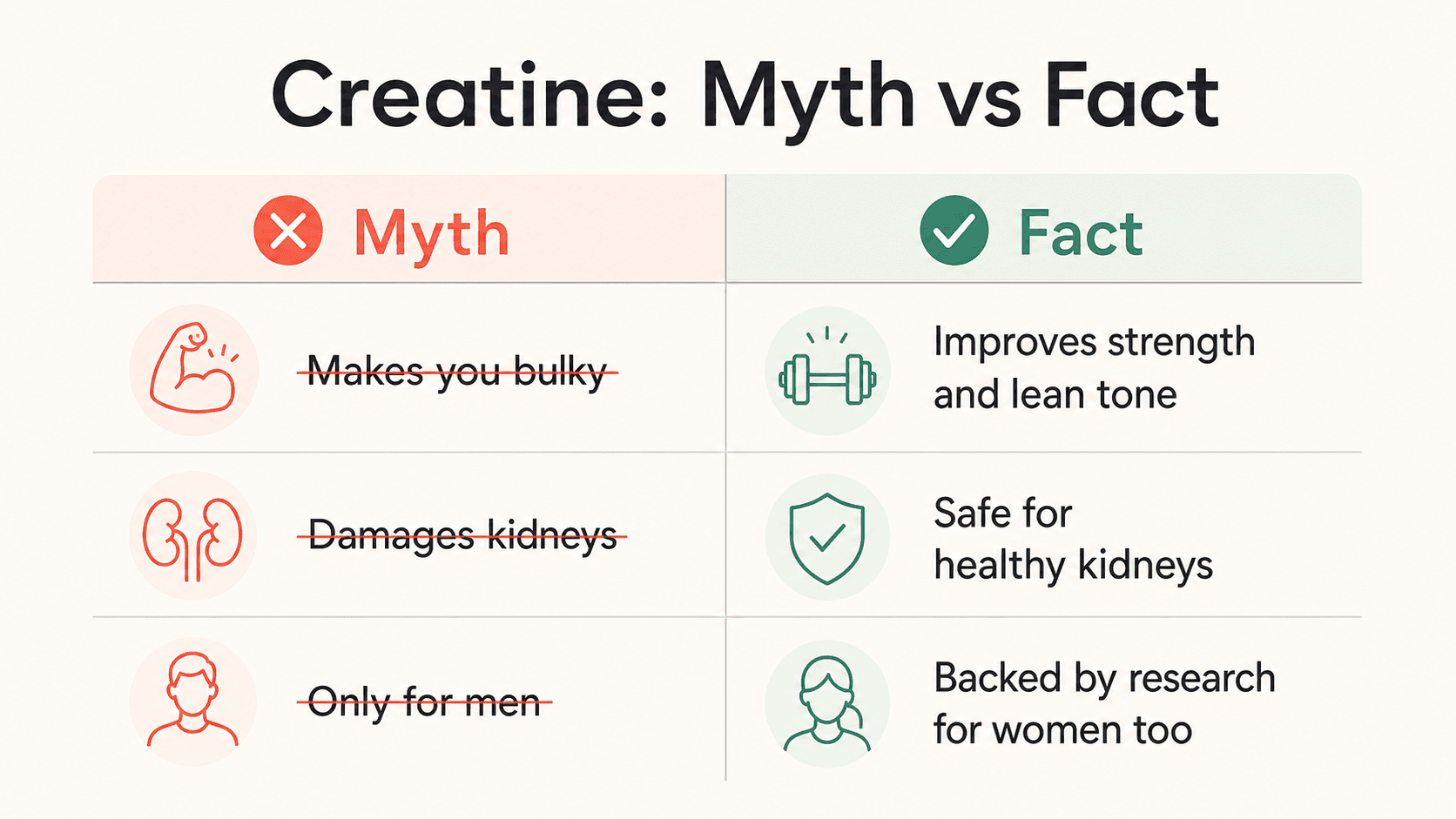
The number one concern I hear from women about creatine is that it will make them bulky or bloated. This is the myth that has cost women years of potential progress. Creatine does cause a small increase in intracellular water retention within muscle cells. This is not the same as subcutaneous water retention that makes you look puffy or soft. It is water being drawn into the muscle itself, which actually makes muscles look fuller and more defined, not bloated (3). The scale may increase by 1 to 2 kilograms in the first week or two. This is not fat gain. It is not even visible bloating in most women. It is water stored inside your muscles where it belongs, supporting performance and recovery.
The second myth is that creatine is a steroid or that it will produce masculine effects. Creatine is not a hormone. It is not anabolic in the way testosterone is. It does not alter your hormonal profile. It does not cause hair growth, voice changes, or any masculinising effects. It is more accurately compared to a B vitamin in terms of its safety profile than to any performance-enhancing drug (4). The International Society of Sports Nutrition has stated clearly that creatine monohydrate is the most effective ergogenic nutritional supplement currently available to athletes in terms of increasing high-intensity exercise capacity and lean body mass, and that it is safe for long-term use (5).
The third myth is that creatine damages the kidneys. This has been studied extensively. In healthy individuals with normal kidney function, creatine supplementation at recommended doses does not impair renal function (6). If you have pre-existing kidney disease, you should discuss any supplementation with your GP. But for the vast majority of women, this concern is unfounded.
Why Women May Benefit Even More Than Men
There is a growing body of evidence suggesting that women may actually experience proportionally greater benefits from creatine supplementation than men in certain areas. Women naturally have 70 to 80 percent lower endogenous creatine stores compared to men, partly due to lower dietary intake (particularly in vegetarian and vegan women) and partly due to hormonal differences (7). This means there is more room for improvement when supplementation begins. Starting from a lower baseline means the relative increase in muscle creatine saturation is greater, which can translate into more noticeable performance improvements.
Research published in the Journal of the International Society of Sports Nutrition found that creatine supplementation in women improved upper body strength, reduced fatigue during repeated high-intensity efforts, and improved body composition when combined with resistance training (8). A separate study looking specifically at pre-menopausal women found that creatine supplementation combined with resistance training produced significantly greater increases in lean mass and strength compared to resistance training alone (9). These are not marginal differences. For women who are training consistently and eating well, creatine can accelerate results that would otherwise take significantly longer to achieve.
Creatine and Menopause: Why This Matters More as You Age
This is a conversation I have regularly with my female clients over 40, and it is one I wish more women were having with their coaches and their GPs. After menopause, oestrogen levels decline sharply. Oestrogen plays a protective role in maintaining muscle mass, bone density, and metabolic health. When it drops, women become significantly more susceptible to sarcopenia (age-related muscle loss), osteoporosis, increased visceral fat accumulation, and metabolic dysfunction (10). Resistance training is the most powerful intervention for mitigating these changes, and creatine makes resistance training more effective.
A review published in Nutrients examined the evidence for creatine supplementation in ageing populations and concluded that creatine, when combined with resistance training, can enhance gains in muscle mass, strength, and functional performance in older adults (11). For post-menopausal women specifically, the combination of resistance training and creatine supplementation has been shown to improve bone mineral density at clinically relevant sites including the hip and lumbar spine (12). Given that osteoporotic fractures are one of the leading causes of disability and mortality in older women, this is not a trivial benefit. It is potentially life-changing.

Creatine and Cognitive Function
The benefits of creatine extend beyond the gym. Your brain is one of the most metabolically active organs in your body, accounting for roughly 20 percent of your daily energy expenditure. Like muscle cells, brain cells rely on ATP for energy, and creatine plays a role in maintaining cerebral energy reserves. Research has shown that creatine supplementation can improve short-term memory, reasoning, and cognitive performance, particularly under conditions of stress, sleep deprivation, or mental fatigue (13). A study published in the Proceedings of the Royal Society found that creatine supplementation significantly improved working memory and processing speed in healthy adults (14).
For the executive clients I work with, women managing high-pressure careers alongside their health and training goals, this is a meaningful additional benefit. Sharper thinking, better mental endurance under stress, and improved memory are not marketing claims. They are outcomes supported by controlled research. And for vegetarian and vegan women, whose baseline brain creatine levels may be lower due to zero dietary intake, the cognitive benefits of supplementation appear to be even more pronounced (1).

How to Take Creatine: A Practical Guide
The form that matters is creatine monohydrate. It is the most studied, most effective, and cheapest form available. Do not waste your money on creatine HCL, buffered creatine, creatine ethyl ester, or any other “advanced” formulation. None of them have been shown to outperform standard creatine monohydrate (5). Look for a product that is pure creatine monohydrate with no added fillers, sweeteners, or proprietary blends. It should be a fine white powder with virtually no taste.
The dose is straightforward. Take 3 to 5 grams per day, every day, regardless of whether you train that day. Creatine works through saturation, not acute dosing. It needs to accumulate in your muscles over time. Taking it only on training days or cycling on and off reduces its effectiveness. Some protocols recommend a loading phase of 20 grams per day (split into four 5-gram servings) for the first 5 to 7 days to achieve saturation faster, followed by a maintenance dose of 3 to 5 grams per day. This works but is not necessary. Taking 3 to 5 grams per day from the start will achieve full saturation within approximately 3 to 4 weeks (15). I typically recommend the lower, consistent approach because it avoids the occasional GI discomfort that some people experience with high loading doses.
Timing does not matter significantly. Take it whenever is most convenient and consistent for you. Mix it into your morning coffee, stir it into a protein shake, add it to your porridge, or take it with water after training. Consistency matters more than timing. One practical tip I give every client: keep the tub next to something you use every single day, your kettle, your coffee machine, your protein powder. Attach the habit to an existing routine and you will never miss a dose.
Top Tips for Getting the Most Out of Creatine
Stay Well Hydrated
Creatine draws water into your muscle cells, so your overall water needs increase slightly. Aim for at least 2.5 to 3 litres of water per day as a baseline, more if you train intensely or in warm conditions. Dehydration while supplementing with creatine can increase the risk of cramping and reduce its effectiveness.
Do Not Judge Results by the Scale Alone
Especially in the first two weeks. The initial water weight increase of 1 to 2 kilograms is not fat. If you rely solely on scale weight, you will misinterpret a positive change as a negative one. Use measurements, progress photos, how your clothes fit, and your training performance as your primary indicators.
Pair It With Resistance Training
Creatine is not a magic powder. It enhances your ability to train harder, which drives results. Without the training stimulus, you are leaving most of the benefit on the table. If you are not already following a structured progressive overload programme, that should be your first priority.
Be Patient
Full muscle saturation takes 3 to 4 weeks at a daily dose of 3 to 5 grams. You will not feel a dramatic overnight change. What you will notice after a few weeks is that you can push slightly harder in your sessions, recover a little faster between sets, and sustain your performance better toward the end of a workout. Those small improvements compound over months into significant differences in strength and body composition.
Prioritise It if You Are Vegetarian or Vegan
With zero dietary creatine from food, your baseline stores are lower, and the relative improvement from supplementation is greater. Research consistently shows that vegetarians and vegans experience larger performance and cognitive benefits from creatine supplementation compared to omnivores (1). If you follow a plant-based diet and you are not supplementing with creatine, you are almost certainly leaving performance on the table.
Who Should Be Cautious
Creatine is safe for the vast majority of healthy adults. However, if you have pre-existing kidney disease or impaired renal function, you should consult your GP before supplementing. If you are pregnant or breastfeeding, the evidence base is limited and I would not recommend supplementation without medical guidance. For everyone else, the safety profile of creatine monohydrate at recommended doses is exceptionally well established, with decades of research and no credible evidence of harm in healthy individuals (6).
The Bottom Line
Creatine is not a men’s supplement. It is a human performance supplement. It improves strength, supports muscle growth, protects bone density, enhances cognitive function, and is particularly valuable for women as they age. The myths around bloating, bulkiness, and kidney damage are exactly that. Myths. If you are a woman who trains with weights, wants to improve her body composition, cares about her long-term bone and brain health, or follows a vegetarian or vegan diet, creatine monohydrate should be in your daily routine. It is cheap, it is safe, it is effective, and it is one of the simplest upgrades you can make to your supplementation protocol.
If you want a complete training, nutrition, and supplementation plan built specifically for you, your body, your goals, your dietary preferences, and your stage of life, get in touch through trperformancecoaching.com. I work with women one-to-one online globally, and creatine is just one small piece of the full picture I build for every client I coach.
Work with Me
Get a personalised coaching plan built around your goals, your schedule, and your life.
Enquire NowReferences
- Benton D, Donohoe R. The influence of creatine supplementation on the cognitive functioning of vegetarians and omnivores. British Journal of Nutrition. 2011; 105(7): 1100-1105.
- Schoenfeld BJ, Ogborn D, Krieger JW. Dose-response relationship between weekly resistance training volume and increases in muscle mass: a systematic review and meta-analysis. Journal of Sports Sciences. 2017; 35(11): 1073-1082.
- Powers ME, Arnold BL, Weltman AL, et al. Creatine supplementation increases total body water without altering fluid distribution. Journal of Athletic Training. 2003; 38(1): 44-50.
- Persky AM, Brazeau GA. Clinical pharmacology of the dietary supplement creatine monohydrate. Pharmacological Reviews. 2001; 53(2): 161-176.
- Kreider RB, Kalman DS, Antonio J, et al. International Society of Sports Nutrition position stand: safety and efficacy of creatine supplementation in exercise, sport, and medicine. Journal of the International Society of Sports Nutrition. 2017; 14: 18.
- Poortmans JR, Francaux M. Adverse effects of creatine supplementation: fact or fiction? Sports Medicine. 2000; 30(3): 155-170.
- Smith-Ryan AE, Cabre HE, Eckerson JM, Candow DG. Creatine supplementation in women’s health: a lifespan perspective. Nutrients. 2021; 13(3): 877.
- Brenner M, Rankin JW, Sebolt-Leopold J. The effect of creatine supplementation during resistance training in women. Journal of Strength and Conditioning Research. 2000; 14(2): 207-213.
- Vandenberghe K, Goris M, Van Hecke P, Van Leemputte M, Vangerven L, Hespel P. Long-term creatine intake is beneficial to muscle performance during resistance training. Journal of Applied Physiology. 1997; 83(6): 2055-2063.
- Maltais ML, Desroches J, Bherer L. The effect of resistance training and different sources of postexercise protein supplementation on muscle mass and physical capacity in sarcopenic elderly men. Journal of Strength and Conditioning Research. 2016; 30(6): 1680-1687.
- Candow DG, Forbes SC, Chilibeck PD, Cornish SM, Antonio J, Kreider RB. Effectiveness of creatine supplementation on aging muscle and bone: focus on falls prevention and inflammation. Journal of Clinical Medicine. 2019; 8(4): 488.
- Chilibeck PD, Kaviani M, Candow DG, Zello GA. Effect of creatine supplementation during resistance training on lean tissue mass and muscular strength in older adults: a meta-analysis. Open Access Journal of Sports Medicine. 2017; 8: 213-226.
- Avgerinos KI, Spyrou N, Bougioukas KI, Kapogiannis D. Effects of creatine supplementation on cognitive function of healthy individuals: a systematic review of randomized controlled trials. Experimental Gerontology. 2018; 108: 166-173.
- Rae C, Digney AL, McEwan SR, Bates TC. Oral creatine monohydrate supplementation improves brain performance: a double-blind, placebo-controlled, cross-over trial. Proceedings of the Royal Society B: Biological Sciences. 2003; 270(1529): 2147-2150.
- Hultman E, Soderlund K, Timmons JA, Cederblad G, Greenhaff PL. Muscle creatine loading in men. Journal of Applied Physiology. 1996; 81(1): 232-237.