Creatine is the most studied sports supplement in existence. There are over 500 peer-reviewed studies examining its effects on performance, body composition, brain function, and health. The evidence is not ambiguous. It works. It is safe. And yet it remains one of the most misunderstood supplements on the market. I have lost count of the number of clients who have walked through my door convinced that creatine is a steroid, that it damages your kidneys, that it is only for bodybuilders, or that it will make them bloated and puffy. None of that is true. Creatine is one of a very small number of supplements I recommend to almost every client I work with, regardless of their age, sex, training experience, or dietary background.
If you have ever been curious about creatine but held back because of something you read online or heard in the gym, this article is for you. I am going to break it down from the ground up. What it actually is. Where it comes from. What it does in your body. Who should be taking it. How much you need. And why the fears around it are based on myths rather than science. No hype. No exaggeration. Just the evidence and the practical advice I give my clients every single day.
What Is Creatine
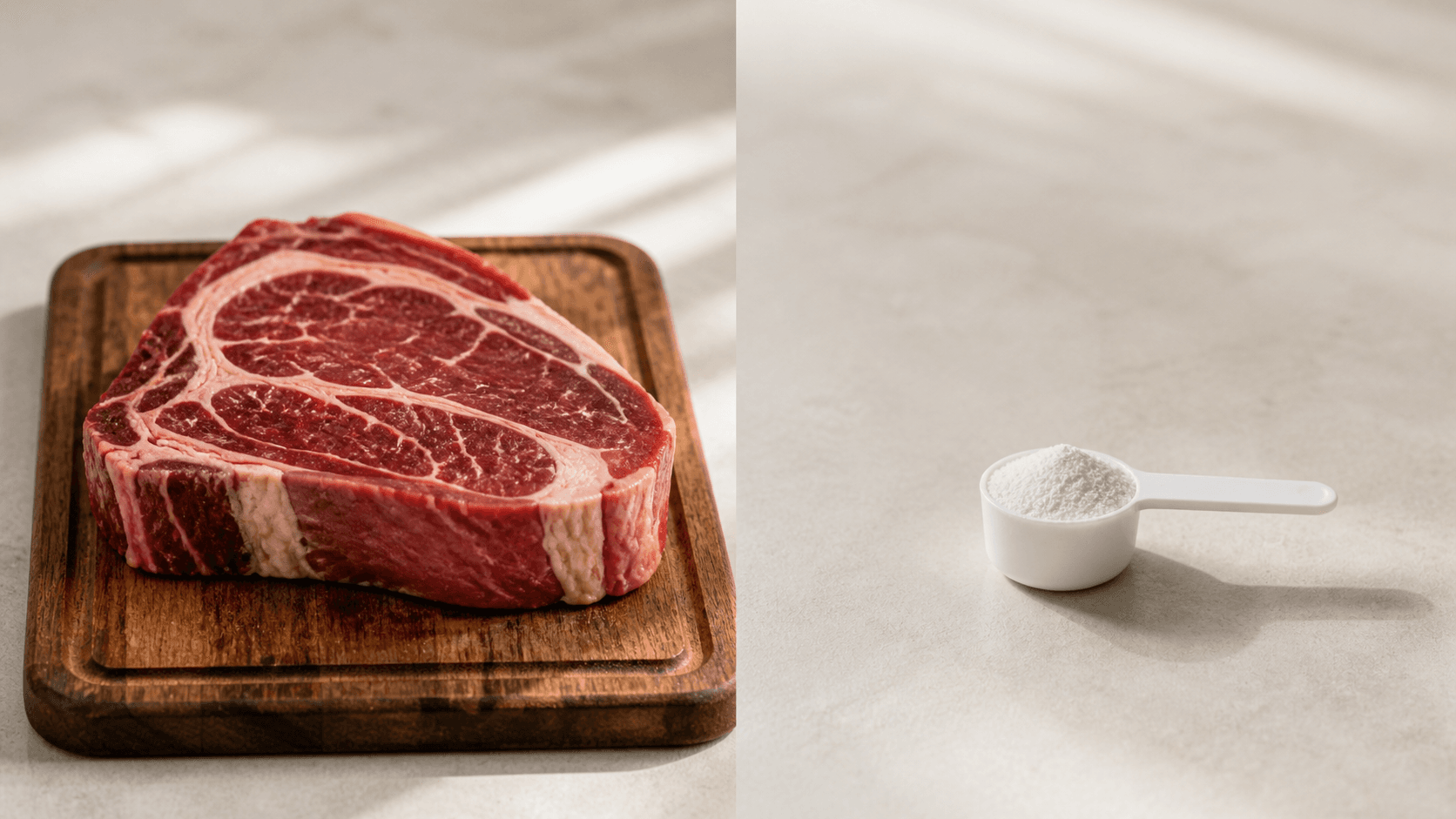
Creatine is a naturally occurring organic compound made up of three amino acids: glycine, arginine, and methionine. Your body produces approximately 1 to 2 grams of creatine per day, primarily in the liver and kidneys, with smaller contributions from the pancreas (1). Once synthesised, creatine is transported through the bloodstream and taken up by tissues with high energy demands. Roughly 95 percent of the creatine in your body is stored in skeletal muscle, with the remaining 5 percent found in the brain, liver, kidneys, and testes (2). It is not a synthetic chemical. It is not a pharmaceutical compound. It is not a steroid. It is a natural part of your body’s energy system, and you have had creatine in your muscles since the day you were born.
Where Creatine Is Found in Food
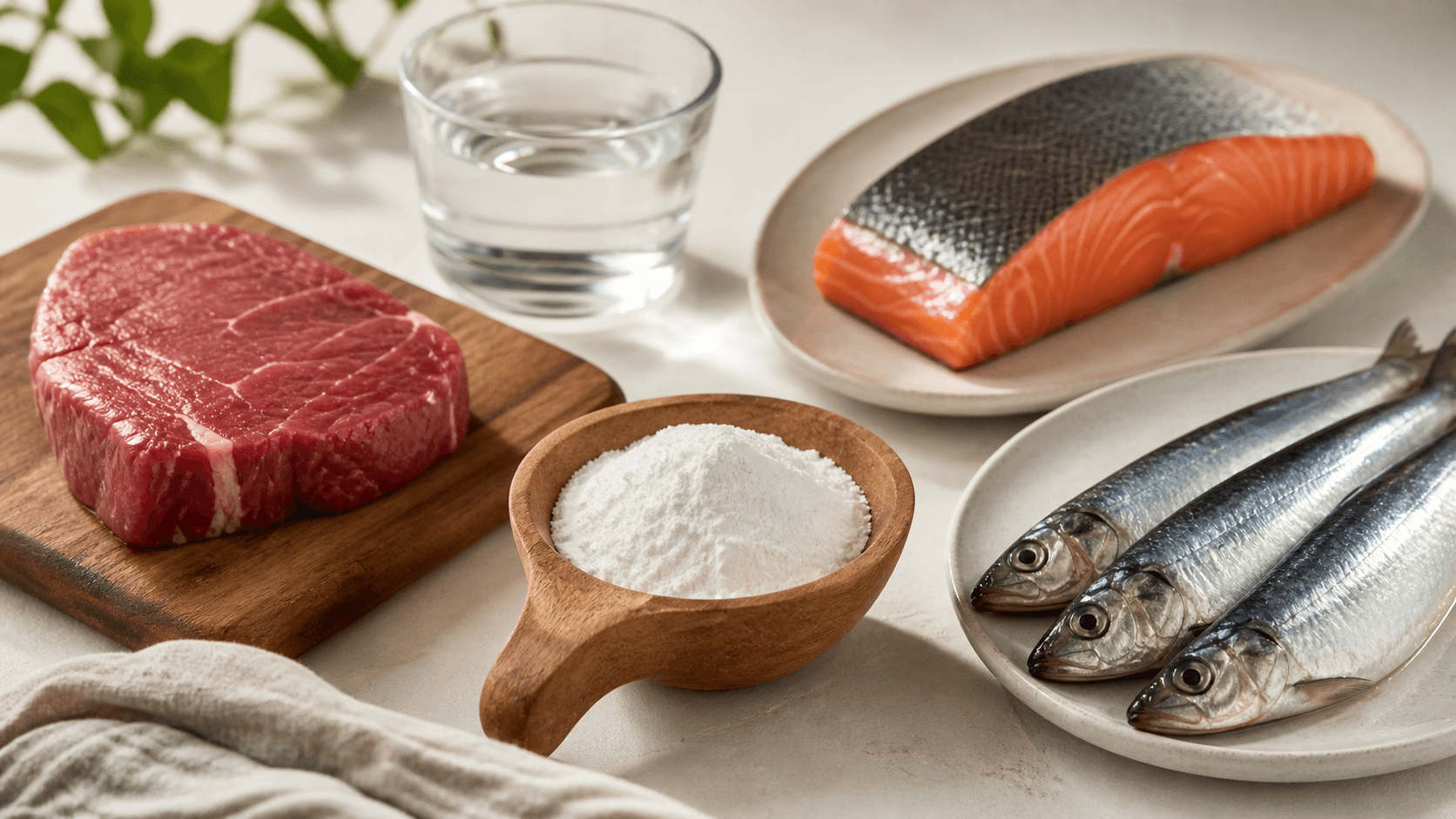
You obtain creatine from two sources: your body’s own production and your diet. Dietary creatine comes almost exclusively from animal products. Red meat is the richest source, with beef and pork providing roughly 4 to 5 grams of creatine per kilogram of raw meat. Fish is the next best source, with herring, salmon, and tuna containing approximately 3 to 4.5 grams per kilogram (3). Chicken and turkey contain smaller amounts. Cooking reduces creatine content somewhat, as heat degrades a portion of the creatine into creatinine, which is biologically inactive.
Here is the practical problem. To get 5 grams of creatine from food alone, which is the standard daily supplementation dose, you would need to eat roughly 1 kilogram of raw beef or a similar quantity of fish every single day. Nobody is doing that consistently. Even the most committed meat eater is unlikely to be hitting optimal creatine levels through diet alone. And for vegetarians and vegans, the situation is significantly more stark. Plant foods contain essentially zero creatine. If you follow a vegetarian or vegan diet, your only source of creatine is what your body produces endogenously, which means your baseline muscle creatine stores are measurably lower than those of omnivores (4). This is not a criticism of plant-based diets. It is simply a biological reality that makes creatine supplementation even more relevant for anyone who does not eat meat or fish regularly.
What Creatine Does in Your Body
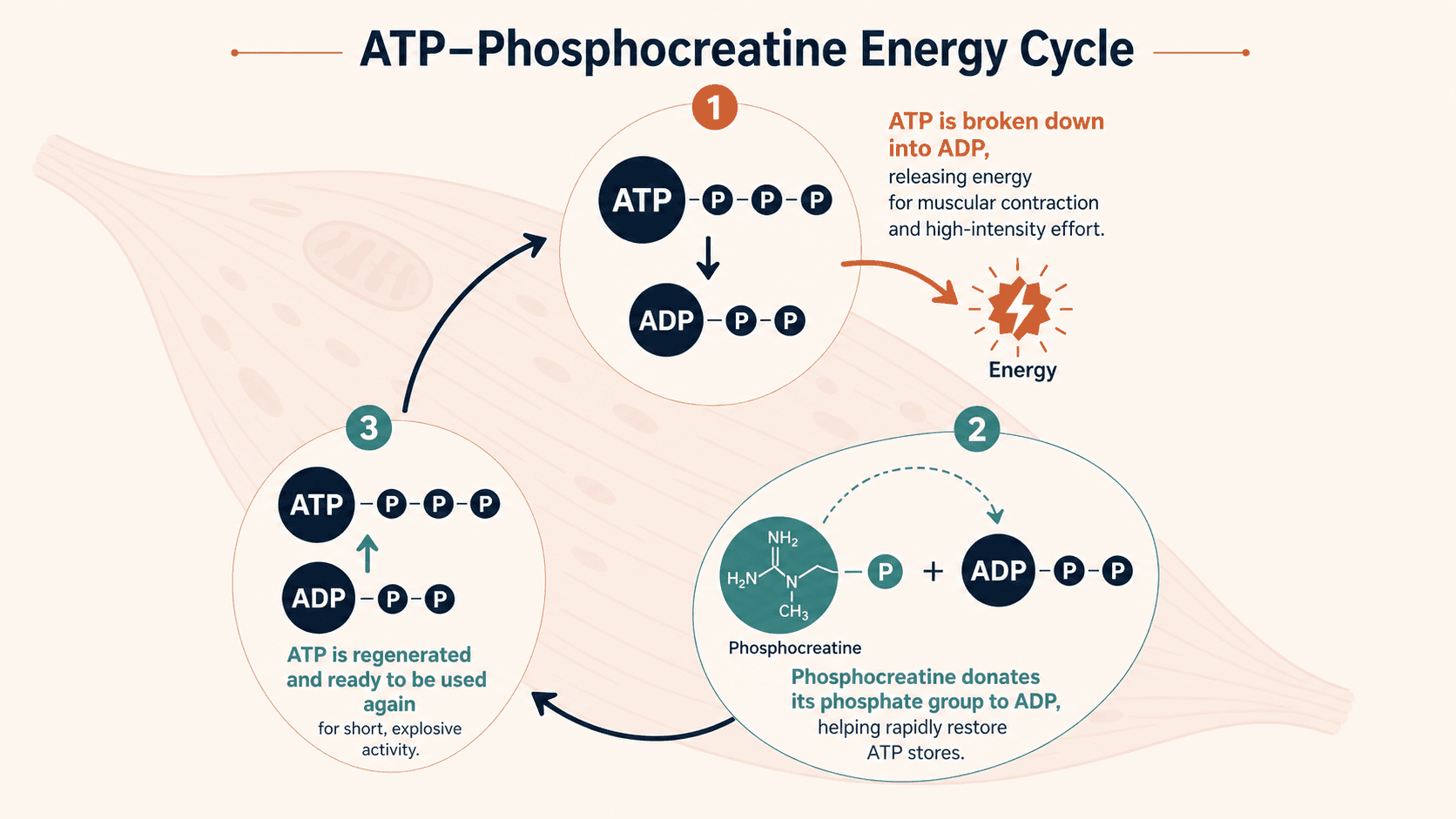
To understand what creatine does, you need to understand how your muscles produce energy during intense effort. Your muscles run on a molecule called adenosine triphosphate, or ATP. ATP is the immediate energy currency for muscular contraction. When you lift a weight, sprint, jump, or perform any explosive movement, your muscles break down ATP to release energy. The problem is that your muscles only store enough ATP for roughly 2 to 3 seconds of maximal effort. After that, ATP must be regenerated for the effort to continue.
This is where creatine comes in. Inside your muscle cells, creatine is stored as phosphocreatine (also called creatine phosphate). When ATP is used and broken down into ADP (adenosine diphosphate), phosphocreatine donates its phosphate group to ADP, rapidly regenerating it back into ATP. This reaction is catalysed by the enzyme creatine kinase and it happens almost instantly, much faster than any other energy system in the body (5). The phosphocreatine system is what allows you to sustain high-intensity effort beyond those initial 2 to 3 seconds and up to approximately 10 to 15 seconds of maximal output. By supplementing with creatine and increasing your muscle’s phosphocreatine stores, you extend this window. You can push out more reps, sustain heavier loads for longer, and recover faster between sets. Over weeks and months, that additional training capacity translates directly into greater strength gains, more muscle growth, and improved body composition (6).
Why We Supplement With Creatine
Your muscles can store more creatine than your body naturally produces and your diet typically provides. Under normal dietary conditions, muscle creatine stores sit at roughly 60 to 80 percent of their maximum capacity (2). Supplementation raises these stores to full saturation, and that is where the performance benefits kick in. Think of it like a fuel tank. Your body keeps the tank at about two thirds full by default. Supplementation tops it up to full, giving you a larger energy reserve to draw from during training.
The reason supplementation is so widely recommended is simple: the gap between typical creatine levels and optimal creatine levels is significant enough to produce measurable, real-world performance improvements, and closing that gap through food alone is impractical for the reasons I outlined above. Supplementation is cheap, effective, safe, and supported by more evidence than virtually any other nutritional intervention in sport and exercise science. The International Society of Sports Nutrition has described creatine monohydrate as the most effective ergogenic nutritional supplement currently available for increasing high-intensity exercise capacity and lean body mass during training (7). That is not a bold marketing claim. That is the consensus position of the leading scientific body in the field.
Who Should Supplement With Creatine
The short answer is almost everyone who trains. The long answer requires a bit more nuance, so let me walk through the groups who stand to benefit most.
Anyone Doing Resistance Training
If you lift weights, creatine will improve your ability to train harder. More reps, heavier loads, better recovery between sets. This is the primary population creatine is studied in, and the evidence is overwhelming. Whether you are a beginner or advanced, male or female, 20 or 60, resistance training combined with creatine produces better outcomes than resistance training alone (6).
Vegetarians and Vegans
With zero dietary creatine intake, plant-based individuals have lower baseline muscle creatine stores. This means the relative benefit of supplementation is even greater. Studies have shown that vegetarians experience larger increases in muscle creatine content, lean mass, and even cognitive performance following creatine supplementation compared to omnivores (4). If you eat a plant-based diet and train regularly, creatine should be near the top of your supplement list.
Anyone Over 40
Age-related muscle loss (sarcopenia) begins accelerating in your 40s and continues throughout life. Creatine, combined with resistance training, has been shown to enhance muscle mass and strength retention in older adults (8). For post-menopausal women, there is additional evidence supporting improvements in bone mineral density, making creatine relevant not just for performance but for long-term health and injury prevention.
Anyone Pursuing Fat Loss
Creatine does not burn fat directly. But it allows you to maintain training intensity during a calorie deficit, which is critical for preserving muscle mass while losing body fat. The more muscle you retain during a fat loss phase, the better your metabolic rate, your body composition, and your long-term results.
People in High-Stress or Cognitively Demanding Roles
Your brain uses a significant amount of ATP, and creatine plays a role in maintaining cerebral energy reserves. Research has shown improvements in short-term memory, reasoning, and mental performance under conditions of stress and sleep deprivation with creatine supplementation (9). For executive clients managing demanding careers alongside their health and training, this is a meaningful added benefit.
Team Sport and Interval-Based Athletes
Football, rugby, basketball, tennis, boxing, CrossFit, and any sport involving repeated bursts of high-intensity effort rely heavily on the phosphocreatine energy system. Creatine supplementation improves repeated sprint performance and recovery between high-intensity efforts (10).

How Much Creatine Do You Need
The standard and most evidence-supported dose is 3 to 5 grams of creatine monohydrate per day, every day. Not just on training days. Creatine works through saturation, not acute dosing. It needs to accumulate in your muscle cells over time to be effective. Taking it only on days you train or cycling on and off undermines this process and reduces the benefit.
Some protocols recommend a loading phase of 20 grams per day, split into four 5-gram doses, for the first 5 to 7 days. This achieves full muscle saturation faster, typically within a week, compared to 3 to 4 weeks at the standard daily dose (11). Loading works, but it is not necessary. Taking 3 to 5 grams per day from day one will get you to the same place. It just takes a little longer. I generally recommend the steady daily approach to my clients because the loading phase can cause mild GI discomfort, bloating, or loose stools in some people, and there is no long-term advantage to loading over simply being consistent with a lower daily dose.
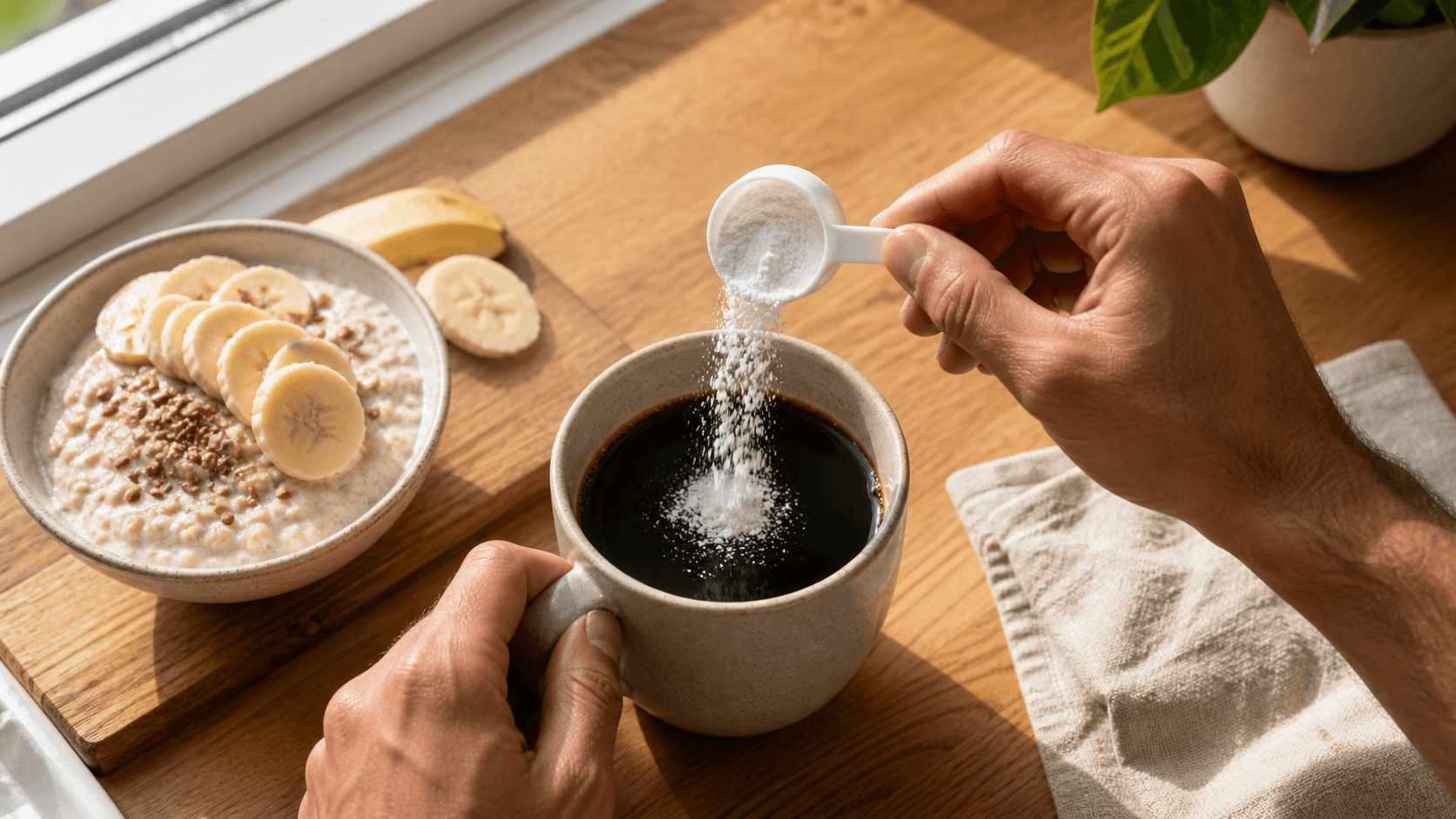
Timing is not a major factor. Some research suggests a slight advantage to taking creatine post-workout alongside protein and carbohydrates, as insulin and blood flow to muscles are elevated after training, potentially enhancing creatine uptake (12). But the difference is marginal at best. The most important thing is that you take it consistently every day. Mix it into your morning coffee, your protein shake, your water, your porridge, or whatever works for your routine. Creatine monohydrate dissolves reasonably well in warm liquids and has virtually no taste.
The Form That Matters
Creatine monohydrate. Full stop. It is the most researched, most effective, and cheapest form available. The supplement industry has produced dozens of alternative forms over the years including creatine HCL, creatine ethyl ester, buffered creatine, creatine nitrate, and various liquid formulations. None of them have been shown to be superior to standard creatine monohydrate in peer-reviewed research (7). Some are significantly more expensive for no additional benefit. Do not overcomplicate this. Buy a bag of pure creatine monohydrate powder with no added flavours, fillers, or proprietary blends. It should be a fine white powder, almost tasteless, and very affordable. A 500-gram bag will last over three months at 5 grams per day.
The Proven Benefits of Creatine
The benefits of creatine are not speculative. They are backed by decades of controlled research across thousands of participants. Here is what the evidence consistently shows.
Increased Strength and Power Output
A meta-analysis published in the Journal of Strength and Conditioning Research found that creatine supplementation increased maximal strength by an average of 8 percent and power output by an average of 14 percent compared to placebo (13). These are not trivial numbers. An 8 percent increase in your squat or deadlift, accumulated over months of training, represents a significant real-world improvement.
Greater Muscle Mass
Creatine supplementation combined with resistance training consistently produces greater increases in lean body mass compared to training alone. This is partly due to increased training volume and partly due to enhanced cell hydration, which may provide an anabolic signal for protein synthesis (6). For anyone pursuing a lean, strong physique, this is a clear advantage.
Improved Recovery Between Sets and Sessions
By replenishing phosphocreatine stores more rapidly, creatine allows you to recover faster between high-intensity efforts. This means less drop-off in performance across multiple sets and a greater capacity to handle demanding training sessions (10).
Enhanced Cognitive Function
Creatine supplementation has been shown to improve working memory, processing speed, and mental performance, particularly under conditions of cognitive demand, stress, or sleep deprivation. These effects appear to be even more pronounced in vegetarians and vegans (9).
Bone Health Support
When combined with resistance training, creatine supplementation has shown positive effects on bone mineral density, particularly in older adults and post-menopausal women. This has meaningful implications for long-term skeletal health and fracture prevention (8).
Potential Neuroprotective Effects
Emerging research is investigating creatine’s role in protecting brain cells against neurodegenerative conditions. While this research is still in its early stages, the mechanism is biologically plausible given creatine’s role in maintaining cellular energy reserves in the brain (14).
Top Tips for Supplementing With Creatine
Attach It to an Existing Habit
Keep your creatine next to your kettle, your coffee machine, or your protein powder. Add it to something you already do every morning. The supplement only works if you take it consistently, and the easiest way to guarantee consistency is to tie it to a routine you never miss.
Stay Hydrated
Creatine draws water into muscle cells. This is part of how it works, but it means your overall fluid needs increase slightly. Aim for at least 2.5 to 3 litres of water daily, more if you are training hard or in warm environments. Proper hydration also reduces the chance of any cramping or digestive discomfort.
Ignore the Scale for the First Two Weeks
You may see a 1 to 2 kilogram increase in body weight when you start creatine. This is intracellular water being stored in your muscles. It is not fat. It is not subcutaneous bloating. If you are tracking your body composition, rely on measurements, photos, and how your clothes fit rather than the number on the scale during the initial saturation period.
Do Not Cycle On and Off
There is no evidence-based reason to cycle creatine. It works through maintaining saturated muscle stores. Going on and off simply means you spend periods of time at sub-optimal levels for no benefit. Take it every day, indefinitely. The long-term safety data supports continuous use (7).
Combine It With Resistance Training
Creatine enhances your capacity to train harder. Without the training stimulus, you are missing the primary mechanism through which it improves your body. A structured progressive overload programme is what turns the extra performance capacity into actual results.
What Creatine Will Not Do
I believe in honest supplementation advice, which means telling you what creatine will not do is just as important as telling you what it will. Creatine will not burn fat. It will not replace a calorie deficit for fat loss. It will not build muscle without training. It will not compensate for poor nutrition, poor sleep, or poor programming. It is not a shortcut. It is an optimiser. It makes a good training and nutrition plan work slightly better. That is its role, and within that role, it is exceptionally good at what it does. But it is one piece of the puzzle, not the whole picture.
Is Creatine Safe
Yes. Creatine monohydrate has been studied for over three decades in populations ranging from adolescents to elderly adults. Systematic reviews and meta-analyses have consistently concluded that creatine supplementation at recommended doses does not cause kidney damage, liver damage, dehydration, muscle cramping, or any other clinically significant adverse effect in healthy individuals (15). The International Society of Sports Nutrition, the American College of Sports Medicine, and the European Food Safety Authority have all affirmed its safety. If you have pre-existing kidney disease or impaired renal function, consult your GP before supplementing. For everyone else, the safety profile is as well-established as any supplement on the market.
The Bottom Line
Creatine monohydrate is cheap, safe, effective, and backed by more research than any other sports supplement in existence. It improves strength, supports muscle growth, enhances recovery, benefits cognitive function, and is relevant for almost anyone who trains, regardless of age, sex, or dietary preference. The myths around bloating, kidney damage, and it being a steroid are exactly that. If you are training regularly, eating well, and not supplementing with creatine, you are leaving results on the table. Five grams a day, every day, in whatever form is most convenient. That is all it takes.
If you want a complete training, nutrition, and supplementation plan built around your specific goals, your body, your lifestyle, and your dietary preferences, get in touch through trperformancecoaching.com. I work one-to-one with clients online globally. Whether you eat meat, are vegetarian, vegan, or somewhere in between, I will build a plan that works for you and gets you results.
Work with Me
Get a personalised coaching plan built around your goals, your schedule, and your life.
Enquire NowReferences
- Wyss M, Kaddurah-Daouk R. Creatine and creatinine metabolism. Physiological Reviews. 2000; 80(3): 1107-1213.
- Harris RC, Söderlund K, Hultman E. Elevation of creatine in resting and exercised muscle of normal subjects by creatine supplementation. Clinical Science. 1992; 83(3): 367-374.
- Balsom PD, Söderlund K, Ekblom B. Creatine in humans with special reference to creatine supplementation. Sports Medicine. 1994; 18(4): 268-280.
- Benton D, Donohoe R. The influence of creatine supplementation on the cognitive functioning of vegetarians and omnivores. British Journal of Nutrition. 2011; 105(7): 1100-1105.
- Wallimann T, Tokarska-Schlattner M, Schlattner U. The creatine kinase system and pleiotropic effects of creatine. Amino Acids. 2011; 40(5): 1271-1296.
- Lanhers C, Pereira B, Naughton G, Trousselard M, Lesage FX, Dutheil F. Creatine supplementation and lower limb strength performance: a systematic review and meta-analyses. Sports Medicine. 2015; 45(9): 1285-1294.
- Kreider RB, Kalman DS, Antonio J, et al. International Society of Sports Nutrition position stand: safety and efficacy of creatine supplementation in exercise, sport, and medicine. Journal of the International Society of Sports Nutrition. 2017; 14: 18.
- Candow DG, Forbes SC, Chilibeck PD, Cornish SM, Antonio J, Kreider RB. Effectiveness of creatine supplementation on aging muscle and bone: focus on falls prevention and inflammation. Journal of Clinical Medicine. 2019; 8(4): 488.
- Avgerinos KI, Spyrou N, Bougioukas KI, Kapogiannis D. Effects of creatine supplementation on cognitive function of healthy individuals: a systematic review of randomized controlled trials. Experimental Gerontology. 2018; 108: 166-173.
- Rawson ES, Volek JS. Effects of creatine supplementation and resistance training on muscle strength and weightlifting performance. Journal of Strength and Conditioning Research. 2003; 17(4): 822-831.
- Hultman E, Söderlund K, Timmons JA, Cederblad G, Greenhaff PL. Muscle creatine loading in men. Journal of Applied Physiology. 1996; 81(1): 232-237.
- Antonio J, Ciccone V. The effects of pre versus post workout supplementation of creatine monohydrate on body composition and strength. Journal of the International Society of Sports Nutrition. 2013; 10: 36.
- Rawson ES, Volek JS. Effects of creatine supplementation and resistance training on muscle strength and weightlifting performance. Journal of Strength and Conditioning Research. 2003; 17(4): 822-831.
- Smith RN, Agharkar AS, Gonzales EB. A review of creatine supplementation in age-related diseases: more than a supplement for athletes. F1000Research. 2014; 3: 222.
- Poortmans JR, Francaux M. Adverse effects of creatine supplementation: fact or fiction? Sports Medicine. 2000; 30(3): 155-170.