
There is one number that predicts how long you will live more accurately than your blood pressure, your cholesterol, your body fat percentage, or whether you smoke. That number is your cardiorespiratory fitness, measured as your VO2max. A landmark study published in JAMA Network Open in 2018, analysing over 122,000 adults, found that low cardiovascular fitness carried a greater mortality risk than smoking, diabetes, or coronary artery disease (1). Individuals in the lowest fitness category had nearly five times the risk of dying compared to those in the highest category. And critically, there was no upper limit to the benefit. The fitter you were, the longer you lived. Full stop.
Yet most people I coach have never given a second thought to their cardiovascular conditioning beyond whether it helps them burn calories. Cardio gets treated as a fat loss tool and nothing more. Something to suffer through on a treadmill for 40 minutes before rewarding yourself with a coffee. That limited understanding is not just leaving results on the table. It is leaving years of your life on the table. Because what cardiovascular conditioning actually does, at the deepest cellular level, is transform the machinery inside your muscles that determines how efficiently you produce energy, burn fat, regulate blood sugar, and resist the diseases of ageing. That machinery is your mitochondria. And if you do not understand why mitochondrial health matters, you do not understand fitness at all.
What Happens When Your Mitochondria Decline
Mitochondria are the structures inside your cells that produce energy. Every movement you make, every heartbeat, every thought, every time your body oxidises fat for fuel, it happens inside your mitochondria through a process called beta-oxidation (2). Without healthy, abundant, functioning mitochondria, your body cannot efficiently use fat as fuel, cannot regulate blood sugar properly, and cannot produce enough energy to meet the demands of daily life let alone exercise.
Here is the problem. Mitochondrial function declines with age, inactivity, and metabolic disease. Research has demonstrated that reduced mitochondrial capacity is directly implicated in the development of insulin resistance, type 2 diabetes, cardiovascular disease, and neurodegenerative conditions (3). As your mitochondria deteriorate, your ability to burn fat drops, your reliance on sugar increases, your blood glucose becomes harder to control, and your metabolic flexibility, meaning your body's ability to switch between burning fat and carbohydrate depending on demand, is compromised.
This is not theoretical. I see it in clients every week. People who are eating reasonably well, training consistently, but struggling to lose body fat or control blood sugar. Often the missing piece is not their diet or their willpower. It is that their cardiovascular system is deconditioned, their mitochondrial density is low, and their body simply does not have the cellular infrastructure to burn fat efficiently. You cannot out-diet or out-supplement a lack of cardiovascular conditioning.
13 to 15%
Lower Mortality Risk
For every 1 MET (3.5 ml/kg/min) increase in VO2max, all-cause mortality drops by 13 to 15% (Kokkinos et al. 2022, JACC, 750,000+ participants)
How Fat Is Actually Burned: The Four Step Sequence
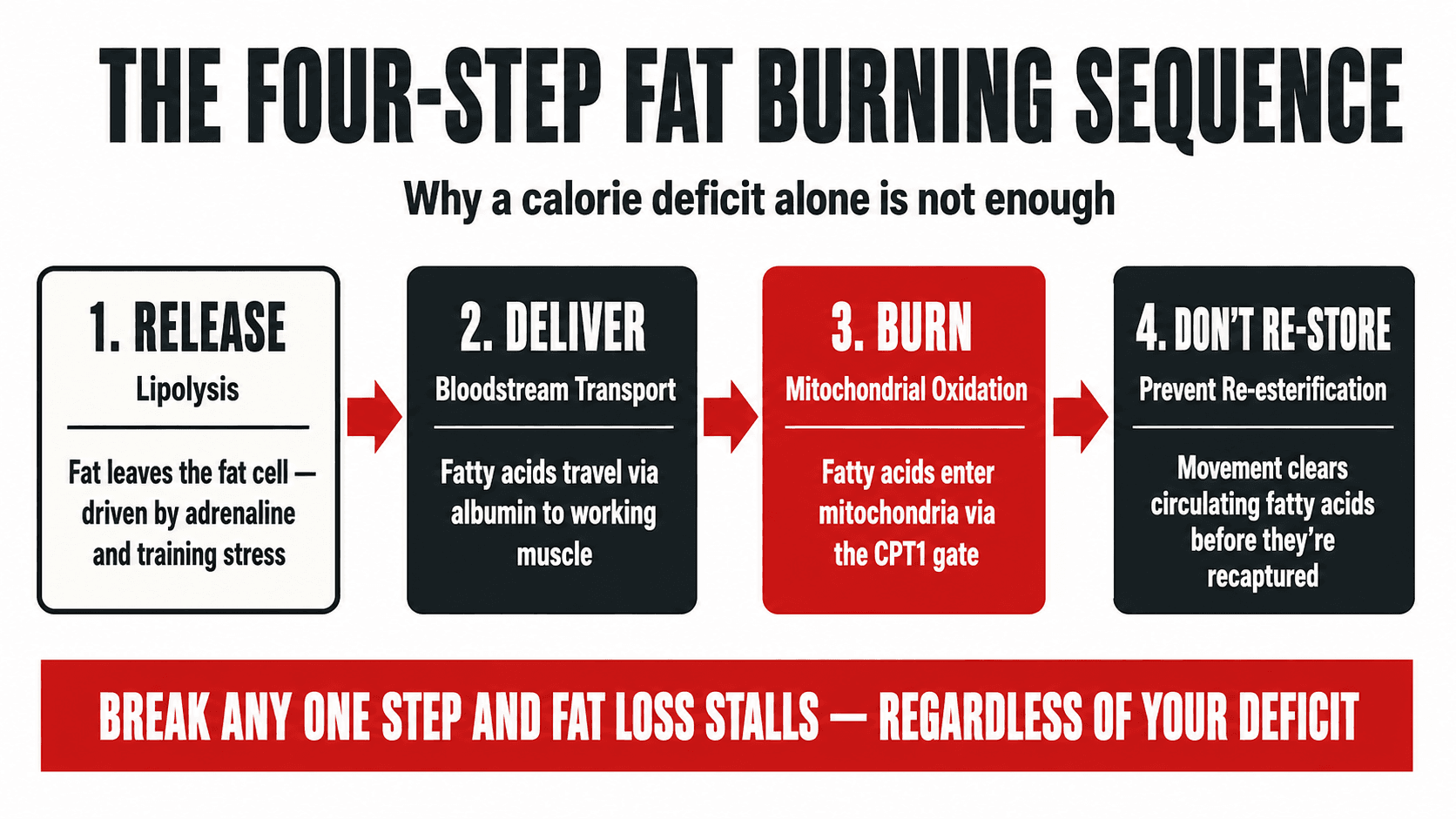
Before I explain how cardiovascular conditioning improves mitochondrial health, you need to understand the actual process your body goes through to burn fat. Most people think fat loss is as simple as creating a calorie deficit. The deficit matters, but the physiology underneath it is far more nuanced. Fat burning follows a four step sequence, and a breakdown at any stage will stall your progress regardless of how disciplined your diet is.
Step 1 — RELEASE: Fat leaves the fat cell
Hormones like adrenaline and natriuretic peptides signal fat cells to break down stored triglycerides into fatty acids and glycerol. This process is called lipolysis. Hard training, interval work, and challenging cardio all increase the catecholamines that drive this step.
Step 2 — DELIVER: Fat travels through the bloodstream
Released fatty acids attach to albumin proteins in the blood and are transported to active tissues. Blood flow is critical here. Poor circulation means fatty acids cannot reach the muscles where they are needed. This is why people with hypertension or poor vascular health often struggle with fat loss.
Step 3 — BURN: Fat enters the mitochondria and is oxidised
Fatty acids must physically enter the mitochondria inside your muscle cells to be burned. This step is controlled by a transport system called the carnitine shuttle, with an enzyme called CPT1 acting as the rate-limiting gatekeeper. Fat metabolism requires significantly more oxygen than carbohydrate metabolism, which is why aerobic fitness directly determines how much fat you can burn per minute.
Step 4 — DO NOT RE-STORE: Prevent re-esterification
At rest, 30 to 70 percent of released fatty acids can be recaptured and stored back as fat before they are burned. High carbohydrate intake combined with inactivity dramatically increases this re-storage rate. Movement after fat mobilisation helps clear circulating fatty acids by directing them into working muscle.
Key Point
Fat loss is not just about releasing fat from fat cells. It is about delivering it, burning it inside your mitochondria, and preventing re-storage. Cardiovascular conditioning directly improves steps 2, 3, and 4.
The Mitochondrial Gate: CPT1 and Why It Matters
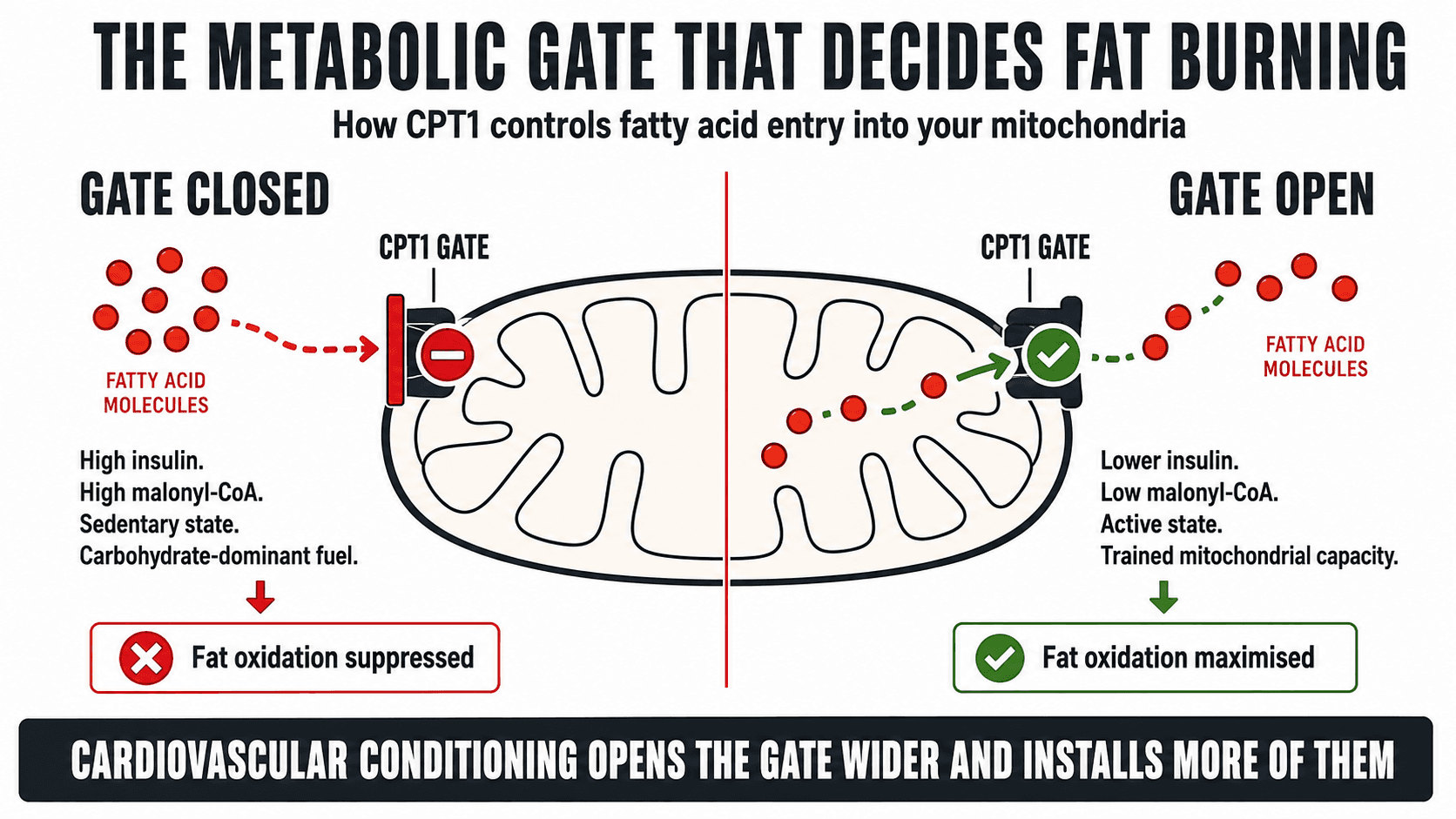
The single most important bottleneck in fat burning is the point where fatty acids enter the mitochondria. This is controlled by an enzyme called CPT1, which sits on the outer membrane of the mitochondria and acts as a metabolic gate (4). When carbohydrate availability and insulin are high, a molecule called malonyl-CoA accumulates, and this molecule closes the CPT1 gate, limiting how much fat can enter the mitochondria for burning. When activity levels are elevated, glycogen stores are moderately depleted, and insulin is lower, malonyl-CoA drops, and the gate opens, allowing greater fat oxidation.
This is why cardiovascular conditioning is so powerful for fat loss that goes beyond simple calorie expenditure. Regular aerobic training increases the number and size of your mitochondria, increases CPT1 enzyme activity, and increases the density of fatty acid transport proteins on your muscle cell membranes (5). In plain language, cardiovascular conditioning builds more furnaces to burn fat in, opens the gates wider, and installs more doorways for fat to enter your muscle cells. A well conditioned person is burning more fat at every intensity, from sitting at their desk to walking to the shops to running for a bus, than a deconditioned person doing the exact same activities.
| Adaptation | Deconditioned Person | Conditioned Person |
|---|---|---|
| Mitochondrial density | Low: fewer and smaller mitochondria | High: more and larger mitochondria |
| CPT1 activity | Low: restricted fat entry | High: greater fat oxidation |
| Capillary density | Low: poor oxygen delivery | High: enhanced delivery |
| Fat oxidation at rest | Relies heavily on carbohydrate | Burns more fat at all intensities |
| Metabolic flexibility | Poor: difficulty switching fuels | Excellent: adapts to demand |
| Fatty acid transporters | Few: limited fat uptake | Abundant: CD36/FABPs upregulated |
PGC-1 Alpha: The Master Switch for Mitochondrial Growth
At the molecular level, the key driver of mitochondrial biogenesis, meaning the creation of new mitochondria, is a transcription coactivator called PGC-1 alpha (6). When you perform cardiovascular exercise, the metabolic stress of the activity triggers signalling pathways including AMPK and calcium-dependent mechanisms that activate PGC-1 alpha. Once activated, PGC-1 alpha moves into the cell nucleus and switches on a cascade of genes responsible for building new mitochondria, improving existing mitochondrial function, and increasing the capillary network that delivers oxygen to your muscles.
A 2025 systematic review and meta-analysis confirmed that endurance exercise produces a large and statistically significant increase in PGC-1 alpha expression, with both continuous and interval training modalities showing comparable effects (7). Research from the Journal of the American Heart Association has further demonstrated that exercise enhances mitochondrial function through multiple quality control processes including biogenesis, fission, fusion, and the targeted removal of damaged mitochondria through a process called mitophagy (8). In other words, cardiovascular conditioning does not just build new mitochondria. It cleans house, removes the damaged ones, and improves the quality of those that remain.
This is particularly important for clients I work with who are managing type 2 diabetes, insulin resistance, or PCOS. Mitochondrial dysfunction has been directly linked to impaired insulin signalling and glucose regulation (3). By improving mitochondrial health through structured cardiovascular conditioning, we address one of the root causes of metabolic dysfunction rather than just managing symptoms.
Science Note
PGC-1 alpha expression declines with age and inactivity. Cardiovascular exercise is the most potent natural stimulus to reverse this decline and rebuild mitochondrial capacity at any age.
Capillary Density: The Overlooked Adaptation
Mitochondria can only function if they receive adequate oxygen. Fat metabolism is significantly more oxygen-hungry than carbohydrate metabolism (2). This means your body's ability to deliver oxygen to working muscle is a rate-limiting factor in how much fat you can burn. Oxygen delivery is determined largely by capillary density, which is the number of tiny blood vessels surrounding each muscle fibre.
Research has shown that capillary density declines with age and is significantly compromised in individuals with type 2 diabetes (9). However, cardiovascular training directly stimulates capillary growth through a process called angiogenesis, driven in part by PGC-1 alpha and vascular endothelial growth factor. Studies on lifelong exercisers have shown they possess over 35 percent more capillaries per muscle fibre than age-matched sedentary individuals (10). More capillaries means better oxygen delivery, better nutrient transport, improved insulin sensitivity, and greater fat burning capacity at every level of effort.
This is why I tell clients that cardiovascular conditioning is not optional if you care about your long term health. It is not about burning 300 calories on a bike. It is about physically remodelling the infrastructure of your muscles so they can function the way they were designed to.

What Type of Cardio Builds Mitochondria Best?
There has been significant debate about whether low intensity steady state cardio or higher intensity work is superior for mitochondrial adaptations. A 2025 narrative review by Storoschuk and colleagues, published in Sports Medicine, critically examined the popular claim that Zone 2 training is the optimal intensity for improving mitochondrial capacity (11). Their conclusion was nuanced. While Zone 2 training does activate mitochondrial biogenesis pathways and is effective particularly for beginners and as a recovery tool, the evidence consistently shows that higher exercise intensities produce greater improvements in mitochondrial capacity, VO2max, and cardiorespiratory fitness.
The practical takeaway is straightforward. You need both. A well structured cardiovascular conditioning programme should include a base of lower intensity steady state work for building aerobic capacity, fat oxidation, and capillary density, combined with appropriately dosed higher intensity intervals for maximising mitochondrial adaptations and VO2max improvements. Neither modality alone is optimal. The combination is where the real results come from.
| CARDIOVASCULAR CONDITIONING: A BALANCED APPROACH | |
|---|---|
| Zone 2 Steady State | Builds aerobic base, enhances fat oxidation, increases capillary density, low recovery cost, sustainable for high volume. Aim for 30 to 60+ min per session, 3 to 4 times per week. |
| Higher Intensity | Maximises PGC-1 alpha activation, greatest VO2max improvements, strongest mitochondrial biogenesis stimulus. Intervals of 15 to 25 min, 1 to 2 times per week. |
| Daily Movement | 10,000+ steps daily for NEAT, post-meal and post-training walks to clear circulating fatty acids and prevent re-storage. The foundation of daily energy expenditure. |

How I Programme Cardiovascular Conditioning for My Clients
Every client I work with receives a structured cardiovascular conditioning component alongside their resistance training. The specific approach depends on their current fitness level, health conditions, and goals, but the principles remain consistent.
Resistance Training Comes First
Strength training is the foundation for body composition change. It preserves and builds lean muscle, increases your basal metabolic rate, and creates the metabolic environment for fat loss (12). Resistance training also has its own mitochondrial benefits, increasing mitochondrial protein content and improving oxidative capacity within muscle fibres. I programme three to four resistance sessions per week for most clients.
Stack Conditioning After Lifting
When schedule permits, I add 20 to 30 minutes of brisk walking or Zone 2 conditioning after resistance training sessions. This approach leverages the fat mobilisation that occurs during strength training by creating an extended clearance window where circulating fatty acids are directed into working muscle for oxidation rather than being re-stored. Physiologically, this stacks release from lifting with burning from steady aerobic work, covering the full fat loss sequence in a single session.
Dedicated Conditioning on Non-Lifting Days
On days without resistance training, I programme longer Zone 2 sessions of 40 to 60 or more minutes for maximum fat oxidation and aerobic base building, or shorter higher intensity interval sessions of 15 to 25 minutes for VO2max and mitochondrial capacity improvements. The choice depends on recovery status, training age, and goals.
Daily Steps Are Non-Negotiable
A minimum of 10,000 steps per day is required for every client regardless of their training programme. Walking is the single most underrated tool for fat loss and metabolic health. It elevates NEAT, improves insulin sensitivity, supports cardiovascular health, requires zero recovery, and creates the daily movement foundation that formal training sessions alone cannot provide.
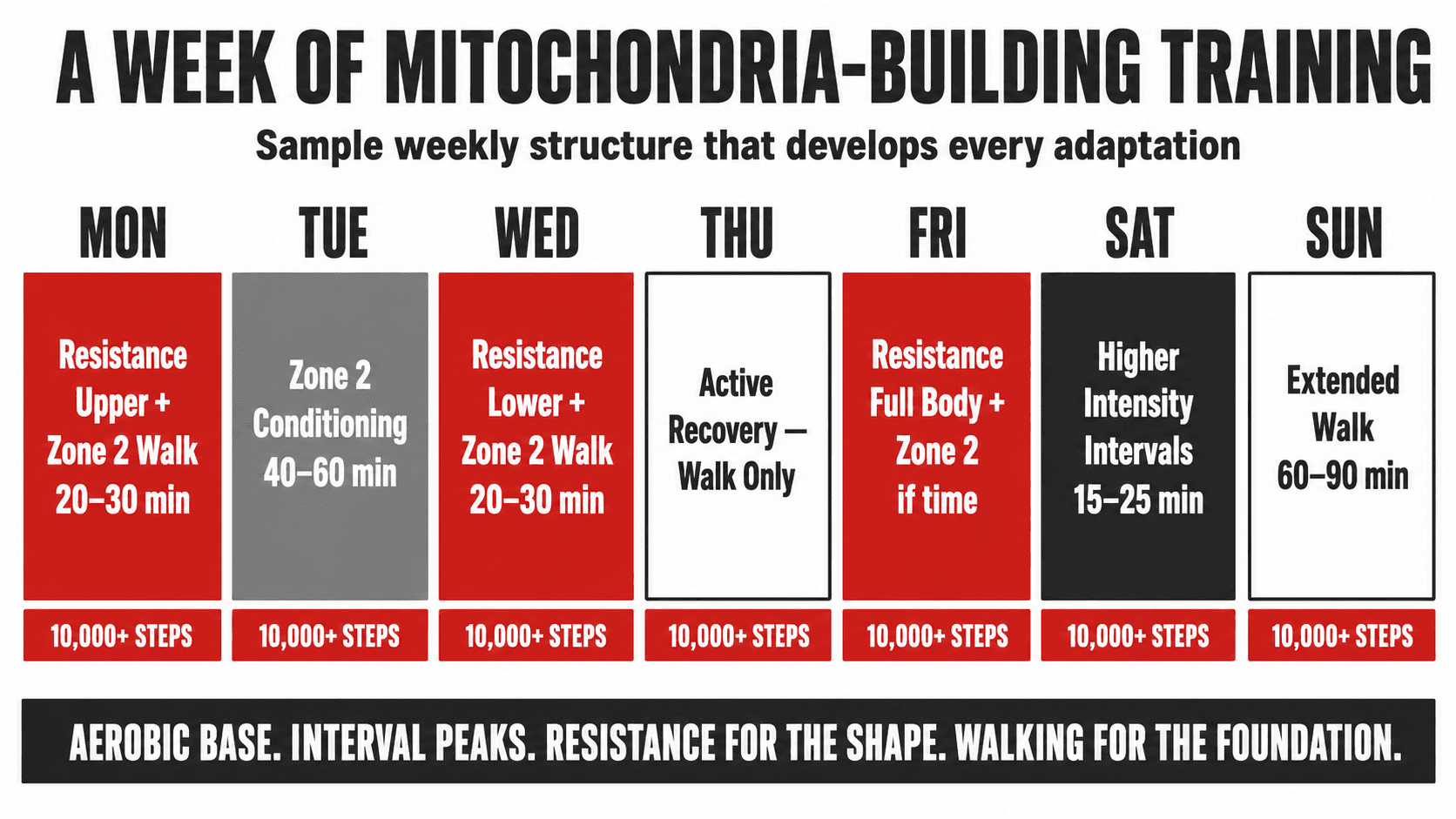
| SAMPLE WEEKLY STRUCTURE | |
|---|---|
| Monday | Resistance training (upper body, 45-60 min) + 20-30 min Zone 2 walk/cycle. 10,000+ steps. |
| Tuesday | Dedicated conditioning: 40-60 min Zone 2 (cycling, incline walk, rowing). 10,000+ steps. |
| Wednesday | Resistance training (lower body, 45-60 min) + 20-30 min Zone 2. 10,000+ steps. |
| Thursday | Rest or active recovery. Walking only. 10,000+ steps. |
| Friday | Resistance training (full body/push-pull, 45-60 min) + Zone 2 if time permits. 10,000+ steps. |
| Saturday | Higher intensity intervals: 15-25 min assault bike, rower, or hill sprints. 10,000+ steps. |
| Sunday | Rest day. Extended walk 60-90 min or active leisure. 10,000+ steps. |
Nutrition That Supports Mitochondrial Health
Your mitochondria need the right fuel and the right micronutrients to function optimally. Protein intake of 1.6 to 2.2 grams per kilogram of body weight per day is essential for maintaining muscle mass and supporting the structural proteins within mitochondria (13). For omnivores, this means lean meats, fish, eggs, and dairy. For vegetarians and vegans, it means tofu, tempeh, seitan, lentils, chickpeas, soy protein, pea protein, and plant-based dairy alternatives. I am a lifelong vegetarian and I hit my protein targets every single day without exception.
Beyond protein, several micronutrients play critical roles in mitochondrial function and the electron transport chain. Iron is required for oxygen transport and multiple mitochondrial enzymes. Iodine and selenium support thyroid function, which sets the metabolic rate and influences overall oxidative capacity. Coenzyme Q10 is a direct participant in the mitochondrial electron transport chain. Magnesium is involved in over 300 enzymatic reactions including ATP production (14). If you are experiencing persistent fatigue, poor exercise tolerance, or plateaued fat loss, I always recommend having your iron levels, thyroid function, and vitamin D checked as a baseline.
Strategic carbohydrate timing also supports both training performance and fat oxidation. Clustering your carbohydrate intake around high-intensity training sessions fuels performance and recovery, while creating lower-insulin windows at other times of the day opens the CPT1 gate and allows greater fat burning. This is not about going low carb. It is about placing carbohydrates where they serve you best and creating metabolic windows for optimised fat utilisation.
The Bottom Line
Cardiovascular conditioning is not just about burning calories during a workout. It is a fundamental investment in the cellular machinery that determines how efficiently your body produces energy, burns fat, regulates blood sugar, and resists the chronic diseases of ageing. Every session of cardiovascular work you perform triggers molecular signals that build new mitochondria, improve oxygen delivery, open the gates for fat oxidation, and enhance your metabolic flexibility. No supplement, no diet, no amount of willpower can replicate what consistent cardiovascular conditioning does for your biology.
I am a performance coach. I have helped hundreds of clients through body transformations. I work one-to-one with clients online globally, across every dietary background, whether you eat meat, are vegetarian like me, vegan, or anything in between. Whether you are managing diabetes, hypertension, PCOS, post-menopause hormonal changes, or you simply want to transform your body composition and health from the inside out, I build evidence-based training and nutrition programmes that are grounded in real physiology, not trends. If you want to stop guessing and start building a body that works properly at the cellular level, get in touch through trperformancecoaching.com.
Work with Me
Get a personalised coaching plan built around your goals, your schedule, and your life.
Enquire NowReferences
- Mandsager K, Harb S, Cremer P, Phelan D, Nissen SE, Jaber W. Association of cardiorespiratory fitness with long-term mortality among adults undergoing exercise treadmill testing. JAMA Network Open. 2018;1(6):e183605.
- Holloszy JO. Biochemical adaptations in muscle: effects of exercise on mitochondrial oxygen uptake and respiratory enzyme activity in skeletal muscle. Journal of Biological Chemistry. 1967;242(9):2278-2282.
- Kim JA, Wei Y, Sowers JR. Role of mitochondrial dysfunction in insulin resistance. Circulation Research. 2008;102(4):401-414.
- McGarry JD, Brown NF. The mitochondrial carnitine palmitoyltransferase system: from concept to molecular analysis. European Journal of Biochemistry. 1997;244(1):1-14.
- Bonen A, Luiken JJ, Arumugam Y, Glatz JF, Tandon NN. Acute regulation of fatty acid uptake involves the cellular redistribution of fatty acid translocase. Journal of Biological Chemistry. 2000;275(19):14501-14508.
- Puigserver P, Spiegelman BM. Peroxisome proliferator-activated receptor-gamma coactivator 1 alpha (PGC-1 alpha): transcriptional coactivator and metabolic regulator. Endocrine Reviews. 2003;24(1):78-90.
- Elechi JOG, et al. The impact of exercise on mitochondrial biogenesis in skeletal muscle: a systematic review and meta-analysis of randomized trials. Journal of Functional Morphology and Kinesiology. 2025;10(2):article 159.
- Li H, Qin S, Liang Q, et al. Exercise alleviates cardiovascular diseases by improving mitochondrial homeostasis. Journal of the American Heart Association. 2024;13(22):e036555.
- Groen BB, Hamer HM, Snijders T, et al. Skeletal muscle capillary density and microvascular function are compromised with aging and type 2 diabetes. Journal of Applied Physiology. 2014;116(8):998-1005.
- McKendry J, et al. Lifelong endurance exercisers demonstrate elevated skeletal muscle capillarisation. Journal of Applied Physiology. 2020;128:379-389.
- Storoschuk KL, Moran-MacDonald A, Gibala MJ, Gurd BJ. Much ado about Zone 2: a narrative review assessing the efficacy of Zone 2 training for improving mitochondrial capacity and cardiorespiratory fitness. Sports Medicine. 2025.
- Lopez P, Taaffe DR, Galvao DA, Newton RU, et al. Resistance training effectiveness on body composition and body weight outcomes in individuals with overweight and obesity across the lifespan: a systematic review and meta-analysis. Obesity Reviews. 2022;23(5):e13428.
- Phillips SM. Dietary protein requirements and adaptive advantages in athletes. British Journal of Sports Medicine. 2012;46(8):585-588.
- Villablanca PA, Jarber JR, Sishi MN, et al. Nonexercise activity thermogenesis in obesity management. Mayo Clinic Proceedings. 2015;90(4):509-519.
- Kokkinos P, Faselis C, Samuel IBH, et al. Cardiorespiratory fitness and mortality risk across the spectra of age, race, and sex. Journal of the American College of Cardiology. 2022;80(6):598-609.