
The Decade Where Everything Catches Up
Your 40s are the decade where the bill arrives. Every late night, every skipped workout, every year of relying on a fast metabolism that no longer exists, every decade of stress that you told yourself you would deal with later. It all compounds. And the body you are living in now is the receipt.
I am not being dramatic. The data is stark. According to the US National Health and Nutrition Examination Survey, the prevalence of metabolic syndrome rises sharply in the 40 to 59 age group, with approximately 35 to 40 percent of adults in this bracket meeting the diagnostic criteria(1). In the UK, almost two-thirds of adults aged 45 to 74 are now classified as overweight or obese. Heart disease, type 2 diabetes, hypertension, and certain cancers all see significant increases in incidence during this decade.
But here is the part most people miss. Your 40s are not the decade where decline becomes inevitable. They are the decade where you still have the power to change the trajectory of every single one of these conditions. The research is unambiguous on this point. A systematic review and meta-analysis of combined lifestyle factors found that adults who adopted the healthiest lifestyle patterns had a 43 percent lower risk of metabolic syndrome compared to those with the least healthy lifestyles(2). Forty-three percent. That is not a marginal improvement. That is a fundamentally different health outcome, and it is entirely within your control.
| Path | Trajectory |
|---|---|
| Path A: Inaction | Rising body fat → Insulin resistance → Pre-diabetes → Type 2 diabetes. Muscle loss → Slower metabolism → More fat gain → Increased inflammation. Stress + poor sleep → Elevated cortisol → Visceral fat accumulation → Hypertension. |
| Path B: Structured Intervention | Resistance training → Muscle preserved → Metabolism protected → Fat loss. Nutrition optimised → Blood sugar controlled → Insulin sensitivity improved. Sleep and stress managed → Hormones stabilised → Inflammation reduced. The difference between these paths is not genetics. It is decisions made in your 40s. |
What Is Metabolic Syndrome and Why Should You Care?
Before I go further, I want to explain metabolic syndrome clearly, because too many people have never heard of it despite the fact that it may be the most significant health risk they face. Metabolic syndrome is not a single disease. It is a cluster of interconnected risk factors that, when they appear together, dramatically increase your likelihood of developing heart disease, stroke, and type 2 diabetes.
You are diagnosed with metabolic syndrome if you have three or more of the following five criteria.
The Five Diagnostic Criteria for Metabolic Syndrome
| Criteria | Threshold | What It Means in Plain Language |
|---|---|---|
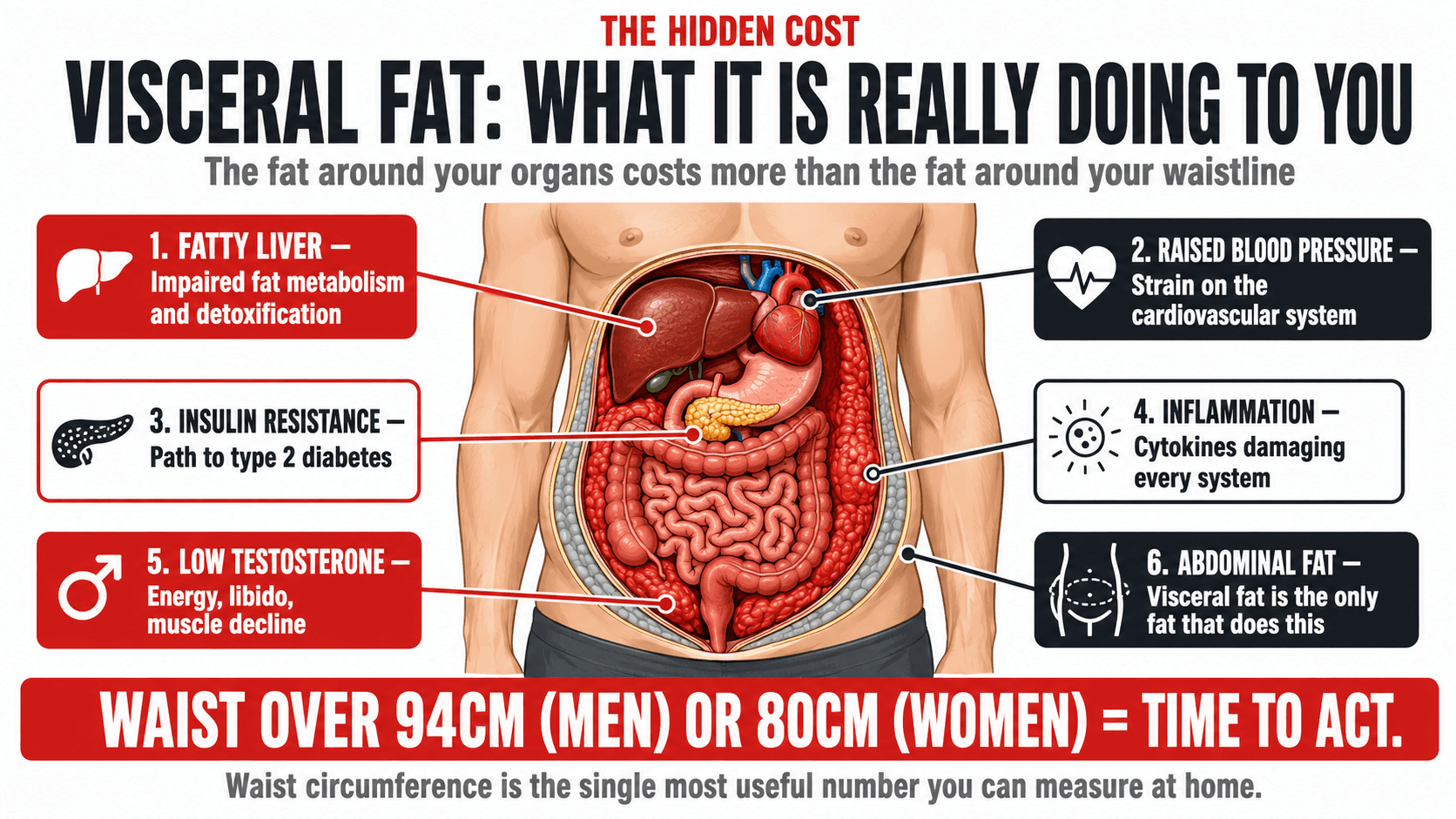
| Elevated waist circumference | Men: ≥ 94 cm (37 inches) / Women: ≥ 80 cm (31.5 inches) | You are carrying too much fat around your midsection, particularly visceral fat that surrounds your organs |
| Elevated triglycerides | ≥ 1.7 mmol/L (or on medication) | Your blood contains too much of a type of fat linked to heart disease |
| Reduced HDL cholesterol | Men: < 1.0 mmol/L / Women: < 1.3 mmol/L | Your ‘good’ cholesterol is too low to protect your arteries |
| Elevated blood pressure | ≥ 130/85 mmHg (or on medication) | Your heart is working harder than it should to push blood through your body |
| Elevated fasting glucose | ≥ 5.6 mmol/L (or on medication) | Your body is struggling to regulate blood sugar, a precursor to type 2 diabetes |
Three out of five. That is all it takes. And here is the uncomfortable truth: many people in their 40s meet these criteria and do not know it because they have never been tested, or because they assume feeling ‘a bit tired’ and ‘a bit heavier’ is just normal ageing. It is not normal. It is a warning sign.
Top Tip
Ask your GP for a full metabolic health check. Request fasting blood glucose, HbA1c, a lipid panel (total cholesterol, HDL, LDL, triglycerides), blood pressure, and a waist circumference measurement. Know your numbers. You cannot manage what you do not measure.

The Executive Health Crisis: When Success Costs Your Body
I work with a significant number of executive clients online. High-performing professionals in their 40s who are at the top of their careers but at the bottom of their health. The pattern is remarkably consistent. Long hours, high stress, poor sleep, business meals, alcohol as a social lubricant, exercise deprioritised for years. They look successful on the outside and feel terrible on the inside.
The physiological impact of chronic stress is not trivial. Sustained elevated cortisol, the body’s primary stress hormone, promotes visceral fat storage, particularly around the abdomen. It impairs insulin sensitivity, disrupts sleep architecture, reduces testosterone in men and dysregulates oestrogen and progesterone in women, and suppresses immune function(3). This is not abstract biology. This is the mechanism by which your demanding career is literally making you fatter, weaker, and sicker.
The irony is that the people who need exercise and nutrition intervention the most are often the ones who believe they do not have time for it. I challenge that belief with every client I work with. If you can find 45 minutes to sit in a meeting that achieves nothing, you can find 45 minutes to train. The difference is that the training will actually change your life.
Top Tip
If you are a busy professional, you do not need to train every day. Three focused 45-minute sessions per week, combining resistance training with brief cardiovascular conditioning, will produce significant improvements in body composition, blood pressure, blood sugar, and energy levels. Prioritise it like you would a board meeting.

Hypertension: The Silent Killer in Your 40s
Hypertension affects approximately one in four adults in the UK and is the single largest risk factor for cardiovascular disease and stroke. In your 40s, blood pressure often begins to creep upward, driven by increased body fat, reduced physical activity, excess sodium intake, stress, and alcohol consumption. Many people with hypertension have no symptoms at all, which is why it is called the silent killer.
The evidence on exercise and blood pressure is robust. A comprehensive meta-analysis published in the Journal of the American Heart Association found that structured exercise programmes reduced systolic blood pressure by an average of 4.8 mmHg and diastolic by 3.2 mmHg, with combined aerobic and resistance training producing the most consistent reductions(4). The Diabetes Prevention Program, one of the largest lifestyle intervention trials ever conducted, demonstrated that 150 minutes of moderate-intensity exercise per week combined with nutritional counselling achieved a 38 percent reversal of metabolic syndrome(5).
I have worked with clients whose GPs have reduced or stopped blood pressure medication after a sustained period of structured training and fat loss. This is not anecdotal wishful thinking. It is the predictable result of reducing visceral fat, improving arterial compliance, and strengthening the cardiovascular system through consistent, progressive exercise.
Evidence-Based Strategies for Blood Pressure Reduction in Your 40s
| Strategy | Expected Reduction in Systolic BP | How to Implement |
|---|---|---|
| Resistance training (2–3x/week) | ~4–5 mmHg | Compound movements with moderate loads, full body sessions |
| Aerobic exercise (150 min/week) | ~5–8 mmHg | Brisk walking, cycling, swimming, or incline treadmill walking |
| Weight loss (5–10% body weight) | ~5–10 mmHg per 5kg lost | Caloric deficit through nutrition combined with training |
| Reduce sodium intake (< 6g/day) | ~2–5 mmHg | Minimise processed foods, ready meals, and takeaways |
| Increase potassium intake | ~2–4 mmHg | Eat more bananas, potatoes, beans, leafy greens, avocado |
| Reduce alcohol (< 14 units/week) | ~2–4 mmHg | Track weekly units honestly. Consider alcohol-free days |
| Improve sleep quality (7–9 hours) | ~2–3 mmHg | Consistent bedtime, dark room, no screens 60 minutes before bed |
Notice that these strategies are additive. A client who implements all of them can realistically expect a combined reduction of 15 to 25 mmHg in systolic blood pressure. For many people, that is the difference between needing medication and not needing it.
Top Tip
Buy a validated home blood pressure monitor and check your readings two to three times per week, at the same time of day, seated and rested. Track the trend over weeks and months. This data is invaluable for you and your GP.
Type 2 Diabetes: The Condition You Can Prevent
Type 2 diabetes does not appear overnight. It develops over years through a process of increasing insulin resistance, where your cells become progressively less responsive to insulin and your blood sugar levels climb. By the time you receive a diagnosis, the metabolic dysfunction has usually been present for a decade or more. Your 40s are the decade where this process accelerates, especially if you are carrying excess body fat around your midsection.
The landmark Diabetes Prevention Program trial demonstrated that lifestyle intervention, combining exercise and nutritional management, reduced the incidence of type 2 diabetes by 58 percent in high-risk individuals, outperforming the drug metformin which achieved only a 31 percent reduction(5). Let me emphasise that. Exercise and nutrition were nearly twice as effective as medication at preventing diabetes. This is one of the most important findings in modern preventive medicine.
| Stage | Description |
|---|---|
| Stage 1 | Normal blood sugar, normal insulin |
| Stage 2 | Insulin resistance develops (often undetected for years). Blood sugar still appears normal but insulin levels are rising. |
| Stage 3 | Pre-diabetes (HbA1c 42–47 mmol/mol). Blood sugar is elevated but below the diabetes threshold. |
| Stage 4 | Type 2 diabetes (HbA1c ≥ 48 mmol/mol). Blood sugar regulation has broken down. The earlier you intervene, the more reversible the process. Stages 2 and 3 are where exercise and nutrition have the greatest impact. |
Resistance training is particularly powerful for diabetes prevention because muscle tissue is a primary site of glucose disposal. The more muscle you have and the more regularly you use it, the more effectively your body handles blood sugar. This is why resistance training improves insulin sensitivity independently of weight loss(6).
Top Tip
If your HbA1c is between 42 and 47 mmol/mol, you are pre-diabetic. This is the critical intervention window. A structured training programme and nutrition overhaul at this stage can prevent progression to type 2 diabetes in the majority of cases. Do not wait for a diagnosis.
PCOS in Your 40s: What Every Woman Needs to Know
Polycystic ovary syndrome affects approximately 1 in 10 women of reproductive age, and its metabolic consequences become increasingly significant in the 40s. PCOS is strongly associated with insulin resistance, elevated androgens, weight gain (particularly around the abdomen), and increased risk of type 2 diabetes, cardiovascular disease, and non-alcoholic fatty liver disease(7).
Many women with PCOS find it extremely difficult to lose weight, and for good reason. The hormonal profile of PCOS promotes fat storage and makes fat loss physiologically harder. But harder does not mean impossible. It means the approach needs to be more precise, more patient, and more evidence-based than generic diet advice.
The evidence consistently shows that even modest weight loss of 5 to 10 percent of body weight in women with PCOS produces clinically meaningful improvements in insulin sensitivity, menstrual regularity, androgen levels, and fertility(7). Resistance training is particularly beneficial because it improves insulin sensitivity, builds metabolically active tissue, and has been shown to reduce testosterone levels in women with PCOS(8).
Evidence-Based PCOS Management Through Training and Nutrition
| Intervention | Why It Helps | Practical Application |
|---|---|---|
| Resistance training (2–3x/week) | Improves insulin sensitivity, reduces androgens, builds lean tissue | Full body compound movements, progressive overload, moderate to high intensity |
| Moderate aerobic exercise | Improves cardiovascular fitness, aids fat loss, reduces inflammation | Brisk walking, cycling, or swimming 3–4 times per week, 20–30 minutes |
| Caloric deficit (moderate, not extreme) | Drives fat loss without metabolic adaptation or hormonal disruption | Aim for 300–500 kcal deficit per day, not crash dieting |
| Higher protein intake (1.2–1.6g/kg) | Supports muscle retention, improves satiety, stabilises blood sugar | Include protein at every meal: eggs, Greek yoghurt, tofu, tempeh, lentils, lean meat |
| Reduce refined carbohydrates | Lowers insulin spikes and reduces androgen stimulation | Swap white bread, pastries, sugary cereals for wholegrains, oats, sweet potato |
| Prioritise sleep (7–9 hours) | Regulates cortisol, insulin, and reproductive hormones | Consistent sleep schedule, dark room, limit caffeine after midday |
Top Tip
If you have PCOS, do not let anyone tell you that you just need to ‘eat less and move more.’ That oversimplification ignores the hormonal complexity of the condition. You need a structured, progressive training programme and a nutrition approach that specifically addresses insulin resistance. That is exactly what I build for my female clients with PCOS.
Nutrition in Your 40s: What to Prioritise
Your 40s are when nutritional precision starts to matter. The margin for error narrows. Your metabolism is slower, your hormonal environment is shifting, and your body is less forgiving of excess calories, poor food quality, and inadequate protein. Here is what I focus on with clients in this age group.
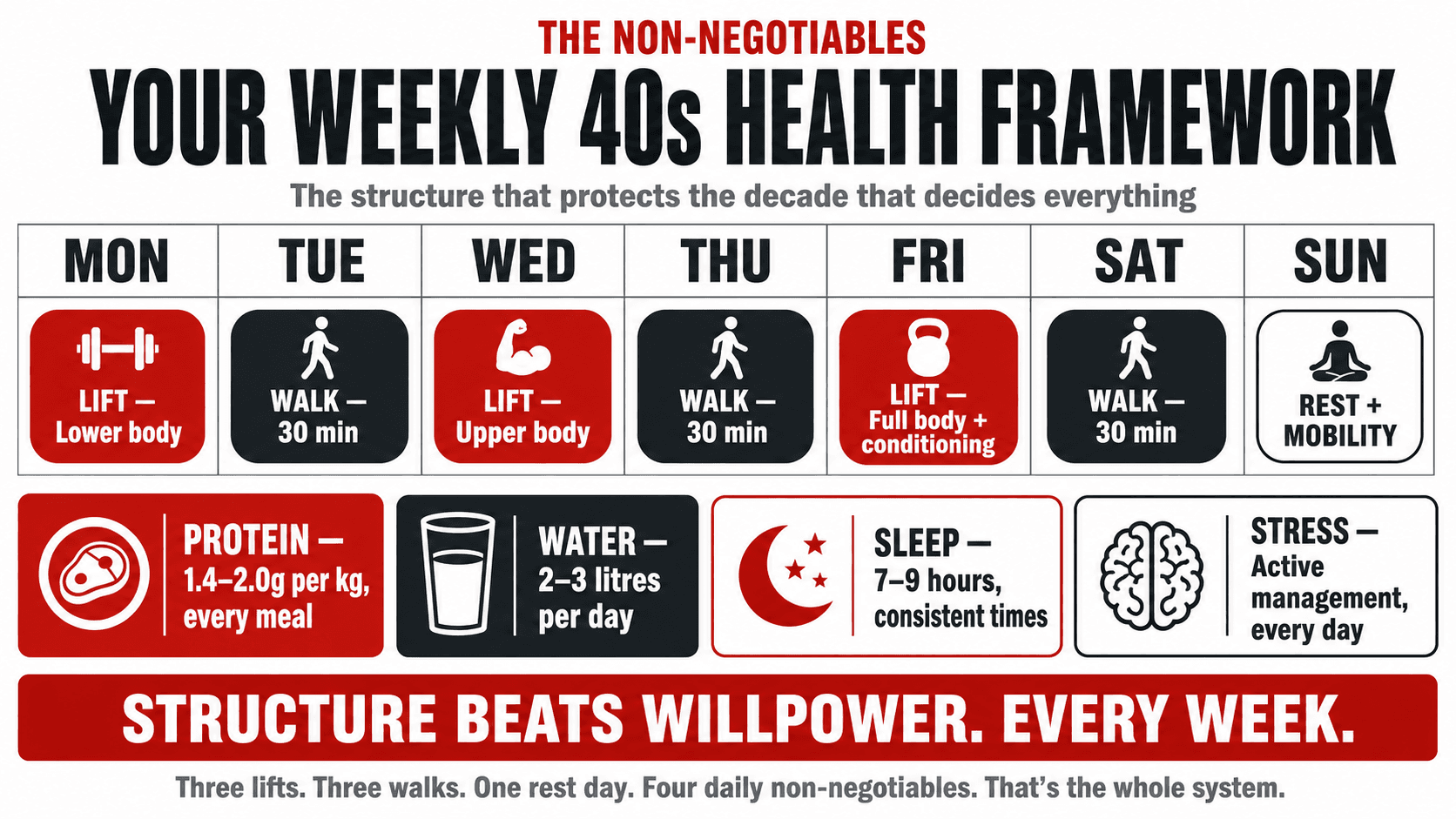
Protein is the priority. I have covered this in detail in previous articles, but it bears repeating. After 40, anabolic resistance means your body is less efficient at using protein to build and maintain muscle. You need more of it, distributed evenly across your meals. I recommend 1.4 to 2.0 grams per kilogram of body weight for active individuals in their 40s. Whether you eat meat, fish, eggs, tofu, tempeh, lentils, or use protein supplements, the target is the same.
Fibre is underrated. Most adults in the UK consume approximately 18 grams of fibre per day, well below the recommended 30 grams. Fibre slows glucose absorption, feeds beneficial gut bacteria, reduces cholesterol, and improves satiety. For anyone at risk of metabolic syndrome, increasing fibre intake is one of the simplest and most effective nutritional changes available. Good sources include beans, lentils, oats, vegetables, fruits, wholegrains, and seeds.
Processed food must be minimised. I am not someone who demonises any single food group, but I will be straight with you: ultra-processed foods are a significant driver of the metabolic crisis affecting this age group. They are engineered to be over-consumed, they are calorie-dense and nutrient-poor, and they promote insulin resistance. Reducing your reliance on ready meals, takeaways, processed snacks, and sugary drinks will do more for your metabolic health than any supplement or superfood ever will.
Nutrition Priorities for Your 40s: A Quick Reference
| Priority | Target | Why It Matters |
|---|---|---|
| Protein | 1.4–2.0g per kg bodyweight | Preserves muscle, supports metabolism, improves satiety |
| Fibre | 30g minimum per day | Blood sugar regulation, gut health, cholesterol management |
| Vegetables | 5+ servings per day | Micronutrients, fibre, antioxidants, low calorie density |
| Water | 2–3 litres per day | Performance, recovery, appetite regulation, kidney function |
| Ultra-processed food | Minimise | Calorie-dense, nutrient-poor, promotes insulin resistance |
| Alcohol | < 14 units per week | Excess alcohol drives visceral fat gain, disrupts sleep, impairs recovery |
| Added sugar | < 30g per day | Reduces insulin spikes, supports dental health, aids fat loss |
Top Tip
Track your food intake for just one week using a free app. You do not need to do this forever. But one honest week of tracking will reveal exactly where your calories, protein, fibre, and sugar intake actually stand versus where you think they stand. The gap almost always surprises people.

Training in Your 40s: What Actually Works
Let me be clear about what your training should look like in your 40s. This is not the decade for random gym sessions, class hopping, or endless cardio. This is the decade for structured, progressive resistance training with clear goals and measured progress.
Sample Weekly Training Structure for Your 40s
| Day | Focus | Example Exercises | Sets x Reps |
|---|---|---|---|
| Monday | Lower Body Strength | Back squat or goblet squat, Romanian deadlift, walking lunges, leg curl | 3–4 x 8–12 |
| Wednesday | Upper Body Push + Pull | Bench press or dumbbell press, bent-over row, overhead press, lat pulldown | 3–4 x 8–12 |
| Friday | Full Body + Conditioning | Trap bar deadlift, step ups, push ups, farmer carries, sled push or bike intervals | 3 x 8–10 + 10–15 min conditioning |
| Tues/Thurs/Sat | Active Recovery | Brisk walking (30–40 min), stretching, mobility work | n/a |
This structure gives you three resistance sessions per week, which is the minimum effective dose for meaningful improvements in body composition, strength, and metabolic health. Active recovery days keep you moving without adding excessive stress. If you can train four days per week, add a second upper body session or a dedicated conditioning day.
The non-negotiable element is progressive overload. You must be gradually increasing the challenge over time, whether that means adding weight, adding reps, improving form, or reducing rest periods. Without progression, your body has no reason to adapt. This applies equally to men and women, and equally to beginners and experienced trainees.
Top Tip
Keep a training log. Record every exercise, every weight, and every set and rep. This is the single most powerful habit for long-term progress. It removes guesswork, creates accountability, and allows you to see exactly how far you have come.
Sleep and Stress: The Invisible Saboteurs
I cannot write an honest article about health in your 40s without addressing sleep and stress, because they undermine everything else. You can have the best training programme and the most dialled-in nutrition plan in the world, and if you are sleeping five hours a night and running on chronic stress, your results will be a fraction of what they could be.
Poor sleep impairs insulin sensitivity, increases appetite through dysregulation of ghrelin and leptin, reduces testosterone, elevates cortisol, and impairs recovery from training. Research published in The Lancet found that sleeping less than six hours per night was associated with a 48 percent increase in coronary heart disease risk(9). Chronic sleep deprivation is not a badge of honour. It is a metabolic catastrophe.
Chronic psychological stress operates through similar pathways. Sustained cortisol elevation promotes visceral fat storage, impairs immune function, and dysregulates blood sugar(3). For executive clients, this is often the missing piece. They train hard and eat well, but until they address the chronic stress and sleep deficit, their body composition and blood markers plateau.
Top Tip
Non-negotiable sleep hygiene rules for your 40s: go to bed and wake up at the same time every day (including weekends), make your bedroom completely dark, keep the room cool (16 to 18 degrees), stop all screens 60 minutes before bed, and limit caffeine after midday. These changes alone can transform your energy, recovery, and body composition.
Your 40s Action Plan: Start This Week
| Action | Frequency | Impact |
|---|---|---|
| Resistance train (compound movements) | 3 times per week | Builds muscle, improves insulin sensitivity, reduces body fat, strengthens bones |
| Walk briskly | Daily, 20–40 minutes | Cardiovascular health, stress reduction, recovery, energy |
| Get a full metabolic health check | Once, then annually | Know your blood pressure, blood sugar, cholesterol, and waist circumference |
| Track food intake for one week | Once (to establish baseline) | Reveals exactly where your nutrition gaps and excesses are |
| Increase protein to 1.4–2.0g/kg | Every meal | Preserves muscle, supports fat loss, stabilises blood sugar |
| Sleep 7–9 hours per night | Every night | Recovery, hormone regulation, appetite control, cognitive function |
| Reduce alcohol intake | Ongoing | Less visceral fat, better sleep, improved liver function, lower blood pressure |
| Manage stress deliberately | Daily | Cortisol management, hormonal balance, mental clarity |
How I Can Help You
Your 40s are not the beginning of the end. They are the beginning of the most important health investment you will ever make. Every decision you make in this decade sets the course for the next 30 to 40 years of your life. The science is clear. The path is proven. The only variable is whether you choose to walk it.
I am a performance coach. I have helped hundreds of clients through body transformations. I work one-to-one with clients online globally. I work with men and women of all dietary backgrounds, including vegetarians, vegans, and omnivores. I am a lifelong vegetarian myself, so I understand the specific challenges of optimising nutrition without meat.
I offer one-to-one coaching online globally. If your 40s have been a wake-up call, or if you want to make sure they never need to be, get in touch.
Work with Me
Get a personalised coaching plan built around your goals, your schedule, and your life.
Enquire NowReferences
- Hirode G, Wong RJ. Trends in the prevalence of metabolic syndrome in the United States, 2011–2016. JAMA. 2020; 323(24): 2526–2528.
- Guo Y, Luo S, Ye T, Chen D, Zheng X, Zhang Y. Combined lifestyle factors and metabolic syndrome risk: a systematic review and meta-analysis. International Journal of Obesity. 2024; 48(12): 1691–1700.
- Chrousos GP. Stress and disorders of the stress system. Nature Reviews Endocrinology. 2009; 5(7): 374–381.
- Cornelissen VA, Smart NA. Exercise training for blood pressure: a systematic review and meta-analysis. Journal of the American Heart Association. 2013; 2(1): e004473.
- Knowler WC, Barrett-Connor E, Fowler SE, Hamman RF, Lachin JM, Walker EA, et al. Reduction in the incidence of type 2 diabetes with lifestyle intervention or metformin. New England Journal of Medicine. 2002; 346(6): 393–403.
- Strasser B, Siebert U, Schobersberger W. Resistance training in the treatment of the metabolic syndrome: a systematic review and meta-analysis of the effect of resistance training on metabolic clustering in patients with abnormal glucose metabolism. Sports Medicine. 2010; 40(5): 397–415.
- Teede HJ, Misso ML, Costello MF, Dokras A, Laven J, Moran L, et al. Recommendations from the international evidence-based guideline for the assessment and management of polycystic ovary syndrome. Human Reproduction. 2018; 33(9): 1602–1618.
- Patten RK, Boyle RA, Moholdt T, Kiel I, Hopkins WG, Harrison CL, et al. Exercise interventions in polycystic ovary syndrome: a systematic review and meta-analysis. Frontiers in Physiology. 2020; 11: 606.
- Cappuccio FP, Cooper D, D’Elia L, Strazzullo P, Miller MA. Sleep duration predicts cardiovascular outcomes: a systematic review and meta-analysis of prospective studies. European Heart Journal. 2011; 32(12): 1484–1492.
Disclaimer: This article is for educational purposes only and does not constitute medical advice. If you have existing health conditions, consult your GP or relevant healthcare professional before starting any new exercise or nutrition programme.