
Type 2 diabetes in men is one of the most pressing and most preventable health crises we face. In the UK alone, over 4.4 million people are living with diabetes, with the vast majority having Type 2. Men are significantly more likely to develop the condition than women at any given body weight, are diagnosed later on average, and are more prone to the metabolic consequences that accumulate silently over years before a clinical diagnosis is made.
The tragedy of Type 2 diabetes is not just the condition itself. It is the window of opportunity that passes unrecognised. Most men who receive a diabetes diagnosis have been metabolically moving in that direction for a decade or more. The dysfunction was reversible at almost every stage of that journey. The question is not whether lifestyle interventions work. The evidence on that is unambiguous. The question is whether men are getting the right information early enough to act on it.
This article covers what Type 2 diabetes actually is at a physiological level, why men are disproportionately affected and underdiagnosed, what the evidence says about prevention and reversal, and the specific training and nutrition strategies that produce the greatest metabolic benefit. Whether you are currently in good metabolic health and want to stay there, or you have already received a prediabetes or Type 2 diagnosis and want to understand what is genuinely possible, this is written for you.
The Diabetes Crisis Most Men Do Not See Coming
Prediabetes affects an estimated 13.6 million people in the UK. The vast majority do not know. Unlike Type 1 diabetes, which is an autoimmune condition typically presenting acutely in childhood or early adulthood, Type 2 diabetes develops gradually through a process of declining insulin sensitivity. By the time fasting blood glucose reaches diagnostic thresholds, significant physiological damage may already have occurred.
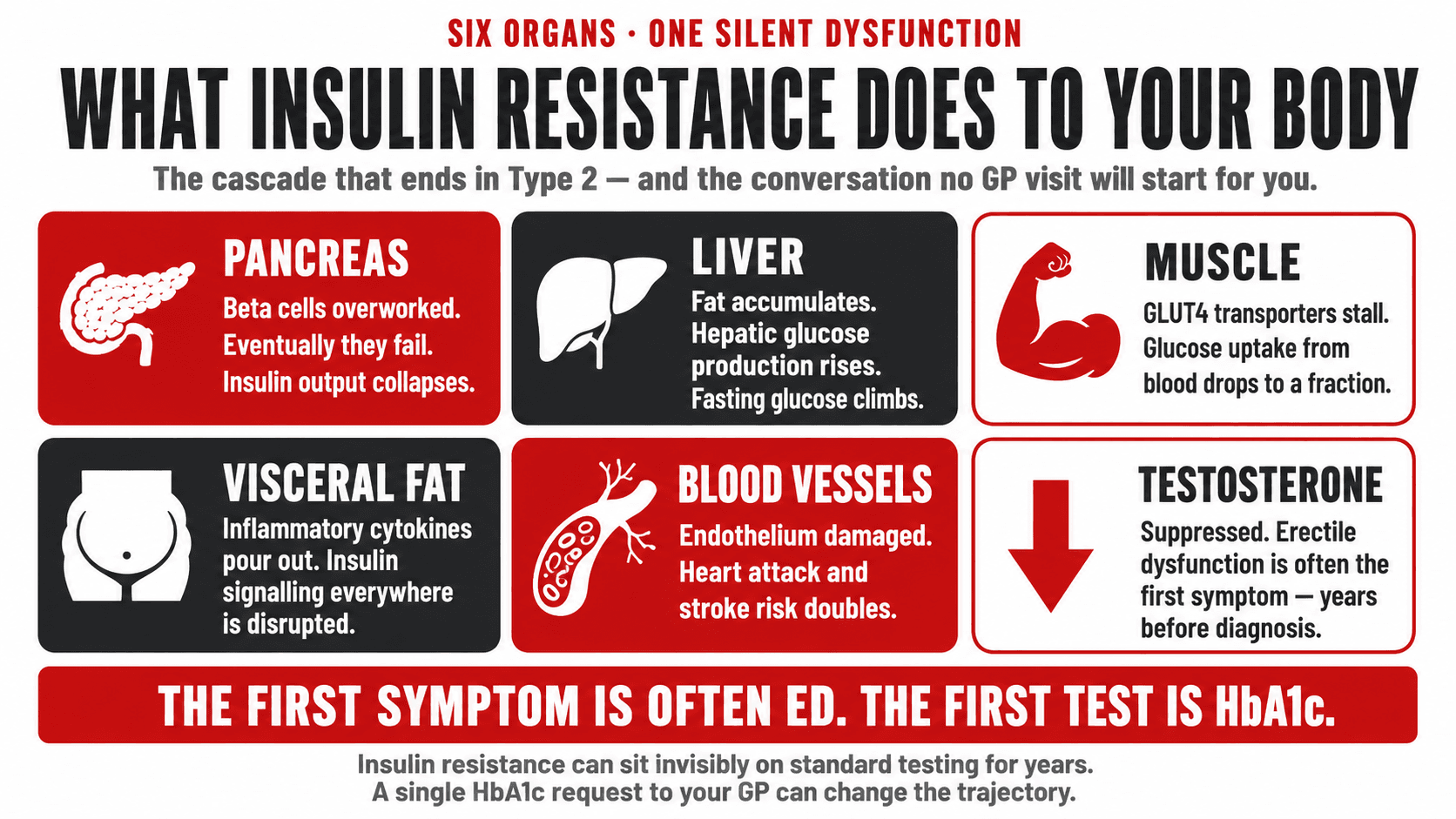
Men are more metabolically vulnerable than women at equivalent body fat levels due to the male tendency to store excess adipose tissue viscerally, around the organs rather than subcutaneously under the skin. Visceral fat is metabolically active in a way that subcutaneous fat is not. It releases inflammatory cytokines and free fatty acids that directly impair insulin signalling in liver and muscle tissue. This means a man can appear relatively lean in terms of visual body composition while carrying a significant metabolic risk load internally.
Men are also less likely than women to attend GP appointments proactively, less likely to have routine blood work done, and less likely to act on early warning signs. The combination of elevated biological risk and reduced health-seeking behaviour creates a situation where many men are diagnosed with Type 2 diabetes only after years of unmanaged insulin resistance have already taken a toll on cardiovascular health, kidney function, nerve integrity, and hormonal balance.
What Insulin Resistance Actually Is: Explained Simply
Insulin is a hormone produced by the pancreas in response to rising blood glucose. When you eat carbohydrates, glucose enters the bloodstream. Insulin acts as a key, unlocking cells in the liver, muscle, and fat tissue so that glucose can be taken up and used for energy or stored as glycogen. In a healthy metabolic state, this process is efficient. Blood glucose rises modestly after eating and returns to baseline within a couple of hours.
Insulin resistance develops when cells become progressively less responsive to insulin's signalling. The pancreas compensates by producing more insulin to achieve the same glucose-clearing effect. For a period, this compensation maintains normal blood glucose readings, which is why insulin resistance can be invisible on standard testing. Over time, however, the pancreas cannot sustain this elevated output. Beta cell function declines. Blood glucose begins to rise. First into the prediabetic range, and eventually into the diabetic range.
The key physiological drivers of insulin resistance in men include accumulation of visceral and intramuscular fat, chronic low-grade systemic inflammation, physical inactivity, poor sleep quality, chronic psychological stress, and dietary patterns high in ultra-processed foods and refined carbohydrates. Each of these is modifiable. That is the central message of this article.
Top Tip
If you have been told your blood glucose is slightly elevated, or if your GP has mentioned prediabetes, this is not a sentence. It is information. The research on lifestyle intervention at the prediabetes stage is among the most consistently positive in all of preventive medicine. A structured programme of resistance training, modest fat loss if appropriate, and dietary improvement has been shown to prevent progression to Type 2 diabetes in the majority of people who follow it with reasonable consistency.
Table 1 — Insulin Resistance Progression with Intervention Points
| Stage | What Is Happening | Intervention Opportunity |
|---|---|---|
| Healthy Function | Cells respond normally to insulin. Blood glucose rises after eating and returns to baseline efficiently. Fasting glucose below 5.6 mmol/L. HbA1c below 42 mmol/mol. | Maintain through consistent training, quality nutrition, healthy body composition, and adequate sleep. |
| Insulin Resistance | Cells become less responsive to insulin. Pancreas compensates with higher insulin output. Blood glucose may still appear normal. Visceral fat is typically accumulating. Often asymptomatic. | High-response window. Resistance training, fat loss, and dietary improvement can fully restore insulin sensitivity. |
| Prediabetes | Fasting glucose 5.6 to 6.9 mmol/L or HbA1c 42 to 47 mmol/mol. Pancreas still compensating but under strain. | Lifestyle intervention at this stage has been shown to prevent progression to Type 2 diabetes in a majority of people. |
| Type 2 Diabetes | Fasting glucose 7.0 mmol/L or above, or HbA1c 48 mmol/mol or above. | Lifestyle intervention remains highly effective. Remission is achievable for many men. Working alongside GP and medical team is essential. |

Why Men Are Diagnosed Later and Why That Matters
The later diagnosis of Type 2 diabetes in men is partly biological and partly behavioural. On the biological side, men have a higher threshold for glycaemic dysregulation before symptoms become apparent. On the behavioural side, men attend GP appointments significantly less frequently than women across all age groups and are less likely to flag fatigue, increased thirst, or changes in urinary frequency as symptoms warranting investigation.
One underappreciated consequence of this is that by the time a man is diagnosed with Type 2 diabetes, he has frequently already been living with clinically significant insulin resistance for years. During that period, damage to the vasculature, kidneys, and nervous system may have been accumulating. Early diagnosis through routine screening is therefore not a minor administrative convenience. It is the difference between a highly reversible metabolic state and one with established complications that are much harder to address.
One of the most clinically significant and least-discussed early markers of insulin resistance in men is erectile dysfunction. Endothelial dysfunction, the impaired ability of blood vessels to dilate appropriately, is a feature of insulin resistance and precedes cardiovascular disease by years. The penis is highly vascularised and is frequently the first organ to show signs of this dysfunction. Research has established that erectile dysfunction in men under 50 without an obvious psychological cause is a significant independent predictor of cardiovascular events and metabolic disease.
Top Tip
If you are experiencing unexplained erectile dysfunction and you have not had your blood glucose tested recently, make that appointment with your GP specifically requesting an HbA1c test. This is not about alarm. It is about using a widely available clinical marker to get an accurate picture of your metabolic health before problems compound further. Most men find this conversation easier when they frame it in terms of overall health screening rather than the symptom itself.
Table 2 — Blood Sugar Markers: What to Test and What the Numbers Mean
| Test | Healthy Range | Prediabetic Range | Diabetic Range | What to Do |
|---|---|---|---|---|
| Fasting Blood Glucose | Below 5.6 mmol/L | 5.6 to 6.9 mmol/L | 7.0 mmol/L or above | Begin lifestyle intervention immediately. See GP. |
| HbA1c (average 3-month blood glucose) | Below 42 mmol/mol (6.0%) | 42 to 47 mmol/mol (6.0 to 6.4%) | 48 mmol/mol or above (6.5%+) | HbA1c is the most accurate single marker. Request this specifically. |
| Post-meal blood glucose (2 hours after eating) | Below 7.8 mmol/L | 7.8 to 11.0 mmol/L | 11.1 mmol/L or above | Useful if monitoring at home. Diet and exercise intervention first. |
| Fasting Insulin (where available) | Below 12 microU/mL | Elevated fasting insulin with normal glucose may indicate early insulin resistance | Requires clinical interpretation | Not always tested routinely. Worth requesting in the context of central obesity. |
How Resistance Training Improves Insulin Sensitivity
Skeletal muscle is the largest insulin-sensitive tissue in the body, accounting for approximately 80 percent of post-meal glucose disposal. This makes resistance training one of the most powerful metabolic interventions available, independent of weight loss. The primary mechanism involves a transporter protein called GLUT4.
GLUT4 is a glucose transporter that normally resides inside muscle cells until insulin signals it to move to the cell surface, where it facilitates glucose uptake from the bloodstream. Insulin resistance occurs in part because GLUT4 translocation becomes impaired. Muscle contraction during resistance exercise triggers GLUT4 translocation independently of insulin, through a separate signalling pathway involving AMPK activation. This means that a resistance training session improves glucose uptake during the session itself, and training adaptations over weeks and months increase GLUT4 expression in muscle tissue, improving baseline insulin sensitivity.
Beyond GLUT4, resistance training increases total muscle mass. Greater muscle mass means a larger reservoir for glucose storage, reduced post-meal glycaemic excursions, improved metabolic rate, and reduced visceral fat accumulation over time. Muscle also functions as a major site of fatty acid oxidation. Increasing muscle mass therefore improves lipid metabolism alongside glucose metabolism, which is relevant given that dyslipidaemia commonly accompanies insulin resistance.
Research consistently shows that resistance training reduces HbA1c by clinically meaningful amounts in both prediabetic and diabetic populations, with some studies showing effects comparable to first-line pharmacological intervention. The combination of resistance training with aerobic exercise produces additive benefits and is the recommended approach in current clinical guidelines.
Top Tip
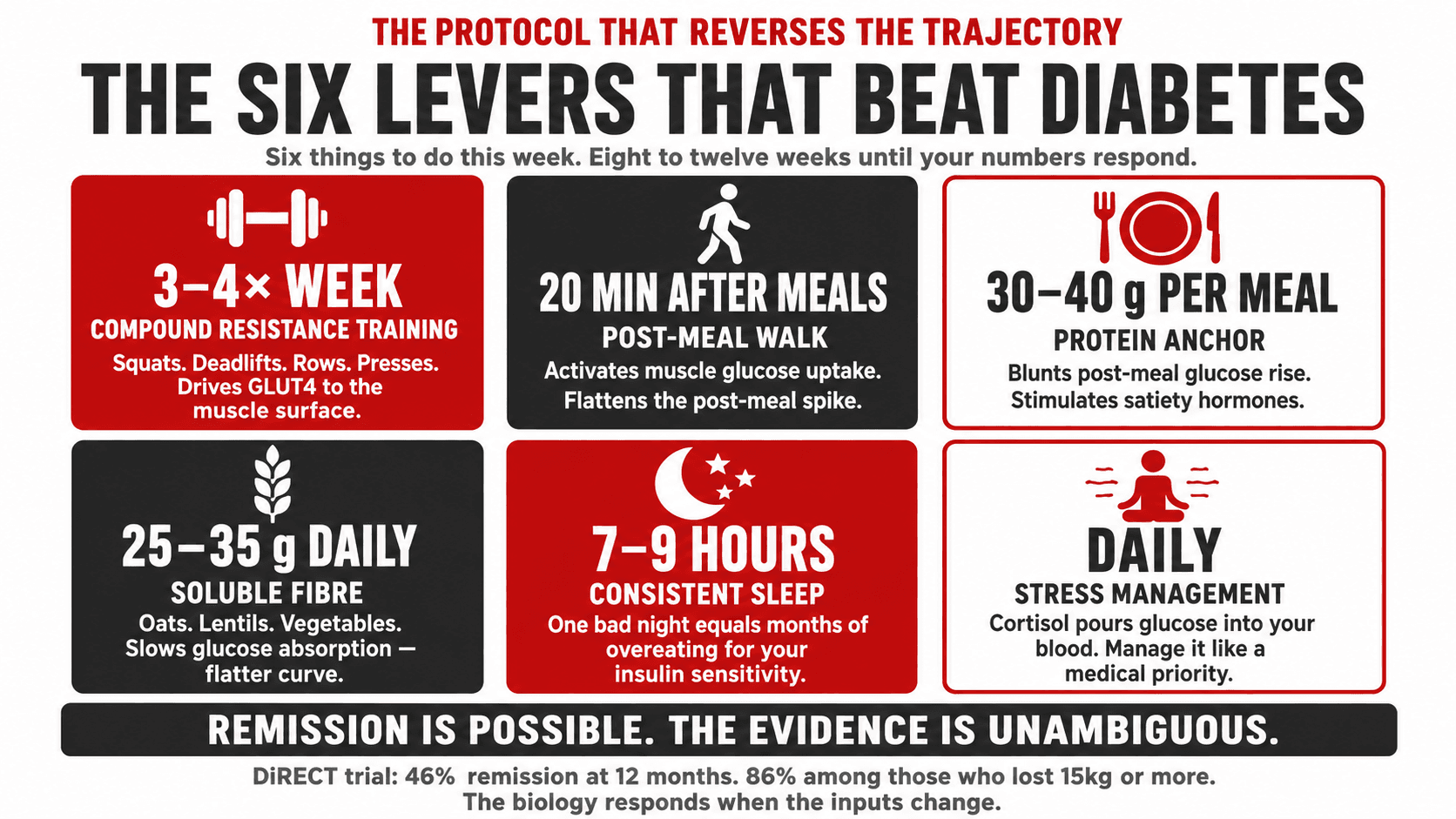
The most metabolically effective resistance training for blood glucose management prioritises the largest muscle groups: the legs, the back, and the chest. Compound movements such as squats, deadlifts, rows, and presses recruit the greatest volume of muscle tissue and produce the largest GLUT4 response. Training three to four times per week with progressive overload delivers the best metabolic outcomes. If you are new to resistance training and managing blood glucose, start with supervised sessions to ensure technique is sound and loading is appropriate to your current capacity.

What Uncontrolled Blood Sugar Does to the Male Body
Understanding what is at stake is not about instilling fear. It is about providing accurate information so that decisions are made with full awareness of the consequences of inaction. Chronically elevated blood glucose causes damage through multiple mechanisms, principally through the formation of advanced glycation end-products (AGEs), which stiffen proteins and impair tissue function, and through oxidative stress that damages endothelial cells lining blood vessels throughout the body.
Microvascular complications affect the small blood vessels supplying the kidneys, eyes, and peripheral nerves. Diabetic nephropathy is the leading cause of kidney failure in the developed world. Diabetic retinopathy is the leading cause of preventable blindness in working-age adults in the UK. Diabetic peripheral neuropathy causes progressive loss of sensation, initially in the feet and lower limbs, which in combination with impaired wound healing creates a risk of serious foot complications. These processes develop over years of poor glycaemic control and are largely irreversible once established.
Macrovascular complications affect the larger blood vessels. Men with Type 2 diabetes have approximately twice the cardiovascular disease risk of non-diabetic men. The combination of hyperglycaemia, dyslipidaemia, hypertension, and chronic inflammation that characterises poorly managed diabetes creates a highly atherogenic environment. Heart attack and stroke are substantially more common, and outcomes following these events are significantly worse in diabetic patients.
Sexual health consequences beyond erectile dysfunction include reduced testosterone, hypogonadism, and in some cases retrograde ejaculation due to autonomic neuropathy. Testosterone and insulin sensitivity have a bidirectional relationship. Low testosterone worsens insulin resistance, and insulin resistance suppresses testosterone production. Men with Type 2 diabetes have significantly higher rates of hypogonadism than the general population, which creates a compounding cycle that worsens both metabolic and hormonal health simultaneously.
Top Tip
Cardiovascular disease is the leading cause of death in men with Type 2 diabetes. If you have a diabetes or prediabetes diagnosis, ask your GP not only about blood glucose management but also about your lipid panel, blood pressure, and cardiovascular risk score. These should be assessed together. Lifestyle interventions that improve blood glucose also tend to improve cardiovascular risk markers, but knowing your full picture allows you to prioritise the right interventions with appropriate medical oversight.
Nutrition for Blood Sugar Management
Nutrition strategy for blood glucose management does not require an extreme approach. The evidence supports several consistent principles that can be applied within virtually any dietary framework, whether omnivore, vegetarian, or plant-based.
Protein at every meal. Protein has a minimal direct glycaemic effect and stimulates incretin hormones that moderate post-meal blood glucose rise. High-protein meals also blunt appetite, reducing the likelihood of overconsumption of glycaemically significant foods. Targeting 30 to 40 grams of protein per meal is a practical starting point for most men.
Soluble fibre. Soluble fibre forms a gel in the gut that slows gastric emptying and glucose absorption, producing a significantly flatter blood glucose curve after meals. Oats, legumes, vegetables, and psyllium husk are the highest-yield sources. A target of 25 to 35 grams of total dietary fibre per day, with emphasis on soluble sources, is well supported by the evidence.
Low glycaemic index carbohydrates. Swapping high-GI refined carbohydrates for lower-GI alternatives reduces post-meal glycaemic spikes without requiring carbohydrate elimination. Legumes, intact grains, sweet potato, and non-starchy vegetables all produce significantly lower blood glucose responses than white bread, white rice, and ultra-processed snacks.
Post-meal walking. A brief walk of 10 to 20 minutes following meals has been shown to significantly reduce post-meal blood glucose elevation by driving muscle glucose uptake through contraction-stimulated GLUT4 activity. This is one of the most accessible and consistent interventions available and requires no equipment or gym membership.
Table 3 — Blood Sugar Friendly Foods: GI, Benefits, and Context
| Food | GI Category | Key Blood Sugar Benefit | Plant-Based Context | Omnivore Context |
|---|---|---|---|---|
| Oats | Low GI | Beta-glucan fibre slows glucose absorption | Porridge, overnight oats | Same. |
| Lentils and chickpeas | Very low GI | Protein and fibre combination produces minimal blood glucose response | Cornerstone of plant-based diet | Excellent addition to any diet. |
| Tofu and tempeh | Negligible GI | Protein anchors meals. Soy protein improves insulin sensitivity. | Primary protein source | Excellent protein alternative. |
| Sweet potato | Medium-low GI | Slower glucose release than white potato. Rich in fibre and potassium. | Roasted, mashed, or in curries | Same. |
| Brown rice and quinoa | Medium GI | Higher fibre content slows absorption | Grain base for bowls | Same. |
| Non-starchy vegetables | Very low GI | Fibre, volume, micronutrients with minimal blood glucose impact | Foundation of every meal | Same. |
| Eggs | Negligible GI | High protein, no carbohydrate. Blunts blood glucose response of co-consumed food. | Suitable for vegetarians | Highly versatile. |
| Greek yoghurt (unsweetened) | Low GI | Protein and probiotic content supports blood glucose and gut-metabolic axis | Suitable for vegetarians. Coconut or soy-based yoghurt for vegans. | High protein, widely available. |
Top Tip
A twenty-minute walk after your main meal every day is one of the most evidence-supported blood glucose management tools available, yet it is almost never mentioned in primary care. You do not need to walk fast. A comfortable pace is sufficient to activate muscle glucose uptake and measurably reduce your post-meal glycaemic spike. If you can implement only one new behaviour from this article, make it the post-meal walk. The compounding metabolic effect over weeks is substantial.

Sleep, Stress, and Blood Glucose: The Variables That Training Cannot Compensate For
Even a well-designed training programme and a carefully structured diet will deliver suboptimal metabolic outcomes if sleep and stress remain unaddressed. These are not soft wellness concerns. They are direct physiological influences on blood glucose regulation.
Sleep deprivation impairs insulin sensitivity acutely. A single night of four to five hours of sleep has been shown in controlled studies to produce insulin resistance equivalent to several months of high-fat dietary overfeeding. The mechanisms involve elevated cortisol and growth hormone dysregulation, altered incretin function, and increased appetite for high-calorie foods driven by changes in ghrelin and leptin. Chronic sleep restriction below seven hours per night is independently associated with increased Type 2 diabetes risk in large-scale epidemiological studies.
Chronic psychological stress elevates cortisol, which directly raises blood glucose through gluconeogenesis in the liver and inhibits insulin signalling in peripheral tissues. Men who report high levels of work-related or relationship stress have measurably worse glycaemic control than those with equivalent dietary and training habits but lower stress levels. Stress management is therefore not optional for metabolic health. It is a clinical priority. Practical interventions include structured sleep hygiene, time-restricted working, daily low-intensity physical activity such as walking, and in many cases psychological support for men carrying significant stress loads without adequate processing outlets.
Top Tip
If you are working seriously on your blood glucose and your training and nutrition are solid but your numbers are not moving as expected, audit your sleep and stress first before changing anything else. Most men overlook these variables entirely. Seven to nine hours of sleep per night is not a luxury. It is a metabolic requirement. If you are sleeping fewer than seven hours regularly, this is a more urgent priority than optimising your meal timing or supplement stack.
Type 2 Diabetes Remission: What Is Actually Possible
The concept of Type 2 diabetes remission, defined as sustained HbA1c below 48 mmol/mol for at least three months without glucose-lowering medication, has moved from theoretical possibility to clinical reality over the past decade. The evidence is now substantial and has changed clinical guidance in the UK and internationally.
The landmark DiRECT trial, conducted in UK primary care settings, tested a structured low-calorie dietary intervention in people with Type 2 diabetes of up to six years' duration. At 12 months, 46 percent of participants achieved remission. At 24 months, 36 percent remained in remission. Critically, among those who lost 15 kilograms or more, the remission rate was 86 percent. These results were achieved through lifestyle intervention alone, with no pharmacological support for blood glucose management during the intervention period.
The biological mechanism of remission involves the removal of excess fat from the liver and pancreas. When liver fat is substantially reduced, hepatic glucose production normalises. When pancreatic fat is reduced, beta cell function partially recovers. This is why the degree of weight loss is the strongest predictor of remission success. It is also why duration of diabetes at the time of intervention matters. Earlier diagnosis and earlier intervention produces better outcomes.
Remission is not a cure in the sense of a permanent biological resolution. It requires ongoing maintenance of the lifestyle changes that produced it. Men who regain weight typically see blood glucose rise again. But for the substantial proportion of men who achieve and sustain meaningful fat loss through structured lifestyle change, remission represents a genuine and evidence-supported possibility that many are never told about.
Top Tip
If you have been diagnosed with Type 2 diabetes, have an explicit conversation with your GP about the possibility of remission through lifestyle intervention. Not all GPs will raise this proactively. Ask specifically whether you are a candidate for a structured dietary and exercise programme aimed at remission. In the UK, the NHS Low Calorie Diet Programme offers a structured remission pathway for eligible patients. This conversation could be the most important medical discussion you have this year.
How I Work With Clients With Type 2 Diabetes and Metabolic Health Goals
When I work with men who have Type 2 diabetes, prediabetes, or significant insulin resistance, the programme structure reflects the evidence on what produces the greatest metabolic benefit in the shortest sustainable timeframe.
Training is built around compound resistance movements prioritising the lower body and posterior chain, performed three to four times per week with progressive loading. Where appropriate, post-session and post-meal aerobic activity is integrated to maximise the GLUT4-mediated glucose uptake window. Volume and intensity are calibrated to the individual's starting point and any co-existing health considerations.
Nutrition strategy starts with protein adequacy, building meals around 30 to 40 gram protein anchors at each meal before optimising carbohydrate quality and quantity. Fibre intake is systematically increased. Ultra-processed foods and liquid calories are the primary targets for reduction. Total dietary structure is designed to be sustainable across years, not weeks.
Sleep and stress are assessed at intake and revisited regularly. Where I identify that lifestyle stress or sleep disruption is actively undermining progress, this is addressed directly as a coaching priority, not treated as a secondary concern.
All work with clients managing a medical diagnosis is conducted in parallel with, not instead of, their medical team. I work in a coaching capacity to implement the lifestyle components of metabolic management. GPs, diabetes nurses, and endocrinologists manage the clinical dimensions. Clear communication between all parties produces the best outcomes for the individual.
If you are managing Type 2 diabetes, prediabetes, or want to take your metabolic health seriously before a clinical threshold is reached, I would be glad to talk through what a structured coaching programme might look like for your specific situation. The enquiry form below takes two minutes to complete.
Work with Me
Get a personalised coaching plan built around your goals, your schedule, and your life.
Enquire NowReferences
- (1) Lean MEJ, Leslie WS, Barnes AC, et al. Primary care-led weight management for remission of type 2 diabetes (DiRECT): an open-label, cluster-randomised trial. The Lancet. 2018;391(10120):541–551.
- (2) Taylor R, Al-Mrabeh A, Sattar N. Understanding the mechanisms of reversal of type 2 diabetes. The Lancet Diabetes & Endocrinology. 2019;7(9):726–736.
- (3) Colberg SR, Sigal RJ, Yardley JE, et al. Physical Activity/Exercise and Diabetes: A Position Statement of the American Diabetes Association. Diabetes Care. 2016;39(11):2065–2079.
- (4) Umpierre D, Ribeiro PA, Kramer CK, et al. Physical activity advice only or structured exercise training and association with HbA1c levels in type 2 diabetes: a systematic review and meta-analysis. JAMA. 2011;305(17):1790–1799.
- (5) Knowler WC, Barrett-Connor E, Fowler SE, et al. Reduction in the incidence of type 2 diabetes with lifestyle intervention or metformin. New England Journal of Medicine. 2002;346(6):393–403.
- (6) Despres JP, Lemieux I. Abdominal obesity and metabolic syndrome. Nature. 2006;444(7121):881–887.
- (7) Vlachopoulos C, Rokkas K, Ioakeimidis N, Stefanadis C. Inflammation, metabolic syndrome, erectile dysfunction, and coronary artery disease: common links. European Urology. 2007;52(6):1590–1600.
- (8) Donga E, van Dijk M, van Dijk JG, et al. A single night of partial sleep deprivation induces insulin resistance in multiple metabolic pathways in healthy subjects. Journal of Clinical Endocrinology & Metabolism. 2010;95(6):2963–2968.
- (9) Bjorntorp P. Do stress reactions cause abdominal obesity and comorbidities? Obesity Reviews. 2001;2(2):73–86.
- (10) Kelley DE, Goodpaster BH. Effects of exercise on glucose homeostasis in type 2 diabetes mellitus. Medicine & Science in Sports & Exercise. 2001;33(6 Suppl):S495–501.
- (11) NHS England. NHS Low Calorie Diet Programme. NHS England. 2020. Available at: https://www.england.nhs.uk/diabetes/treatment-care/low-calorie-diets/