If there is one single nutritional factor that separates the clients who transform their bodies from the ones who spin their wheels for years, it is protein. Not supplements. Not meal timing. Not whether they eat organic or avoid gluten. Protein. How much they eat, how consistently they eat it, and whether they actually understand what it does in their body. The majority of people who come to me are not eating enough protein. Not even close.
The confusion around protein is staggering. Some people think a splash of milk in their tea counts as a meaningful protein source. Others believe that because they eat chicken once a day, their protein intake must be fine. Many vegetarian and vegan clients come to me genuinely convinced that getting enough protein without meat is either impossible or requires eating enormous volumes of food. None of this is true. But the misinformation is so widespread and so deeply embedded that most people have never actually calculated how much protein they consume in a day. When I get them to do it for the first time, the number is almost always far lower than they expected.

What Happens When You Do Not Eat Enough Protein
The consequences of chronically low protein intake are significant and they affect virtually every goal a client might have when they come to me. Whether you want to lose fat, build muscle, improve your metabolic health, or simply look and feel better in your clothes, inadequate protein will hold you back.
The first and most direct impact is on muscle mass. Protein provides the amino acids your body needs to repair and build muscle tissue. Without a sufficient supply, your body cannot maintain its existing muscle, let alone build new tissue. This is particularly problematic during a calorie deficit when the body is already primed to break down tissue for energy. Research published in the American Journal of Clinical Nutrition found that higher protein intakes during caloric restriction significantly attenuated the loss of lean body mass compared to lower protein intakes, even when total calories were identical (1). If you are dieting on low protein, you are not just losing fat. You are losing the muscle that gives your body shape, supports your metabolism, and keeps you strong.
The second impact is on hunger and appetite. Protein is the most satiating macronutrient by a considerable margin. It keeps you fuller for longer, reduces cravings, and makes it significantly easier to maintain a calorie deficit without feeling deprived. A study published in the American Journal of Clinical Nutrition demonstrated that increasing protein intake from 15 percent to 30 percent of total calories resulted in a spontaneous reduction in daily caloric intake of approximately 441 calories per day, without any conscious effort to eat less (2). That is an enormous difference. Clients who struggle with hunger on a fat loss plan almost always see a dramatic improvement when I increase their protein intake. It is one of the simplest and most powerful levers I have.
The third impact is metabolic. Protein has the highest thermic effect of any macronutrient. This means your body expends more energy digesting and processing protein than it does for carbohydrates or fat. Research published in Nutrition and Metabolism estimated the thermic effect of protein at approximately 20 to 30 percent of the energy consumed, compared to 5 to 10 percent for carbohydrates and 0 to 3 percent for fat (3). In practical terms, eating 200 calories of protein costs your body 40 to 60 calories just to process it. Eating 200 calories of fat costs your body virtually nothing. Over time, this difference adds up meaningfully.
The fourth impact, and one that is often overlooked, is on recovery and immune function. Protein supports tissue repair, enzyme production, and the maintenance of a healthy immune system. Clients who are chronically under eating protein tend to get ill more frequently, recover more slowly from training, and experience higher levels of fatigue. This is not a coincidence. It is a direct consequence of not providing the body with the raw materials it needs to function properly.
How Much Protein You Actually Need
Let me cut through the noise and give you a clear, evidence-based answer. The general population recommendation of 0.8 grams per kilogram of bodyweight per day, which you will find on most government health guidelines, is a minimum to prevent deficiency. It is not an optimal intake for anyone who trains, wants to improve their body composition, or is in a calorie deficit. It is the bare minimum to stop your body from breaking down its own tissue. If you are reading this article, you almost certainly need more than that.
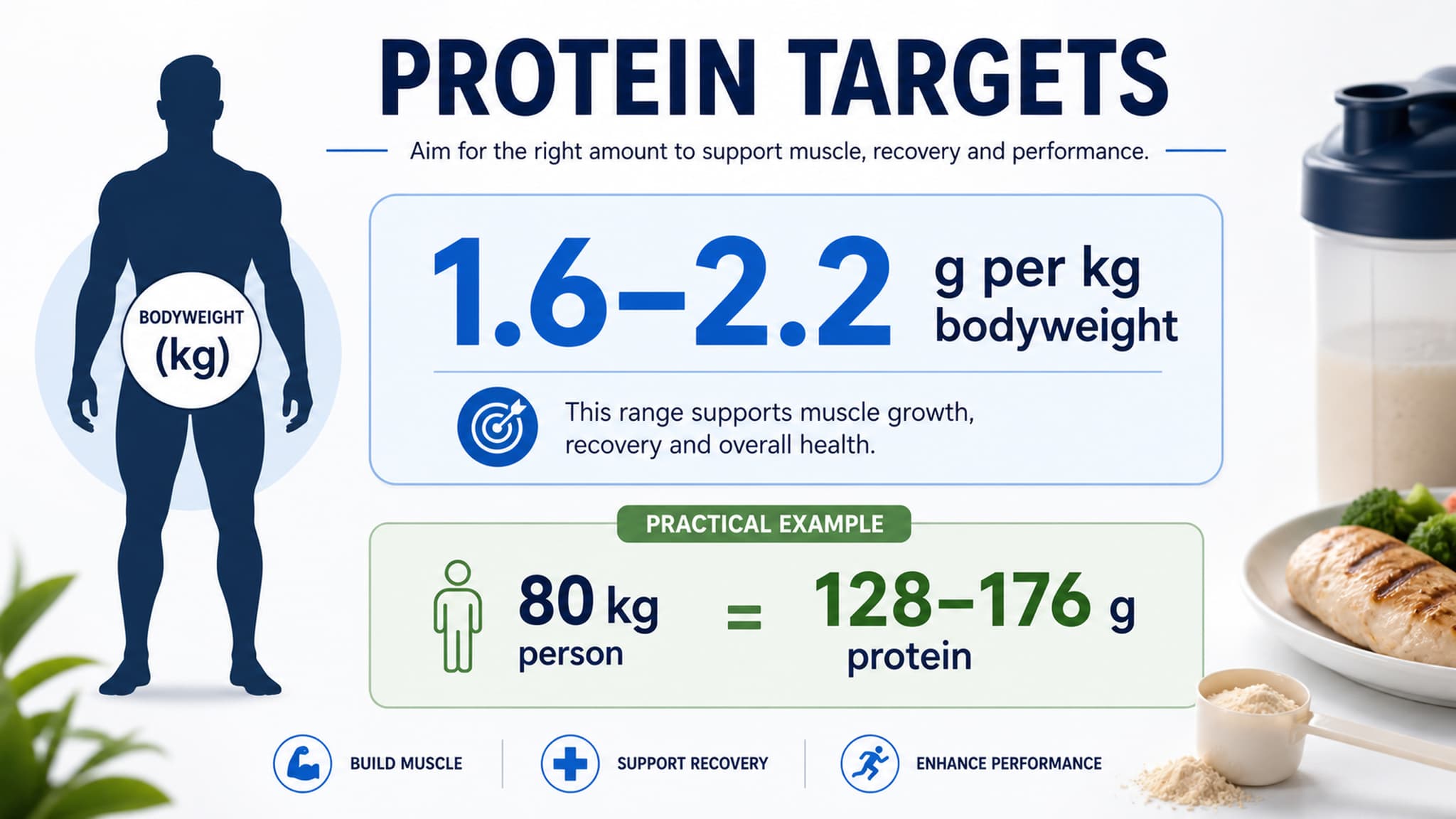
The most comprehensive meta-analysis on this topic, published in the British Journal of Sports Medicine, analysed data from 49 studies involving over 1,800 participants and concluded that protein intakes of approximately 1.6 grams per kilogram of bodyweight per day maximised gains in muscle mass and strength when combined with resistance training (4). For most of my clients, I set protein targets between 1.6 and 2.2 grams per kilogram of bodyweight per day, depending on their goals, their training volume, and whether they are in a deficit, at maintenance, or in a surplus. During a fat loss phase, I tend to push toward the higher end of that range because the evidence for muscle preservation during a deficit is strongest at higher protein intakes (5).
To put that into practical terms, a person weighing 80 kilograms would need between 128 and 176 grams of protein per day. A person weighing 65 kilograms would need between 104 and 143 grams. These numbers are not arbitrary. They are the ranges that the evidence consistently supports for optimising body composition in active individuals.
How to Distribute Your Protein Across the Day
Total daily protein intake is the most important variable. But once you have that dialled in, how you distribute it across the day can offer additional benefits. The current evidence suggests that spreading protein intake relatively evenly across three to five meals, with each meal containing at least 20 to 40 grams, is optimal for maximising muscle protein synthesis throughout the day (6). This is because muscle protein synthesis, the process by which your body builds new muscle tissue, is stimulated most effectively when a sufficient threshold of amino acids is reached at each meal. Eating 20 grams of protein six hours apart produces a better anabolic response than eating 10 grams in one meal and 50 grams in another.
In practice, this means I structure my clients’ plans so that every meal and most snacks contain a meaningful protein source. Breakfast is not just toast and jam. It is eggs on toast, or Greek yoghurt with fruit and nuts, or a protein smoothie, or overnight oats made with protein powder. Lunch is not just a sandwich with a thin slice of ham. It is a proper portion of chicken, tofu, or cottage cheese with carbohydrates and vegetables. Dinner follows the same principle. If there is a snack, it includes protein. This consistent drip-feeding of amino acids across the day is what keeps muscle protein synthesis elevated and supports the best possible body composition outcomes.
The Best Protein Sources for Every Dietary Background
One of the most common objections I hear, particularly from vegetarian and vegan clients, is that it is difficult or impractical to hit higher protein targets without eating meat. I have been a lifelong vegetarian myself. I understand the challenge. And I can tell you from both personal experience and professional practice that it is entirely achievable with the right food choices and a bit of planning.
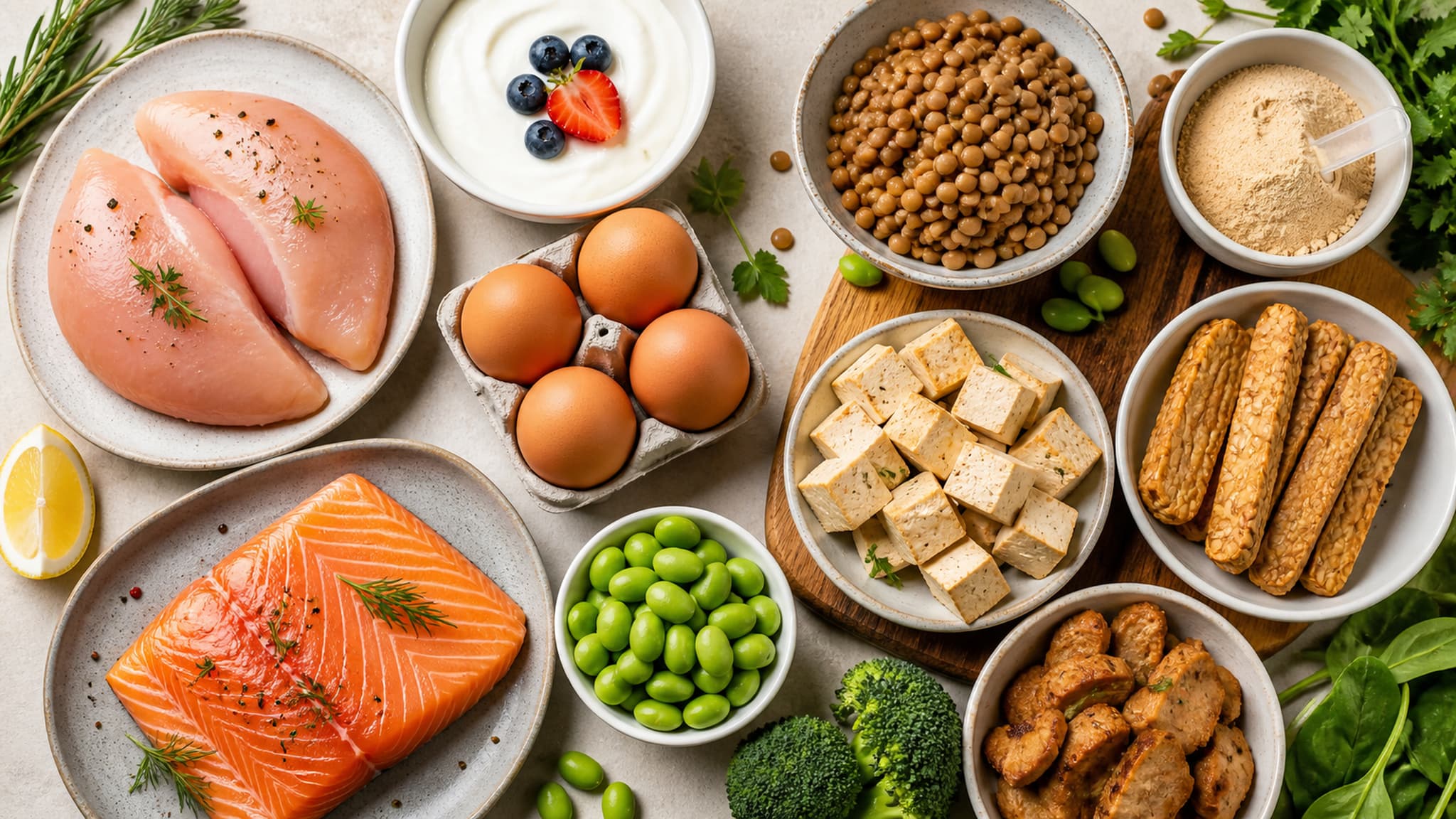
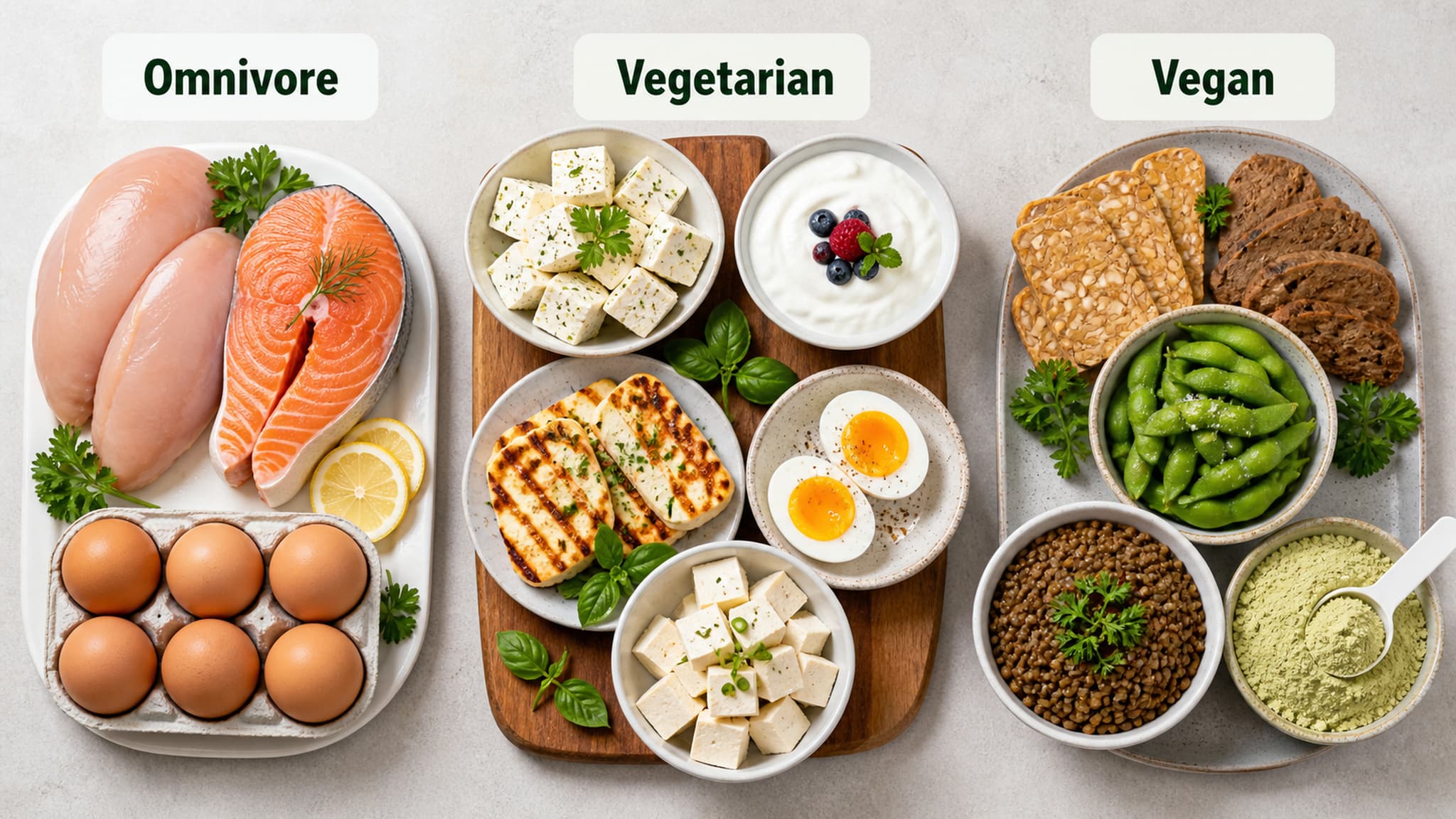
For omnivore clients, the highest quality protein sources include chicken breast, turkey breast, lean beef, white fish, salmon, prawns, eggs, and Greek yoghurt. These foods provide complete proteins with all essential amino acids in high concentrations relative to their calorie content. For vegetarian clients, eggs, Greek yoghurt, cottage cheese, paneer, halloumi, and whey protein provide excellent complete protein sources. Tofu and tempeh are also strong options that bridge the vegetarian and vegan categories.
For vegan clients, the key is combining a variety of plant protein sources across the day to ensure a complete amino acid profile. Soy-based products are the standout performers. Tofu, tempeh, edamame, soy milk, and soy mince all provide complete proteins with a strong amino acid profile. Seitan is exceptionally high in protein per serving, though lower in lysine. Lentils, chickpeas, black beans, and other legumes provide solid protein alongside fibre and complex carbohydrates. Pea protein and soy protein isolate powders are highly effective for hitting daily targets, particularly around training. A position paper from the Journal of the International Society of Sports Nutrition confirmed that appropriately planned plant-based diets can provide sufficient protein to support muscle growth and athletic performance (7).
Common Protein Mistakes I See Every Week
The first mistake is back-loading all protein into one meal. I regularly see clients who eat almost no protein at breakfast, a small amount at lunch, and then try to cram 80 or 90 grams into dinner. This is suboptimal for muscle protein synthesis and it makes the evening meal unnecessarily large and uncomfortable. Spreading protein across the day is both more effective and more practical.
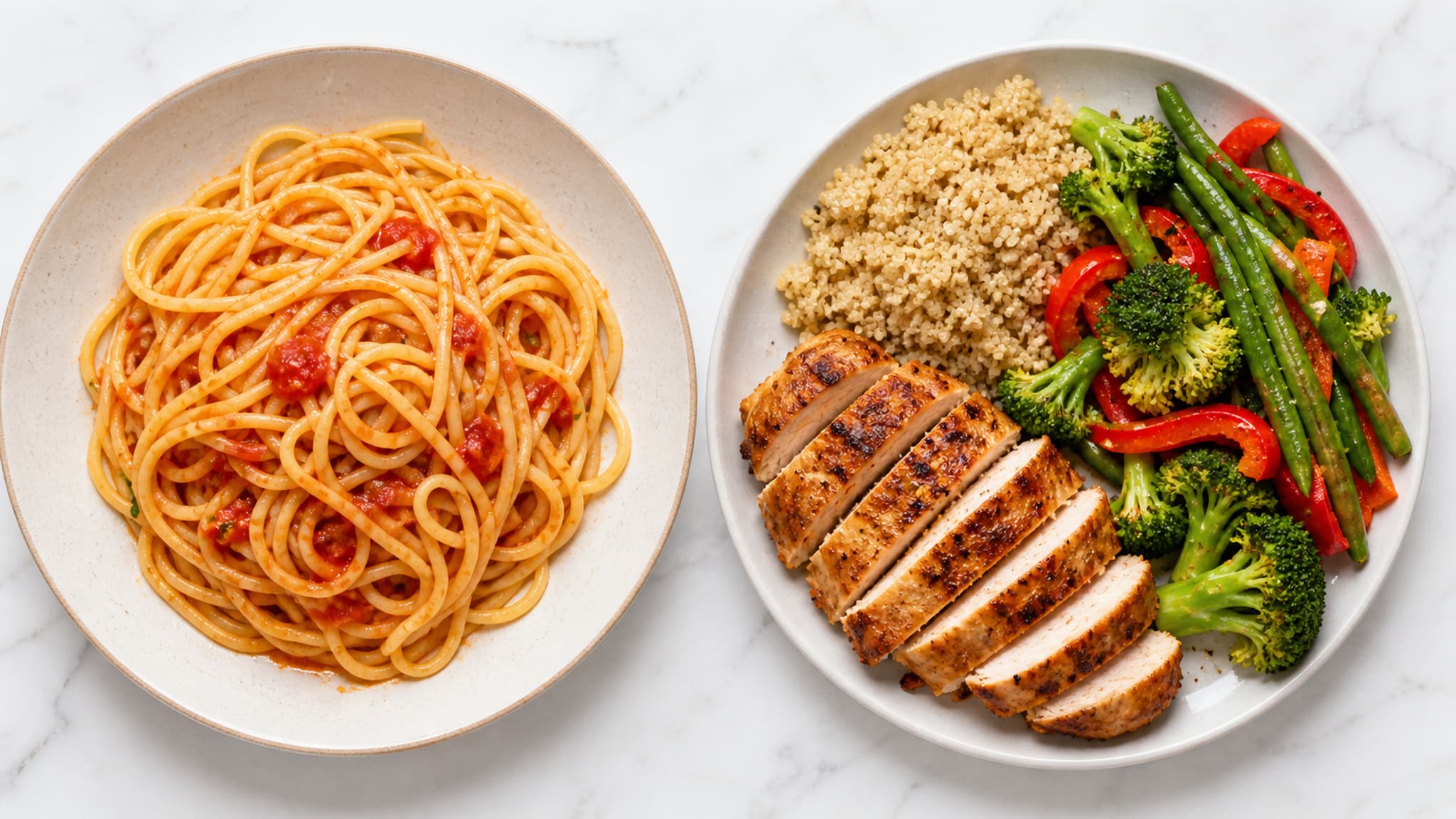
The second mistake is relying on incomplete or low-quality sources without realising it. A handful of nuts, for example, contains some protein but is predominantly a fat source. Hummus has some protein but you would need to eat an enormous amount to hit a meaningful target. Bread, rice, and pasta contain small amounts of protein but should not be counted as primary protein sources. I teach my clients to distinguish between foods that contain protein and foods that are protein sources. The distinction matters.
The third mistake is neglecting protein on rest days. Your body does not stop building and repairing muscle tissue on the days you do not train. In fact, much of the recovery and growth process happens in the 24 to 48 hours following a training session. Dropping protein intake on rest days is counterproductive. I keep my clients’ protein targets consistent seven days a week regardless of training schedule.
Do You Need a Protein Supplement?
Supplements are exactly what the name implies. They supplement an already solid diet. They do not replace real food. That said, protein powders can be a genuinely useful tool for clients who struggle to hit their daily target through whole foods alone, particularly around training when a quick-digesting protein source is convenient.
For omnivore and vegetarian clients, whey protein remains the gold standard in terms of amino acid profile, digestibility, and evidence base (8). For vegan clients, soy protein isolate is the closest plant-based equivalent, followed by pea protein and rice protein blends. I typically recommend a protein powder only when a client consistently falls 20 to 30 grams short of their target despite eating well-structured meals. It is a practical solution, not a magic one. And it should never be the cornerstone of your protein intake.
Protein Is the Non-Negotiable
If you take one thing from this article, let it be this. Protein is the single most impactful nutritional variable for body composition. It preserves muscle when you are dieting. It builds muscle when you are in a surplus. It keeps you full. It costs your body more energy to process. It supports recovery, immune function, and long-term health. And the vast majority of people are not eating enough of it.
Getting your protein right is not complicated. It requires a clear target, a consistent habit of including a quality source at every meal, and a basic understanding of which foods actually deliver meaningful amounts. Whether you eat meat, are vegetarian, vegan, or somewhere in between, there is no dietary background that prevents you from hitting an optimal protein intake. It just requires the right guidance.
If you want a nutrition plan with your protein targets calculated precisely for your body, your goals, and your dietary preferences, with a meal structure and food choices that make hitting those targets feel effortless, that is exactly what I build for every client I work with. I coach one-to-one online globally. Get in touch and let me show you what proper protein intake looks like in practice.
Work with Me
Get a personalised coaching plan built around your goals, your schedule, and your life.
Enquire NowReferences
- Mettler S, Mitchell N, Tipton KD. Increased protein intake reduces lean body mass loss during weight loss in athletes. Medicine and Science in Sports and Exercise. 2010; 42(2): 326-337.
- Weigle DS, Breen PA, Matthys CC, Callahan HS, Meeuws KE, Burden VR, Purnell JQ. A high-protein diet induces sustained reductions in appetite, ad libitum caloric intake, and body weight despite compensatory changes in diurnal plasma leptin and ghrelin concentrations. American Journal of Clinical Nutrition. 2005; 82(1): 41-48.
- Westerterp KR. Diet induced thermogenesis. Nutrition and Metabolism. 2004; 1(1): 5.
- Morton RW, Murphy KT, McKellar SR, Schoenfeld BJ, Henselmans M, Helms E, Aragon AA, Devries MC, Banfield L, Krieger JW, Phillips SM. A systematic review, meta-analysis and meta-regression of the effect of protein supplementation on resistance training-induced gains in muscle mass and strength in healthy adults. British Journal of Sports Medicine. 2018; 52(6): 376-384.
- Phillips SM, Van Loon LJ. Dietary protein for athletes: from requirements to optimum adaptation. Journal of Sports Sciences. 2011; 29(sup1): S29-S38.
- Schoenfeld BJ, Aragon AA. How much protein can the body use in a single meal for muscle-building? Implications for daily protein distribution. Journal of the International Society of Sports Nutrition. 2018; 15(1): 10.
- Rogerson D. Vegan diets: practical advice for athletes and exercisers. Journal of the International Society of Sports Nutrition. 2017; 14(1): 36.
- Jager R, Kerksick CM, Campbell BI, Cribb PJ, Wells SD, Skwiat TM, Purpura M, Ziegenfuss TN, Ferrando AA, Arent SM, Smith-Ryan AE, Stout JR, Arciero PJ, Ormsbee MJ, Taylor LW, Wilborn CD, Kalman DS, Kreider RB, Willoughby DS, Hoffman JR, Krzykowski JL, Antonio J. International Society of Sports Nutrition position stand: protein and exercise. Journal of the International Society of Sports Nutrition. 2017; 14(1): 20.