
The Question Nobody Asks Until It Is Almost Too Late
Here is a question I want you to think about honestly. If I asked you what the single most important thing you could do for your health after the age of 40 was, what would you say? Most people would say eat better. Some would say do more cardio. A few might say reduce stress. All of those are valuable, but none of them is the answer. The single most impactful thing you can do for your health, your body composition, your metabolic function, your bones, your brain, and your quality of life after 40 is to lift weights. And the science behind that statement is not even close to debatable.
I have watched the research on resistance training grow from a niche area of sports science into one of the most robust and consistent bodies of evidence in all of health and medicine. And yet the majority of people over 40, particularly those who have never set foot in a gym, have no idea just how profoundly lifting weights can change their health. This article is going to change that. I am going to walk you through the science in plain language, explain what is happening inside your body, and show you exactly why resistance training is not just exercise but genuine medicine.
What Is Actually Happening Inside Your Body After 40
Before I explain why lifting weights is so powerful, I need you to understand what is happening inside your body right now if you are over 40 and not doing any form of resistance training. This is not to alarm you. It is to give you the knowledge you need to make an informed decision about your health.
Sarcopenia: The Silent Thief You Have Never Heard Of
Sarcopenia is the medical term for the progressive loss of skeletal muscle mass, strength, and function that occurs as we age. Think of it this way: your muscles are like a savings account. In your 20s and early 30s, you are at peak balance. From around the age of 30, if you are not actively making deposits through resistance training, your body begins to make withdrawals. By your 40s the withdrawals are regular. By your 50s and 60s, they accelerate. Research published in Age and Ageing estimates that adults lose between 3 and 8 percent of their muscle mass per decade from the age of 30, and this rate increases substantially after the age of 60 (1).
But here is the part that matters most: sarcopenia is not a disease. It is a consequence of disuse. The European Working Group on Sarcopenia in Older People has made it clear that the primary modifiable risk factor for sarcopenia is physical inactivity, specifically a lack of resistance exercise (1). Your body does not lose muscle because you are getting older. It loses muscle because you stop giving it a reason to keep it.
Your Muscle Savings Account: A Simple Way to Understand Sarcopenia
| Think of Your Muscles Like a Bank Account | ||
|---|---|---|
| Deposits (Things that build muscle) | Withdrawals (Things that break muscle down) | The Balance (The result) |
| Resistance training / Adequate protein intake / Quality sleep / Progressive overload | Physical inactivity / Low protein diet / Chronic stress and poor sleep / Chronic inflammation | If deposits > withdrawals = muscle maintained or gained / If withdrawals > deposits = muscle lost (sarcopenia) |
Most people over 40 who are not training are making zero deposits and steady withdrawals. The account is draining. The good news is that you can start making deposits at any age and the account responds immediately.
Top Tip
You do not need to have trained before to start building muscle after 40. In fact, people who are new to resistance training often see the fastest initial results because their muscles are so responsive to the new stimulus. Researchers call this the novice effect, and it is one of the most encouraging findings in exercise science (2).
Anabolic Resistance: Why Your Muscles Become Harder to Build With Age
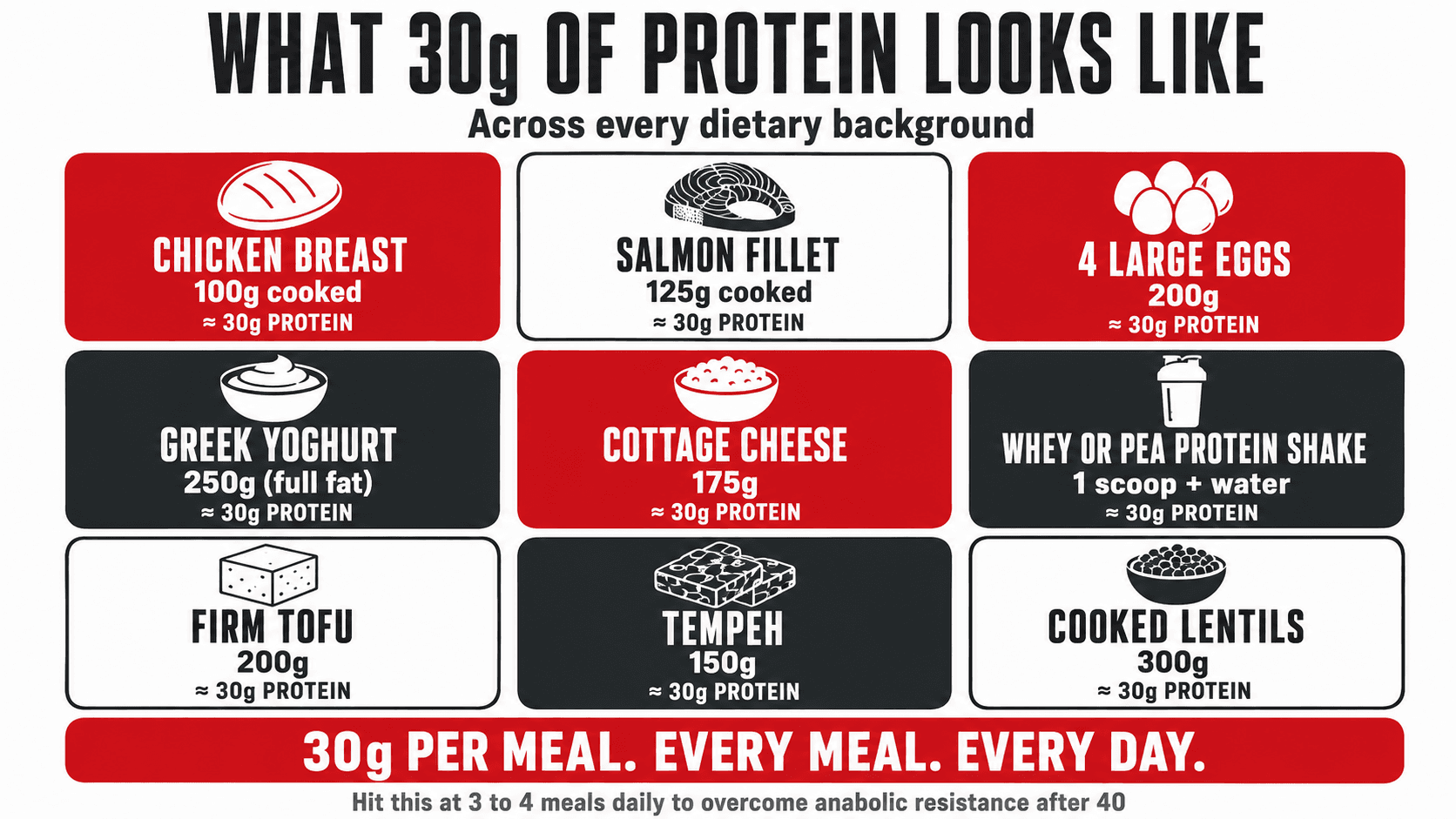
There is a second process I want you to understand because it directly affects how you should eat and train after 40. It is called anabolic resistance. In simple terms, it means that as you get older, your muscles become less efficient at using the protein you eat to build and repair muscle tissue (3). A 25 year old might eat a meal containing 20 grams of protein and get a strong muscle building response. A 50 year old eating the same meal may get a significantly weaker response. The protein is not wasted, but the signal to build muscle is blunted.
This does not mean building muscle after 40 is impossible. It means you need to be smarter about two things: how much protein you eat per meal, and how consistently you train. Research published in the British Journal of Sports Medicine found that adults over 40 who combined resistance training with adequate protein intake of 1.2 to 1.6 grams per kilogram of bodyweight per day achieved significant gains in both muscle mass and strength (4). The solution to anabolic resistance is not complicated. It is more protein, distributed across the day, combined with consistent training.
Anabolic Resistance: What It Looks Like in Practice
| At Age 25 | At Age 50+ |
|---|---|
| You eat a meal with 20g of protein / ↓ / Your muscles receive a strong signal to build and repair / ↓ / Strong muscle building response | You eat the same meal with 20g of protein / ↓ / Your muscles receive a weaker signal (anabolic resistance) / ↓ / Blunted muscle building response |
| The Solution: Increase protein per meal to 30 to 40 grams / Spread protein across 3 to 4 meals daily / Combine with regular resistance training to restore muscle sensitivity to protein | |
Top Tip
If you are over 40, aim for at least 30 grams of protein at every main meal. For a vegetarian or vegan, that could be 150 grams of firm tofu with a serving of lentils, or a large portion of tempeh with quinoa and a pea protein shake. For an omnivore, a palm sized portion of chicken, fish, or lean meat with a side of legumes or dairy will get you there comfortably.
The Seven Proven Benefits of Lifting Weights After 40
Now that you understand what is happening inside your body, let me show you exactly what the science says about what resistance training can do to reverse it. These are not speculative claims. Every single benefit listed below is supported by peer reviewed research.
1. It Builds and Preserves Muscle Mass
This is the most direct and obvious benefit. Resistance training is the single most effective stimulus for building muscle at any age. A meta analysis published in Ageing Research Reviews examined the results of 49 studies involving adults with an average age of 67 and found that progressive resistance training produced significant increases in muscle mass and strength in every study analysed (2). The effect was consistent regardless of sex, starting fitness level, or training history. Even adults in their 70s and 80s built measurable muscle in response to structured training.
What makes this so important is that muscle is not just cosmetic tissue. It is your body's metabolic engine, your structural support system, your glucose storage facility, and your primary defence against frailty as you age. Every kilogram of muscle you build or preserve after 40 is an investment in your future independence.
2. It Increases Your Metabolic Rate and Burns Fat
Muscle is metabolically active tissue. It burns calories even when you are sitting still. The more muscle mass you carry, the higher your resting metabolic rate, which means you burn more energy throughout the day without doing anything extra (5). This is why people who carry more muscle find it easier to maintain a healthy body weight and why people who lose muscle through inactivity find fat gain increasingly difficult to reverse.
A study published in the journal Current Sports Medicine Reports found that 10 weeks of resistance training increased resting metabolic rate by approximately 7 percent and reduced body fat by around 1.8 kilograms (6). That may not sound dramatic, but remember that these are changes that happen without any dietary modification. Combine resistance training with a well structured nutrition plan and the results multiply significantly.
3. It Strengthens Your Bones
Osteoporosis, the progressive weakening of bone tissue, is a serious concern for adults over 40, particularly women after menopause. When you lift weights, the mechanical loading placed on your bones triggers a remodelling process. Your bones respond to the stress by becoming denser and stronger, in much the same way that muscles respond to training by getting bigger and stronger (7). A systematic review published in the journal Endocrinology and Metabolism confirmed that resistance exercise is one of the most effective non pharmacological interventions for increasing bone mineral density in both pre and post menopausal women and in older men (7).
Top Tip
For bone health, compound exercises that load the spine and hips are the most beneficial. Squats, deadlifts, lunges, overhead presses, and carries all provide the mechanical stress your bones need to maintain and improve density. If you are post menopausal or have been told you are at risk of osteoporosis, these are exactly the exercises you should be doing, not avoiding.
4. It Improves Insulin Sensitivity and Blood Sugar Control
This benefit is critically important and still wildly underappreciated by the general public. Skeletal muscle is the largest site for glucose disposal in the human body. When you eat carbohydrates, they are broken down into glucose. That glucose needs somewhere to go. Muscle tissue acts as a storage depot, pulling glucose out of your blood and storing it as glycogen for future energy use. The more muscle you have and the more active that muscle is, the more efficiently your body clears glucose from your bloodstream (8).
For anyone with insulin resistance, pre diabetes, Type 2 diabetes, or PCOS, this is transformative information. A position statement from the American Diabetes Association published in Diabetes Care confirmed that resistance training improves insulin sensitivity, reduces HbA1c levels, and should be a cornerstone of exercise prescription for people with Type 2 diabetes (8). I have worked with clients who have seen their blood sugar levels normalise, their HbA1c drop significantly, and their GP reduce their medication, all through a combination of resistance training and dietary changes.
How Your Muscles Help Control Blood Sugar: A Simple Explanation
Step 1: You Eat a Meal Containing Carbohydrates
Carbs are broken down into glucose and enter your bloodstream.
Step 2: Insulin Is Released by Your Pancreas
Insulin acts like a key, unlocking your muscle cells so glucose can enter.
Step 3: Your Muscles Absorb the Glucose
Muscle tissue stores glucose as glycogen for energy. More muscle = more storage capacity = blood sugar drops efficiently.
What Goes Wrong
Less muscle mass means less storage. Insulin resistance means the key stops fitting the lock properly. Blood sugar stays elevated. Risk of Type 2 diabetes increases.
The Fix
Resistance training builds more muscle (more storage), improves insulin sensitivity (the key fits again), and lowers blood sugar levels.
Top Tip
If you have been diagnosed with Type 2 diabetes or pre diabetes, resistance training is not optional, it is one of the most powerful tools available to you. Two to three sessions per week combined with a higher protein, moderate carbohydrate diet can make a measurable difference to your blood sugar control within weeks.

5. It Lowers Blood Pressure
High blood pressure is one of the most common health conditions in adults over 40 and one of the leading risk factors for heart attack, stroke, and kidney disease. Many people assume that lifting weights will increase their blood pressure. The opposite is true. While blood pressure does rise temporarily during a set, the long term effect of consistent resistance training is a sustained reduction in resting blood pressure. A comprehensive meta analysis published in the Journal of the American Heart Association found that dynamic resistance training produced clinically meaningful reductions in both systolic and diastolic blood pressure in adults with hypertension, with average reductions of 5 to 10 mmHg systolic (9). To put that in context, that is comparable to the effect of some blood pressure medications.
Top Tip
If you have high blood pressure, focus on controlled breathing during every repetition. Breathe out on the exertion phase (when you are pushing or pulling the weight) and breathe in on the lowering phase. Avoid holding your breath, which can spike blood pressure temporarily.
6. It Protects Your Brain
This is one of the most exciting areas of emerging research. Resistance training does not just benefit your body. It benefits your brain. A study published in the British Journal of Sports Medicine found that resistance training improved cognitive function in older adults, including executive function, memory, and attention, with benefits persisting for up to 12 months after training (10). Separate research published in the journal Molecular Psychiatry demonstrated that resistance exercise promotes the release of brain derived neurotrophic factor, a protein that supports the growth of new neurons and is associated with improved mood, reduced depression, and lower risk of neurodegenerative diseases (11).
In simple terms, when you lift weights, your brain releases chemicals that help it grow, repair, and function better. This is particularly important after 40 when cognitive decline begins to accelerate in sedentary individuals.
7. It Reduces Chronic Inflammation
Chronic low grade inflammation is one of the hallmarks of ageing and a root driver of most chronic diseases, from cardiovascular disease to Type 2 diabetes to certain cancers. It is sometimes called inflammaging. Excess body fat, particularly visceral fat stored around the organs, is one of the primary sources of this inflammation. Resistance training tackles inflammaging from multiple angles: it reduces body fat, it increases anti inflammatory cytokine production, and it improves the body's ability to regulate the immune response (12). A study published in the journal Mediators of Inflammation found that regular resistance exercise significantly reduced markers of systemic inflammation including C reactive protein and interleukin 6 in older adults (12).
The Seven Benefits at a Glance
| # | Benefit | What This Means in Plain English | Key Evidence |
|---|---|---|---|
| 1 | Builds and preserves muscle | Prevents the age related wasting that leads to weakness and frailty. | Peterson et al., 2010. Ageing Research Reviews (2) |
| 2 | Increases metabolic rate | Burns more calories at rest, making fat loss easier and weight regain harder. | Westcott, 2012. Current Sports Medicine Reports (6) |
| 3 | Strengthens bones | Reduces risk of osteoporosis and fractures, especially critical for post menopausal women. | Hong and Kim, 2018. Endocrinology and Metabolism (7) |
| 4 | Improves blood sugar control | More muscle means better glucose storage. Improves insulin sensitivity and lowers HbA1c. | Colberg et al., 2016. Diabetes Care (8) |
| 5 | Lowers blood pressure | Sustained reductions of 5 to 10 mmHg systolic. Comparable to some medications. | MacDonald et al., 2016. JAHA (9) |
| 6 | Protects the brain | Improves memory, executive function, mood. Promotes growth of new brain cells. | Mavros et al., 2017. BJSM (10) |
| 7 | Reduces chronic inflammation | Lowers CRP and IL-6, key markers linked to chronic disease and accelerated ageing. | Calle and Fernandez, 2010. Mediators of Inflammation (12) |

Fuelling the Benefits: Nutrition Essentials for Every Dietary Background
None of these benefits happen in isolation. Your training provides the stimulus, but your nutrition provides the raw materials. I coach clients who eat meat, clients who are vegetarian, clients who are vegan, and clients who fall somewhere in between. The science applies equally to all of them. The specific foods differ, but the principles are the same.
The Three Non Negotiable Nutritional Priorities After 40
| Priority 1: Protein | Priority 2: Micronutrients | Priority 3: Hydration |
|---|---|---|
| 1.2 to 1.6g per kg bodyweight daily. 30 to 40g per meal minimum. | Vitamin D, calcium, omega 3, magnesium, B12. All commonly deficient after 40. | Minimum 2 litres daily. More on training days and in warm weather. |
| Chicken, fish, eggs, tofu, tempeh, seitan, lentils, Greek yoghurt, pea protein, soy protein. | Prioritise from food first. Supplement where needed. Get tested where possible. | Your thirst mechanism weakens with age. Do not wait until you feel thirsty. Drink consistently throughout the day. |
Top Tip
A simple way to check your hydration is the colour of your urine. Pale straw colour means you are well hydrated. Dark yellow means you need to drink more. It sounds basic, but this one check can make a meaningful difference to your energy, concentration, and training performance.
What a Day of Eating Could Look Like: Three Dietary Examples
| Meal | Omnivore Example | Vegetarian Example | Vegan Example |
|---|---|---|---|
| Breakfast | 3 eggs scrambled with spinach, 1 slice whole grain toast, handful of berries. | Greek yoghurt with oats, mixed seeds, and banana. Glass of milk. | Tofu scramble with peppers and spinach, 2 slices sourdough, avocado. |
| Lunch | Grilled chicken breast with brown rice, roasted vegetables, and olive oil dressing. | Lentil and paneer curry with brown rice, side salad. | Tempeh stir fry with quinoa, broccoli, edamame, and sesame dressing. |
| Snack | Cottage cheese with pineapple and walnuts. | Apple with almond butter and a small handful of mixed nuts. | Pea protein shake blended with oat milk, banana, and peanut butter. |
| Dinner | Salmon fillet with sweet potato, green beans, and a side of mixed leaves. | 3 egg omelette with vegetables and feta cheese, side of sauteed new potatoes. | Seitan and vegetable casserole with sweet potato mash, steamed kale. |
| Approx Protein | 120 to 140g | 100 to 120g | 100 to 130g |
Top Tip
If you look at the table above and feel overwhelmed, do not try to change everything at once. Start with one meal. Get your breakfast protein right for two weeks until it becomes automatic. Then fix lunch. Then dinner. Build the habit gradually and it will stick permanently.

Putting the Science Into Action
I know this article contains a lot of information. Let me distil it into the simplest possible action plan for someone over 40 who wants to start lifting weights and improving their health.
Your Five Step Starting Plan
| 1 | Get clearance from your GP if you have any existing health conditions. This is a formality for most people, but it is an important one. Tell your doctor you plan to start resistance training. |
| 2 | Commit to two resistance training sessions per week for 12 weeks. Two sessions is the minimum effective dose. Consistency matters far more than frequency at this stage. |
| 3 | Increase your protein intake to at least 1.2 grams per kilogram of bodyweight. Focus on getting 30g or more per meal from quality sources appropriate to your dietary background. |
| 4 | Prioritise sleep. Seven to nine hours per night. Set a consistent bedtime, reduce screen time before bed, and make your room cool and dark. |
| 5 | Get professional guidance. A good coach will accelerate your results and keep you safe. You do not need to figure this out alone. The right programme, tailored to your body and your goals, makes all the difference. |
The Best Time to Start Was 10 Years Ago. The Second Best Time Is Now.
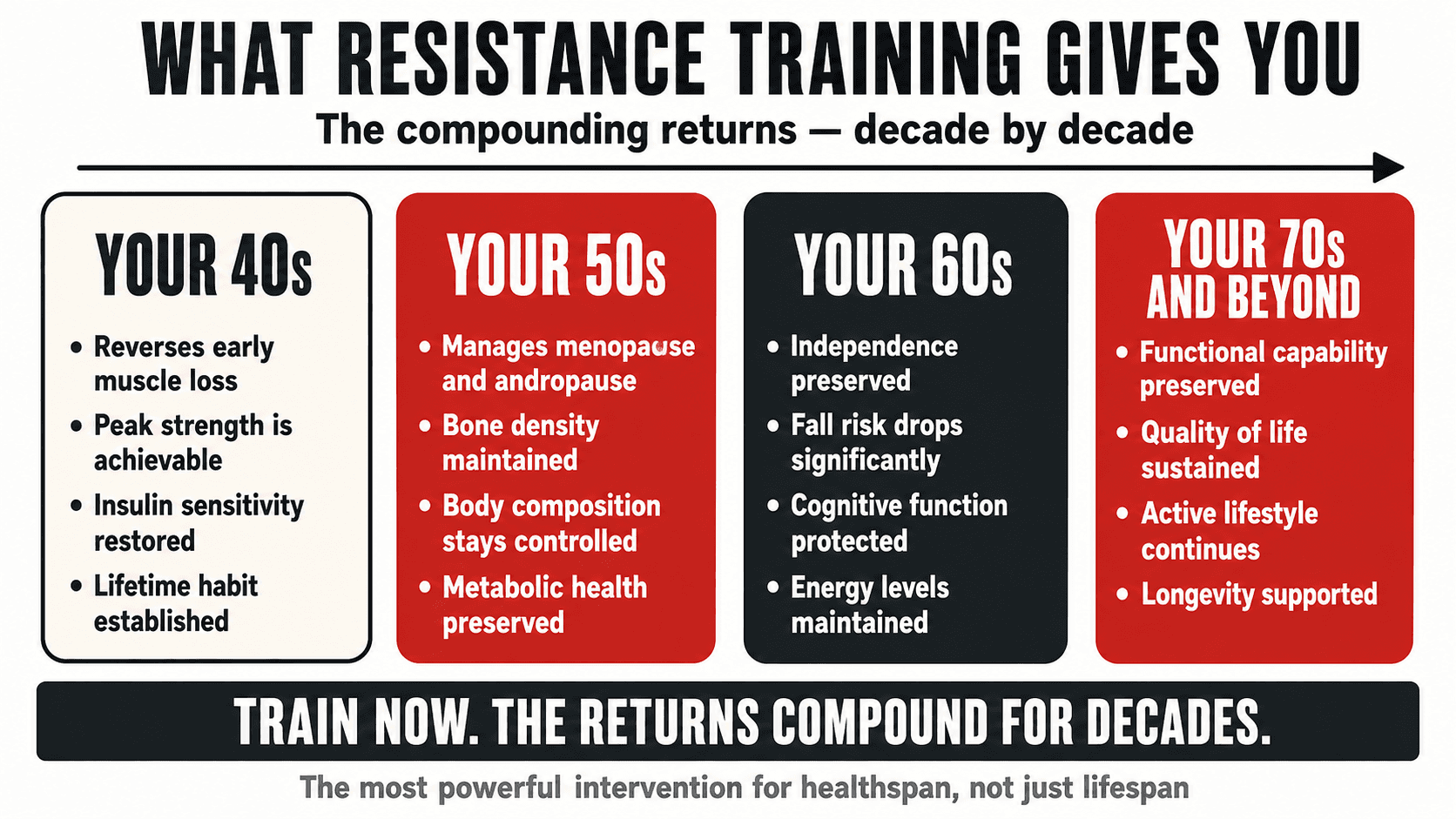
The evidence is not ambiguous. It is not controversial. It is overwhelming. Lifting weights after 40 builds muscle, burns fat, strengthens bones, lowers blood pressure, improves blood sugar control, protects your brain, and reduces chronic inflammation. No pill, no supplement, and no other single intervention comes close to delivering the same breadth of health benefits.
I am a performance coach. I have helped hundreds of clients over 40 build strength and transform their body composition. I work one-to-one with clients online globally. I am a lifelong vegetarian myself and I work with clients of every dietary background. Every programme I build is tailored to the individual because no two people are the same and no two transformations should look the same either.
If you are over 40 and you have read this far, something in here has resonated with you. That is your signal. Do not wait for the perfect moment. It does not exist. Start where you are, with what you have, and build from there.
Get in touch through my website at trperformancecoaching.com and let us talk about what the science can do for you, personally.