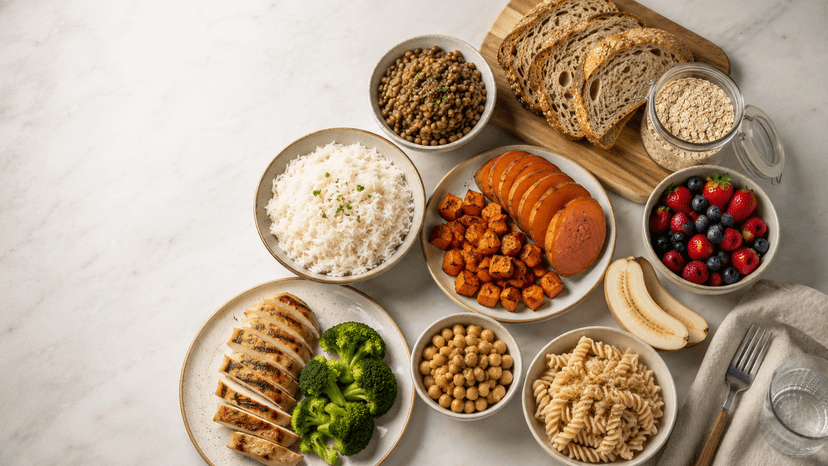
If you have been struggling with fat loss despite doing what feels like everything right, there is a chance that insulin resistance is quietly working against you. Insulin resistance and fat loss are more closely connected than most people realise, and understanding that connection can be the difference between spinning your wheels for months and finally making consistent, measurable progress. This is not an obscure medical condition that only affects people with diabetes. It exists on a spectrum, and millions of people are sitting somewhere on that spectrum without knowing it, wondering why the weight will not shift despite eating less and training more.
I work with clients managing type 2 diabetes, type 1 diabetes, PCOS, hypertension, and metabolic syndrome alongside clients who simply want to lose fat and look better. Insulin resistance is a thread that runs through almost every one of these conditions, and it is one of the most important physiological factors I consider when building a fat loss plan. If your body is not handling insulin efficiently, you are fighting a biological headwind that makes fat loss harder, slower, and more frustrating than it needs to be. The good news is that insulin resistance is not a fixed sentence. It is highly responsive to the right interventions, and improving your insulin sensitivity can genuinely accelerate your results.
What Insulin Resistance Actually Is
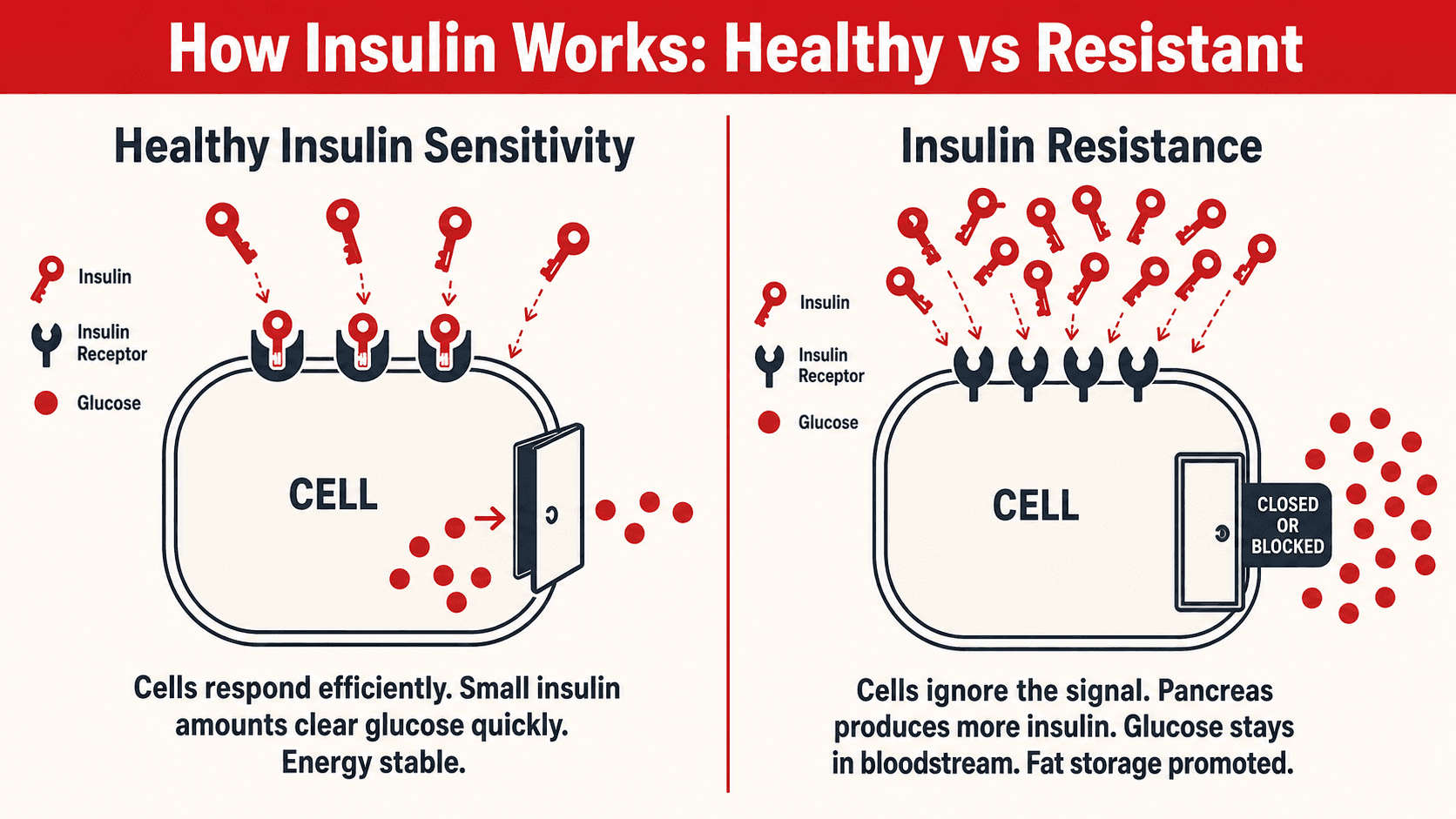
To understand insulin resistance, you first need to understand what insulin does in a healthy body. Insulin is a hormone produced by the beta cells of your pancreas. Its primary role is to regulate blood glucose. When you eat carbohydrates, they are broken down into glucose, which enters your bloodstream. In response to rising blood glucose, your pancreas releases insulin. Insulin acts like a key, binding to receptors on the surface of your cells, particularly muscle cells, liver cells, and fat cells, and opening the door for glucose to enter and be used for energy, stored as glycogen, or converted to fat (1).
In a healthy, insulin-sensitive person, this process works efficiently. A relatively small amount of insulin is sufficient to clear glucose from the blood and deliver it where it needs to go. Blood sugar rises modestly after a meal and returns to baseline within a couple of hours. Energy is stable. Hunger is regulated. Fat storage and fat burning operate in a normal, balanced cycle.
Insulin resistance occurs when your cells become less responsive to insulin's signal. The receptors on your cells start to ignore the key. Glucose cannot enter the cells as efficiently, so it accumulates in the bloodstream. Your pancreas responds by producing more insulin to compensate, driving blood insulin levels higher and higher in an attempt to force the same amount of glucose into increasingly reluctant cells (1). This state of chronically elevated insulin, known as hyperinsulinemia, has profound consequences for your body composition, your metabolic health, and your ability to lose fat.
The Insulin Resistance Spectrum: Where Do You Sit?
Insulin resistance is not a binary condition where you either have it or you do not. It exists on a continuum that progresses gradually over years and even decades. Most people do not jump from perfectly healthy to type 2 diabetic overnight. They slide along a spectrum, often without any obvious symptoms, until the damage is significant enough to show up on a blood test or produce visible health consequences. The table below illustrates this spectrum from optimal insulin sensitivity through to type 2 diabetes, showing what happens at each stage and how you might recognise where you are.
| Stage 1: Optimal Sensitivity | Stage 2: Early Resistance | Stage 3: Moderate Resistance | Stage 4: Severe Resistance / Prediabetes | |
|---|---|---|---|---|
| What Is Happening | Cells respond efficiently to insulin. Small amounts of insulin clear glucose quickly. | Cells begin to resist insulin's signal. Pancreas produces slightly more insulin to compensate. | Cells significantly resistant. Pancreas working much harder. Fasting insulin rising. Glucose staying elevated longer after meals. | Pancreas struggling to keep up. Fasting glucose elevated. HbA1c entering prediabetic range (5.7 to 6.4%). High risk of progression to type 2 diabetes. |
| Fasting Insulin | Low and healthy (typically under 8 mIU/L) | Creeping upward (8 to 12 mIU/L) though often still within laboratory reference range | Elevated (12 to 20 mIU/L). Rarely flagged by standard GP tests. | High (above 20 mIU/L). Pancreas in overdrive. |
| Fasting Glucose | Normal (under 5.0 mmol/L) | Normal but may be at the upper end of normal (5.0 to 5.5 mmol/L) | Upper normal to borderline (5.5 to 6.0 mmol/L) | Impaired fasting glucose (6.1 to 6.9 mmol/L). Prediabetic territory. |
| How Fat Loss Feels | Straightforward. Respond well to a calorie deficit. Fat comes off predictably. | Slightly harder than expected. May notice stubborn abdominal fat. Hunger and cravings slightly elevated. | Noticeably difficult. Fat loss stalls frequently despite good adherence. Strong carb cravings. Energy crashes after meals. | Extremely difficult without targeted intervention. Body preferentially stores fat, especially around the abdomen. High hunger, low energy, poor training recovery. |
| Typical Symptoms | None. Energy stable. Appetite manageable. | Often no obvious symptoms. Mild afternoon energy dips. Slight increase in waist circumference. | Fatigue after meals. Difficulty concentrating. Increased abdominal fat. Skin tags. Darkened skin folds (acanthosis nigricans). | Persistent fatigue. Excessive thirst and urination. Brain fog. Significant abdominal obesity. GP may flag blood sugar. |
| Who Is Typically Here | Active individuals with good muscle mass, healthy body composition, and well-managed nutrition. | Sedentary office workers, people who have gained 5 to 10kg over several years, those with a family history of diabetes. | Individuals with significant excess body fat, particularly visceral fat. Common in PCOS, metabolic syndrome, post-menopause. | Individuals with longstanding obesity, very sedentary lifestyles, strong family history of type 2 diabetes, or diagnosed prediabetes. |
| What Needs to Happen | Maintain current habits. Continue training and eating well. | Increase resistance training, reduce refined carbohydrates, add post-meal walks, improve sleep quality. | Structured fat loss programme with calorie deficit, high protein, resistance training, and targeted carbohydrate management. Professional coaching strongly recommended. | Medical assessment alongside structured lifestyle intervention. Combination of fat loss, exercise, and potentially pharmacological support. Do not attempt this alone. |
If you are reading this table and recognising yourself at Stage 2 or Stage 3, you are not alone. Research suggests that approximately 40 percent of adults in the UK have some degree of insulin resistance, with many of them undiagnosed (2). The important thing is that progression along this spectrum is not inevitable. It is reversible at every stage except very late type 2 diabetes where significant beta cell destruction has occurred. And the earlier you intervene, the easier and faster the reversal.
Why Insulin Resistance Makes Fat Loss Harder
Understanding why insulin resistance sabotages fat loss requires understanding what chronically elevated insulin does to your body's ability to burn stored fat. Insulin is fundamentally an anabolic, storage-promoting hormone. When insulin levels are high, your body is in storage mode. Lipolysis, the process of breaking down stored triglycerides in your fat cells and releasing them into the bloodstream for use as fuel, is suppressed by insulin. The higher your insulin levels, the more powerfully lipolysis is inhibited (3).
In a person with healthy insulin sensitivity, insulin rises after a meal, does its job of clearing glucose, and then falls back to baseline relatively quickly. Between meals and during fasted periods, low insulin allows lipolysis to proceed normally, enabling your body to access and burn stored fat for energy. The system oscillates between storage (after meals) and burning (between meals) in a balanced, healthy rhythm.
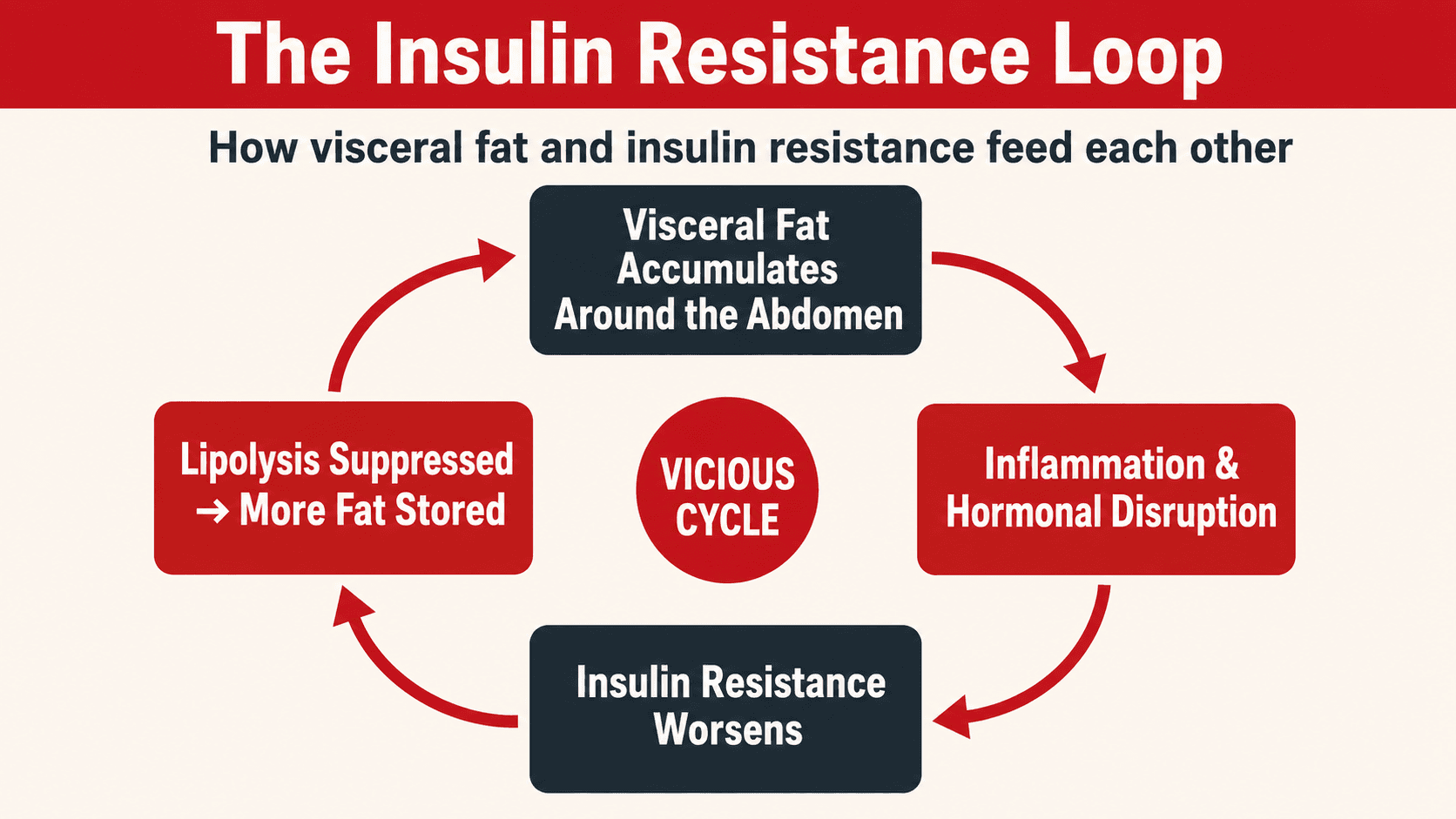
In a person with insulin resistance, this rhythm is disrupted. Because the cells are not responding efficiently to insulin, the pancreas produces more of it and keeps producing it for longer. Insulin levels stay elevated for extended periods after meals and may never fully return to a healthy baseline even during fasting. This means your body spends more time in storage mode and less time in fat-burning mode. Even if you are in a calorie deficit, chronically elevated insulin makes it harder for your body to access stored fat efficiently. You are still losing fat because thermodynamics demands it, but the process is slower, more frustrating, and accompanied by stronger hunger, more intense cravings, and greater fatigue than it would be if your insulin sensitivity were healthy (3).
Insulin resistance also promotes preferential fat storage around the abdomen and visceral organs. This is why individuals with insulin resistance tend to carry their excess weight centrally rather than distributed evenly across the body. Visceral fat is metabolically active and produces inflammatory cytokines that further worsen insulin resistance, creating a vicious cycle where abdominal fat drives insulin resistance and insulin resistance drives more abdominal fat (4).
The Telltale Signs of Insulin Resistance: A Self-Assessment
Insulin resistance often develops silently over years. Most people are not tested for it by their GP because standard blood tests check fasting glucose and HbA1c, which may remain normal until the condition has progressed significantly. Fasting insulin, the earliest and most sensitive marker, is rarely measured in routine practice. This means you need to be your own detective. The following table lists the telltale signs and symptoms of insulin resistance. If you recognise three or more of these in yourself, I strongly recommend asking your GP for a fasting insulin test alongside your standard blood glucose tests.
| Category | Sign or Symptom | Why It Happens |
|---|---|---|
| Body Composition | Stubborn abdominal fat that does not respond to dieting, even when you lose weight elsewhere | Elevated insulin promotes visceral fat storage around the midsection specifically. The abdomen is the last place fat leaves in insulin-resistant individuals. |
| Body Composition | Increasing waist circumference despite stable or falling body weight | Visceral fat accumulation driven by chronic hyperinsulinemia. Fat is redistributing from subcutaneous depots to visceral depots. |
| Energy | Fatigue or drowsiness within 1 to 2 hours after eating, particularly after carbohydrate-rich meals | Exaggerated insulin response causes a rapid blood sugar drop (reactive hypoglycemia) after the initial glucose spike, leaving you tired and foggy. |
| Energy | Afternoon energy crashes that feel unavoidable, regardless of sleep quality | Chronic blood sugar instability throughout the day driven by impaired glucose regulation. |
| Appetite | Intense cravings for sugar, bread, pasta, and refined carbohydrates, particularly in the afternoon or evening | Reactive hypoglycemia and poor glucose delivery to cells triggers hunger signals and drives cravings for fast-acting energy sources. |
| Appetite | Feeling hungry again within 1 to 2 hours of eating a full meal | Glucose is not being efficiently taken up by cells, so despite eating, your cells are not receiving adequate fuel and signal for more food. |
| Skin | Skin tags, particularly around the neck, armpits, or groin | Elevated insulin stimulates epidermal growth. Skin tags are a well-documented clinical marker of hyperinsulinemia and insulin resistance (5). |
| Skin | Dark, velvety patches of skin in body folds (neck, armpits, groin), known as acanthosis nigricans | Chronically elevated insulin stimulates melanocyte and keratinocyte proliferation in skin folds. A visible external marker of internal metabolic dysfunction (5). |
| Hormonal | Irregular menstrual cycles, excess facial or body hair, or difficulty conceiving (women) | Insulin resistance is a core driver of PCOS. Elevated insulin stimulates ovarian androgen production, disrupting the menstrual cycle and causing androgenic symptoms (6). |
| Hormonal | Low testosterone, reduced libido, or difficulty building muscle (men) | Insulin resistance promotes conversion of testosterone to oestrogen via aromatase activity in visceral fat. Chronically high insulin also suppresses sex hormone binding globulin. |
| Cognitive | Brain fog, difficulty concentrating, or poor mental clarity, especially after meals | The brain is highly sensitive to glucose fluctuations. The rapid swings in blood sugar caused by insulin resistance impair cognitive function. |
| Metabolic | Elevated blood pressure, high triglycerides, or low HDL cholesterol | These are hallmarks of metabolic syndrome, which is driven by insulin resistance. Elevated insulin promotes sodium retention (raising blood pressure) and impairs lipid metabolism (7). |
| Family History | Parent or sibling with type 2 diabetes, metabolic syndrome, or cardiovascular disease | Insulin resistance has a strong genetic component. A first-degree relative with type 2 diabetes significantly increases your risk. |
This is not a diagnostic tool. It is a self-awareness exercise. If you are ticking multiple boxes, the responsible next step is to speak with your GP and request a fasting insulin test alongside your fasting glucose and HbA1c. The earlier insulin resistance is identified, the more effectively it can be reversed through lifestyle intervention before it progresses to prediabetes or type 2 diabetes.
How to Improve Insulin Sensitivity and Accelerate Fat Loss
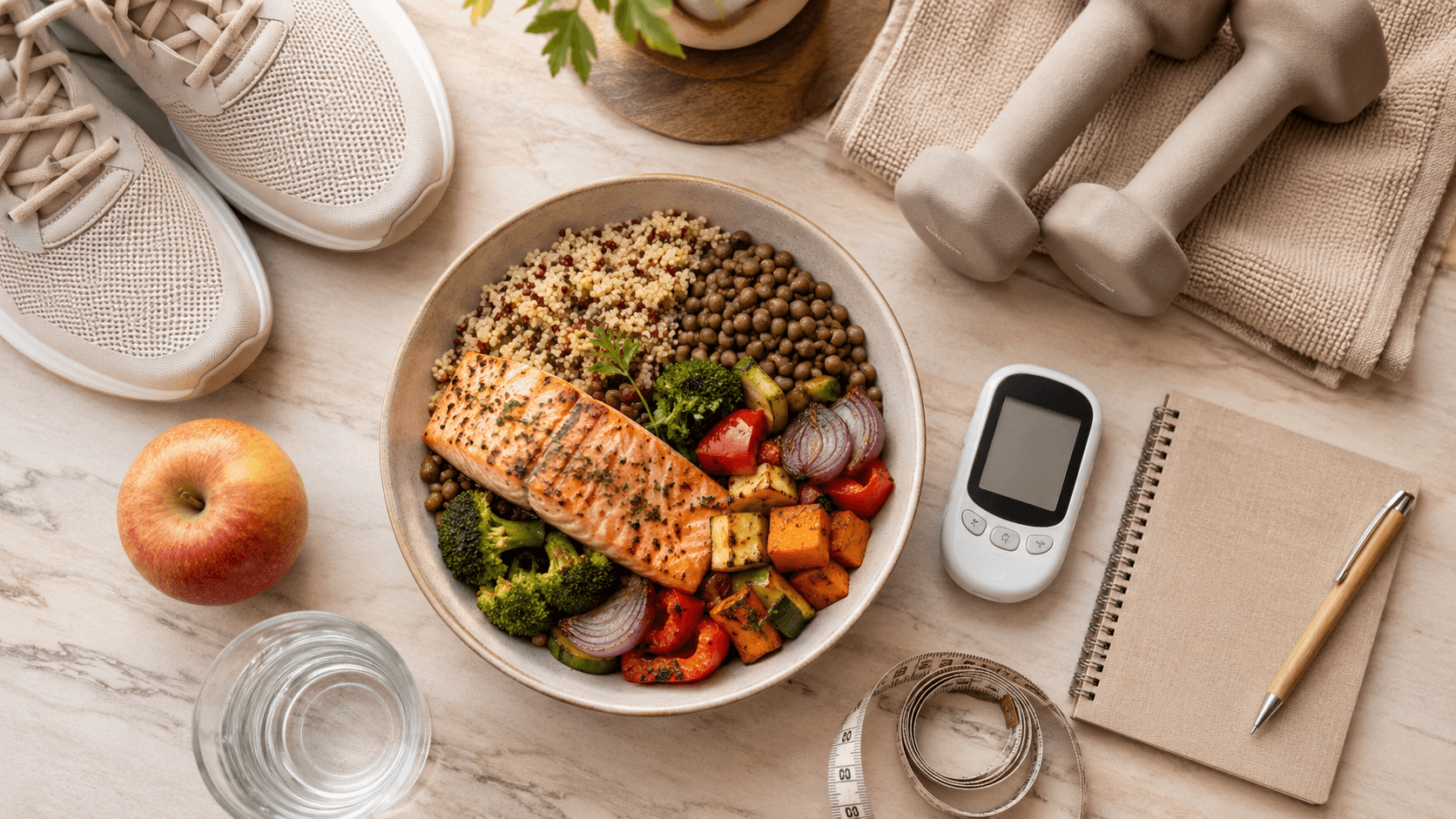
The evidence on improving insulin sensitivity is clear, consistent, and encouraging. Insulin resistance is one of the most modifiable risk factors in medicine. The interventions that work are not exotic or complicated. They are the same fundamentals that drive effective fat loss, which is why improving insulin sensitivity and losing body fat tend to happen simultaneously when you get the basics right.
Lose body fat, particularly visceral fat. This is the single most powerful intervention for improving insulin sensitivity. A landmark study from the Diabetes Prevention Program found that a 7 percent reduction in body weight reduced the incidence of type 2 diabetes by 58 percent in individuals with prediabetes, outperforming the drug metformin which achieved a 31 percent reduction (8). You do not need to reach a magazine-cover physique. A moderate, sustained fat loss of 5 to 10 percent of body weight produces clinically significant improvements in insulin sensitivity, fasting insulin, fasting glucose, and HbA1c. Research from Washington University found that combining a 10 percent weight loss with regular exercise more than doubled improvements in insulin sensitivity compared to weight loss alone (9). The deficit does not need to be extreme. A moderate deficit of 400 to 600 calories per day, sustained over 12 to 24 weeks, is the sweet spot I use with my clients.
Resistance training is non-negotiable. Skeletal muscle is the largest glucose sink in your body. The more muscle mass you have and the more metabolically active that muscle is, the more glucose your body can clear from the bloodstream without requiring excessive insulin. Resistance training improves insulin sensitivity acutely (a single session improves glucose uptake for 24 to 48 hours) and chronically (regular training increases GLUT4 transporter density on muscle cell membranes, making glucose uptake more efficient) (10). I programme 3 to 4 resistance training sessions per week for all clients with insulin resistance. Compound movements like squats, deadlifts, presses, rows, and lunges are prioritised because they recruit the largest muscle groups and produce the greatest metabolic stimulus.
Walk after meals. This is one of the simplest and most impactful habits I recommend to every insulin-resistant client. A 15 to 20 minute walk after your main meals significantly reduces post-meal blood glucose spikes by directing glucose into active muscles rather than leaving it circulating in the bloodstream (11). It does not need to be vigorous. A brisk walk is sufficient. The cumulative effect of walking after two or three meals per day is substantial. It adds steps, it improves glucose clearance, it supports your calorie deficit, and it costs nothing.
Manage your carbohydrate quality and timing. I am not anti-carbohydrate. Carbohydrates are an important fuel source, particularly for people who are training. But the type, quantity, and timing of your carbohydrate intake matters significantly when you are insulin resistant. I prioritise lower glycemic, fibre-rich carbohydrate sources: oats, sweet potatoes, lentils, chickpeas, quinoa, beans, basmati rice, and vegetables. These are digested more slowly, produce a gentler blood sugar response, and place less demand on your already-strained insulin system. I often front-load carbohydrates around training sessions when your muscles are most insulin sensitive, and reduce them at meals furthest from training. For vegetarian and vegan clients, many of the best carbohydrate choices for insulin sensitivity, including legumes, beans, lentils, and whole grains, are already dietary staples.

Prioritise protein at every meal. Protein supports muscle preservation during a deficit, improves satiety, and has a minimal impact on blood glucose compared to carbohydrates. It also stimulates glucagon, which counterbalances insulin and supports stable blood sugar. I set protein targets at 1.8 to 2.2 grams per kilogram of bodyweight for fat loss clients with insulin resistance. For omnivores this means lean meats, fish, eggs, and dairy. For vegetarians and vegans, tofu, tempeh, seitan, soy protein, pea protein, lentils, and legumes form the backbone.
Sleep is a metabolic intervention, not a luxury. A study published in the Annals of Internal Medicine found that restricting sleep to 4.5 hours per night for just four days reduced insulin sensitivity by 30 percent in healthy individuals (12). Four days. That is how quickly poor sleep can push your metabolism in the wrong direction. Seven to nine hours of quality sleep per night is not optional if you are serious about improving insulin sensitivity. I discuss sleep with every client at every check-in because it is that important.
Manage chronic stress. Cortisol, the primary stress hormone, directly antagonises insulin by promoting glucose release from the liver and impairing glucose uptake in peripheral tissues. Chronic stress means chronically elevated cortisol, which means chronically impaired insulin sensitivity. This is compounded by the fact that cortisol promotes visceral fat storage, which further worsens insulin resistance. Stress management through deliberate relaxation, boundaries around work, regular time outdoors, and enjoyable social activities is a genuine metabolic intervention, not a soft extra.
Top Tips: Improving Insulin Sensitivity for Better Fat Loss
Ask your GP for a fasting insulin test, not just fasting glucose. Fasting glucose and HbA1c can remain normal for years while insulin resistance worsens silently. Fasting insulin is the earliest marker and will catch the problem long before standard tests flag anything. If your fasting insulin is above 10 mIU/L, you likely have some degree of insulin resistance even if your glucose is normal.
Measure your waist circumference monthly alongside your weight. Waist circumference is a practical proxy for visceral fat, which is the fat most strongly associated with insulin resistance. For men, aim for below 94cm (and ideally below 90cm if South Asian). For women, aim for below 80cm. A decreasing waist is one of the clearest signs that your insulin sensitivity is improving.
Never eat refined carbohydrates in isolation. A piece of white bread on its own produces a sharp glucose spike and a large insulin response. The same bread eaten with protein, fat, and fibre produces a dramatically flatter blood sugar curve. Build every meal around a protein source first, add vegetables and fibre, then include your carbohydrates. This simple structure reduces the glycemic impact of every meal without eliminating any food group.
Prioritise resistance training over cardio if you can only choose one. Both improve insulin sensitivity, but resistance training builds muscle mass which permanently increases your body's capacity to clear glucose. Cardio improves insulin sensitivity acutely but does not build the long-term glucose disposal machinery that muscle provides. Ideally do both, but if time is limited, the weights win.

Front-load your carbohydrates around your training sessions. Your muscles are most insulin sensitive during and immediately after exercise. Consuming the majority of your daily carbohydrates in the meals before and after training takes advantage of this window and minimises the insulin burden at other times of the day.
Walk for 15 to 20 minutes after your two largest meals every day. This is the single easiest intervention with the highest return on investment for insulin-resistant individuals. It reduces blood sugar spikes, adds daily steps, supports your deficit, and requires zero equipment or planning. Make it non-negotiable.
Fix your sleep before adding supplements, medications, or more training. Sleep deprivation can reduce insulin sensitivity by 30 percent in less than a week. No supplement will compensate for that. If you are sleeping under seven hours consistently, improving your sleep will do more for your insulin sensitivity than any other single change.
Consider berberine or magnesium supplementation under professional guidance. Berberine has been shown in multiple studies to improve insulin sensitivity and lower fasting glucose, with effects comparable to metformin in some trials (13). Magnesium deficiency is common and associated with impaired insulin signalling. These are the only two supplements I consider for insulin resistance, and always alongside the lifestyle fundamentals, never instead of them.
The Bottom Line
Insulin resistance is not a mysterious, untreatable condition. It is a predictable metabolic response to excess body fat (particularly visceral fat), physical inactivity, poor sleep, chronic stress, and a diet overloaded with refined carbohydrates. It exists on a spectrum, and wherever you sit on that spectrum, you can move in the right direction. The interventions that reverse insulin resistance are the same interventions that drive effective, sustainable fat loss: a moderate calorie deficit, adequate protein, resistance training, daily movement, quality sleep, and stress management. There is no secret. There is only execution.
If you suspect you may be insulin resistant, or if you have been diagnosed with prediabetes, PCOS, metabolic syndrome, or type 2 diabetes and want to take control of your health through evidence-based nutrition and training, get in touch. I work one-to-one with clients online globally. Whether you eat meat, are vegetarian, vegan, or anywhere in between, I will build a plan that addresses your insulin sensitivity alongside your body composition goals. This is what I do. And for the clients I have worked with who have reduced their insulin, normalised their blood glucose, and transformed their bodies, the results speak louder than any supplement or fad ever could.
Work with Me
Get a personalised coaching plan built around your goals, your schedule, and your life.
Enquire NowReferences
- Petersen MC, Shulman GI. Mechanisms of insulin action and insulin resistance. Physiological Reviews. 2018; 98(4): 2133-2223.
- Mainous AG, Tanner RJ, Baker R, Zayas CE, Harle CA. Prevalence of prediabetes in England from 2003 to 2011: population-based, cross-sectional study. BMJ Open. 2014; 4(6): e005002.
- Samuel VT, Shulman GI. The pathogenesis of insulin resistance: integrating signaling pathways and substrate flux. Journal of Clinical Investigation. 2016; 126(1): 12-22.
- Neeland IJ, Ross R, Despres JP, et al. Visceral and ectopic fat, atherosclerosis, and cardiometabolic disease: a position statement. The Lancet Diabetes and Endocrinology. 2019; 7(9): 715-725.
- Barbato MT, Criado PR, Silva AK, Averbeck E, Guerine MB, Sa NB. Association of acanthosis nigricans and skin tags with insulin resistance. Anais Brasileiros de Dermatologia. 2012; 87(1): 97-104.
- Dunaif A. Insulin resistance and the polycystic ovary syndrome: mechanism and implications for pathogenesis. Endocrine Reviews. 1997; 18(6): 774-800.
- Reaven GM. Banting lecture 1988: role of insulin resistance in human disease. Diabetes. 1988; 37(12): 1595-1607.
- Knowler WC, Barrett-Connor E, Fowler SE, et al. Reduction in the incidence of type 2 diabetes with lifestyle intervention or metformin. New England Journal of Medicine. 2002; 346(6): 393-403.
- Houmard JA, Tanner CJ, Slentz CA, Duscha BD, McCartney JS, Kraus WE. Effect of the volume and intensity of exercise training on insulin sensitivity. Journal of Applied Physiology. 2004; 96(1): 101-106.
- Holten MK, Zacho M, Gaster M, Juel C, Wojtaszewski JF, Dela F. Strength training increases insulin-mediated glucose uptake, GLUT4 content, and insulin signaling in skeletal muscle in patients with type 2 diabetes. Diabetes. 2004; 53(2): 294-305.
- Buffey AJ, Herring MP, Langley CK, Donnelly AE, Carson BP. The acute effects of interrupting prolonged sitting time in adults with standing and light-intensity walking on biomarkers of cardiometabolic health: a systematic review and meta-analysis. Sports Medicine. 2022; 52(8): 1765-1787.
- Donga E, van Dijk M, van Dijk JG, et al. A single night of partial sleep deprivation induces insulin resistance in multiple metabolic pathways in healthy subjects. Journal of Clinical Endocrinology and Metabolism. 2010; 95(6): 2963-2968.
- Yin J, Xing H, Ye J. Efficacy of berberine in patients with type 2 diabetes mellitus. Metabolism. 2008; 57(5): 712-717.