
You are doing everything right. You are eating in a calorie deficit. You are hitting your protein targets. You are training three or four times a week and walking 10,000 steps a day. But the fat around your midsection will not shift. Your weight stalls, your waist measurement refuses to drop, and you start to wonder if something is wrong with you. If this sounds familiar, there is a strong chance that the missing piece is not in your nutrition or your training plan. It is in your cortisol belly fat stress response, the invisible hormonal process that is working against you 24 hours a day.
Cortisol is one of the most misunderstood hormones in fitness and health. The supplement industry has demonised it, selling you cortisol blockers and adrenal support formulas as if cortisol itself is the enemy. It is not. Cortisol is essential for life. It regulates blood sugar, manages inflammation, supports immune function, and mobilises energy when you need it. The problem is not cortisol. The problem is chronic, unrelenting, elevated cortisol that never comes back down to baseline, because your life, your sleep, your work, and your habits keep the stress response locked in the on position. That is when cortisol stops helping you and starts storing fat around your organs.
What Happens When Cortisol Stays Elevated
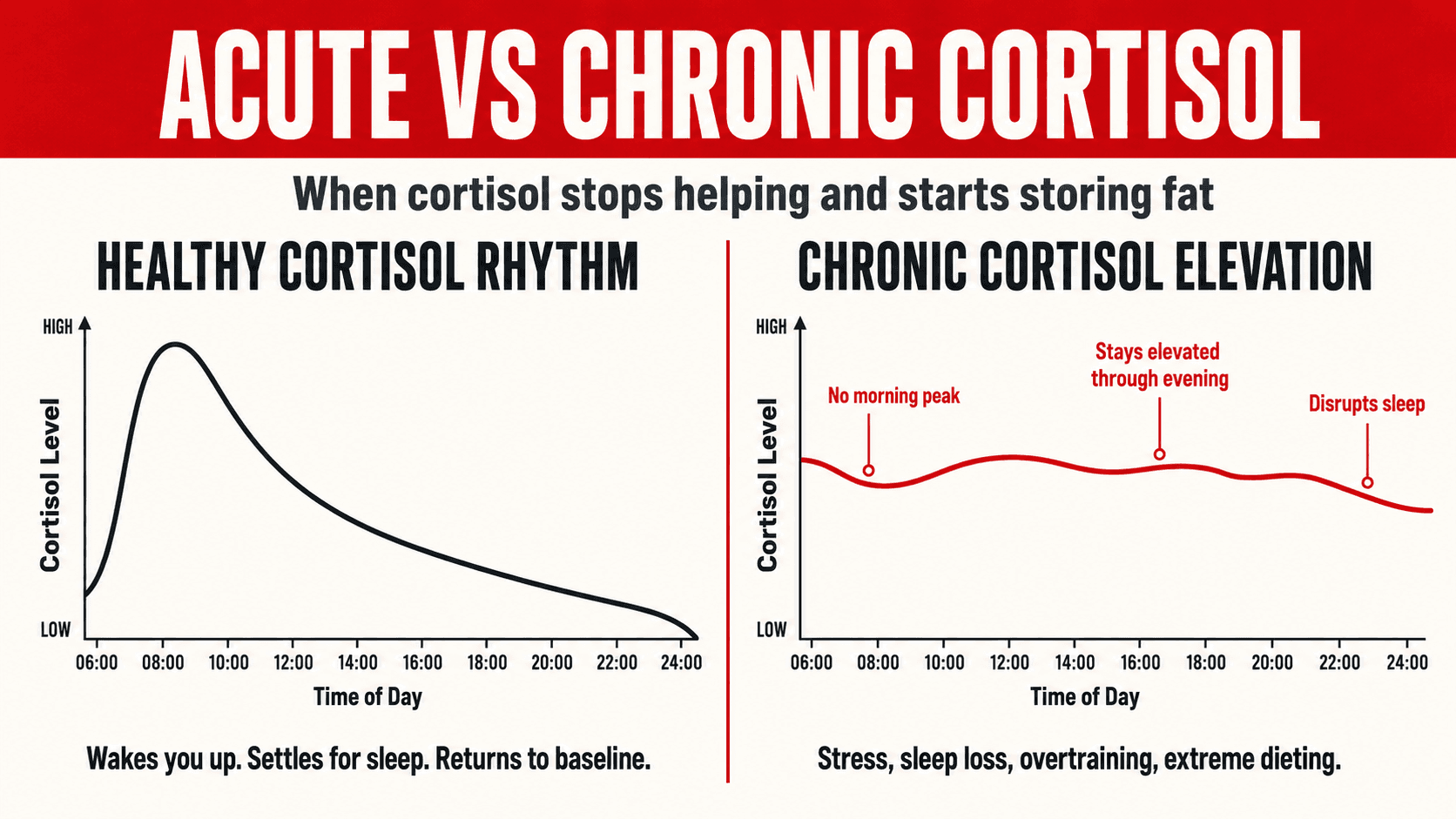
Cortisol is produced by the adrenal glands as part of the hypothalamic-pituitary-adrenal (HPA) axis. In a healthy individual, cortisol follows a predictable circadian rhythm: it peaks in the early morning to help you wake up and feel alert, then gradually declines throughout the day, reaching its lowest point around midnight when you are preparing for deep sleep (1). This rhythm supports energy regulation, cognitive function, and metabolic health. Acute stress causes a temporary spike in cortisol that resolves once the stressor passes. This is normal and healthy. The problem arises when stress becomes chronic.
When you are under sustained psychological, physical, or physiological stress, the HPA axis remains activated and cortisol levels stay chronically elevated. Research has shown that this pattern of persistent cortisol elevation creates a cascade of metabolic consequences that directly sabotage fat loss. Chronically elevated cortisol increases appetite, particularly for calorie-dense, high-sugar, high-fat foods (2). It promotes the deposition of fat specifically in the visceral compartment around your internal organs (3). It impairs insulin sensitivity, driving glucose and insulin levels higher (4). It accelerates the breakdown of lean muscle tissue, reducing your metabolic rate (5). And it disrupts sleep quality, creating a vicious cycle where poor sleep further elevates cortisol, which further disrupts sleep (6).
The clearest clinical evidence for what chronic cortisol excess does to the body comes from Cushing's syndrome, a condition characterised by pathologically elevated cortisol. Patients with Cushing's syndrome develop a distinctive pattern of central obesity, a round face, thin limbs, and a large, protruding abdomen packed with visceral fat, despite often having normal or even reduced total body weight (7). While Cushing's syndrome represents an extreme, the same mechanisms operate on a smaller scale in anyone living with chronic stress, sleep deprivation, overtraining, or sustained psychological pressure.
Why Cortisol Drives Fat Storage Specifically to Your Midsection
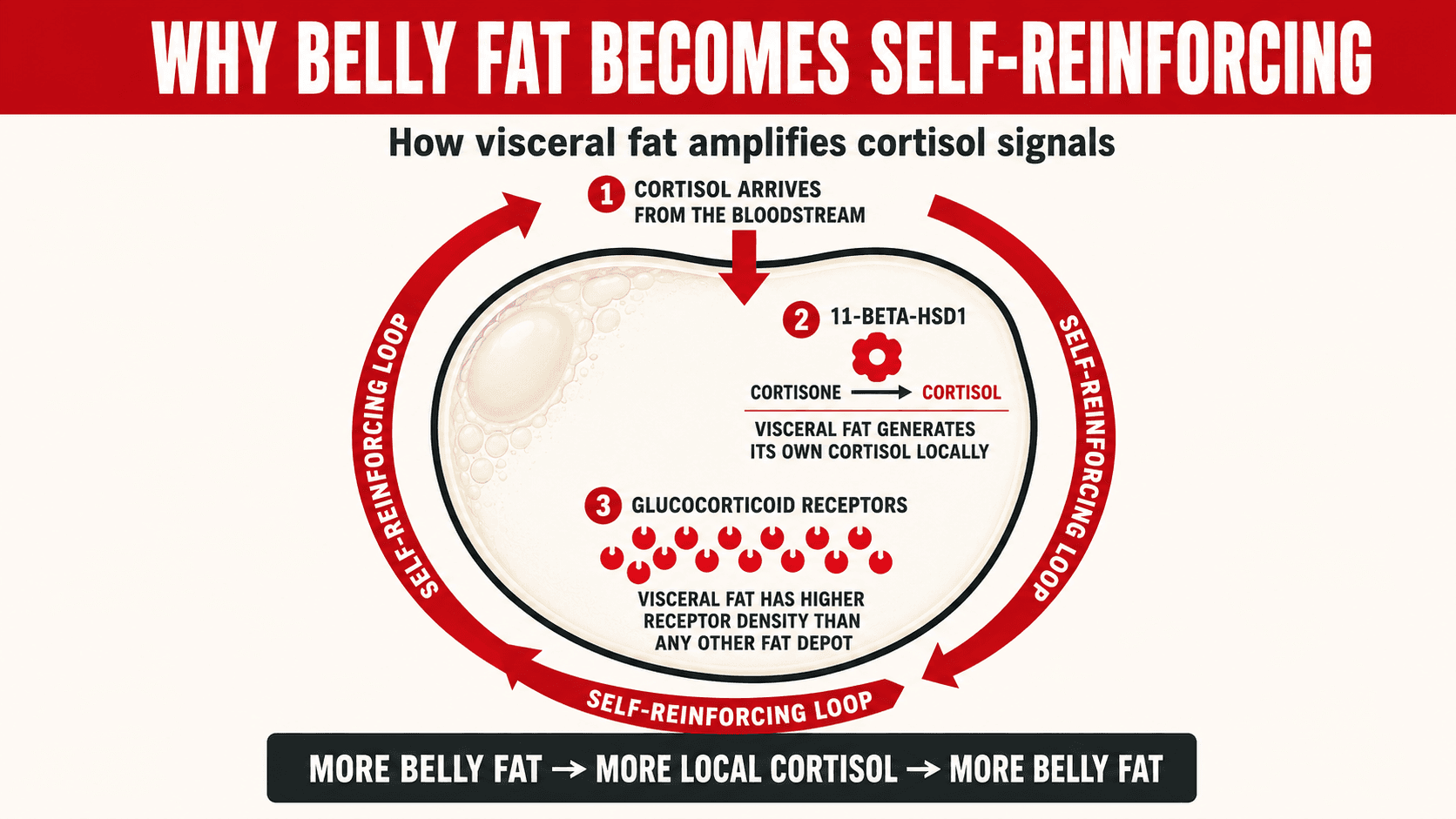
This is the question everyone asks, and the answer lies in the biology of your fat cells. Visceral adipose tissue, the fat stored deep inside your abdominal cavity around your liver, pancreas, and intestines, has a significantly higher density of glucocorticoid receptors compared to subcutaneous fat stored under the skin (3). Glucocorticoid receptors are the docking sites through which cortisol exerts its effects on cells. Because visceral fat has more of these receptors, it is more sensitive to cortisol's fat-accumulating signals. When cortisol levels are chronically elevated, it promotes the uptake and storage of fat in visceral depots preferentially over other fat stores in the body.
There is also an enzyme called 11-beta-hydroxysteroid dehydrogenase type 1 (11-beta-HSD1) that is highly active in visceral fat tissue. This enzyme converts inactive cortisone into active cortisol within the fat tissue itself, amplifying the local cortisol signal and accelerating fat storage in the abdominal region (8). In essence, your belly fat is not just responding to the cortisol circulating in your blood. It is generating its own cortisol locally, creating a self-reinforcing loop that becomes increasingly difficult to break the longer it persists.
Research on chronic stress models has confirmed this preferential abdominal fat accumulation. A study on post-menopausal women found that among those experiencing chronic psychological stress, consumption of highly palatable foods was specifically associated with greater abdominal adiposity and insulin resistance, while the same association was not present in the low-stress control group (9). The combination of chronic stress and a diet high in processed food was synergistically worse than either factor alone. Stress did not just make them eat more. It directed the excess energy storage specifically to the visceral compartment.
The Stress, Appetite, and Fat Storage Cycle
Cortisol does not just tell your body where to store fat. It also drives you to eat more of the foods most likely to cause fat gain. Elevated cortisol increases the activity of reward centres in the brain, particularly in response to calorie-dense, highly palatable food. When you are stressed, your body is not craving broccoli and chicken. It is craving sugar, refined carbohydrates, and fatty comfort foods, because these foods provide a temporary dopamine response that briefly dampens the stress signal (2). This is not a character flaw. It is a neurobiological response that was adaptive in an environment where stress meant physical danger and the next meal was uncertain. In a modern environment where stress is chronic and food is unlimited, it becomes a direct pathway to weight gain.
The cycle looks like this. Chronic stress elevates cortisol. Elevated cortisol increases appetite and cravings for calorie-dense food. You eat more than your plan prescribes, often in the evening when cortisol should be declining but is not. The excess calories, combined with the cortisol-driven preference for visceral fat storage, accumulate around your midsection. The growing visceral fat produces inflammatory cytokines that further activate the HPA axis, producing more cortisol (10). Your sleep quality declines because elevated evening cortisol disrupts the natural cortisol decline that is necessary for deep sleep. Poor sleep further elevates cortisol, further increases hunger hormones, further reduces your willpower and decision-making capacity (6). The cycle tightens with every rotation.
The Cortisol Fat Storage Cycle: How Stress Becomes Belly Fat
| Stage | What Happens | Consequence |
|---|---|---|
| 1 | Chronic psychological, physical, or lifestyle stress activates the HPA axis | Cortisol levels remain elevated throughout the day |
| 2 | Elevated cortisol increases appetite and drives cravings for calorie-dense food | Higher caloric intake, especially from sugar and processed food |
| 3 | Cortisol promotes fat storage in visceral depots due to higher glucocorticoid receptor density | Fat accumulates specifically around the midsection and internal organs |
| 4 | Elevated cortisol impairs insulin sensitivity and increases fasting insulin | Blood sugar regulation worsens. Fat oxidation is impaired |
| 5 | Cortisol accelerates muscle protein breakdown, especially without adequate training and protein | Lean mass declines. Metabolic rate drops |
| 6 | Evening cortisol remains elevated, disrupting melatonin release and sleep architecture | Sleep quality declines. Deep sleep and REM sleep are reduced |
| 7 | Poor sleep increases ghrelin, decreases leptin, and further elevates cortisol the following day | Hunger increases. Energy drops. The cycle restarts at a worse baseline |
| 8 | Visceral fat produces inflammatory cytokines that stimulate further HPA axis activation | The cycle becomes self-perpetuating. More fat means more cortisol |
Sleep Deprivation: The Hidden Cortisol Amplifier
If chronic stress is the petrol, sleep deprivation is the accelerant. The relationship between poor sleep and elevated cortisol is one of the most consistently demonstrated findings in endocrine research. A landmark study found that restricting healthy young men to four hours of sleep per night for six consecutive nights resulted in significantly elevated cortisol levels in the afternoon and evening, precisely the time when cortisol should be declining (6). The quiescent period during which cortisol is at its lowest was shortened, and the rate at which cortisol fell in the evening was nearly six times slower than in rested conditions.
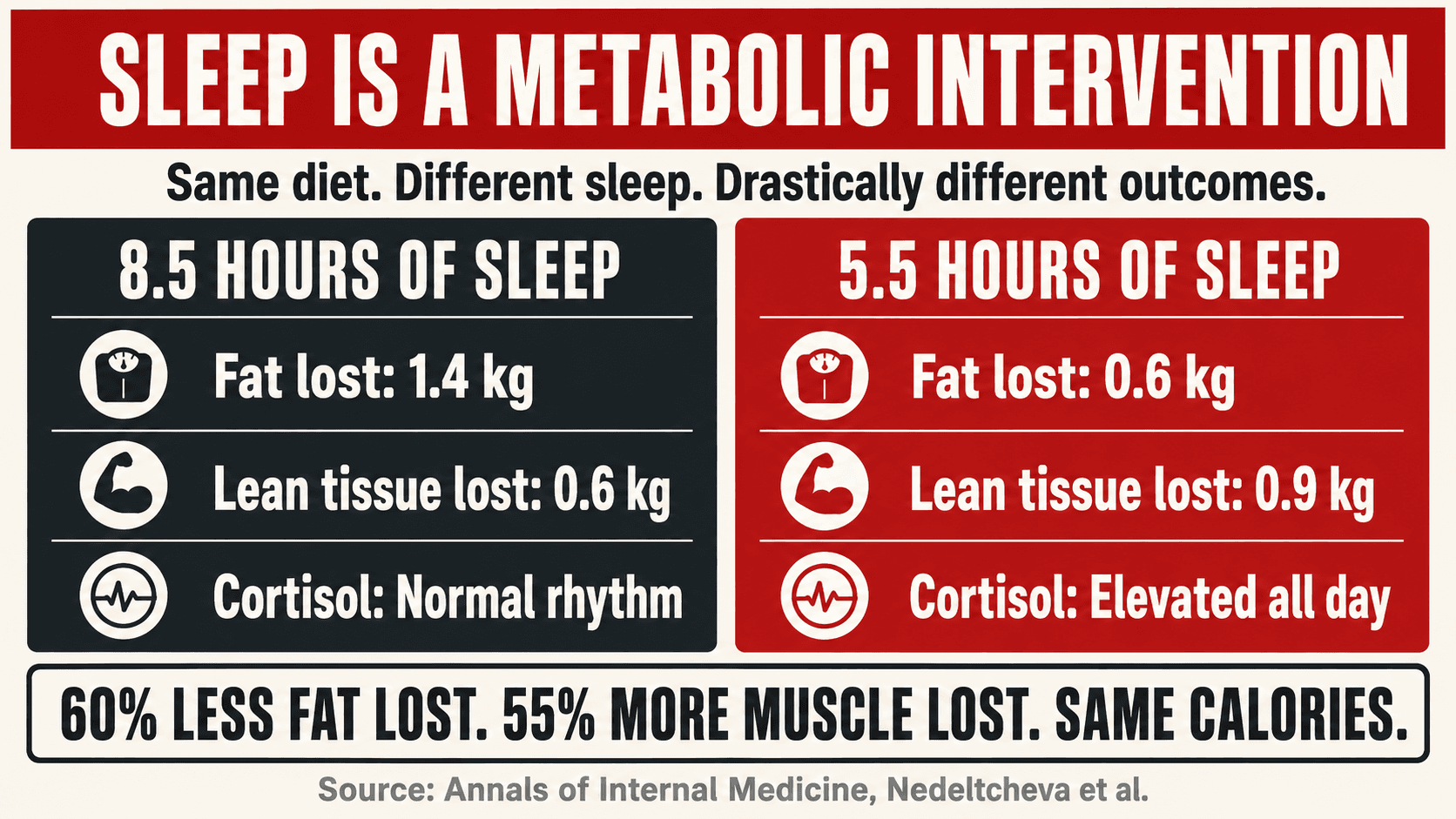
The metabolic consequences of this are profound. The same study found that after just six nights of restricted sleep, glucose tolerance was impaired to a degree comparable to older adults with prediabetes. Insulin sensitivity dropped. Leptin levels fell, producing increased hunger. And cortisol remained elevated throughout the second half of the day, driving every one of the mechanisms described above: appetite, cravings, visceral fat storage, and muscle breakdown (6). A separate study demonstrated that when participants were placed on a calorie-restricted diet, those sleeping 5.5 hours per night lost 60 percent less fat and 55 percent more lean tissue than those sleeping 8.5 hours per night, despite eating the same number of calories (11). Sleep is not optional. It is a metabolic intervention.
Overtraining and Undereating: When Your Fat Loss Programme Becomes a Stressor
Here is the irony that catches so many people. You are trying to lose fat, so you cut your calories aggressively and train harder and longer. You add extra cardio sessions. You push through fatigue. You sleep less because you are getting up earlier to fit in another workout. And your cortisol goes through the roof, not because of life stress but because your fat loss programme itself has become the chronic stressor. Severe calorie restriction, excessive training volume, and insufficient recovery are all potent activators of the HPA axis (5). If your approach to fat loss is extreme enough, it will produce the very hormonal environment that makes fat loss, particularly abdominal fat loss, harder.
I see this pattern frequently with clients who come to me after months of aggressive calorie restriction combined with daily intense exercise and poor sleep. Their body weight has plateaued. Their midsection will not budge. They are irritable, fatigued, and their training performance has deteriorated. Their cortisol is chronically elevated because their body perceives their lifestyle as a survival threat, not a health improvement strategy. The solution is not more restriction and more cardio. The solution is a moderate deficit, adequate protein, structured recovery, quality sleep, and training that challenges the body without crushing it.
How to Lower Chronic Cortisol and Break the Cycle
Prioritise Sleep Above Everything Else. I know you have heard this before. I know it sounds simple. But the evidence is overwhelming and unambiguous: sleep is the single most powerful lever you have to regulate cortisol, manage appetite, protect lean muscle, and optimise fat loss. Seven to nine hours per night is not a luxury. It is a physiological requirement. If you are sleeping fewer than seven hours per night and wondering why your fat loss has stalled, this is almost certainly a major contributing factor. Create a consistent sleep schedule. Dim the lights an hour before bed. Remove screens from the bedroom. Keep the room cool, dark, and quiet. These are not nice-to-haves. These are essential interventions.
Moderate Your Calorie Deficit. A deficit of 400 to 600 calories per day is sufficient for steady fat loss of 0.5 to 1 kilogram per week without creating a stress response that elevates cortisol and impairs recovery. Extreme deficits of 800 to 1,000 calories below maintenance create a physiological stress signal that activates the HPA axis and accelerates muscle breakdown. More is not better. Sustainable is better.

Protect Your Protein Intake. Protein at 1.8 to 2.2 grams per kilogram of bodyweight per day preserves lean muscle mass even in a calorie deficit, which protects your metabolic rate and reduces the cortisol-driven breakdown of muscle tissue. Build every meal around a protein source: eggs, chicken, fish, Greek yoghurt, tofu, tempeh, seitan, lentils, soy protein, pea protein, or whichever sources fit your dietary preferences.
Train Smart, Not Just Hard. Resistance training two to four times per week is the backbone of any fat loss programme. But the volume and intensity need to be appropriate for your recovery capacity, which is determined by your sleep, your stress levels, your nutrition, and your training history. If you are chronically stressed and under-recovered, more training is not the answer. Better training, with adequate rest between sessions and programmed deload weeks, will produce superior results with less cortisol burden.
Incorporate Deliberate Stress Management. This is where most people roll their eyes, but the evidence supports it. Mindfulness meditation, deep breathing techniques, yoga, walking in nature, journaling, and other deliberate stress reduction practices have been shown to reduce cortisol levels and improve metabolic outcomes in randomised controlled trials (12). You do not need to become a meditator. You need to create daily moments of genuine downregulation where your nervous system shifts from sympathetic (fight or flight) to parasympathetic (rest and digest). Even 10 to 15 minutes of focused deep breathing each day can make a measurable difference.
Reduce Caffeine After Midday. Caffeine stimulates cortisol release. A moderate cup of coffee in the morning is unlikely to be problematic, but consuming caffeine in the afternoon and evening directly interferes with cortisol's natural decline and disrupts sleep architecture. If you are dealing with elevated stress and poor sleep, cutting caffeine after noon is one of the simplest and most immediately impactful changes you can make.
Walk Daily. Low-intensity walking is a remarkably effective cortisol management tool. It provides metabolic benefits (increased energy expenditure, improved insulin sensitivity) without the cortisol spike associated with high-intensity exercise. Walking outdoors, particularly in green spaces, has been shown to lower cortisol levels independently of the exercise component (13). I programme 8,000 to 10,000 steps per day for every one of my fat loss clients, not just for calorie burning, but for stress regulation.

Top Tips: Managing Cortisol for Better Fat Loss
Sleep is not a reward for hard work. It is a metabolic requirement. Prioritise seven to nine hours per night with a consistent schedule. Poor sleep elevates cortisol, increases hunger, reduces willpower, and shifts fat storage towards your midsection. Nothing in your training or nutrition plan can compensate for chronic sleep deprivation.
A moderate calorie deficit protects your hormonal environment. Extreme restriction and excessive training are stressors that elevate cortisol. A sustainable deficit of 400 to 600 calories per day with adequate protein and structured rest days produces better body composition results than an aggressive approach that drives cortisol through the roof.
If your midsection is the last place to lean out, consider your stress load before blaming your diet. Chronic stress, poor sleep, and overtraining all preferentially drive fat storage to the abdominal region through cortisol-mediated mechanisms. Sometimes the best fat loss intervention is not a harder diet. It is a better night's sleep and a conversation with yourself about the stress in your life.
Build recovery into your programme with the same seriousness as your training. Rest days, deload weeks, adequate sleep, and deliberate relaxation are not signs of weakness. They are the conditions under which your body actually adapts, recovers, and burns fat. You do not get fitter in the gym. You get fitter when you recover from the gym.
Stop using stimulants to mask fatigue. If you need multiple cups of coffee and a pre-workout just to get through the day, you are not energised. You are compensating for a recovery deficit. Address the root cause: sleep, stress, and workload. Stimulants mask the problem while making the cortisol situation worse.
Walk more. Especially outdoors. Low-intensity walking is one of the most underrated tools for cortisol management and fat loss. It increases energy expenditure without adding stress to the system, and walking in nature has been independently shown to lower cortisol levels.
Track your waist circumference, not just your weight. Cortisol-driven visceral fat can accumulate even when total body weight remains stable. If your waist measurement is increasing or not decreasing despite being in a calorie deficit, cortisol and stress should be the first suspects you investigate.
The Bottom Line
Cortisol is not your enemy. It is a vital hormone that keeps you alive, alert, and functional. But when it stays chronically elevated because of unmanaged stress, sleep deprivation, overtraining, or extreme dieting, it becomes the primary driver of stubborn abdominal fat. Visceral fat has more cortisol receptors than any other fat depot in your body. It generates its own cortisol through local enzyme activity. And it produces inflammatory signals that further activate the stress response, creating a self-reinforcing cycle that willpower alone cannot break. The solution is not more discipline. It is better management of the systems that control cortisol: sleep, stress, recovery, and a moderate rather than extreme approach to your calorie deficit.
If you are struggling with stubborn midsection fat despite doing everything right in your diet and training, get in touch. I work one-to-one with clients online globally. Whether you eat meat, are vegetarian, vegan, or somewhere in between, whether you are an executive under relentless work pressure or a parent juggling responsibilities with no time for yourself, I will build a programme that accounts for your stress, your sleep, your hormones, and your life. Because fat loss that lasts does not come from punishing your body. It comes from working with it.
Work with Me
Get a personalised coaching plan built around your goals, your schedule, and your life.
Enquire NowReferences
- Weitzman ED, Fukushima D, Nogeire C, Roffwarg H, Gallagher TF, Hellman L. Twenty-four hour pattern of the episodic secretion of cortisol in normal subjects. Journal of Clinical Endocrinology and Metabolism. 1971; 33(1): 14-22.
- Adam TC, Epel ES. Stress, eating and the reward system. Physiology and Behavior. 2007; 91(4): 449-458.
- Bjorntorp P. Do stress reactions cause abdominal obesity and comorbidities? Obesity Reviews. 2001; 2(2): 73-86.
- Rosmond R, Dallman MF, Bjorntorp P. Stress-related cortisol secretion in men: relationships with abdominal obesity and endocrine, metabolic and haemodynamic abnormalities. Journal of Clinical Endocrinology and Metabolism. 1998; 83(6): 1853-1859.
- Duclos M, Gouarne C, Bonnemaison D. Acute and chronic effects of exercise on tissue sensitivity to glucocorticoids. Journal of Applied Physiology. 2003; 94(3): 869-875.
- Spiegel K, Leproult R, Van Cauter E. Impact of sleep debt on metabolic and endocrine function. The Lancet. 1999; 354(9188): 1435-1439.
- Newell-Price J, Bertagna X, Grossman AB, Nieman LK. Cushing's syndrome. The Lancet. 2006; 367(9522): 1605-1617.
- Tomlinson JW, Walker EA, Bujalska IJ, et al. 11-beta-hydroxysteroid dehydrogenase type 1: a tissue-specific regulator of glucocorticoid response. Endocrine Reviews. 2004; 25(5): 831-866.
- Aschbacher K, Kornfeld S, Picard M, et al. Chronic stress increases vulnerability to diet-related abdominal fat, oxidative stress, and metabolic risk. Psychoneuroendocrinology. 2014; 46: 14-22.
- Tchernof A, Despres JP. Pathophysiology of human visceral obesity: an update. Physiological Reviews. 2013; 93(1): 359-404.
- Nedeltcheva AV, Kilkus JM, Imperial J, Schoeller DA, Penev PD. Insufficient sleep undermines dietary efforts to reduce adiposity. Annals of Internal Medicine. 2010; 153(7): 435-441.
- Pascoe MC, Thompson DR, Jenkins ZM, Ski CF. Mindfulness mediates the physiological markers of stress: systematic review and meta-analysis. Journal of Psychiatric Research. 2017; 95: 156-178.
- Hunter MR, Gillespie BW, Chen SY. Urban nature experiences reduce stress in the context of daily life based on salivary biomarkers. Frontiers in Psychology. 2019; 10: 722.